
Decorating outdoor spaces for the holidays in the Philippines brings unique challenges, primarily due to the unpredictable tropical climate. While solar-powered Christmas lights offer an energy-efficient and hassle-free way to illuminate gardens, patios, and facades, they must endure intense afternoon heat, high humidity, and sudden heavy downpours. Selecting the right setup requires looking beyond festive aesthetics to evaluate technical specifications like weatherproofing, solar conversion efficiency, and battery capacity. By understanding these key factors, you can ensure your holiday display remains bright and safe throughout the festive season.
Understanding Waterproof Ratings for Outdoor Durability
When selecting outdoor solar Christmas lights, understanding the Ingress Protection (IP) rating system is essential for ensuring long-term durability. The IP rating consists of two digits: the first digit represents protection against solid objects like dust (ranging from 0 to 6), while the second digit indicates protection against liquids (ranging from 0 to 9). For outdoor holiday lighting exposed to the elements, the liquid protection digit is the most critical factor to consider.
Many budget-friendly string lights carry an IP44 rating, which means they are protected against solid objects larger than 1 millimeter and water splashes from any direction. While this level of protection is sufficient for covered porches, carports, or mild climates, it often falls short during the heavy tropical rains and sudden downpours common in the Philippines. For fully exposed outdoor installations, such as wrapping garden trees, lining rooflines, or draping fences, IP65-rated lights are highly recommended. An IP65 rating indicates that the product is completely dust-tight and can withstand low-pressure water jets from any angle, ensuring the internal circuitry remains dry even during severe weather.
Products mentioned in this guide
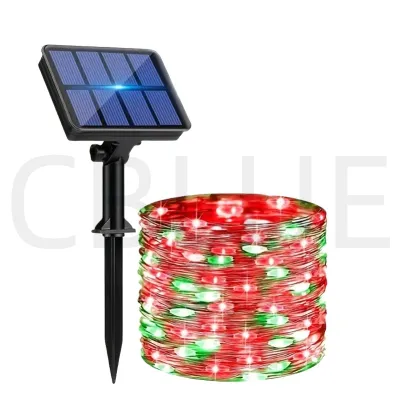
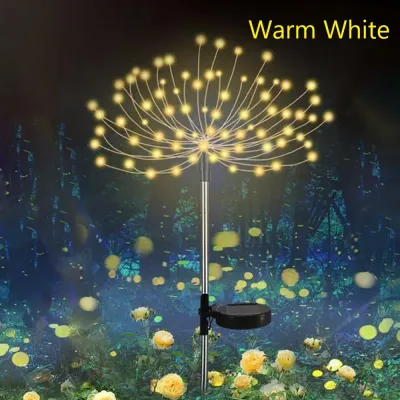
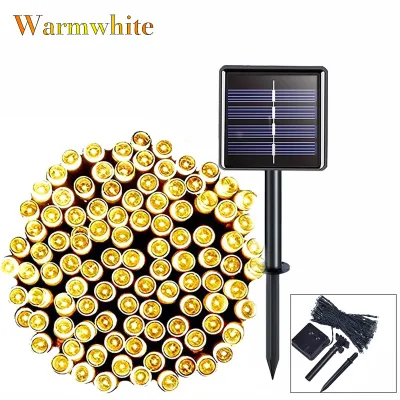
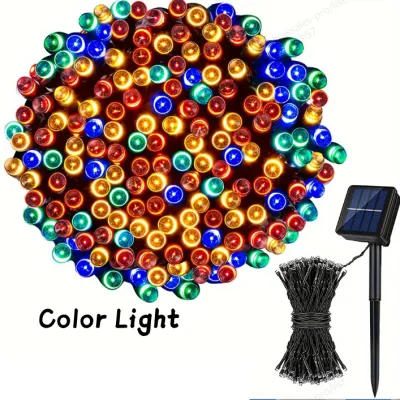
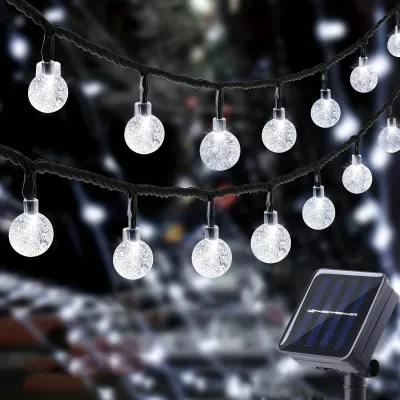
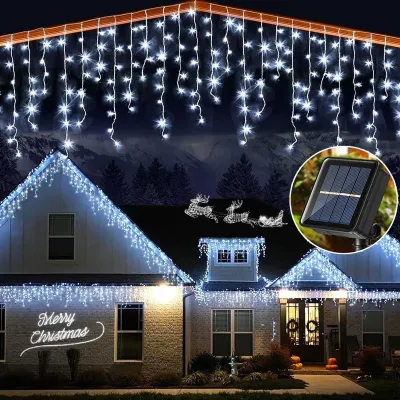
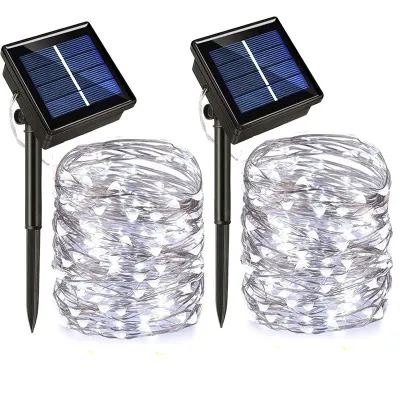
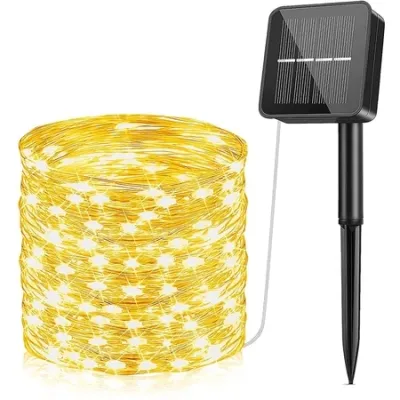
Prices are valid at publication and may change. Please refer to the product page for the latest price.
It is also crucial to differentiate between water-resistant and fully waterproof claims made by manufacturers. A product labeled as “water-resistant” may only survive light drizzle or high humidity, whereas a truly waterproof product can handle continuous exposure to heavy rain. When evaluating these claims, pay close attention to the solar panel and controller box assembly. Many manufacturers advertise a product as waterproof based solely on the durability of the LED string itself, while the solar panel housing and mode controller carry a much lower rating. If water penetrates the controller box, it can cause short circuits, corrosion, and permanent failure of the entire system, so always verify that both the light string and the solar panel assembly carry an adequate IP rating for their intended placement.
Evaluating Solar Panel and Battery Specifications
The performance and runtime of your solar Christmas lights depend heavily on the quality of the solar panel and the capacity of the integrated rechargeable battery. Solar panels used for consumer lighting generally fall into two categories: monocrystalline and polycrystalline. Monocrystalline panels are made from a single pure silicon crystal, giving them a uniform dark appearance and a higher energy conversion efficiency, typically between 15% and 22%. This efficiency is particularly beneficial in the Philippines during the holiday season, when cloudy afternoons or shaded areas can limit direct sunlight. Polycrystalline panels, recognizable by their speckled blue appearance, are more affordable to manufacture but have lower efficiency, usually around 13% to 16%. They require longer exposure to bright, direct sunlight to achieve the same charge, making them less reliable during overcast weeks.

Equally important is the battery type and capacity housed within the solar panel assembly. Most solar Christmas lights use either Nickel-Metal Hydride (NiMH) or Lithium-ion (Li-ion) rechargeable batteries. NiMH batteries are common in budget-friendly models; they are reliable but have lower energy density and a shorter overall lifespan. Li-ion batteries offer higher energy density, faster charging cycles, and a longer operational life, though they require sophisticated charge-controller circuitry to prevent overheating. Battery capacity is measured in milliampere-hours (mAh). A higher mAh rating indicates a larger energy storage capacity, which is essential for keeping the lights illuminated for eight to ten hours. However, a larger battery capacity also requires a correspondingly efficient solar panel to fully charge during the day.
Before purchasing, check the manufacturer’s specifications for the required charging time. Most standard solar lights require six to eight hours of unshaded, direct sunlight to achieve a full charge. If your outdoor space is partially shaded by trees, walls, or neighboring buildings, the solar panel may not receive enough energy to power the lights through the night, resulting in a dim display that shuts off prematurely. Understanding these specifications helps you choose a system that matches the solar exposure available in your specific installation area.
Choosing the Right Light Design and Illumination
The choice of color temperature significantly influences the mood of your outdoor holiday display. Warm white LEDs (typically 2700K to 3000K) emit a soft, golden glow that creates a cozy, traditional atmosphere. Cool white LEDs (5000K to 6500K) provide a bright, crisp light that mimics ice or snow, making them highly visible from a distance. Multicolor options offer a vibrant, festive look suitable for lively family gatherings. These aesthetic choices are highly subjective and should be selected based on your existing outdoor decor and personal preferences.
Solar string lights come in various shapes, including classic fairy micro-LEDs, larger globe bulbs, and decorative shapes like stars or teardrops. The wire material is equally important for durability. Thin copper wire is highly flexible and nearly invisible during the day, making it excellent for wrapping delicate branches or weaving through foliage. However, copper wire can be fragile and prone to snapping if pulled too tightly. PVC-coated wire is thicker, heavier, and offers superior physical protection and moisture insulation, making it the preferred choice for hanging across open spaces or along fences where wind exposure is high.
Most solar Christmas lights feature multiple operating modes, such as steady-on, slow fade, flashing, and chasing patterns. These modes are controlled by a small button on the back of the solar panel or via an included remote control. Additionally, integrated dusk-to-dawn sensors automatically activate the lights when ambient light levels drop and turn them off at sunrise. This automation ensures that your display operates efficiently without requiring manual intervention every evening.
Installation, Placement, and Safety Boundaries
To maximize energy generation, position the solar panel in a location that receives unobstructed sunlight for the majority of the day. In the Philippines, angling the panel slightly southward helps capture the maximum amount of solar radiation. Avoid placing the panel directly under roof eaves, dense tree canopies, or outdoor security lights, as artificial light sources can trick the dusk-to-dawn sensor into keeping the Christmas lights turned off at night.
When securing the light strings and solar panels, use non-destructive mounting hardware. Plastic cable ties (zip ties), insulated outdoor mounting clips, or temporary adhesive hooks are excellent choices that do not damage property. Avoid using metal staples, nails, or tacks to secure the wires, as these can easily pierce the protective insulation, exposing the copper conductors to moisture and causing short circuits or electrical hazards. Ensure that the solar panel’s mounting stake is firmly anchored in stable soil or securely clamped to a railing to prevent it from shifting.
While solar Christmas lights operate on low-voltage direct current (typically 1.2V to 3.7V) and are generally safe for DIY installation, certain scenarios require caution. If you plan to mount lights at significant heights, such as on high rooflines or tall palm trees, always use a stable ladder and have a second person assist you. If your solar lighting system includes a hybrid backup system that connects to your home’s 220V main electrical grid, always isolate the power source before making any connections. For complex installations involving fixed outdoor wiring, damp-rated junction boxes, or integration with existing landscape lighting, stop and consult a qualified professional electrician to ensure compliance with local electrical safety standards.
Building Your Shortlist: Pre-Purchase Verification Checklist
When browsing online marketplaces, it is easy to be misled by exaggerated product titles and generic waterproof claims. To build a reliable shortlist, always verify the technical specifications against the manufacturer’s official product manual or detailed spec sheets. Look for explicit mentions of certified IP ratings (such as IP65) rather than vague marketing terms.
Ensure the total length of the light string matches your decorating plan, paying close attention to the lead wire length. The lead wire is the unlit portion of the cable between the solar panel and the first LED bulb; a longer lead wire allows you to place the solar panel in a sunny spot while keeping the decorative lights in a shaded area. Additionally, check if the product package includes mounting accessories, such as ground stakes or wall-mount brackets, and verify if the rechargeable battery is accessible for future replacement.
Compare prices in ₱ across different sellers, keeping in mind that extremely low-priced options (often under ₱150) may compromise on wire thickness, battery capacity, or waterproofing. A durable, high-quality solar string light set typically ranges from ₱400 to ₱1,200, depending on the length and features. Read customer reviews carefully, filtering for feedback that mentions long-term performance during heavy rain or high-humidity conditions, as this provides the most accurate reflection of real-world durability.
Frequently Asked Questions (FAQ)
How do I clean the solar panel to maintain charging efficiency?
To maintain optimal charging efficiency, clean the solar panel surface every few weeks. Use a soft, damp microfiber cloth to gently wipe away accumulated dust, pollen, bird droppings, and atmospheric residue. Avoid using abrasive cleaning pads, steel wool, or harsh chemical solvents, as these can scratch the protective glass or plastic cover, permanently reducing light transmission. Never use high-pressure water sprays directly on the panel, as the force can breach the waterproof seals and damage the internal electronics.
Why do my solar lights stop working after a few hours at night?
If your solar lights shut off prematurely, the most common cause is insufficient daytime charging. This can happen if the solar panel is shaded by growing foliage, covered in dirt, or positioned at an angle that does not receive direct sunlight. Another common cause is battery degradation. Over time, rechargeable batteries lose their ability to hold a full charge. Check the manufacturer’s instructions to see if the battery is user-replaceable; if so, open the battery compartment and replace the old cell with a high-quality rechargeable battery of the exact same chemistry (such as NiMH or Li-ion) and voltage.
Can I leave solar Christmas lights outside year-round?
Although high-quality IP65-rated solar lights are designed to withstand outdoor weather, leaving them exposed year-round in a tropical climate is not recommended. Continuous exposure to intense UV radiation, high humidity, and extreme summer heat will accelerate the degradation of plastic components, wire insulation, and waterproof seals. To maximize the lifespan of your lights, it is best to carefully uninstall them after the holiday season. Clean the components, ensure they are completely dry, and store them in a cool, dry indoor location until the next festive season.
Community discussion
Share your experience or ask a question. Comments are reviewed before publication.