
Finding the right plug-in night light for your condo depends on matching each room’s function to the light’s brightness, color temperature, and sensor type. In a compact living space, bedrooms require a low-lumen, warm amber glow to preserve sleep quality, while hallways benefit from motion-activated directional pathfinders, and bathrooms require moisture-resistant units with neutral tones for safe visibility. Selecting fixtures tailored to these distinct zones allows you to navigate your home safely at night without disrupting your sleep cycle or cluttering limited wall outlets.
Understanding Ambient Lighting Needs in a Condo
Condo living presents unique spatial challenges that affect how you plan your lighting. Compact layouts mean a single bright light can easily spill from a hallway into a bedroom, disrupting your rest. Wall outlets are often at a premium, meaning a plug-in night light must share limited socket space with appliances and chargers. Before purchasing, walk through your space at night to identify where dark spots exist and where existing furniture might block a wall outlet.
It is also essential to distinguish between primary ambient lighting and supplemental night lights. Primary lighting, such as ceiling downlights, is designed to illuminate entire rooms for daytime activities. Supplemental plug-in night lights are low-intensity guide lights meant to assist with safe navigation in the dark. Attempting to use a night light to illuminate an entire room, or using a primary light as a nighttime guide, often leads to either insufficient visibility or harsh glare.
Products mentioned in this guide
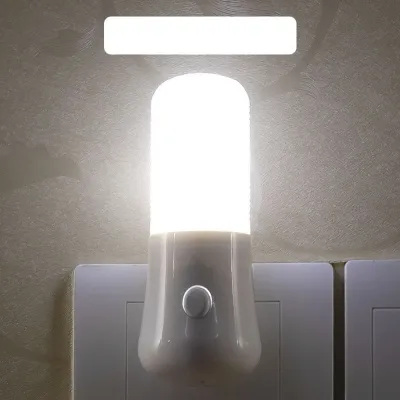
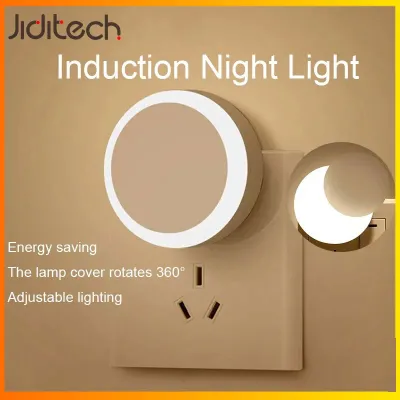
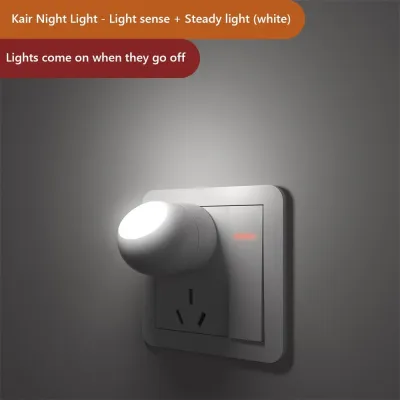
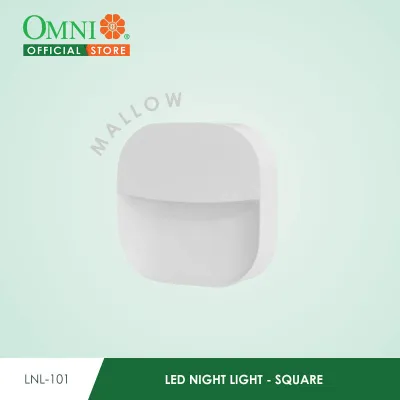
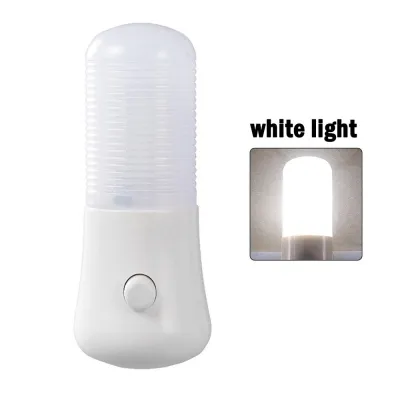
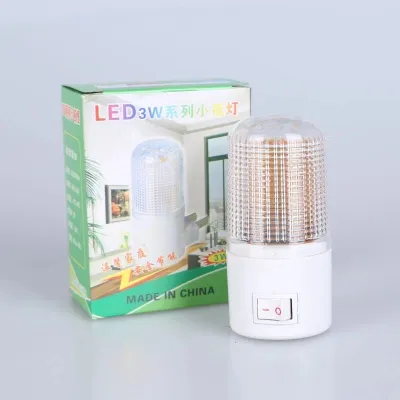
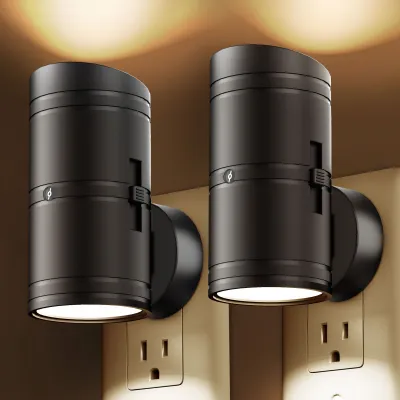
Prices are valid at publication and may change. Please refer to the product page for the latest price.
Safety and electrical compatibility must be your first considerations. In the Philippines, the standard residential electrical system operates at 220 volts and 60 hertz, typically utilizing Type A or Type B outlets. Always verify that the plug-in night light you select is explicitly rated for 220V operation to avoid short circuits or overheating. Using a device designed solely for 110V systems without a proper transformer can permanently damage the unit and pose a serious safety risk.
Bedroom: Balancing Mood and Sleep Quality
Your bedroom is a sanctuary dedicated to rest, making light control critical for maintaining healthy sleep patterns. Exposure to bright, cool blue light at night can suppress the production of melatonin, the hormone responsible for regulating your sleep-wake cycle. To prevent this disruption, prioritize plug-in night lights that emit warm color temperatures, such as amber or soft warm white (typically around 2200K to 2700K). These warmer hues mimic the natural colors of sunset, signaling to your brain that it is time to wind down.

If you enjoy decorative lighting, sunset lamps and mood projection lights offer a relaxing visual element for condo bedrooms. These devices project soft, gradient colors onto walls or ceilings, creating a soothing, indirect glow that minimizes harsh shadows. However, because these lamps are designed for atmospheric effect rather than task visibility, they should be used as transitional lighting before sleep rather than left on at full brightness throughout the night. When selecting a mood lamp, look for models that offer adjustable brightness levels so you can dim the projection as you prepare to sleep.
To ensure your bedroom night light remains functional without becoming a distraction, look for units equipped with physical dimming switches or adjustable brightness settings. A light that feels perfectly dim during the day can seem blindingly bright once your eyes have fully adjusted to the dark. Additionally, consider choosing a model with a directional shade or a downward-facing design. This physical structure shields your eyes from direct bulb exposure and casts the light downward toward the floor, keeping your sleeping area dark while still illuminating the immediate path beside your bed.
Hallways and Entryways: Safe Navigation Without Glare
Condo hallways and entryways are high-traffic transit zones that require reliable illumination to prevent trips and falls, especially in narrow layouts. When selecting a plug-in night light for these areas, you must choose between motion-sensor models and always-on dusk-to-dawn sensors. Motion-sensor lights are highly efficient because they only activate when they detect movement, providing instant illumination when you step out of bed and turning off automatically once you pass. Dusk-to-dawn models, which use a light sensor to remain on as long as the surrounding area is dark, provide a continuous, reassuring guide path but consume slightly more energy over time.
The physical placement and orientation of the light are just as important as the sensor type. To avoid sudden eye strain when walking out of a dark bedroom, position your hallway night lights low to the ground, ideally in outlets located near the floorboards. Choose fixtures that direct their beam downward or feature frosted diffusers that soften the light spread. This ensures that the light illuminates your actual walking path—helping you spot pet toys, slippers, or furniture corners—without shining directly into your eyes and causing temporary blindness.
In narrow condo corridors, physical clearance is a practical concern that is easily overlooked. Standard wall outlets often project outward, and a bulky plug-in night light can easily become an obstacle. If your hallway is tight, look for slim-profile or flat-panel night lights that sit flush against the wall plate. This design prevents the unit from being accidentally bumped by passing shoulders, caught on loose clothing, or knocked out of the socket by vacuum cleaners and moving furniture.
Bathrooms and Kitchens: Nighttime Visibility and Safety
Bathrooms and kitchens present unique challenges because they combine high-moisture environments with the need for clear, functional visibility. In these utility zones, standard warm night lights might not provide enough contrast to help you safely navigate wet floors or locate items on a counter. For these spaces, a neutral white light (around 3000K to 4000K) is often more practical, as it offers better visual clarity for quick tasks like getting a glass of water or washing your hands, without being as harsh as a full overhead ceiling light.
Because bathrooms are subject to high humidity and occasional water splashes, you must verify the manufacturer’s specifications regarding moisture resistance before plugging any device into a bathroom outlet. Look for units that are rated for damp environments or feature enclosed designs that protect the internal electrical components from steam and condensation. If your bathroom outlet is located close to a sink or shower area, ensure the night light is plugged into a Ground Fault Circuit Interrupter (GFCI) outlet to protect against electrical shocks. If you are unsure about the safety of your bathroom’s electrical layout, consult a qualified professional to inspect your outlets.
In the kitchen, outlet space is often reserved for essential appliances like microwaves, blenders, and refrigerators. When adding a plug-in night light, ensure that the unit does not interfere with these heavy-duty appliances or create a tangled mess of cords. Avoid using extension cords or multi-plug adapters to power your night lights in wet areas, as this increases the risk of short circuits. Instead, select a compact, single-plug night light that leaves the second outlet on the wall plate completely free for daily kitchen tasks, keeping your countertops clean and hazard-free.
Key Features to Check Before Buying
Before purchasing any plug-in night light, a thorough check of product specifications and safety labels will save you from potential hazards and compatibility issues. Always look for official safety certification marks on the product packaging or the device itself, such as the Philippine Standard (PS) mark or the Import Commodity Clearance (ICC) sticker, which indicate the product has undergone rigorous safety testing. Additionally, check the maximum wattage limit of the device; modern LED night lights are highly recommended because they operate at very low wattages, reducing heat generation and minimizing the risk of scorching nearby outlet covers or wallpaper.
Another practical detail to examine is the physical orientation of the plug pins relative to the night light’s body. Some wall outlets in condos are installed horizontally, while others are vertical. If a night light has a fixed, non-rotating plug, it may sit sideways in a horizontal outlet, casting light in the wrong direction or blocking the adjacent socket entirely. Look for models with rotating plugs or compact, symmetrical designs that ensure you can still access the neighboring outlet for other household electronics.
Finally, evaluate any integrated smart features based on your actual daily routine rather than their novelty appeal. While features like smartphone app control, color-changing modes, and programmable timers sound convenient, they may add unnecessary complexity if you simply need a reliable light to guide you to the bathroom. If you do choose a smart night light, verify that its wireless connectivity is compatible with your condo’s home network and that the companion app does not require excessive permissions. For most condo spaces, a simple, high-quality light with a reliable physical sensor or manual dimmer remains the most practical and durable choice.
Frequently Asked Questions (FAQ)
Can I use a sunset mood lamp as a primary light source in a small condo?
No, a sunset mood lamp is designed strictly for decorative accent lighting and cannot replace a primary light source. These lamps typically have a low lumen output and a highly focused, directional beam spread meant to project color gradients onto a specific wall surface rather than illuminate an entire room. For tasks that require visual precision, such as reading, cooking, or cleaning, you should rely on standard overhead fixtures or dedicated task lamps. Always check the manufacturer’s specifications to verify the intended use and maximum illumination area of any mood lamp before purchasing.
Do plug-in night lights consume a lot of electricity if left on all night?
Modern LED plug-in night lights consume very little electricity, but their actual impact depends on their wattage and how long they run. To determine the baseline consumption of a specific model, check the wattage rating printed on the product packaging or the device’s safety label; most LED night lights draw between 0.5 and 2 watts of power. To manage your energy usage effectively, look for models equipped with built-in dusk-to-dawn light sensors or motion sensors that automatically turn the light off when it is not needed, preventing unnecessary power draw during daylight hours.
Community discussion
Share your experience or ask a question. Comments are reviewed before publication.