
Choosing the right aesthetic desk lamp for a minimalist work-from-home (WFH) setup in the Philippines requires balancing visual simplicity with practical performance. A well-designed lamp does more than illuminate your keyboard; it serves as a visual anchor that keeps your workspace feeling calm, organized, and free from unnecessary clutter. In a home office environment—where space is often shared with living areas—a bulky, poorly wired light source can quickly disrupt the clean lines of a minimalist desk.
To find a lamp that truly enhances your workspace, you must look beyond surface-level styling. The ideal lighting solution integrates seamlessly with your daily routine, offering adjustable illumination that transitions from bright morning focus sessions to soft evening wind-downs. By focusing on compact footprints, hidden cable routing, and precise light control, you can maintain an uncluttered desk while ensuring your eyes remain comfortable during long hours of screen work.
Defining the Minimalist Aesthetic for Your Workspace
Minimalism is not a single design philosophy; it ranges from warm, organic textures to sharp, industrial lines. Before selecting a desk lamp, identify which sub-style dominates your current WFH setup. Warm organic minimalism relies on natural materials, soft matte finishes, and earthy tones. If your desk features light oak, bamboo, or a textured desk mat, a lamp with subtle wood accents or a soft ceramic-like finish will complement these elements, making the workspace feel inviting and grounded.
Products mentioned in this guide
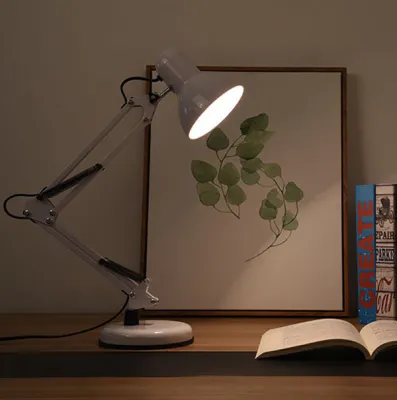
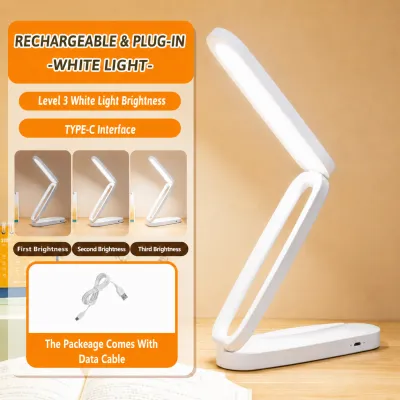
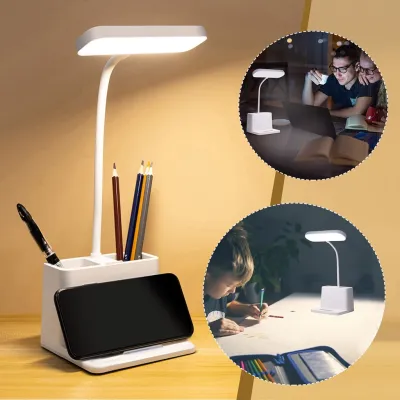
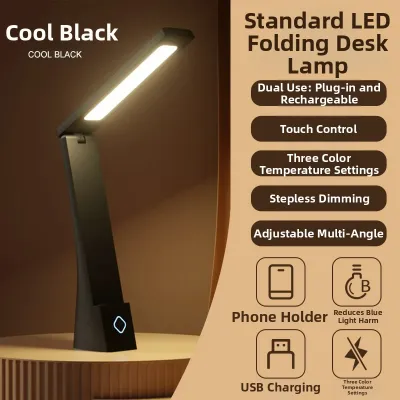
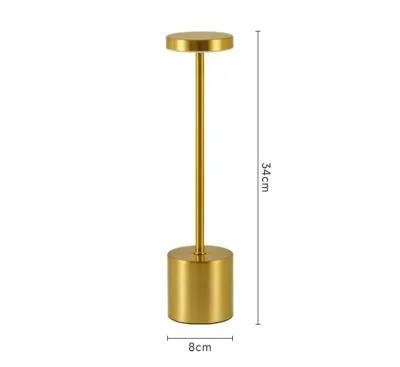
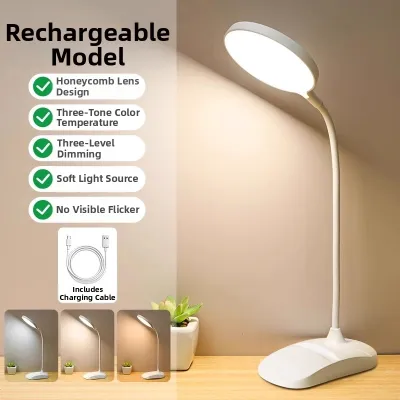
Prices are valid at publication and may change. Please refer to the product page for the latest price.
Conversely, sleek modern minimalism favors industrial materials like anodized aluminum, matte black steel, and precise geometric shapes. This style pairs exceptionally well with high-tech setups featuring mechanical keyboards, dual monitors, and metallic desk accessories. A lamp with a slim, metallic profile and sharp angles reinforces this professional, high-performance aesthetic, creating a cohesive look that minimizes visual distractions.
You must also decide whether the lamp should serve as a subtle background tool or a deliberate sculptural focal point. A background lamp is designed to disappear into your setup, featuring an ultra-slim neck and a color that matches your wall or desk surface. A sculptural lamp, on the other hand, uses bold, artistic geometry to make a statement. Even when turned off during the day, a sculptural lamp acts as a piece of functional art that elevates the overall design of your room.
Finally, consider how the lamp’s physical materials and light temperature interact with your existing desk surfaces. In the Philippines, where natural daylight can be intense and highly variable, your desk lamp must work in harmony with shifting ambient light. A warm light reflecting off a dark wood desk creates a cozy, heavy atmosphere, while a cool white light on a white laminate desk can feel clinical. Choosing a lamp that allows you to adjust both the physical angle and the light output ensures your workspace remains visually balanced throughout the day.
Key Design Features for a Clean, Uncluttered Look
The physical structure of a desk lamp plays a critical role in maintaining a clean, spacious work surface. When space is at a premium, as is common in urban apartments and condominiums, a lamp with a massive base can severely limit your usable desk area. Look for lamps that feature a compact, weighted base. A heavy base ensures the lamp remains stable and secure even when the arm is fully extended, preventing accidental tipping without requiring a large physical footprint.

Cable management is another essential factor in preserving a minimalist aesthetic. Exposed, tangled cords instantly ruin the clean lines of a well-curated desk. High-quality minimalist lamps often feature integrated cable routing, where the power cord is threaded through the hollow interior of the support arms. Some modern designs go a step further by incorporating wireless charging pads or USB pass-through ports directly into the base, allowing you to charge your phone or wireless earbuds without running extra cables across your desk.
The visual cleanliness of a lamp also depends on its joints, hinges, and control interfaces. Traditional desk lamps often feature prominent knobs, exposed springs, and bulky plastic switches that disrupt their silhouette. Minimalist designs replace these with hidden friction joints, counterweights, or seamless internal hinges that allow smooth adjustment without visible hardware. These clean joints ensure the lamp maintains its sleek profile from every angle.
Control interfaces should be similarly streamlined. Touch-sensitive panels integrated flat into the base or stem offer a modern, button-free look that is easy to clean and operate. These touch controls eliminate mechanical wear points and prevent the clicking sounds associated with traditional switches. When evaluating touch controls, look for designs that offer intuitive gestures, such as tapping to power on and holding to adjust brightness, which keeps the interface as clean and unobtrusive as possible.
Functional Specs That Support a Minimalist WFH Setup
While aesthetics are important, a desk lamp must ultimately deliver high-quality light to support your daily work. A key functional specification to look for is adjustable color temperature, typically measured in Kelvin (K). Your lighting needs change throughout the day; a cool, crisp light of around 4000K to 5000K is ideal for morning focus and detailed tasks, while a warm, gentle light of 2700K to 3000K is better suited for evening work, as it reduces blue light exposure before sleep.
Stepless dimming is another crucial feature for a minimalist setup. Unlike stepped dimming, which limits you to a few preset brightness levels, stepless dimming allows you to fine-tune the light output to match the exact ambient conditions of your room. This is particularly useful in the Philippines, where sudden tropical rainstorms can rapidly darken a room, requiring quick, precise adjustments to your workspace lighting to prevent eye strain.
The way light is distributed also affects your comfort during long WFH sessions. Standard lamps often cast wide, uncontrolled pools of light that can reflect off your computer screen, causing distracting glare and eye fatigue. To prevent this, prioritize lamps with asymmetric optical designs or high-quality diffusers. Asymmetric lighting directs the beam downward at an angle, illuminating your desk documents and keyboard while keeping the light completely off your monitor screen.
Finally, you must verify the electrical compatibility of the lamp with local standards. The standard residential voltage in the Philippines is 220V at 60Hz. Many aesthetic lamps sold on international online marketplaces are designed for 110V systems; plugging these directly into a local outlet without a proper transformer can destroy the LED driver or pose a fire hazard. Always check the input specifications on the power adapter to ensure it supports 220V, and verify that the plug type matches your wall outlets or extension cords without requiring unstable adapters.
Building Your Shortlist: What to Check Before Buying
Before finalizing your purchase from an online marketplace or local lighting store, create a practical checklist to compare your top choices. Start by measuring the physical dimensions of your desk, including the depth, width, and the height of your monitor. A lamp with a short arm may end up blocked by a large monitor screen, while a lamp that is too tall might cast light directly into your eyes rather than onto your workspace. Ensure the lamp’s reach matches your specific desk layout.
Material durability is another critical consideration, especially under tropical conditions. High humidity levels in the Philippines can cause low-grade metals to rust quickly and cheap plastics to become brittle or discolored. Matte rubberized coatings can also degrade and become sticky over time in warm climates. Prioritize lamps constructed from anodized aluminum, powder-coated steel, or high-quality ABS plastics, as these materials offer superior resistance to humidity and daily wear.
Read user reviews carefully, focusing specifically on long-term build quality rather than initial impressions. Pay close attention to feedback regarding joint stiffness; a lamp with weak joints will eventually sag, failing to hold its position over time. Additionally, look for comments on the reliability of the touch sensors and the stability of the light output, ensuring there are no reports of flickering or sudden brightness drops.
Lastly, verify the warranty terms and the availability of replacement parts. Because most modern minimalist lamps use integrated LED modules rather than replaceable bulbs, a dead LED or a broken power adapter could render the entire lamp useless. Check if the manufacturer or seller offers a reliable warranty, and confirm whether the power adapter uses a standard connection type that can be easily replaced if it fails.
Frequently Asked Questions (FAQ)
How do I hide the power cord of a minimalist desk lamp?
Maintaining a clean desk aesthetic requires active cable management to keep the lamp’s power cord out of sight. You can use small, adhesive cable clips attached to the back edge or underside of your desk to route the cord cleanly along the furniture’s frame. If your desk has a built-in grommet hole, route the power cable directly down through it to hide the cord beneath the desktop. For setups with multiple devices, installing an under-desk cable tray allows you to tuck away the lamp’s power brick alongside other cables, keeping the floor and desk surface completely clear.
Can a minimalist desk lamp provide enough light for detailed work?
Yes, a slim, minimalist desk lamp can provide more than enough light for detailed tasks, provided you look at the correct specifications. Instead of judging a lamp’s brightness by its physical size, check its lumen rating, which measures total light output, and its lux level, which measures light intensity on a specific surface. For detailed desk work, look for a lamp that delivers at least 500 lumens. Positioning the lamp closer to your work surface and using a model with an adjustable arm allows you to focus the light exactly where you need it, maximizing efficiency without requiring a bulky fixture.
Are touch-control lamps reliable for daily WFH use?
Touch-control lamps are highly reliable for daily use and offer a seamless, button-free design that perfectly complements a minimalist aesthetic. However, their performance depends heavily on the quality of the capacitive sensors used. To ensure reliability, choose lamps from reputable manufacturers and read user reviews to check for issues like unresponsive sensors or accidental triggers caused by dust or humidity. If you prefer smart home integration, look for models that can be controlled via a mobile app or voice assistants, which provides a convenient backup control method if you want to avoid physical touch controls entirely.

Community discussion
Share your experience or ask a question. Comments are reviewed before publication.