
Finding a reliable wall inspection light under ₱500 in the Philippines requires focusing on high-contrast illumination and flexible positioning rather than premium brand names. When managing a home renovation, checking a contractor’s plastering work, or preparing a room for a fresh coat of paint, a specialized light source reveals hidden imperfections that standard overhead lighting completely misses. By understanding how to evaluate budget-friendly clip-on and USB-powered options on local online marketplaces, you can secure a highly functional tool without overspending.
Identifying the Right Light for Wall Flaws
Wall inspection is a demanding task that relies on a lighting technique known as grazing or raking light. To spot hairline cracks, uneven plaster, or paint roller marks, you must position your light source almost parallel to the wall surface. This shallow angle casts long, dramatic shadows over even the smallest bumps, ridges, or depressions. A standard ceiling bulb or a handheld flashlight held at a direct angle will wash out these details, making the surface appear perfectly flat when it is actually highly uneven.
Different stages of a wall renovation demand different lighting characteristics. For instance, identifying hairline cracks in old concrete plaster requires a highly focused, high-contrast beam that can highlight tiny fissures. Checking plaster flatness after mudding requires a wider, consistent beam that can cover a larger surface area to reveal gradual bowing or dips. Spotting paint roller marks or drips requires a clean, color-accurate light that does not distort the appearance of the wet or dry paint film.
Products mentioned in this guide
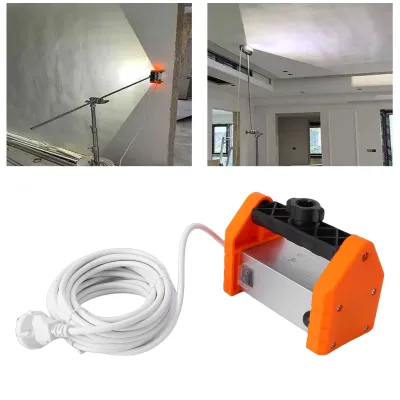
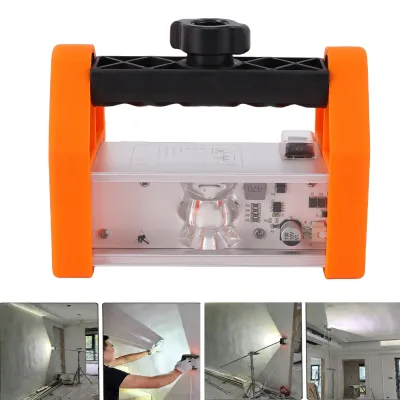
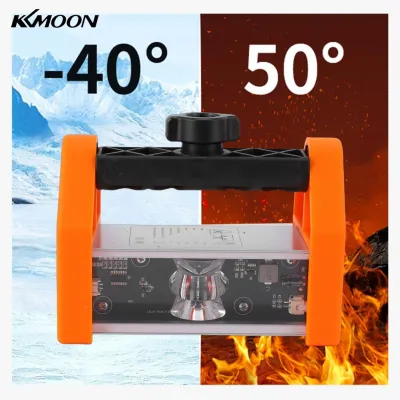
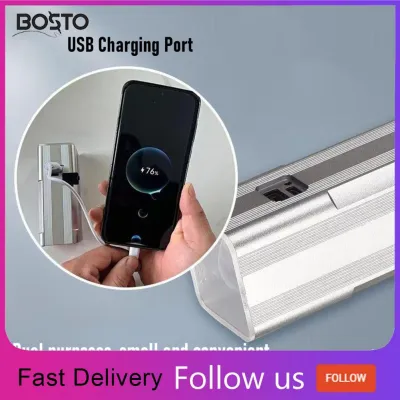
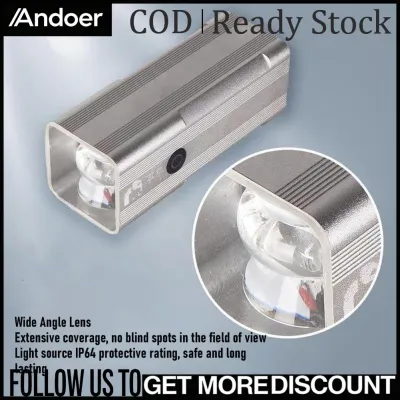
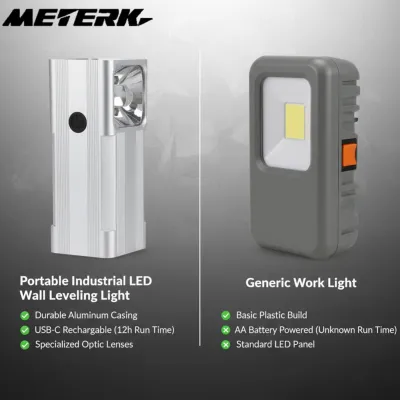
Prices are valid at publication and may change. Please refer to the product page for the latest price.
When shopping with a strict budget of ₱500, choosing between a clip-on model and a fixed USB-powered setup depends on your workflow. Clip-on lights offer excellent mobility, allowing you to move the light quickly along a wall, clamp it to ladder rungs, or attach it to temporary scaffolding as you work. Fixed USB-powered setups, which often feature longer cords or mounting brackets, are better suited for stationary sanding stations or continuous monitoring of a single wall section.
Working under a ₱500 limit means accepting certain compromises. You will need to prioritize raw brightness and clamp stability over premium features like aluminum alloy housings, stepless touch dimming, or high-capacity built-in batteries. A basic plastic lamp with a powerful spring clamp and a bright, single-mode LED bulb will serve you far better during an active renovation than a feature-rich but dim decorative desk lamp.
Essential Specs to Verify on E-Commerce Platforms
Navigating online marketplaces in the Philippines requires a critical eye, as product listings for budget lighting often feature exaggerated specifications. To find a tool that actually performs under real-world renovation conditions, you must verify several key technical details before clicking the buy button.

First, evaluate the brightness claims. Many sellers list astronomical lumen ratings that are physically impossible for a cheap USB-powered device. Instead of relying solely on the written description, look at the stated LED bead count and cross-reference this with user-uploaded photos in the review section. A lamp with 10 to 20 high-efficiency LED beads will generally provide sufficient brightness for close-range wall inspection. Additionally, check if the lamp offers an adjustable focus or a tight spot beam. A focused beam is highly effective for throwing light across a long wall surface, whereas a wide, diffused flood beam is less effective at casting the sharp shadows needed to reveal plaster flaws.
Second, verify the power delivery constraints. If you choose a fixed USB-powered model, check the length of the included cable. Many budget lamps come with cords shorter than one meter, which will severely limit your reach unless you plan to carry a portable power bank. For cordless, rechargeable clip-on models, pay close attention to the battery capacity, typically measured in milliampere-hours (mAh). A battery capacity of 1200mAh to 2000mAh is standard in this price range and should provide several hours of continuous use on a medium brightness setting. Ensure the charging port is robust; modern USB-C ports are generally more durable and less prone to loose connections than older Micro-USB ports, especially in dusty environments.
Third, assess the durability of the clip mechanism and the adjustable neck. The clamp must have a strong steel spring and a maximum jaw width of at least 3 to 5 centimeters to grip onto standard doors, ladder frames, or wooden studs. Look for listings that explicitly mention non-slip rubber or foam padding inside the clamp jaws to prevent the lamp from sliding off smooth surfaces. The neck of the lamp, whether a flexible metal gooseneck or a plastic ball-joint, must be stiff enough to hold the weight of the lamp head at extreme angles. In the warm, humid climate of the Philippines, cheap plastic joints can soften and droop, so a stiff, vinyl-coated metal gooseneck is highly preferred.
Maximizing Your ₱500 Budget and Avoiding Traps
To get the absolute most out of a ₱500 budget, you must separate essential functional features from unnecessary cosmetic extras. This focus ensures every peso goes toward light quality and tool durability.
Your must-have list should be short and practical: a strong, padded clamp, a stiff adjustable neck, and a bright, high-contrast light beam. Nice-to-have features like multiple color temperature modes, touch-sensitive control panels, or sleek, minimalist designs often add cost without improving performance. In fact, complex touch controls are more likely to fail when exposed to fine plaster dust than a simple, sealed physical toggle switch.
Always account for hidden checkout costs that can push your total purchase over the ₱500 limit. Many budget USB lamps do not include a wall adapter. If you do not already own a spare 5V USB charger, you will need to purchase one, which can add ₱100 to ₱200 to your total cost. Furthermore, pay attention to shipping fees, especially if you live outside major metropolitan areas like Metro Manila or Metro Cebu. Look for sellers that offer free shipping vouchers or bundle discounts to keep the final checkout price strictly under your budget.
To avoid falling for inflated specifications, make it a habit to ignore the seller’s polished marketing graphics and head straight to the customer reviews. Look for reviews written by local buyers that include real-world photos or videos of the lamp in use. Pay close attention to comments regarding battery life, clamp strength, and how warm the lamp gets during extended use. If multiple buyers complain that the clamp snapped on the first day or that the light is too dim to read by, move on to another listing.
Safe Setup and Handling During Renovations
Using temporary lighting in an active renovation environment requires careful handling to prevent damage to your newly finished walls and to avoid electrical hazards.
Protecting vulnerable surfaces is a primary concern when using heavy-duty clip-on lamps. Clamping a strong, spring-loaded plastic or metal jaw directly onto freshly painted plaster, delicate wallpaper, or soft wooden trim can leave permanent dents, scratches, or paint chips. To prevent this, always place a small barrier between the clamp and the surface. A folded microfiber cloth, a piece of thick cardboard, or a scrap of rubber drawer liner will distribute the clamping pressure evenly and protect your hard work.
Managing electrical safety is equally critical on dusty job sites. Fine dust from sanding plaster or drywall is highly conductive and can easily penetrate open USB ports, power switches, and wall adapters. To minimize risks, keep your power connections elevated off the floor where dust accumulates. If you are using a portable power bank, place it inside a clean, zip-top plastic bag with only the cable running out. Never use cheap, uncertified USB wall adapters that feel excessively hot to the touch, as they lack proper thermal overload protection and can pose a fire hazard in dusty, enclosed spaces.
Finally, monitor the thermal output of your lamp. Budget LED chips driven at high brightness generate significant heat, and cheap plastic housings rarely feature adequate aluminum heat sinks to dissipate this warmth. Running a budget lamp continuously for several hours can cause the internal components to degrade rapidly or even melt. To extend the lifespan of your light and prevent accidental burns, establish a routine of turning the lamp off for 10 minutes for every hour of continuous use.
Frequently Asked Questions (FAQ)
Can a standard USB desk lamp replace an inspection light?
While a standard USB desk lamp can provide temporary illumination, it is generally unsuitable for detailed wall inspection. Desk lamps are designed to diffuse light widely and evenly over a horizontal surface to reduce glare while reading. This diffused light pattern is the exact opposite of what you need for wall inspection, which requires a focused, directional beam to cast sharp shadows over vertical surface imperfections. Furthermore, standard desk lamps lack the heavy-duty, high-tension clamps and highly flexible goosenecks required to hold the light source perfectly flush against a wall at awkward angles or high elevations.
Which color temperature best reveals paint and plaster flaws?
For identifying physical surface defects like plaster ridges, sanding scratches, and hairline cracks, a cool white light (around 6000K to 6500K) is highly effective because it provides the sharpest contrast and cleanest shadows. However, if you are inspecting a finished paint job for color consistency, uneven coverage, or thin spots, a neutral white light (around 4000K) is often superior. Cool white light can sometimes wash out subtle yellow or beige pigment variations, whereas neutral light reveals the true color of the paint as it will appear under standard household lighting. Avoid warm white light (3000K or lower) for inspection tasks, as its soft, yellow glow tends to hide surface flaws and distort color perception.
Community discussion
Share your experience or ask a question. Comments are reviewed before publication.