
Choosing between a traditional banker lamp and a modern LED reading lamp for your bedside table comes down to a fundamental choice between classic, nostalgic style and highly customizable, ergonomic utility. While both fixtures can illuminate your evening reading, they serve different visual and practical needs. A banker lamp offers a timeless, vintage aesthetic with a focused downward glow, but its rigid structure limits how you can direct the light. Conversely, a modern LED reading lamp provides adjustable color temperatures, precise dimming, and flexible arms that let you target your book without disturbing a sleeping partner. To find the right fit, you must weigh your bedroom’s decor against your personal requirements for eye comfort, physical adjustability, and space.
Light Quality and Eye Comfort for Night Reading
The light source itself plays a critical role in how comfortable your eyes feel during late-night reading sessions. Traditional banker lamps rely on standard screw-in bulb sockets, typically matching E27 or E14 base specifications. This design gives you the freedom to choose your own bulb, but it also means the quality of light—including potential flicker and color rendering—depends entirely on the bulb you purchase. Because the classic green glass shade of a banker lamp is designed to soften and diffuse light outward while directing a bright pool downward, choosing a bulb with a high Color Rendering Index (CRI) is essential for keeping text sharp and legible.
Modern LED reading lamps, on the other hand, usually feature integrated LED arrays. These built-in light sources are engineered specifically for task lighting, often incorporating diffusion panels that spread light evenly across your book or e-reader. This integrated design minimizes harsh hotspots and reduces glare, which is a common cause of eye strain when reading glossy pages. Furthermore, high-quality modern LEDs are designed to operate with minimal to no flicker, providing a stable stream of light that allows your eye muscles to relax during extended reading sessions.
Products mentioned in this guide
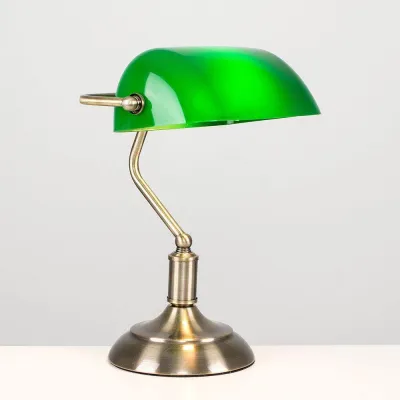
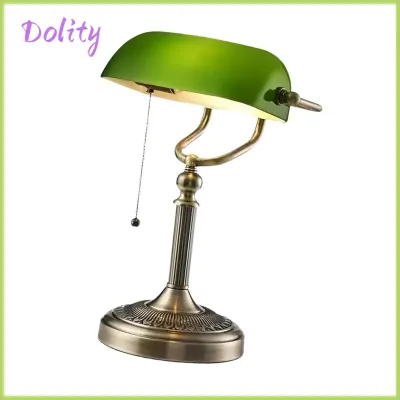
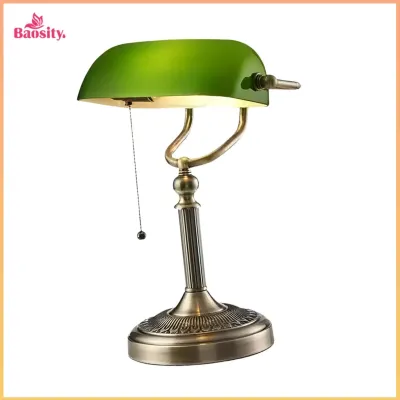
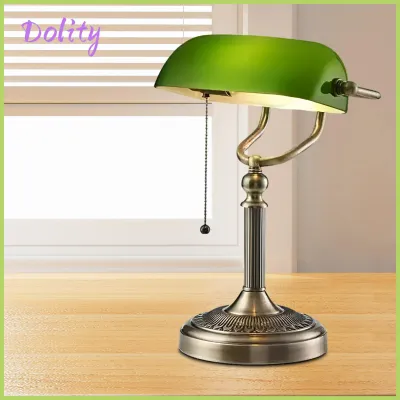
Prices are valid at publication and may change. Please refer to the product page for the latest price.
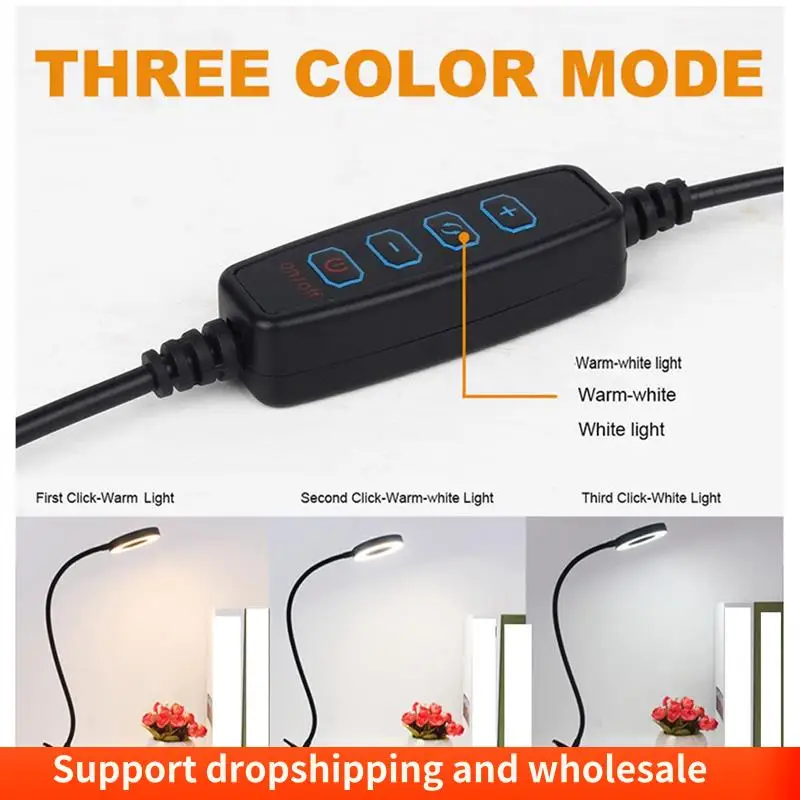
Color temperature is another vital factor for nighttime relaxation and sleep readiness. Reading under cool, blue-toned light (above 5000 Kelvin) can suppress melatonin production, making it harder to fall asleep after you close your book. Modern LED lamps often feature adjustable color temperatures, allowing you to switch to a warm, amber glow (around 2700 Kelvin) as bedtime approaches. While you can install a warm LED bulb in a banker lamp, you are generally locked into that single color temperature unless you physically swap the bulb or use a smart bulb controlled via a mobile application.
To prevent eye fatigue, you must also consider how light distributes across your reading area. A banker lamp creates a concentrated pool of light directly beneath its shade, which works well if you sit upright and hold your book directly under the lamp. However, if you prefer to recline or shift positions, this fixed light distribution can create high-contrast shadows in the rest of the room. Modern LED reading lamps often feature directional beams that can be angled precisely to illuminate your pages while keeping the surrounding environment dim, reducing the contrast glare that tires your eyes in a dark bedroom.
Functionality and Adjustability in Bedside Setups
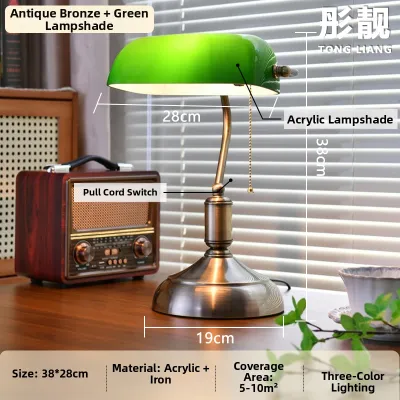
When reading in bed, the physical usability of your lamp determines how easily you can transition from reading to sleeping. Traditional banker lamps are highly rigid, featuring a heavy metal base, a fixed vertical stem, and a glass shade that pivots only slightly on a single axis. To adjust the light, you must physically move the entire lamp or shift your body to align with the downward beam. Operating the lamp typically involves pulling a classic metal chain, a tactile experience that many find satisfying but can be noisy or awkward to reach from a fully reclined position.

Modern LED reading lamps prioritize physical adjustability to accommodate various reading postures. Many models feature flexible goosenecks or multi-jointed articulating arms that allow you to pull the light source close to your book, push it away, or angle it to avoid reflections on tablet screens. This flexibility is particularly useful in shared beds, as you can direct the light away from your partner’s eyes.
Control mechanisms also differ significantly between the two styles. While banker lamps rely on simple on-off toggle switches or pull chains, modern LED lamps frequently incorporate touch-sensitive control panels, stepless dimming sliders, and even programmable sleep timers. These touch controls allow you to lower the brightness to a faint glow with a gentle tap, preventing a sudden burst of bright light from waking you up fully right before sleep. Some advanced models also feature USB charging ports built directly into the base, reducing bedside clutter.
Bedside table space and stability are practical considerations that should not be overlooked, especially in tropical climates where bedside tables might also hold water carafes or personal fans. Banker lamps require a flat, sturdy surface because their heavy brass bases and delicate glass shades make them top-heavy. Modern LED lamps often have a much smaller footprint, and some models even feature clamp-on bases that attach directly to your headboard, freeing up valuable nightstand space. Cord management is also simpler with modern lamps, which often use thin, lightweight USB cables rather than the thick, fabric-covered or heavy plastic cords common on traditional fixtures.
Aesthetics, Build, and Room Integration
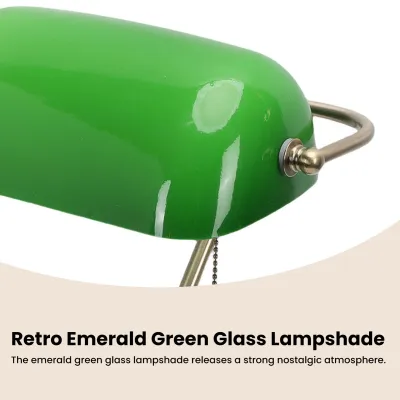
The visual appeal of your lamp can dramatically alter the ambiance of your bedroom. Banker lamps are celebrated for their classic, scholarly aesthetic, featuring polished brass, antique bronze, or chrome finishes paired with thick, emerald-green or amber glass shades. This traditional build adds a sense of warmth, history, and sophistication to a room, making the lamp a prominent decorative statement piece even when it is turned off. However, these premium materials require regular maintenance; in humid tropical environments, brass finishes must be checked periodically for tarnish, and the glass shade must be dusted carefully to maintain its classic luster.
Modern LED reading lamps lean toward minimalist, contemporary designs, utilizing lightweight materials such as anodized aluminum, matte plastics, and silicone. Their slim profiles are designed to blend into the background rather than stand out as a focal point, making them ideal for modern, minimalist, or industrial bedroom decors. While they may lack the historical charm of a banker lamp, their clean lines and neutral colors ensure they do not clash with existing furniture or wall colors.
Weight and stability are crucial safety factors when integrating these lamps into your bedside setup. A traditional banker lamp can weigh several kilograms, which helps prevent it from sliding but poses a significant hazard if knocked over. If you have pets or young children who might bump the bedside table, a heavy glass-shaded lamp requires careful placement away from the edges. Modern LED lamps are generally much lighter and less fragile, meaning an accidental bump is far less likely to result in broken glass or damaged furniture.
Decision Framework: Which Lamp Should You Choose?
To make the right choice for your nighttime reading routine, evaluate your primary goals, your bedroom’s layout, and your existing furniture.
Choose a banker lamp if you prioritize vintage aesthetics, appreciate the warm ambient glow of a classic design, and have a spacious, sturdy bedside table that can safely support a heavy fixture. A banker lamp serves as both a functional reading light and a beautiful decorative accent, provided you are comfortable with a fixed light position and a traditional pull-chain interface.
Choose a modern LED reading lamp if your priority is highly functional, ergonomic task lighting. This option is ideal if you need to adjust the light’s angle frequently, prefer customizable brightness and color temperatures to protect your eyes, or have limited bedside space. It is also the safer, more practical choice for busy households or shared bedrooms where targeted, glare-free light is essential.
Before purchasing a banker lamp, verify its electrical specifications to ensure it fits your needs. Check the manufacturer’s label for the maximum wattage limit and the base type (such as E27). To improve eye comfort, look for a banker lamp that is compatible with modern, dimmable LED bulbs, and pair it with an external plug-in dimmer switch if the lamp itself does not feature built-in dimming capabilities.
Frequently Asked Questions (FAQ)
Can I use an LED bulb in a traditional banker lamp?
Yes, you can use an LED bulb in a traditional banker lamp, provided the bulb’s base matches the lamp’s socket, which is commonly an E27 or E14 screw thread. Always check the manufacturer’s label on the lamp to verify the maximum wattage rating and voltage compatibility before installation. Using an LED bulb is highly recommended because LEDs generate significantly less heat than traditional incandescent bulbs. This lower heat output reduces the risk of thermal stress on the delicate glass shade, preventing potential cracking while lowering energy consumption. However, if you want to dim the light for comfortable night reading, you must ensure both the LED bulb you purchase is labeled as dimmable and your banker lamp is connected to a compatible dimming switch.
What color temperature is best for reading in bed at night?
For reading in bed at night, a warm white color temperature between 2700 Kelvin and 3000 Kelvin is highly recommended. Warm light closely mimics the soft glow of sunset, which helps signal to your brain that it is time to wind down, minimizing sleep disruption caused by blue light exposure. If you choose a modern LED reading lamp, check if the model offers adjustable color temperature settings. This feature allows you to use a brighter, cooler light (around 4000 Kelvin to 5000 Kelvin) for daytime tasks or focused work, and then easily transition to a soft, warm amber light as part of your nighttime wind-down routine.
Community discussion
Share your experience or ask a question. Comments are reviewed before publication.