
Quick Answer: Choosing the Right Billiard Light Style
Selecting the ideal billiard light for your home pool table in the Philippines requires balancing visual performance with the interior design of your game room. The best style for your space depends heavily on your room’s existing aesthetic—whether modern, industrial, or traditional—and the physical dimensions of your pool table. To achieve professional-grade playability, your lighting fixture must distribute illumination evenly across the entire slate bed without casting distracting shadows or creating harsh glare.
Multi-bulb rectangular pendant lights and linear LED fixtures stand out as the top functional choices for residential setups. These designs provide a continuous, elongated source of downward-focused light that covers the table from head rail to foot rail. Before finalizing any purchase, you must verify your ceiling height, the total length of the fixture, and local electrical compatibility. Ensuring these physical and technical specifications align with your room layout will guarantee a comfortable, shadow-free playing experience.
Sizing and Brightness Rules for Shadow-Free Play
Fixture Length vs. Table Size
To achieve consistent illumination across the playing surface, the physical length of your billiard light must correspond directly to the size of your pool table. A light that is too short will leave the corners and short cushions in deep shadow, making bank shots and corner pocket alignments incredibly difficult. Conversely, a fixture that is excessively long can spill light into the eyes of spectators sitting nearby.
Products mentioned in this guide
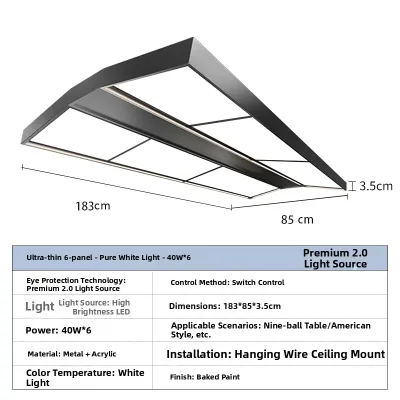
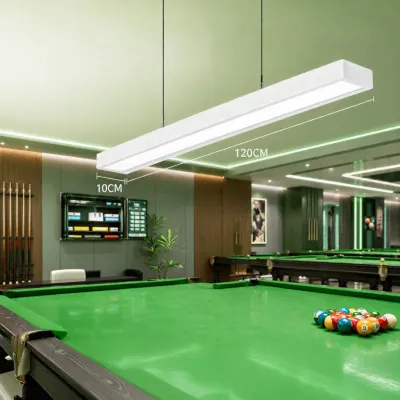
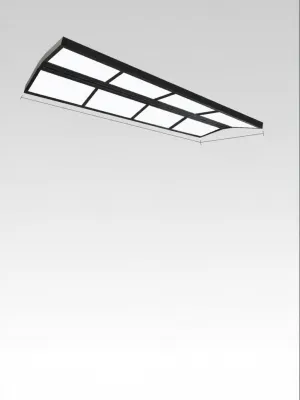
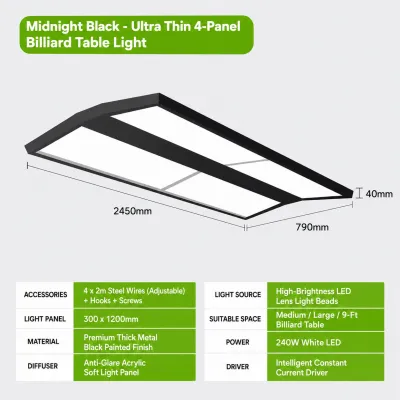
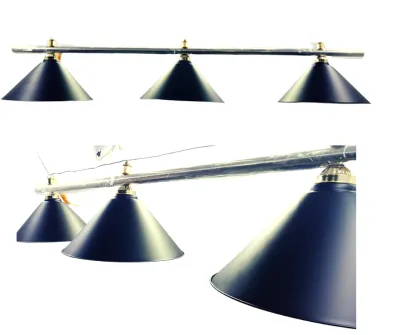
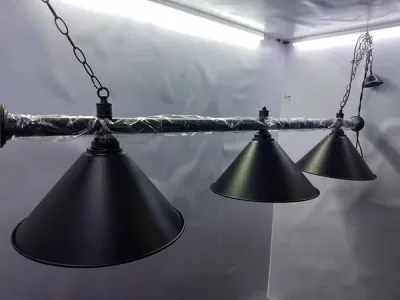
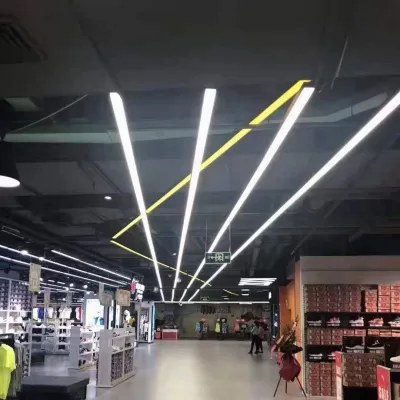
Prices are valid at publication and may change. Please refer to the product page for the latest price.

For a standard 7-foot home table, which is highly popular in space-conscious Philippine residences, a fixture measuring between 35 and 48 inches in length is ideal. If you own an 8-foot or 9-foot table, you will need a larger multi-bulb span or a linear fixture measuring 50 to 60 inches. This extended length ensures that the light source reaches past the foot spot and head spot, eliminating the dark zones that commonly plague amateur home setups.
Hanging Height
The height at which you suspend your billiard light determines both the spread of the illumination and the comfort of the players. The standard rule of thumb is to maintain a clearance of 30 to 36 inches between the bottom of the light shades and the felt playing surface. Hanging the light within this range strikes the perfect balance between maximizing light concentration on the table and keeping the light source out of your direct line of sight.
If you mount the fixture too high, the light beams will spread too wide, causing glare to spill into the eyes of players standing around the table. It also increases the likelihood that a player’s cue stick will cast a long, distracting shadow across the table during a high-angle shot. Hanging the fixture too low, on the other hand, restricts the light to a narrow pool in the center of the table and increases the risk of accidental cue strikes against the shades.
Brightness and Beam Angle
Unlike general ambient room lighting, billiard lighting must be highly focused and directed downward. This is achieved by utilizing fixtures with opaque or semi-opaque shades, such as metal or thick glass, which prevent light from escaping horizontally. The goal is to illuminate the table bed brightly while keeping the surrounding room relatively dim, which enhances focus and mimics a professional tournament environment.
When calculating brightness, aim for a total light output of approximately 2,000 to 4,000 lumens, depending on the size of your table. You should check the lumen rating of your bulbs or integrated LED strips rather than relying solely on wattage. A focused beam angle of 60 to 90 degrees from each bulb shade will ensure the light covers the table surface efficiently without washing out the rest of the game room.
Top Billiard Light Styles for Residential Game Rooms
Achieving the perfect home game room setup involves matching the functional requirements of pool table lighting with an aesthetic that complements your home. The Philippine market offers a diverse range of fixture designs, each bringing unique visual characteristics and performance trade-offs to your entertainment space.
Industrial and Metal Shade Designs
Industrial-style fixtures featuring metal shades are a timeless choice for home game rooms, offering a rugged, utilitarian aesthetic that pairs exceptionally well with exposed brick, concrete finishes, or rustic wooden tables. These fixtures typically consist of three or four metal domes suspended from a single black iron bar or chain system. Common finishes include matte black, brushed steel, and antique brass, allowing you to match other hardware in your home.
Functionally, the opaque nature of metal shades makes them outstanding at directing light strictly downward. Because no light can penetrate the sides of the metal domes, there is virtually zero horizontal glare, keeping the focus entirely on the pool table. Additionally, high-quality metal shades finished with rust-resistant powder coatings are highly durable and perform exceptionally well in the humid tropical climate of the Philippines, resisting the moisture-induced wear that can degrade cheaper materials over time.
Modern Minimalist and Linear LED Fixtures
For contemporary homes, modern townhouses, or high-rise condominiums in urban areas, bulky traditional light fixtures can sometimes overwhelm the space. Modern minimalist linear LED fixtures offer a sleek, low-profile alternative. These fixtures utilize slim aluminum or acrylic profiles housing integrated LED strips, presenting a clean, continuous line of light that matches minimalist, Scandinavian, or high-tech interior designs.
These low-profile designs are particularly advantageous for rooms with standard or slightly lower ceiling heights, as they do not crowd the vertical space. Beyond their space-saving form, integrated LEDs often provide superior Color Rendering Index (CRI) ratings. When choosing a linear LED fixture, look for a CRI rating of 90 or higher; this ensures that the colors of the billiard balls—such as distinguishing the dark blue 2-ball from the black 8-ball—are rendered with absolute accuracy under the light.
Traditional and Stained Glass Pendants
If your home features classic wooden architecture, formal dining areas, or a dedicated wood-paneled entertainment den, traditional stained glass pendants can serve as a stunning centerpiece. Often referred to as Tiffany-style lights, these fixtures feature intricate glass mosaics, warm color palettes, and classic brass or dark bronze hardware. They evoke the nostalgic charm of historic billiard parlors and upscale private clubs.
While visually striking, stained glass fixtures present a functional trade-off. The colored glass panels allow a portion of the light to diffuse horizontally, creating a warm, ambient glow throughout the upper half of the room. While this reduces harsh shadows, it also means that some of the light is directed away from the playing surface. To compensate for this lower direct brightness, you must carefully check the maximum wattage limits of the traditional sockets (usually E27) and select high-efficiency LED bulbs that can deliver sufficient downward lumens without exceeding the fixture’s thermal limits.
Multi-Bulb Rectangular and Track-Style Chandeliers
Multi-bulb rectangular chandeliers, featuring three to four individual light sources aligned on a rigid frame, remain the gold standard for serious players who demand tournament-grade lighting. By spacing multiple light sources evenly along the length of the table, these fixtures ensure that the head, center, and foot of the table receive identical levels of brightness. This uniform distribution is critical for executing precise bank shots and maintaining consistent depth perception across the entire slate.
Track-style or adjustable multi-bulb fixtures offer the added benefit of customization, allowing you to slide or angle individual light heads to target specific zones of your table. Because these fixtures span a significant distance and often feature heavy metal or glass components, they require robust ceiling mounting systems. They are best suited for permanent installations where the pool table’s position is fixed and will not be moved.
Electrical and Installation Safety Checks
Voltage and Socket Compatibility
Before purchasing any imported billiard light online or from local specialty retailers, you must verify its electrical specifications. The standard residential electrical system in the Philippines operates at 220V to 240V at a frequency of 60Hz. Many lighting fixtures sourced from overseas are wired for 110V systems; installing these without verifying compatibility can lead to immediate component failure, blown fuses, or electrical fires.
Ensure that the fixture’s internal wiring, sockets, and any included ballasts or LED drivers are explicitly rated for 220V/60Hz. If the fixture uses screw-in bulbs, standard E27 medium base sockets are the most common and widely available option in local hardware stores, making bulb replacement simple. Additionally, look for local safety certifications, such as the Import Commodity Clearance (ICC) sticker or the Philippine Standard (PS) mark, to ensure the fixture meets national safety regulations.
Weight and Ceiling Support
Billiard lights—especially multi-bulb metal chandeliers and heavy stained-glass fixtures—can weigh anywhere from 5 to 15 kilograms or more. Standard gypsum board, plasterboard, or acoustic tile ceilings commonly found in modern Philippine homes are not designed to support this type of suspended load. Attempting to mount a heavy fixture directly to the ceiling board using simple toggle bolts will eventually result in structural failure, potentially damaging your pool table or causing serious injury.
Any heavy pendant light must be anchored directly into a structural wooden ceiling joist, a metal light-gauge steel frame, or a concrete slab. If your ceiling is made of gypsum board, you or your installer must locate the underlying metal furring or wooden framing using a stud finder, or install an auxiliary support brace across the joists to distribute the weight safely. Never compromise on the structural integrity of your ceiling mounts.
Professional Installation Boundary
Installing a fixed-wire ceiling fixture involves working with live electrical circuits and, in many cases, working at significant heights. Before beginning any installation or maintenance work, you must isolate the power supply by switching off the corresponding circuit breaker at your home’s main panel board. Do not rely solely on the wall switch to cut the power, as improper original wiring could leave live current running to the ceiling box.
Because of the risks associated with high-voltage wiring, suspended loads, and potential structural modifications, it is strongly advised to hire a licensed electrician or a qualified professional installer. A professional will ensure that the junction box is rated for the fixture’s weight, that the electrical connections are properly insulated and grounded, and that any dimming switches are fully compatible with the fixture’s driver or bulbs. Do not attempt to guess wiring configurations or load limits yourself.
Clearance and Airflow
In the tropical climate of the Philippines, home game rooms are almost always equipped with ceiling fans or powerful air conditioning systems to maintain a comfortable playing environment. When planning the placement of your billiard light, you must carefully analyze the spatial relationship between the light fixture, the ceiling fan blades, and the air conditioning vents.
Suspended pendant lights must be positioned far enough away from ceiling fans to prevent the moving blades from clipping the light chains or shades. Furthermore, the powerful airflow from a nearby fan or split-type air conditioner can cause lightweight or chain-hung billiard lights to sway continuously. This movement creates shifting shadows across the pool table, which can be highly distracting during play and put unnecessary mechanical stress on the ceiling mount. If your room has a ceiling fan, consider utilizing a rigid stem mount rather than a chain suspension to keep the fixture completely stable.
Frequently Asked Questions (FAQ)
Can I use a regular dining chandelier over a pool table?
While you can physically hang a regular dining chandelier over a pool table, it is generally not recommended for optimal playability. Dining room chandeliers are designed to provide ambient, multi-directional light that disperses throughout the room to create a warm atmosphere. This omnidirectional light distribution often results in significant glare shining directly into the players’ eyes when they bend down to align a shot.
Furthermore, dining chandeliers rarely provide the concentrated, downward-focused beam necessary to eliminate shadows on the table bed. Without opaque shades to direct the light straight down, you will likely experience distracting shadows cast by the cushions, the balls, and your own cue stick, which can negatively affect your accuracy.
What is the best color temperature for billiard lights?
The ideal color temperature for billiard lighting ranges from neutral white (4000K) to cool daylight (5000K). This temperature range closely mimics natural daylight, which provides the high visual contrast and clarity needed to read the table accurately. Neutral and cool white light makes the vibrant colors of the billiard balls stand out and helps prevent eye strain during long playing sessions.
Warm white light (2700K to 3000K), which is common in cozy living areas, should be avoided over a pool table. Warm light can make the green or blue billiard felt look muddy and dull, reducing the contrast between the balls and the table bed. It also softens details, making it harder to judge precise distances and angles.
Do I need a dimmer switch for my game room lights?
A dimmer switch is not strictly necessary for playing billiards, but it is a highly valuable addition if your game room serves multiple purposes. When you are actively playing, you will want the light at full brightness to ensure a shadow-free table. However, when the table is not in use, dimming the billiard light allows it to function as a beautiful low-light accent, contributing to the overall mood of the room.
If you decide to install a dimmer switch, you must verify that both the light fixture and the bulbs you use are explicitly labeled as dimmable. Standard LED bulbs or cheap LED drivers paired with incompatible dimmer switches can cause annoying flickering, buzzing noises, or premature bulb failure. Always consult with a licensed electrician to ensure your dimmer switch matches the electrical load and technology of your billiard light.
Community discussion
Share your experience or ask a question. Comments are reviewed before publication.