
Condo living in dense urban centers across the Philippines offers unparalleled convenience, but it often comes with the challenge of limited square footage. When decorating a studio or a one-bedroom unit, floor space is premium real estate. Traditional lighting fixtures, such as bulky floor lamps or wide table lamps, require dedicated surface areas, which can quickly make a small room feel cluttered and cramped. Setting up the right ambient lighting requires a solution that delivers a cozy glow without occupying physical space.
To achieve the perfect balance of warmth and space efficiency in your condo, low-voltage, dimmable LED curtain Christmas lights in warm white (2700K to 3000K) are the ideal choice. By selecting strands with drop lengths tailored to your window or wall dimensions (typically 1.5 to 2 meters) and verifying that they carry local safety certifications like the Philippine Standard (PS) mark or Import Commodity Clearance (ICC) sticker, you can transform your living room or bedroom into a relaxing retreat. These vertical lighting solutions maximize your space while keeping your home safe and stylish.
Why Curtain Lights Are Ideal for Small Condo Spaces
Decorating a compact urban home requires a thoughtful approach to spatial design. Traditional string lights often concentrate bright points of light in a single, chaotic line, which can make a small room feel visually busy. Curtain lights solve this spatial puzzle by shifting the decorative focus upward. By hanging vertically against walls, windows, or room dividers, these lights utilize empty vertical space that would otherwise go unused. This keeps your floors, side tables, and shelves completely clear, preserving the precious flow of your living area.
Products mentioned in this guide
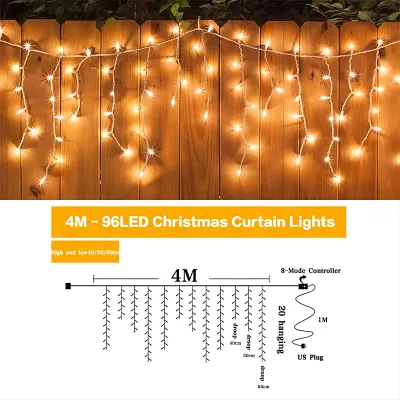
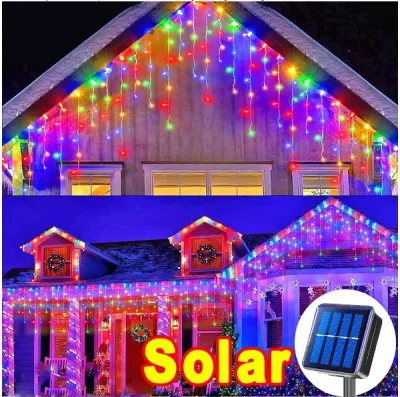
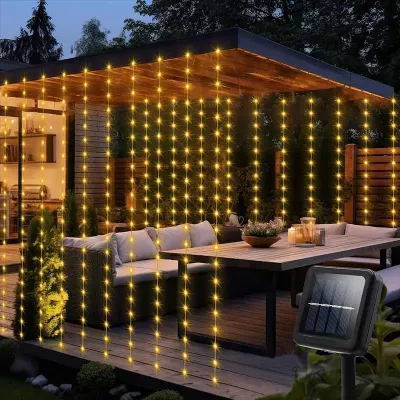
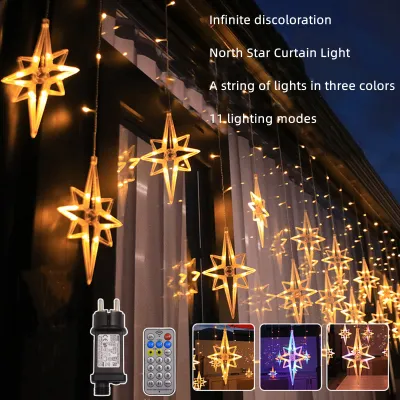
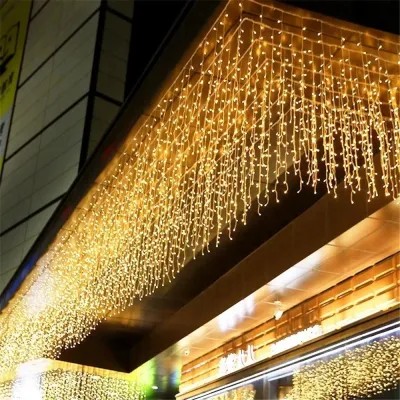
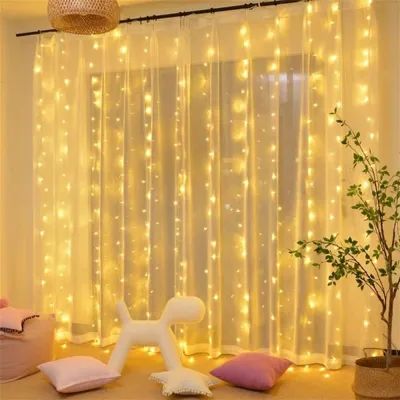
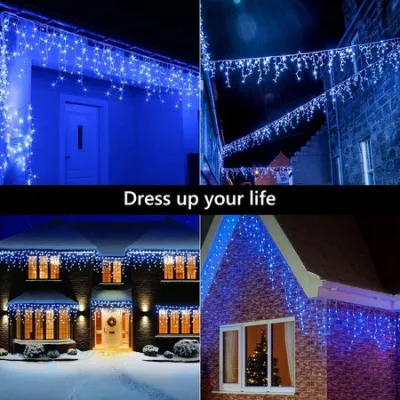
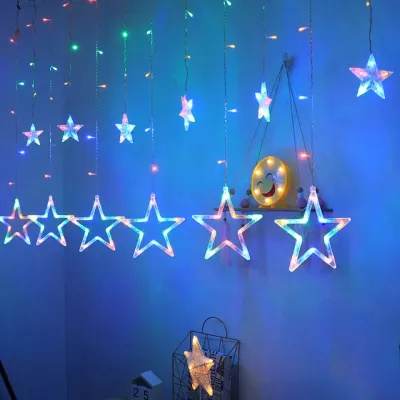
Prices are valid at publication and may change. Please refer to the product page for the latest price.
Beyond physical space savings, curtain lights offer unique visual benefits. The cascading, waterfall-like structure of curtain lights distributes low-intensity illumination across a wider surface area. This creates a soft, diffused wash of light that bounces gently off walls and glass, acting as an ambient backdrop rather than a harsh, direct glare. The result is an even distribution of light that softens the room\’s atmosphere.
From a design psychology perspective, vertical lighting elements can transform how you perceive a room\’s dimensions. Standard condo units often feature ceiling heights between 2.4 and 2.7 meters. Hanging long, vertical strands of light draws the eye upward, creating a subtle optical illusion that makes low ceilings feel loftier. The resulting glow softens the sharp corners of a small room, making the entire layout feel warmer, more open, and deeply relaxing.
Key Features to Choose for Comfortable Ambient Lighting
Selecting the right set of curtain lights requires looking past the holiday packaging and focusing on technical specifications. In a compact condo, minor details like color temperature, strand density, and power source can make the difference between a calming sanctuary and a distracting, high-glare environment.

Light Color Temperature and Bulb Type
The color temperature of your lights dictates the mood of your living space. For a cozy, relaxing ambiance, warm white lights are the undisputed standard. Look for products labeled with a color temperature between 2700K and 3000K. This range emits a gentle, golden glow that mimics the warm light of sunset, which naturally signals your body to relax and prepare for rest.
In contrast, cool white lights (typically 5000K or higher) emit a crisp, blue-toned light. While excellent for task-oriented areas like kitchens or home offices, cool white can feel clinical, harsh, and overly stimulating in a small bedroom or living room. Multicolor or rapidly transitioning lights are festive for active holiday parties, but they quickly become visually exhausting when used as everyday ambient lighting.
When comparing bulb types, modern light-emitting diodes (LEDs) are far superior to traditional incandescent bulbs. LEDs are exceptionally energy-efficient, consuming up to 90% less electricity, which keeps your monthly utility bills manageable. More importantly for tropical climates like the Philippines, LEDs emit virtually no heat. Traditional incandescent bulbs can become hot to the touch, adding unnecessary warmth to an air-conditioned room and posing a safety risk if they come into contact with lightweight fabrics.
Always prioritize safety by verifying that any lighting product you purchase carries the Philippine Standard (PS) quality mark or the Import Commodity Clearance (ICC) sticker. These certifications prove that the lights have been tested and approved for the local 220V/60Hz electrical grid, protecting your condo from electrical overloads, short circuits, or fire hazards.
Dimensions, Drop Length, and Strand Density
Before purchasing, take precise measurements of the window, sliding door, or wall segment you plan to decorate. Standard curtain lights are sold in various widths, typically ranging from 1.5 meters to 3 meters. Sizing the width correctly ensures the main horizontal cord fits perfectly across your space without sagging awkwardly or requiring bunched-up corners.
The drop length—the vertical distance the strands hang down—is equally critical. Standard drop lengths are usually 1.5 meters, 2 meters, or 2.5 meters. For a clean, modern aesthetic, select a drop length that stops just a few centimeters above your floor or windowsill. Avoid letting the delicate wire strands pool on the floor, as this makes them vulnerable to being stepped on, caught in vacuum cleaners, or accumulating dust and pet hair.
Strand density refers to how closely the vertical strings are spaced along the main horizontal wire. For comfortable ambient lighting, look for a density where the strands are spaced roughly 10 to 15 centimeters apart. If the strands are too close together, the cumulative brightness can become overwhelming for a small room. If they are spaced too far apart, the lighting effect can look sparse, uneven, and disjointed.
Power Source Options for Flexible Placement
How your curtain lights receive power affects both their placement versatility and the overall neatness of your room.
- USB-Powered Lights: These are highly recommended for modern condos. Operating on a low 5V system, they can be plugged directly into standard USB wall adapters, power banks, or even the USB ports on your television or computer. This low-voltage design is exceptionally safe, runs cool, and gives you the freedom to place lights in areas without immediate wall outlets by using a discreet power bank.
- Standard Plug-In Lights (220V): Direct plug-in models offer consistent, maximum brightness and do not require recharging or battery replacements. However, they limit your placement options to areas near wall outlets. If you choose this option, map out your outlet locations beforehand to avoid running long, unsightly extension cords across high-traffic floor areas, which creates a tripping hazard.
- Battery-Operated Lights: These offer the ultimate placement flexibility because they require no cords or outlets. They are ideal for temporary setups, decorative ladders, or partitions. The major trade-off is the recurring cost and environmental waste of replacing batteries. Additionally, in the high humidity of the Philippines, battery compartments left unused for extended periods are prone to corrosion, which can ruin the device.
Best Curtain Light Styles for a Cozy Bedroom
In the bedroom, lighting should serve as a bridge between your active daytime hours and restorative sleep. The goal is to create a low-glare, dreamy environment that promotes relaxation and respects your sleep hygiene.
For bedroom spaces, micro-LED curtain lights—often called copper wire or silver wire fairy lights—are an exceptional choice. Unlike traditional plastic-insulated string lights, micro-LEDs feature tiny, teardrop-shaped bulbs mounted directly onto ultra-thin, flexible metallic wires. These wires are incredibly lightweight and virtually disappear when the lights are turned off, maintaining a clean, minimalist bedroom aesthetic during the day.
To achieve a soft, ethereal glow, try layering your curtain lights behind sheer white or pastel curtain panels. Hanging the lights directly against the window glass or wall and draping the sheer fabric in front of them diffuses the individual bright points of light. This transforms the sharp pinpricks of light into a seamless, cloud-like wash of illumination that is incredibly soothing to look at before bed.
When selecting bedroom lights, look for models that include a dedicated remote control, a dimming function, and a built-in automatic timer. Being able to dim the lights down to 10% or 20% of their maximum brightness allows you to use them as a gentle nightlight. A timer function (such as 6 hours on and 18 hours off) ensures that even if you drift off to sleep with the lights on, they will turn off automatically, saving energy and preserving your deep sleep cycles.
Carefully plan your placement to avoid disrupting your daily routines. Draping the lights directly behind your bed\’s headboard creates a stunning, cozy focal point. If you choose to hang them over a window, ensure the installation does not block the smooth opening and closing of your primary blackout curtains. Blackout curtains are essential for blocking out urban streetlights, so your decorative lights should never compromise their functionality.
Before finalizing your setup, always read the manufacturer instructions for both the curtain lights and your curtain fabrics. Ensure that the materials are compatible and that the lights are approved for close contact with textiles.
Best Curtain Light Styles for a Welcoming Living Room
The living room is the social heart of your condo, serving as a space for relaxation, entertainment, and hosting guests. Your ambient lighting here needs to balance festive warmth with everyday practicality, adapting easily to different activities throughout the week.
For living rooms, wider and denser curtain lights are highly effective. These are particularly striking when framed against large sliding glass balcony doors or main accent walls. Because the living room is a larger space than the bedroom, you can opt for slightly larger LED bulbs (such as classic 5mm wide-angle LEDs) to provide a more substantial wash of light that can gently illuminate the entire room without the need for overhead fixtures.
When it comes to light settings, prioritize models that offer subtle, slow-transition modes. Avoid any rapid flashing, chasing, or strobe settings. In a compact condo living room, fast-moving lights can cause visual fatigue, headaches, and a chaotic atmosphere. Instead, look for gentle, non-intrusive modes like “slow fade,” “twinkle,” or “steady on.” These settings add a touch of dynamic movement without distracting you from conversations or television viewing.
Consider investing in smart or app-controlled curtain lights. These advanced systems connect to your home Wi-Fi or Bluetooth, allowing you to adjust brightness levels, customize schedules, and fine-tune the color temperature directly from your smartphone or voice assistant. You can easily transition the room from a bright, warm setting for hosting dinner guests to an ultra-dimmed, theater-like glow for movie nights.
To keep your living room looking polished, pay close attention to the wire color of the curtain lights. Choose clear or silver wires if you are hanging them against light-colored walls or sheer white curtains, as they will blend in seamlessly during the day. If you are framing the lights around dark metal window casings, dark wood paneling, or holiday greenery, opt for green or black wires to keep the installation looking clean and professional.
Typically, high-quality LED curtain lights range from ₱300 for basic USB-powered models to ₱1,500 or more for smart, app-controlled variations, making them an accessible upgrade for any interior budget.
Damage-Free Installation and Safe Storage Tips
Living in a condo, especially a rented unit, requires decorating mindfully to avoid damaging walls, window frames, or fixtures. Fortunately, because modern LED curtain lights are incredibly lightweight, you can achieve a professional-looking installation without drilling a single hole or driving a nail into your drywall.
Damage-Free Hanging Methods
To hang your lights safely and securely, rely on temporary, non-destructive hardware.
- Adhesive Hooks: Clear, damage-free adhesive hooks designed specifically for lightweight cables are the gold standard. Clean the mounting surface with rubbing alcohol first to ensure proper adhesion, apply the hook, and let the adhesive cure according to the package instructions before hanging the lights. When it is time to move or redecorate, these hooks pull away cleanly without stripping the paint or leaving sticky residue.
- Tension Rods: If you want to hang lights across a window frame or a recessed wall area, a simple spring-loaded tension rod is an excellent tool. You can drape the main horizontal wire of the curtain lights around the rod before wedging it into place, leaving your walls completely untouched.
- Curtain Rod Clips: If you already have a curtain rod installed, you can use small, clear plastic S-hooks or curtain clips to hang the lights directly alongside your existing curtains.
Never use heavy-duty mounting tapes, duct tape, staples, or nails. These methods can permanently damage your condo\’s paint, tear drywall paper, or worse, pierce the delicate insulation of the light wires, creating a severe electrical hazard.
Safety Clearances and Electrical Precautions
Before beginning any installation work, always isolate the power source by ensuring the lights are completely unplugged. Carefully inspect the entire length of the wire for any signs of fraying, exposed copper, or cracked plastic insulation. If you discover any damage, do not attempt to patch it with electrical tape; instead, discard the set and replace it.
Although high-quality LED lights run exceptionally cool, basic safety principles still apply. Ensure that the vertical strands are not tightly bunched, knotted, or pinched behind heavy furniture. There should always be a small amount of air circulation around the bulbs. Always cross-reference the safety guidelines provided by the light manufacturer with the care and fabric instructions of your curtains to ensure there are no conflicting recommendations.
Storage Advice for Humid Tropical Climates
The tropical climate of the Philippines presents unique challenges for storing electronics. High relative humidity can accelerate the degradation of copper wires, cause plastic insulation to become sticky or brittle, and lead to rust or corrosion on USB connectors and plug prongs.
When the holiday season ends, take the time to pack your lights away properly to ensure they function perfectly next year.
- Unplug and Cool: Ensure the lights are unplugged and have cooled completely to room temperature.
- Untangle and Coil: Do not bunch the lights into a ball. Instead, coil each vertical strand individually using a loose figure-eight pattern, securing each coil with a twist-tie or a piece of soft ribbon.
- Wrap the Main Cord: Once the individual strands are secured, gently wrap the main horizontal cord around a piece of clean, sturdy cardboard. This keeps the entire set organized and prevents tangles.
- Use Breathable Storage: Store the wrapped lights in a clean, breathable fabric organizer or a sturdy plastic container.
- Add Desiccants: Toss three or four silica gel packets into the storage container. These packets absorb excess moisture, protecting the metal components from rust and preventing the development of mold or musty odors on the wires during the humid off-season months.
Frequently Asked Questions (FAQ)
Can I leave curtain Christmas lights on all night in a condo?
While modern, high-quality LED curtain lights emit very little heat and are designed with safety in mind, it is not recommended to leave them running unattended all night. Continuous operation shortens the overall lifespan of the LEDs and consumes unnecessary electricity. To ensure absolute safety and energy efficiency, connect your lights to a built-in timer, a smart plug, or a 24-hour outlet timer. Programming the lights to turn off automatically after you go to sleep eliminates any minimal electrical risks and helps conserve power.
How do I prevent curtain lights from tangling when storing them?
The most effective way to prevent tangles is to use the cardboard wrap method. Cut a piece of stiff cardboard into a rectangular shape, cutting small notches along the top and bottom edges. Carefully coil each vertical strand of your curtain lights into an individual bundle secured with a twist-tie. Once all strands are bundled, wrap the main horizontal support cable around the cardboard, using the notches to keep the wires separated. Store the organized cardboard insert in a dry, cool location inside your condo, keeping the plug and remote control accessible for quick testing next season.
Community discussion
Share your experience or ask a question. Comments are reviewed before publication.