
Selecting the ideal LED wall sconces for narrow corridors in Filipino homes requires balancing space-saving physical profiles with comfortable, glare-free illumination. Because hallways in typical local residences are often compact and serve as high-traffic transitional zones, bulky fixtures can obstruct movement and make the space feel even tighter. The most effective solution lies in choosing low-profile, flush-mount, or slim-profile LED sconces that project minimally from the wall while casting light vertically or through diffused covers to soften the visual impact.
In tropical climates where homes often feature high humidity, open ventilation, and concrete wall construction, your choice must also account for durability and ease of installation. By focusing on fixtures that offer indirect lighting—such as uplights or downlights—you can visually expand a cramped corridor, turn a plain walkway into an elegant design feature, and ensure safe passage without the harsh glare of exposed bulbs.
Key Lighting Requirements for Narrow Hallways
Narrow corridors present unique lighting challenges because they lack the physical volume to disperse light naturally. In these transitional spaces, the primary goal is to provide adequate ambient illumination for safe navigation without over-lighting the area, which can create an uncomfortable, clinical atmosphere. Balancing this ambient light with subtle accent lighting helps define the pathway while preventing dark, shadowy corners that make a hallway feel even narrower.
Products mentioned in this guide
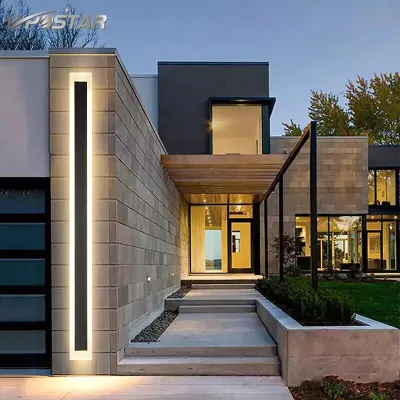
Prices are valid at publication and may change. Please refer to the product page for the latest price.
Ceiling height and corridor width dictate how light should be distributed to optimize the perception of space. For hallways with standard or low ceilings, utilizing uplighting sconces can draw the eye upward, reflecting light off the ceiling to create an illusion of height and openness. Conversely, if your main priority is pathway visibility, downlighting sconces direct illumination precisely where your feet land, keeping the upper walls softer and more relaxed.
Glare reduction is another critical factor when selecting fixtures for confined walking areas. Because you walk in close proximity to the walls in a narrow corridor, exposed LED chips or clear glass covers can cause uncomfortable eye strain. Opting for fixtures with integrated diffusers, frosted acrylic covers, or shielded designs ensures that the light is softly scattered, providing a gentle glow that is easy on the eyes as you move from room to room.
Design and Placement Strategies to Maximize Space
To maintain a clear and unobstructed walkway, the physical depth of your wall decoration is just as important as its light output. Standard building recommendations often suggest keeping wall-mounted fixtures within a shallow projection limit, typically under four inches (approximately ten centimeters) from the wall surface. Choosing flush-mount or ultra-slim LED sconces ensures that family members can carry laundry baskets or move furniture through the corridor without accidentally bumping into or damaging the lights.

Using vertical light washing techniques is a highly effective design strategy to visually expand a narrow hallway. Sconces that cast light both upward and downward—often referred to as up-and-down lights—create elongated vertical patterns on the wall surface. This visual effect breaks up the monotony of a long, blank wall, turning the lighting itself into a sophisticated form of wall decoration that adds depth and architectural interest.
Proper spacing is essential to avoid patchy, uneven lighting or a cluttered wall appearance. As a general guideline, space your sconces roughly six to eight feet (1.8 to 2.4 meters) apart along the length of the corridor, adjusting the distance to avoid placing fixtures directly opposite bedroom doors or structural columns. Installing the sconces at a mounting height of approximately 60 to 66 inches (1.5 to 1.7 meters) from the finished floor keeps the light source at a comfortable level, generally above direct eye line but low enough to illuminate the path.
Finally, the decorative style and finish of your sconces should harmonize with the broader interior theme of your home. Whether your home features a modern minimalist aesthetic, a warm rustic look, or a classic contemporary design, matching the fixture’s trim—such as matte black, brushed brass, or clean white—with nearby door hardware or trim creates a cohesive transition between rooms.
Essential Specifications to Check Before Buying
Before purchasing any LED wall fixture, verifying electrical compatibility and physical fit is crucial to avoid installation delays or safety hazards. In the Philippines, the standard household electrical supply is 220V at 60Hz, so you must confirm that any imported or locally sourced fixture is rated for this specific voltage. Additionally, check the dimensions of your existing utility boxes or junction boxes embedded in the wall to ensure the mounting bracket of the new sconce will fully cover the opening.
Given the tropical climate, humidity, and dust levels common in local households, paying attention to the Ingress Protection (IP) rating is highly recommended. If your corridor is located near an entryway, a semi-outdoor veranda, or an open-air airwell, look for fixtures with at least an IP44 rating to protect the internal electronics from dust buildup and moisture. For fully indoor, air-conditioned hallways, standard indoor ratings are sufficient, but regular dust protection remains a priority.
When evaluating integrated LED fixtures, check the manufacturer’s label for the estimated lifespan of the LED module and whether it is replaceable. While integrated LEDs offer incredibly slim designs and last for thousands of hours, some models do not allow for easy bulb replacement, meaning the entire fixture must be replaced if the light fails. If you plan to connect your corridor lights to a dimmer switch for adjustable evening ambiance, verify that both the LED driver inside the sconce and the wall dimmer switch are explicitly labeled as compatible to prevent flickering.
Lastly, always confirm the physical clearance and protrusion limits of the fixture against your local building guidelines. If your hallway is exceptionally narrow, even a minor protrusion can become a safety hazard for children or elderly family members. Measuring the exact clearance from the face of the wall to the outer edge of the fixture before finalizing your purchase ensures a safe, code-compliant installation.
Step-by-Step Selection Checklist for Your Corridor
To simplify your buying decision, start by measuring the exact width of your corridor and the available flat wall space between door frames. Use these measurements to calculate the maximum allowable depth of the fixture, ensuring that the remaining walkway width allows for comfortable, unhindered passage. A good rule of thumb is to select a fixture whose width and height are in proportion to your wall height, avoiding oversized pieces that dominate the narrow space.
Next, match the light output (measured in lumens) and the color temperature (measured in Kelvin) to the functional needs of your home. For a cozy, welcoming residential corridor, a warm white light of 2700K to 3000K is generally preferred, as it complements natural wood finishes and creates a relaxing atmosphere. Ensure the total lumen output across all fixtures provides uniform coverage without creating overly bright hotspots or dark, unlit zones.
Evaluate the installation requirements of your chosen model, noting whether it requires a hardwired connection to a recessed wall box or if it can be plugged into a nearby outlet. For fixed, hardwired installations—especially those involving concrete walls common in local construction—always isolate the power at the main circuit breaker before starting, follow the manufacturer’s wiring instructions precisely, and hire a licensed electrician to handle the physical wiring and mounting safely.
Finally, review the return policies, warranty terms, and after-sales support offered by the retailer or ecommerce platform. Because LED components can occasionally experience driver issues, having a reliable warranty of at least one to two years provides peace of mind. Confirming that the seller offers straightforward returns or replacement parts ensures that your investment in your home’s wall decoration remains protected over time.
Frequently Asked Questions (FAQ)
Can I install LED wall sconces in a corridor without existing wall wiring?
Yes, you can install LED wall sconces without pre-existing in-wall wiring by opting for plug-in models or using surface-mounted cable management systems. Plug-in sconces feature an external cord that plugs directly into a standard wall outlet, which can be neatly concealed using paintable plastic raceways or decorative metal conduits running down the wall. If you choose this route, ensure the cord is securely fastened and positioned away from foot traffic to prevent tripping hazards, and consult a professional if you decide to run permanent wiring through concrete walls later.
How do I clean and maintain LED wall fixtures in dusty hallway areas?
To maintain optimal light output and preserve the finish of your sconces, perform routine visual inspections and gentle dusting at least once a month. Always turn off the power switch and allow the fixture to cool completely before cleaning. Use a dry, soft microfiber cloth to gently wipe away dust from the housing and the acrylic diffuser; avoid using harsh chemical solvents, abrasive pads, or excessive water, which can damage protective coatings or seep into the electrical components. If you notice any flickering or internal wiring issues, discontinue use immediately and contact a qualified technician.
Community discussion
Share your experience or ask a question. Comments are reviewed before publication.