
An illuminated unboxing experience turns a simple present into a theatrical event. When a recipient lifts the lid of a gift box, a warm, ambient glow immediately elevates the perceived value of the item inside, creating a memorable moment that stands out. To achieve this effect safely and beautifully, selecting the right light for gift box integration is essential. The ideal illumination source must be compact, lightweight, battery-operated, and—most importantly—thermally safe for use in enclosed spaces.
While there are dozens of novelty lighting options on the market, three primary categories excel in gift packaging: micro LED fairy lights, flexible LED strip lights, and mini novelty lamps. Each type offers distinct structural advantages, ranging from the delicate, starry drape of copper wire lights to the clean, modern architectural lines of flexible strips. Choosing between them requires balancing the structural integrity of your packaging, the fragility of the gift, and the specific visual atmosphere you want to project.
By understanding the physical and electrical characteristics of these lighting options, you can design an illuminated gift box that is both visually stunning and completely safe. Let us explore the essential criteria for selecting these lights, evaluate the three primary lighting types, and establish best practices for a seamless, secure setup.
Products mentioned in this guide
Prices are valid at publication and may change. Please refer to the product page for the latest price.
What to Look for in Gift Box Lights
Selecting a light for gift box placement requires a different set of priorities than standard home decor lighting. Because the light source will operate inside a confined, often airtight space filled with potentially combustible materials like paper shred, cardboard, or fabric, safety and physical dimensions must guide your decision. A mismatch in power output or physical bulk can ruin the presentation or, in worst-case scenarios, create a fire hazard.
Size and Flexibility
The physical footprint of both the light source and its power supply is your first constraint. Standard gift boxes have limited clearance, meaning heavy or bulky wiring will crowd the gift or crush delicate packaging fillers. Look for micro-gauge wiring—such as ultra-thin copper or silver-plated wire—that can bend easily around corners without rebounding. Equally important is the battery pack’s dimensions; a dual coin-cell battery holder (typically using CR2032 batteries) measures roughly 5 cm by 2.3 cm and weighs under 20 grams, making it exceptionally easy to conceal beneath a layer of shredded paper or behind a cardboard insert. Larger AA or AAA battery packs provide longer runtimes but require dedicated structural compartments to prevent them from shifting and damaging the gift.
Brightness and Diffusion
In an enclosed box, excessive brightness is a common mistake. High-lumen lights can blind the recipient upon opening, washing out the colors of the gift and creating harsh, unflattering shadows. For a standard gift box, a total light output of 5 to 30 lumens is generally sufficient to create a soft, inviting glow. Color temperature also plays a massive role in the emotional impact of the presentation. Warm white lights (ranging from 2700K to 3000K) evoke a cozy, premium, and intimate feeling, making them ideal for jewelry, artisanal goods, and romantic gifts. Cool white lights (5000K to 6500K) offer a crisp, modern, and energetic aesthetic that works well with tech gadgets or contemporary corporate gifts.
Power Source and Safety
Never use line-voltage (plug-in) lights inside a gift box. Low-voltage, battery-operated direct current (DC) systems—typically operating at 3V to 4.5V—are the only safe choice for this application. At these low voltages, the risk of electrical shock is virtually nonexistent, and heat generation is minimal. Look for LED products that feature built-in auto-timer functions (such as a 6-hours-on, 18-hours-off cycle). A timer ensures that if the gift box remains closed or forgotten for a few days, the batteries will not drain completely, and the light source will not run continuously in an unventilated environment.
Fairy Lights: The Classic Choice for Delicate Gifts
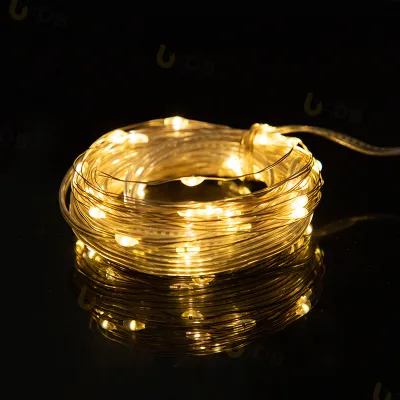
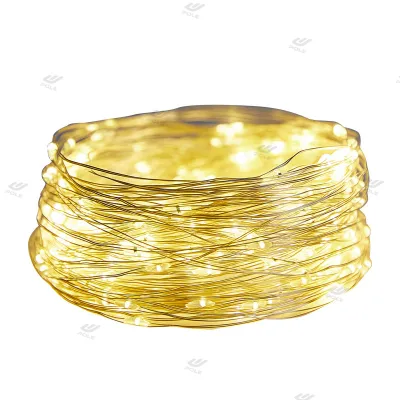
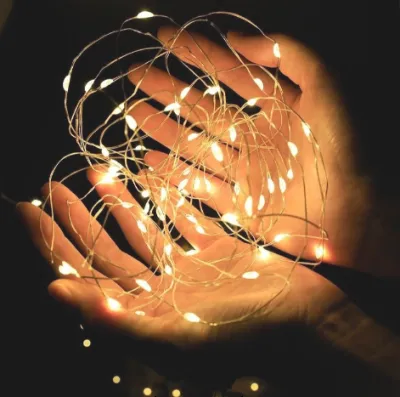
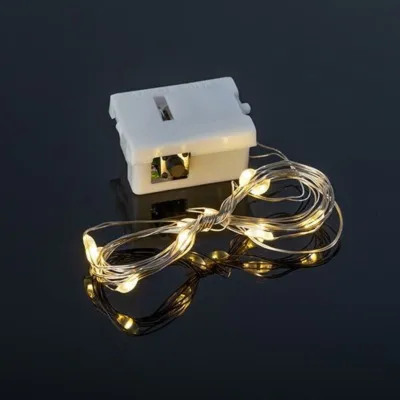
Micro LED fairy lights, often called starry lights, are the most popular and versatile choice for gift box illumination. Consisting of tiny, droplet-like LED chips mounted directly onto thin, insulated metallic wires, these lights offer an unmatched level of flexibility. They can be woven, coiled, or draped effortlessly, conforming to almost any shape or packaging layout.

Best Applications
Fairy lights are highly suited for delicate, lightweight, or irregularly shaped gifts. They excel when woven through the synthetic fur of plush toys, wrapped gently around premium perfume bottles, or nestled into jewelry presentation boxes. Because the wire is virtually weightless, you can drape it directly over fragile items like dried flower arrangements or handmade ceramics without any risk of crushing or scratching the surfaces.
Advantages
The primary advantage of fairy lights is their extreme physical adaptability. The thin copper or silver wire holds its shape once bent, allowing you to position individual LEDs precisely where you want them to highlight specific features of the gift. Furthermore, because the LEDs are incredibly small, they generate almost no detectable heat, even after hours of continuous operation. The ultra-compact size of coin-cell battery packs allows them to be tucked into the smallest corners, keeping the focus entirely on the illuminated gift rather than the power source.
Limitations
While highly versatile, fairy lights are structurally delicate. The micro-fine wires can experience metal fatigue and snap if bent back and forth repeatedly at sharp angles. Additionally, the coin-cell batteries (CR2032) commonly used to power these ultra-compact strings have a limited capacity, usually providing peak brightness for only 12 to 24 hours of continuous use. The battery compartment latches on budget-friendly fairy lights can also be fragile, requiring gentle handling during assembly to prevent the cover from popping open.
Buying Checklist
- Insulated Wires: Ensure the copper or silver wire has a clear lacquer insulation coating to prevent short circuits if it touches metallic gift items.
- Secure Battery Compartment: Look for battery packs with a secure slide-lock or a small screw closure, which prevents the batteries from falling out during transit.
- Appropriate Length: Opt for shorter string lengths (typically 1 to 2 meters with 10 to 20 LEDs) to avoid excess wire cluttering the box.
- Water-Resistant Strings: If your gift includes live florals or items that may condensation-dampen, select strings rated IP44 or higher (though the battery pack must remain dry).
Flexible LED Strips: For Structured or Lined Boxes
For gifts that demand a clean, modern, and highly structured presentation, flexible LED strip lights offer an excellent alternative to fairy lights. Built on a flexible printed circuit board (PCB) with a flat profile, these strips deliver a continuous, linear architectural glow that frames the gift with professional precision.
Best Applications
Flexible LED strips are ideal for rigid, heavy-duty packaging such as wooden keepsake boxes, hinged presentation cases, or cardboard boxes lined with velvet or satin fabric. They are perfect for framing high-end electronics, premium spirits, leather goods, or collector’s items where the goal is to create a high-impact, showcase-style border around the product.
Advantages
Unlike the scattered, starry effect of fairy lights, LED strips provide a uniform, directional beam of light. Most flexible strips come with a pre-applied adhesive backing, allowing you to mount them permanently along the inner rim or underside of the box lid for a seamless, hidden installation. This creates a clean “halo” effect where the light source itself remains invisible, but the gift is bathed in an even, professional wash of light.
Limitations
LED strips have a much thicker profile and are significantly less pliable than copper wire fairy lights. They cannot be bent laterally or wrapped around tight, three-dimensional shapes; attempting to bend a strip at a sharp 90-degree angle can crack the internal copper circuitry, causing a portion of the strip to fail. Instead, you must use specialized solderless corner connectors or fold the strip gently in a non-illuminated gap. Additionally, LED strips typically require more power, meaning they are usually paired with bulkier AA or AAA battery packs that are harder to hide.
Buying Checklist
- Cutting Intervals: Verify that the strip features clear cutting marks (usually every 2.5 to 5 cm) so you can trim it to the exact perimeter of your box.
- Adhesive Quality: Look for strips utilizing high-quality backing tape to ensure the lights do not peel off and sag onto the gift over time.
- Strip Width: Choose narrow strips (typically 5mm or 8mm wide) to ensure they fit comfortably along the inner lip of the box without obstructing the lid.
- Low-Profile Battery Box: Seek out slimline AAA battery packs with built-in on/off switches for easier concealment.
Mini Novelty Lamps: Adding a Themed Focal Point
Instead of hiding the light source, mini novelty lamps embrace it as an active design element. These small, self-contained, battery-operated light fixtures—shaped like stars, mushrooms, clouds, or custom acrylic panels—serve a dual purpose: they illuminate the unboxing experience and remain with the recipient as a functional keepsake.
Best Applications
Mini novelty lamps are highly effective for themed gift boxes, holiday presents, children’s birthday packages, and curated gift hampers. For example, a celestial-themed gift box containing a night sky journal and a mug can be anchored by a small, glowing star lamp. The lamp acts as a central decorative piece that ties the entire theme together.
Advantages
These lamps add immediate visual interest and narrative depth to a gift. Because they are designed as standalone decorative objects, they feature robust, protective outer casings (often made of soft, BPA-free silicone or durable matte plastic) that protect the internal LEDs and batteries. Once the unboxing is complete, the recipient can place the lamp on their nightstand, desk, or bookshelf, extending the sentimental value of your gift for years to come.
Limitations
Because novelty lamps are rigid, three-dimensional objects, they occupy a fixed amount of physical space inside the box. You cannot route them around other items, and they must be positioned carefully so they do not shift and crush more delicate gifts during shipping. Furthermore, because the light is concentrated in one specific object rather than distributed throughout the box, you may end up with uneven lighting, leaving some corners of your gift box in deep shadow.
Buying Checklist
- Stable Base: Ensure the lamp has a flat, stable bottom so it remains upright inside the box during presentation.
- Accessible Switch: Look for a power switch that is easily accessible (ideally on the side or top, or via a remote) so you can turn it on right before sealing the box without disrupting the arrangement.
- Safe Materials: If gifting to families or children, verify that the lamp shell is made of non-toxic, heat-resistant, and shatterproof materials.
- Soft Glow: Select lamps with frosted or diffused covers to prevent harsh glare in close quarters.
Quick Comparison: Which Light Fits Your Gift Box?
To help you determine the best lighting solution for your specific packaging project, this quick-reference matrix compares the key operational and physical characteristics of each lighting type:
| Feature / Dimension | Micro LED Fairy Lights | Flexible LED Strips | Mini Novelty Lamps |
|---|---|---|---|
| Best Box Type | Lightweight cardboard, paper boxes, flexible mailers | Rigid wooden boxes, hinged lids, fabric-lined cases | Large themed hampers, sturdy gift crates, deep boxes |
| Flexibility | Extremely high; wraps, drapes, and holds shapes | Moderate; bends along one axis, requires care at corners | None; rigid, fixed three-dimensional shape |
| Heat Output | Negligible; remains cool to the touch indefinitely | Very low; minor warmth over extended runtimes | Negligible; insulated by protective outer shell |
| Battery Pack Size | Ultra-compact (coin-cell); easy to hide in shred | Bulkier (AA/AAA); requires structural hiding | Self-contained within the lamp's base |
| Installation Ease | Simple; drape or weave loosely through packaging | Moderate; requires precise measuring, cutting, and sticking | Simple; place upright as a central design piece |
| Visual Effect | Delicate, starry, whimsical, scattered points of light | Modern, clean, architectural frame or halo glow | Focused, thematic, localized accent light |
Decision Guidance
When matching a light to your packaging, consider the structural strength of the box material. Flimsy paper or thin cardstock boxes can easily sag under the weight of a heavy AA battery pack or a rigid novelty lamp; for these delicate containers, lightweight copper-wire fairy lights with a coin-cell pack are the only logical choice. Conversely, if you are working with a heavy wooden chest or a thick, rigid cardboard box, the structural integrity allows you to securely mount a flexible LED strip along the inner lid or place a solid novelty lamp right in the center without compromising the box’s shape.
Safety and Setup Tips for Illuminated Gifts
When placing electrical components inside a closed packaging environment, safety must always come first. While modern low-voltage LEDs are incredibly safe, improper installation or low-quality components can still lead to issues. Following structured setup guidelines ensures your illuminated gift remains a delightful and hazard-free surprise.
Heat Management
Although LEDs are highly efficient, they still convert a small percentage of energy into heat. In an airtight, insulated cardboard box filled with paper shred, even minor heat buildup can dry out delicate gifts or, in extreme cases of component failure, pose a safety risk. Always perform a simple thermal test before finalizing your gift: install the chosen light setup inside an identical, empty box filled with your packaging materials, turn the lights on, and let them run for 30 minutes. Open the box and check the components; the wires, LEDs, and battery pack should feel cool or only slightly warm to the touch. If any part feels hot, discard the lighting string immediately and source a lower-wattage alternative.
Battery Safety in Humid Environments
In tropical, high-humidity climates like the Philippines, moisture can quickly accumulate inside sealed containers, accelerating battery oxidation and contact corrosion. To prevent this, ensure that the battery compartment is tightly sealed. If you are preparing the gift box several days in advance, keep a small, food-safe silica gel packet hidden beneath the packaging shred near the battery pack; this will absorb ambient moisture and protect the metal terminals from rusting. Always use fresh, high-quality batteries from the same manufacturer, and never mix old and new batteries in the same pack, as this can cause cell imbalance, leakage, or overheating.
Operational Convenience
To maximize the surprise factor, you want the lights to be active the exact moment the recipient opens the box. However, turning the lights on and sealing the box hours before delivery can drain the batteries. To solve this, consider three practical approaches:
- The Pull-Tab Method: Keep the plastic battery insulator tab in place, but route a thin ribbon attached to the tab through a tiny, inconspicuous slit in the back of the box. Label the ribbon "Pull Me" so the recipient activates the circuit right before opening, or pull it yourself just before hand-delivery.
- Magnetic Reed Switches: For advanced crafters, install a small magnetic reed switch along the box lid and rim. When the lid is closed, the magnet breaks the circuit; when the lid is lifted, the circuit completes, and the lights instantly turn on automatically.
- Remote-Controlled Units: Use a lighting kit that includes a small infrared or radio-frequency remote control. This allows you to activate the lights discretely from across the room just as you hand the box to the recipient.
Frequently Asked Questions (FAQ)
Can I use plug-in lights inside a gift box?
No, you should never use plug-in (line-voltage) lights inside a closed gift box. Standard wall-outlet lights operate at 220V in the Philippines, which carries a severe risk of electrical shock and significant heat generation if a wire is pinched or damaged. Furthermore, routing a thick power cable out of a closed box prevents the lid from sealing properly, ruins the clean aesthetic of the presentation, and creates a physical tripping hazard. For all enclosed packaging applications, stick exclusively to low-voltage, battery-operated LED lights.
How long will battery-operated gift box lights last?
The operational lifespan depends entirely on the battery type and the number of LEDs on the string. A standard 2-meter fairy light string powered by two CR2032 coin-cell batteries will typically shine at maximum brightness for 12 to 24 hours, gradually fading over the next 24 hours. In contrast, setups powered by three AA or AAA batteries can easily run for 48 to 80 hours continuously. To ensure the lights are shining brightly when the gift is opened, utilize built-in timer functions or use a pull-tab to keep the batteries completely fresh until the unboxing moment.
Will the lights damage paper or fabric inside the box?
High-quality, low-voltage LED lights will not scorch, discolor, or damage standard packaging materials like tissue paper, cardboard, silk, or velvet, as they emit virtually no infrared or ultraviolet radiation. However, you must be careful with the adhesives used to mount the lights. Strong permanent tapes or hot glue can melt delicate synthetic fabrics or tear paper linings if the recipient tries to remove the lights later. For delicate interiors, secure the wiring using low-tack double-sided tape, removable glue dots, or simply weave the lights naturally through the packaging materials without any adhesive.
Community discussion
Share your experience or ask a question. Comments are reviewed before publication.