
To make a compact condo bedroom feel twice its actual size, a full-length movable mirror measuring 60 to 70 inches in height and 20 to 30 inches in width offers the most effective balance of scale and utility. This specific size range provides a complete head-to-toe reflection to maximize the “space-doubling” optical illusion, while maintaining a compact footprint that will not block narrow walkways, wardrobe doors, or bed clearance. By choosing a mirror within these dimensions, you can transform a cramped sleeping area into a bright, open sanctuary without sacrificing valuable square footage.
In typical Philippine high-rise developments, where studio and one-bedroom units often range from a cozy 22 to 35 square meters, every inch of floor space is highly contested. A movable mirror is an exceptionally versatile design tool because it does not require permanent wall mounting, making it ideal for renters or those who like to reconfigure their layouts. However, achieving the perfect spacious effect depends heavily on selecting the correct dimensions, understanding your specific room layout, and placing the mirror strategically to capture light.
The Ideal Dimensions for a Small Condo Bedroom
Selecting the right dimensions for a movable mirror involves finding the sweet spot where the glass is large enough to trick the eye into perceiving more depth, yet compact enough to remain physically unobtrusive. For a standard condo bedroom, the ideal height range is 60 to 70 inches (approximately 152 to 178 cm). A height of at least 60 inches ensures that the mirror functions as a true full-body mirror, capturing both the floor and a significant portion of the vertical wall space. This continuity of the floor-to-ceiling plane is what creates the illusion of an adjacent room, effectively doubling the visual depth of your sleeping quarters.
Products mentioned in this guide
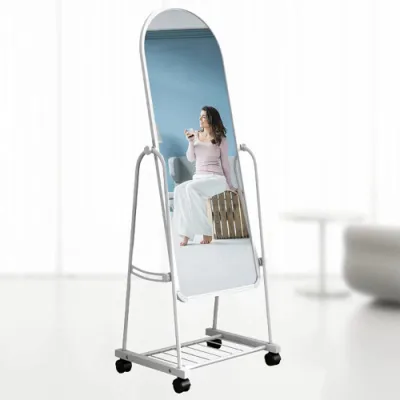
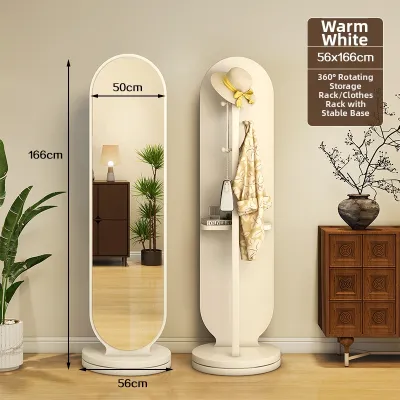
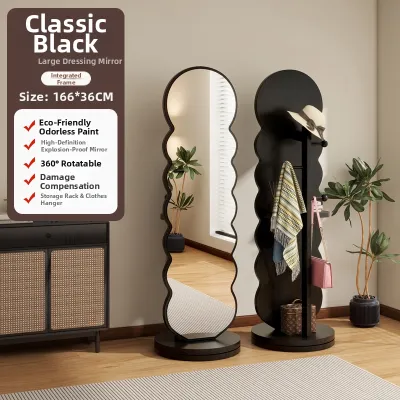

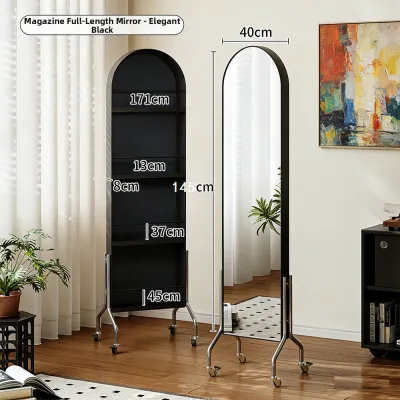
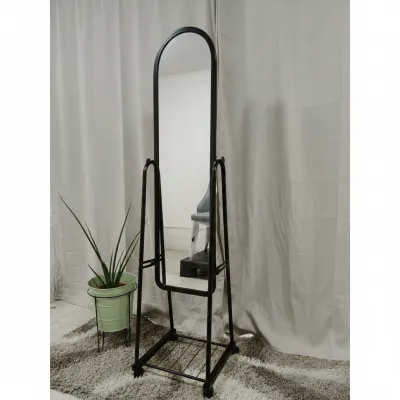
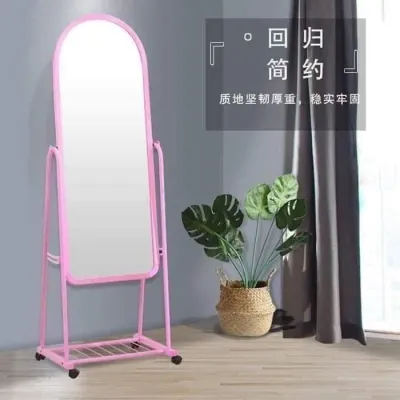
Prices are valid at publication and may change. Please refer to the product page for the latest price.
The ideal width range for a compact bedroom mirror is 20 to 30 inches (approximately 51 to 76 cm). While a wider mirror reflects more of the room, anything exceeding 30 inches can quickly overwhelm a small space, making the wall feel crowded and leaving little room for other essential furniture. Conversely, a mirror narrower than 20 inches behaves more like a vertical stripe, slicing the wall visually rather than expanding it. A width within the 20-to-30-inch range provides a generous reflection window while leaving ample breathing room on either side.
To maintain visual harmony, apply the “two-thirds rule” when positioning your mirror near other furniture. If you place the mirror next to a bed, dresser, or study desk, the mirror’s height should ideally be roughly two-thirds the height of your wall, or its width should be approximately two-thirds the width of the adjacent furniture piece. This proportional scaling prevents the mirror from looking like an accidental addition and ensures it integrates seamlessly with the room’s existing design lines.
Frame thickness also plays a critical role in how heavy the mirror feels in a small room. Thick, ornate wooden or plaster frames can dominate a compact space, drawing attention to the mirror’s physical borders rather than the reflection inside. For a small condo bedroom, frameless designs or ultra-thin metal frames (such as those made from lightweight aluminum or matte black steel) are highly recommended. These minimal borders reduce the visual weight of the mirror, allowing the edges to blend into the background and enhancing the “invisible portal” effect.
Matching Mirror Size to Your Specific Layout
Before purchasing a movable mirror, it is essential to measure your bedroom’s physical footprint to ensure the mirror does not interfere with daily movement. In tight condo layouts, a mirror that juts out too far can block the swing of closet doors, prevent the main bedroom door from opening fully, or restrict the walking path around the foot of the bed. Use painter’s tape to outline the proposed footprint of the mirror on your floor and wall; this simple step allows you to visualize the physical space the mirror will occupy before making a commitment.

Vertical space is another crucial factor, especially in Philippine condos where ceiling heights typically range from 2.4 to 2.7 meters. A tall, vertically oriented mirror draws the eye upward, shifting the focus away from a limited floor plan and making low ceilings feel significantly loftier. By selecting a mirror that utilizes this vertical real estate, you can create a sense of grander architectural scale.
Narrow or Galley-Style Bedrooms
In narrow or galley-style bedrooms, where the walking path between the bed and the opposite wall is highly restricted, horizontal clearance is your primary constraint. For these layouts, select a taller, narrower mirror, ideally 18 to 24 inches wide and at least 65 inches tall. This slender profile allows you to place the mirror in tight pathways or beside a wardrobe without obstructing traffic. The elongated shape acts as a vertical column of light, stretching the perceived height of the room while keeping the floor path completely clear for easy movement.
Square or Open-Plan Studio Bedrooms
For square bedrooms or open-plan studio units where the sleeping area merges with the living space, you have more freedom to experiment with width. In these layouts, opt for a wider leaning mirror, measuring 30 inches or more. A wider mirror serves as a strong visual anchor or focal point, reflecting a broader cross-section of the entire living zone. This wide-angle reflection helps to blur the boundaries between different functional areas, making the entire studio feel like a singular, expansive, and cohesive home.
Choosing the Right Type of Movable Mirror
Movable mirrors come in several distinct structural styles, each offering unique advantages and trade-offs regarding floor usage, flexibility, and space perception.
- Leaning floor mirrors: These mirrors rest directly on the floor and lean against the wall at a slight angle. They are highly favored for their relaxed, contemporary aesthetic and their ability to create deep perspective. The subtle backward tilt projects the reflection slightly upward, making the ceiling feel higher. However, because they lean, the base of the mirror must sit 6 to 12 inches away from the wall, which consumes a small portion of your floor footprint.
- Freestanding mirrors with easel bases: Equipped with a built-in fold-out stand, these mirrors do not rely on wall support. This makes them incredibly flexible, allowing you to place them diagonally across corners or move them freely around the room. The primary trade-off is the footprint; the easel stand extends backward, requiring 12 to 18 inches of depth. This can be a limiting factor if you have very little clearance behind your bedroom door or next to your bed.
- Rolling or wheeled mirrors: These models feature lockable casters on the base, making them exceptionally practical for dynamic, multi-purpose condo spaces. If you use your bedroom for morning yoga, content creation, or need to tuck the mirror away when hosting guests, a wheeled model can be effortlessly repositioned. Ensure the casters are high-quality and lock securely to prevent the mirror from shifting during daily use.
- Frameless vs. thin metal frames: Frameless mirrors offer the most seamless look, acting as a direct extension of the room. If you prefer a framed design, thin metal frames made of aluminum or powder-coated steel provide excellent structural integrity without adding bulk. In the humid tropical climate of the Philippines, high humidity can cause mirror backing to degrade over time, leading to dark spots around the edges (desilverisation). To prevent this, look for mirrors featuring copper-free backing or specialized moisture-resistant coatings, which offer greater durability in humid environments.
Strategic Placement for Maximum Space Illusion
Where you place your movable mirror is just as important as its size. To maximize the illusion of space, you must use the mirror to manipulate light and sightlines.
- Reflecting natural light: The most effective way to brighten a small condo bedroom is to position your mirror adjacent to or directly opposite a window. Many high-rise condos feature single-aspect windows, leaving the back corners of the room dark and shadowy. By placing a mirror where it can catch incoming sunlight, you bounce natural light deep into those dark corners, instantly making the entire room feel larger, airier, and more inviting.
- Creating depth: Avoid placing your mirror directly facing a blank wall, as this simply reflects flat drywall and reinforces the room's physical limits. Instead, angle the mirror to reflect an open doorway, a view of a leafy balcony, or a beautifully styled corner of the room. This creates a visual "escape route" for the eye, making it feel as though there is another room or outdoor space extending beyond the glass.
- Corner placement strategies: Corners are often underutilized in small bedrooms. Placing a freestanding or easel-backed mirror diagonally across a corner softens the sharp 90-degree angles of the room. This blurs the physical boundaries of the space, making the room's perimeter feel ambiguous and creating a cozy, light-filled dressing nook.
- Leaving a small gap: When positioning a leaning mirror, avoid pressing the side of the frame flush against adjacent furniture or side walls. Leaving a small gap of 1 to 2 inches of negative space around the mirror frame creates a subtle shadow line. This shadow adds physical depth, making the mirror look like a deliberate architectural feature rather than a piece of furniture squeezed into a tight spot.
Common Sizing and Placement Mistakes
To ensure your movable mirror successfully enhances your bedroom, avoid several common sizing and placement pitfalls that can inadvertently make your space feel smaller or more cluttered.
- The "too small" trap: Many condo owners opt for small, vanity-sized mirrors or short 48-inch mirrors to save space. However, these compact sizes fail to reflect enough of the floor and ceiling planes to create a convincing spatial illusion. Instead of expanding the room, a small mirror chops up the wall visually, drawing attention to the room's limited dimensions.
- Pathway blocking: Choosing a mirror with an excessively wide base, a bulky wooden frame, or a sprawling tripod stand can turn a beautiful decor piece into a daily tripping hazard. In tight condo circulation zones, prioritize mirrors with streamlined, low-profile bases that sit flush against the wall or tuck neatly into corners.
- Reflecting clutter: A mirror doubles whatever is in its field of view. If your mirror is positioned to reflect an open closet filled with clothes, a laundry basket, or a desk piled with paperwork, it will double the visual noise in your bedroom. This added clutter can make a small room feel twice as chaotic and cramped. Always aim the mirror toward clean, minimalist areas of your room.
- Ignoring the reflection angle: A leaning mirror that is tilted too far backward will only reflect your ceiling and light fixtures, while one tilted too far forward will focus solely on the floor. Neither angle helps to create depth. Ensure your leaning mirror is angled gently—typically between 5 and 10 degrees—so that the reflection captures the mid-level horizon of your room, mimicking a natural doorway view.
Safety and Stability in Compact Spaces
Because movable mirrors are free-standing or leaning, ensuring their physical safety and stability is paramount, especially in compact, high-traffic bedrooms.
- Anti-tip considerations: Even though these mirrors are designed to be movable, leaning models must be properly secured to prevent accidental tipping. Always install non-slip rubber pads on the bottom edge of the frame to prevent the mirror from sliding outward on polished floor tiles, laminate, or hardwood. For optimal safety, utilize a discreet safety wall strap or anchor tether. These tethers allow you to move the mirror slightly when needed but prevent it from falling forward if bumped.
- Tempered or shatterproof glass: In a small bedroom where you are constantly moving around the bed, opening wardrobe doors, or changing clothes near the mirror, the risk of accidental impact is higher. Prioritize mirrors made with tempered glass or those featuring a shatterproof protective membrane. If the glass does suffer a hard impact, the membrane will hold the broken pieces together, preventing sharp shards from scattering across your floor.
- Checking weight and base stability: Before purchasing, check the manufacturer's weight specifications and stability ratings. A high-quality movable mirror should have a weighted base or a sturdy, low-center-of-gravity frame that resists tipping from minor bumps, drafts from balcony doors, or vibrations from nearby sliding doors. Always follow the manufacturer’s assembly and care instructions to maintain the structural integrity of your mirror over time. If you opt for a modern movable mirror with integrated LED backlighting that requires fixed electrical wiring, always isolate the power before installation and consult a qualified professional to ensure compliance with local electrical safety standards.

Community discussion
Share your experience or ask a question. Comments are reviewed before publication.