
Finding the right light for billiard table setups in the Philippines requires balancing precise illumination with the challenges of a tropical environment. High-quality play relies heavily on visual clarity, where even a slight shadow can cause a player to misjudge an angle or miss a crucial pocket. Achieving the perfect setup involves understanding how different fixture styles, technical specifications, and local conditions—such as high humidity and standard 220V electrical grids—affect your lighting’s performance and structural safety.
To secure the best playing experience, you must prioritize a fixture that delivers uniform, glare-free illumination across the entire slate bed. While classic aesthetics remain popular, modern energy-efficient options offer compelling alternatives that reduce heat output in non-air-conditioned spaces. By selecting the appropriate style, verifying electrical compatibility, and installing the fixture at the correct height, you can transform your game room into a professional-grade arena.
Quick Guide: Choosing the Right Billiard Table Light
When selecting a billiard table light, your primary goal is to eliminate shadows and prevent direct glare from distracting the players. The golden rule of billiard lighting is to ensure that the entire playing surface, including the cushions and pockets, is bathed in uniform brightness. Achieving this requires a fixture that matches the proportions of your table and projects light directly downward rather than scattering it across the room.
Products mentioned in this guide
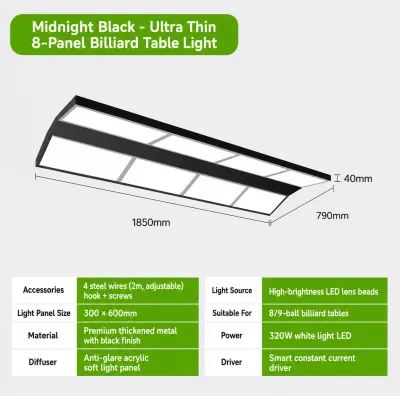
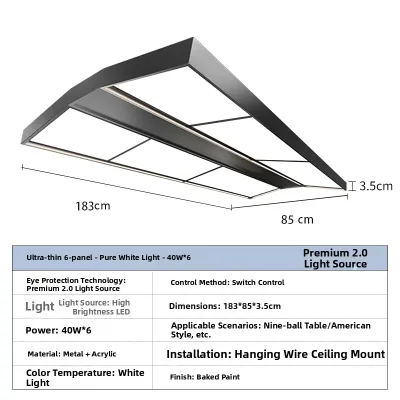
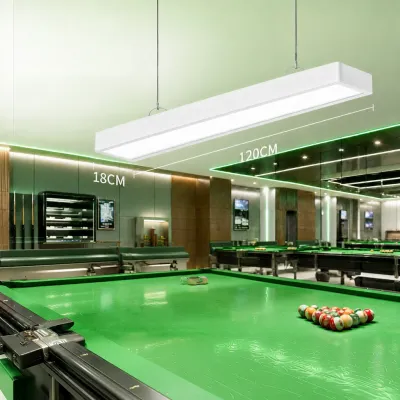
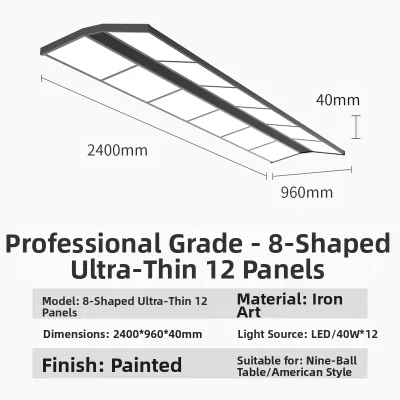
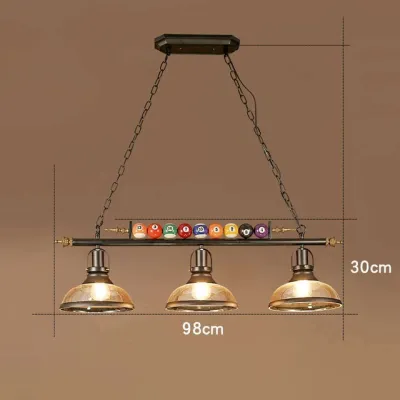
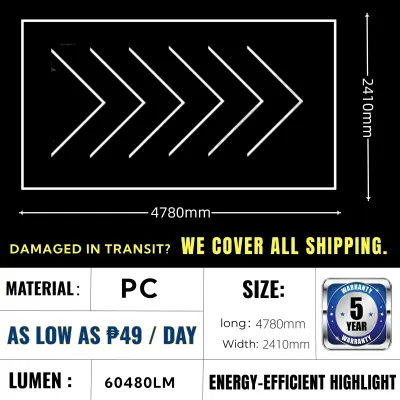
Prices are valid at publication and may change. Please refer to the product page for the latest price.
In the Philippine market, you will generally choose between traditional multi-shade fixtures and modern linear LED pendants. Traditional multi-shade lights use individual cones to direct light downward, offering a classic pool-hall aesthetic. Modern linear LEDs provide a continuous, low-profile beam that is highly energy-efficient and generates minimal heat—a significant advantage in tropical climates.
Before making a purchase, always verify that the fixture is fully compatible with the local 220V/60Hz electrical grid. Many imported fixtures are designed for 110V systems and will require rewiring or driver replacements to operate safely. If you prioritize a classic, nostalgic atmosphere, a multi-shade bar is your best option; if you prefer a sleek, low-maintenance setup with even light distribution, a modern linear LED is the ideal choice.
Top Styles of Pendant Lights for Pool and Billiard Tables
Matching your lighting fixture to your room’s aesthetic and your table’s dimensions is key to creating an inviting and functional game space. Different styles offer distinct advantages in terms of light spread, weight, and ease of maintenance.

Traditional Multi-Shade Fixtures
Traditional multi-shade fixtures are the iconic choice for classic pool rooms, featuring three or four individual shades mounted along a single metal bar. These shades, usually made of metal, thick glass, or poly-resin, direct light downward in overlapping cones. This overlapping pattern is highly effective at minimizing shadows cast by the balls during play.
In terms of aesthetics, these fixtures provide a nostalgic, professional pool-hall character that complements wooden tables and classic interior designs. Locally, these fixtures are available in broad price bands, typically ranging from ₱6,000 to ₱18,000 depending on the quality of the metalwork and shade materials. They use standard E27 bulb sockets, giving you the flexibility to choose your preferred LED bulbs.
However, traditional multi-shade fixtures are relatively heavy, often weighing between 6 and 15 kilograms. This weight requires robust ceiling support and careful installation. Additionally, because they require multiple individual bulbs, you must check the maximum wattage rating per socket to prevent overheating, especially if you opt for older halogen bulbs instead of modern, cooler LEDs.
Modern Linear and LED Pendants
Modern linear pendants utilize integrated LED technology to deliver a single, continuous line of light across the table. This design eliminates the “scalloped” light patterns that can occur between the individual shades of traditional fixtures, providing exceptionally uniform coverage from one end of the slate to the other.
These fixtures are highly energy-efficient and feature a slim, low-profile design that works well in contemporary homes and minimalist spaces. Because they do not use standard bulbs, they generate very little heat, helping keep the playing area comfortable during long sessions. High-quality linear LED fixtures in the Philippines generally range from ₱8,000 to ₱25,000.
When choosing an integrated LED linear light, it is critical to verify the Color Rendering Index (CRI). A CRI of 90 or higher is recommended to ensure that the colors of the billiard balls are vivid and easily distinguishable under the light. One limitation to consider is that if the integrated LED driver or diodes fail, you may need to replace the entire fixture or seek professional electronic repair, unlike socketed fixtures where you simply swap out a bulb.
Industrial and Single Dome Shades
Industrial-style single dome shades offer a rugged, minimalist look that fits well in loft apartments, concrete-walled game rooms, or modern industrial spaces. These fixtures typically feature wide, bowl-shaped metal or concrete shades that suspend individually from the ceiling.
While a single wide dome can illuminate a small area effectively, a single fixture is rarely sufficient for a standard billiard table. To achieve adequate coverage, you will typically need to install a series of two or three matching dome pendants spaced evenly along the length of the table. These individual fixtures are often priced between ₱3,000 and ₱8,000 each.
If you choose this style, be aware of the risk of dark spots and edge shadows on larger tables, such as 9-foot professional slates. To mitigate this, ensure the domes are wide enough and positioned high enough to allow the light beams to overlap. You must also use high-lumen bulbs with a wide beam angle (at least 120 degrees) to ensure the rails and pockets are fully illuminated.
Essential Buying Criteria for Homes in the Philippines
To ensure your billiard light performs well and lasts for years in local conditions, you must evaluate several technical specifications and environmental factors before buying.
Illumination, Lumens, and Glare Control
When planning your lighting, focus on total lumen output rather than bulb wattage. Wattage only measures energy consumption, whereas lumens measure the actual amount of visible light produced. For a standard billiard table, you should aim for a total light output of 3,000 to 4,500 lumens at the table surface to ensure clear visibility.
If you are using a three-shade fixture, this means installing three bulbs that produce roughly 1,000 to 1,500 lumens each (typically a 10W to 14W LED bulb per socket). For linear fixtures, check the manufacturer’s specifications to ensure the integrated LED array meets this total lumen threshold.
Glare control is equally critical for player comfort. Because players frequently bend over the table and look across its surface, direct exposure to bare bulbs will cause eye strain and temporary visual impairment. Choose fixtures with deep shades that completely hide the bulb from side angles, or select units equipped with frosted glass diffusers or white inner-shade coatings that soften and scatter the light downward.
Size, Proportions, and Table Coverage
Your pendant light must be proportioned correctly relative to your billiard table to ensure complete coverage without interfering with active play. A fixture that is too short will leave the corners and pockets in deep shadow, while a fixture that is too long may get in the way of high-angle cue shots.
As a general rule, the physical length of your light fixture should be between 50% and 70% of the length of your table’s playing surface. Below is a quick reference guide for standard table sizes:
- 7-Foot Table (Playing surface approx. 78" x 39"): Choose a fixture or multi-shade bar between 39 and 54 inches in length.
- 8-Foot Table (Playing surface approx. 88" x 44"): Choose a fixture or multi-shade bar between 44 and 61 inches in length.
- 9-Foot Table (Playing surface approx. 100" x 50"): Choose a fixture or multi-shade bar between 50 and 70 inches in length.
Using these proportions ensures that the light spreads naturally to the outer cushion edges without spilling excessively into the eyes of spectators sitting nearby.
Voltage, Electrical Safety, and Humidity
The standard electrical grid in the Philippines operates at 220V to 240V at 60Hz. Because many specialized billiard lights are imported from countries using 110V systems, you must verify that the fixture’s internal wiring, sockets, or LED drivers are rated for 220V/60Hz. Connecting a 110V-only driver directly to local power will cause immediate failure and presents a serious fire hazard.
Additionally, the tropical climate of the Philippines brings high relative humidity, which can quickly corrode cheap metals. Untreated steel or low-grade iron fixtures will rust and tarnish within a few seasons, especially in coastal areas or well-ventilated rooms without continuous air conditioning. Prioritize fixtures constructed from powder-coated steel, anodized aluminum, solid brass, or durable glass.
When purchasing electrical components locally, look for safety certification marks such as the Philippine Standard (PS) mark or the Import Commodity Clearance (ICC) sticker. These certifications verify that the wiring, insulation, and connections have been tested to withstand local voltage fluctuations and thermal limits.
Installation Height and Placement Best Practices
Hanging your billiard light at the correct height is essential to balance wide light distribution with physical safety. The industry standard is to position the bottom edge of the light shades between 30 and 36 inches above the playing surface (the slate bed, not the floor). This placement generally positions the bottom of the fixture roughly 60 to 65 inches above the finished floor.
If you hang the fixture lower than 30 inches, you run a high risk of players striking the shades with their cue sticks during break shots or high-angle massé shots. Hanging the fixture higher than 36 inches will cause the light to spread too wide, reducing the brightness on the table and casting distracting glare into the eyes of standing players and spectators.
For rooms with exceptionally high ceilings, you will need to use adjustable chains, aircraft cables, or downrods to suspend the light at the correct height. Do not attempt to compensate for a high mounting position by simply installing brighter, higher-wattage bulbs, as this will only increase harsh glare and heat.
Before beginning any installation or modification of your ceiling junction box, always isolate the power by turning off the main circuit breaker. Heavy multi-shade or solid wood linear fixtures require robust structural support. Do not hang a heavy fixture directly from a plastic electrical box; instead, secure the mounting bracket directly to a wooden ceiling joist or use heavy-duty steel toggle bolts in concrete ceilings. If you are unsure of your ceiling’s structural capacity or the state of your home’s wiring, stop immediately and consult a qualified professional electrician.
Maintenance and Cleaning for Long-Lasting Performance
Dust, humidity, and airborne grime can accumulate quickly on pendant lights, especially in open-air or fan-cooled game rooms. Over time, a layer of dust on the inside of a shade or diffuser can reduce your light output by up to 30%, making the table appear dim and muddy.
To keep your fixture performing at its best, establish a regular cleaning routine. Always turn off the wall switch and the main circuit breaker, then allow the bulbs to cool completely before touching the fixture. Attempting to clean a hot bulb or wet-wiping an active electrical fixture can cause thermal shock to the glass or lead to electrical short circuits.
For glass, metal, and acrylic shades, use a clean, dry microfiber cloth to remove loose dust. For deeper cleaning, slightly dampen the cloth with water and a drop of mild, non-abrasive dish soap. Never use harsh chemical solvents, ammonia-based glass cleaners, or abrasive scrubbing pads, as these can strip away protective lacquers, powder coatings, or the reflective white paint on the inside of the shades.
For fabric or felt-covered shades, use a soft-bristle brush or a vacuum cleaner with a brush attachment to gently lift dust without crushing the fibers. During your routine cleaning, take a moment to inspect the bulb sockets, mounting chains, and exposed wiring for any signs of heat damage, brittle plastic, or loose connections, replacing any degraded parts immediately to maintain electrical safety.
Frequently Asked Questions (FAQ)
Can I use a regular dining chandelier over a billiard table?
Regular dining room chandeliers are designed to provide ambient, decorative light that radiates outward and upward to illuminate faces and the surrounding room. This design is highly unsuitable for billiard play, where you require focused, downward-directed light. A dining chandelier will typically cast distracting shadows from the cushions onto the slate, leave the corners of the table dark, and expose players to intense, direct glare when they bend down to align a shot.
Do I need a dimmer switch for my billiard table light?
While a dimmer switch is not useful during gameplay—where you always want maximum, uniform brightness—it can be highly beneficial when the table is idle. Dimming the light allows the fixture to act as low-key ambient decor, highlighting the table as a centerpiece without overwhelming the room. If you choose to install a dimmer, you must verify that both your light bulbs and the fixture’s internal LED driver are explicitly rated as dimmable to prevent flickering, buzzing, or premature component failure.
What is the best color temperature for billiard table bulbs?
The ideal color temperature for billiard play is between 4000K (neutral white) and 5000K (daylight white). This range provides a clean, crisp light that enhances visual contrast, making it easier to distinguish between different ball colors and see the exact contact points. Avoid warm white bulbs (below 3000K) as they cast a yellow hue that distorts ball colors and makes green felt look dull. Conversely, avoid extremely cool white bulbs (above 6000K) which emit a harsh blue light that causes rapid eye fatigue during long playing sessions.
Community discussion
Share your experience or ask a question. Comments are reviewed before publication.