
Quick Guide: What Makes a Solar Light Effective for Security?
Securing a residential property requires lighting that remains reliable during sudden power outages, intense monsoon downpours, and prolonged periods of overcast weather. A high-quality solar wall light serves as an autonomous security measure, operating independently of the electrical grid to illuminate dark perimeters, gates, and side pathways. Unlike decorative garden lights that offer soft, ambient glows—often under 100 lumens—true security lighting must deliver high-intensity illumination to expose potential blind spots and startle intruders.
To function as an effective security deterrent, a solar fixture must possess three primary elements: high brightness, precise motion detection, and robust weatherproofing. The light output must be intense enough to trigger the night-vision sensors of security cameras, transitioning them from infrared black-and-white mode to full-color recording when motion is detected. Furthermore, because these fixtures are permanently exposed to the elements, a high Ingress Protection (IP) rating is non-negotiable to prevent internal corrosion from heavy tropical rains and high humidity.
Why Solar Security Lights Make Sense for Philippine Homes
Power grid instability is a practical reality across many provinces and urban centers. Brownouts and rolling blackouts frequently occur during severe weather events, precisely when security risks can heighten. Solar-powered security lights bypass this vulnerability entirely by storing energy locally in dedicated battery cells during the day, ensuring that your home’s perimeter remains fully illuminated even when the local grid fails.
Products mentioned in this guide
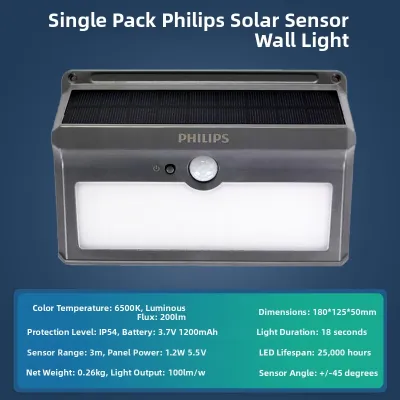
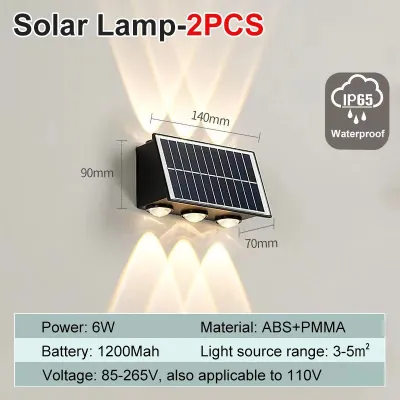
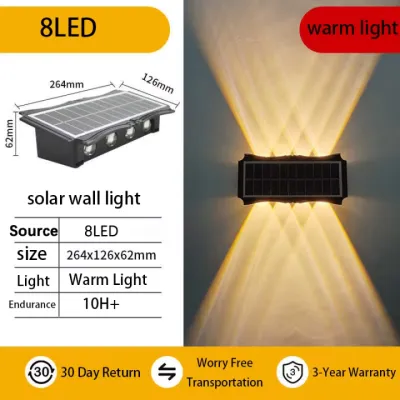
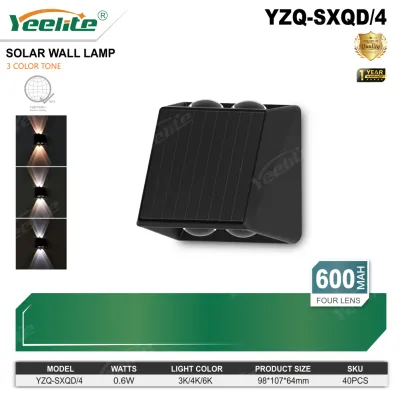
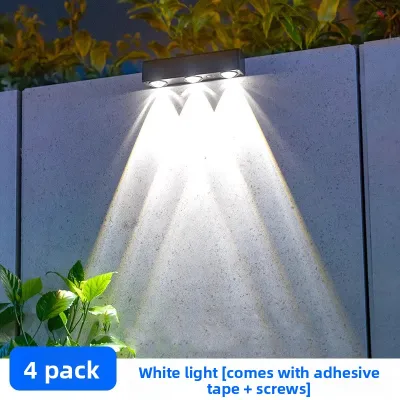
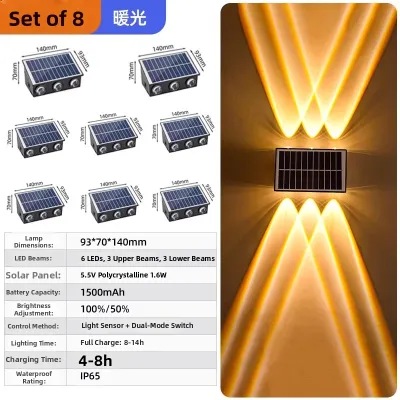
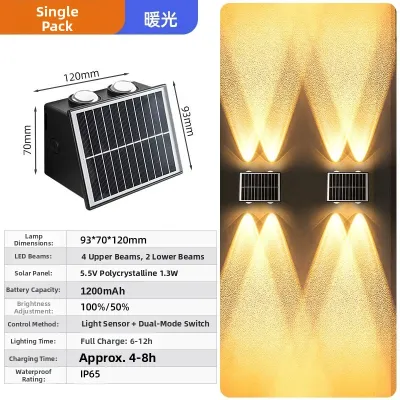
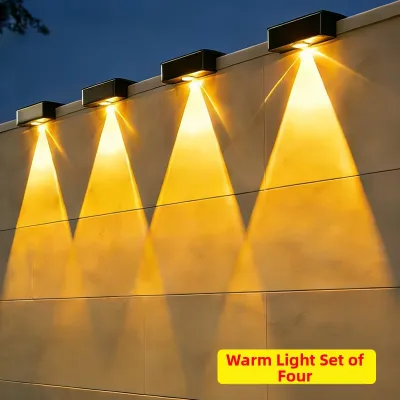
Prices are valid at publication and may change. Please refer to the product page for the latest price.

Another significant advantage of solar wall lights is the elimination of complex electrical wiring. Installing traditional mains-powered floodlights along distant perimeter walls, back alleys, or main gates often requires extensive trenching, conduit laying, and the services of a licensed electrician. Solar fixtures remove these logistical barriers, allowing you to mount a self-sufficient light source onto almost any exterior surface—including remote concrete hollow block (CHB) fences—without running a single centimeter of electrical wire.
Operating high-draw security lights can also noticeably impact your monthly electricity bill if they run on grid power. By utilizing the abundant tropical sunlight available throughout the year, solar security lights allow you to maintain bright, motion-activated illumination across multiple zones of your property at zero ongoing utility cost. This makes it financially viable to install multiple fixtures around your home, creating a comprehensive security envelope without inflating your household expenses.
Key Specifications to Check Before You Buy
Selecting the right solar wall light requires looking beyond basic product descriptions and verifying specific technical standards. Because outdoor environments present harsh operating conditions, understanding these key metrics will help you choose a fixture that performs reliably for years.
Brightness (Lumens)
Lumens measure the total amount of visible light emitted by a source. For decorative or path-marking purposes, lights emitting 50 to 200 lumens are generally sufficient. However, for active security deterrence and clear surveillance camera footage, you should look for fixtures that deliver a minimum of 800 to 2,000+ lumens when triggered. This level of brightness is sufficient to illuminate a wide driveway, backyard, or gate area clearly, ensuring that any movement is highly visible from a distance.
Motion Sensor Technology
Most solar security lights utilize one of two primary sensor types to detect movement:
- Passive Infrared (PIR) Sensors: These sensors detect changes in heat signatures within their field of view. They are highly energy-efficient because they remain in a low-power state until a warm body (such as a human or a vehicle) moves across their detection zones. However, PIR sensors can occasionally be fooled by sudden temperature shifts, warm wind blowing through nearby foliage, or stray animals.
- Microwave/Radar Sensors: These sensors emit high-frequency electromagnetic waves and analyze the reflected signals. They are highly precise and can detect subtle movements through light rain, dense foliage, and even thin plastic or glass light housings. While more sensitive, they can sometimes trigger false alarms if trees or bushes are constantly moving in front of them, making correct positioning essential.
Weather Resistance (IP Rating)
The Ingress Protection (IP) rating consists of two digits: the first represents protection against solid particles (like dust), and the second represents protection against liquids. For outdoor security lights installed in areas prone to driving rain and tropical storms, an IP65 rating is the absolute minimum requirement, meaning the unit is dust-tight and protected against water jets. For maximum durability on exposed walls or coastal properties, look for IP66 or IP67 ratings, which provide superior protection against high-pressure water streams and temporary submersion.
Battery Chemistry
The performance and lifespan of a solar light depend heavily on its internal battery. Traditional outdoor solar lights often use standard Lithium-ion (Li-ion) batteries, which are cost-effective but degrade faster under high heat. For tropical climates, Lithium Iron Phosphate (LiFePO4) batteries are highly recommended. LiFePO4 chemistry offers superior thermal stability, minimizing the risk of swelling or failure when exposed to direct sunlight on hot afternoons. Additionally, they typically support 2,000 to 3,000 charge-discharge cycles, lasting up to five times longer than standard Li-ion alternatives.
Solar Panel Type
Solar panels integrated into wall lights generally fall into two categories:
- Monocrystalline Panels: Constructed from single-crystal silicon, these panels offer the highest efficiency rates, typically between 15% and 22%. They perform significantly better in low-light conditions, making them the superior choice for maintaining battery charge during the cloudy, overcast days of the rainy season.
- Polycrystalline Panels: Made from fragments of silicon melted together, these panels are less expensive but have lower efficiency rates (usually 13% to 16%). They require a larger surface area to generate the same amount of power as a monocrystalline panel, which can limit their effectiveness on compact wall-mounted fixtures.
Electrical and Safety Certifications
Even though solar wall lights operate on low-voltage direct current (DC) internally, any model that includes an integrated AC backup charger or plug-in option must comply with local electrical safety standards. Always verify that the product carries recognized electrical certifications (such as the CE, RoHS, or local import clearance marks) to ensure the internal circuitry, overcharge protection, and battery management systems are safe and stable.
Best Solar Wall Light Configurations for Home Security
Different areas of your property require different physical lighting layouts. Matching the configuration of the solar light to the specific installation zone ensures optimal solar charging and maximum security coverage.
Split-Type Floodlights with Separate Solar Panels
Split-type configurations are highly effective for primary security zones such as main gates, driveways, and expansive perimeter walls. In this setup, the solar panel is physically separated from the light fixture, connected by a heavy-duty, weatherproof cable that typically ranges from three to five meters in length.
This design allows you to mount the heavy, high-lumen floodlight unit under an eave, inside a dark carport, or low on a wall where illumination is needed, while placing the solar panel high on a rooftop or pole where it receives direct, unshaded sunlight throughout the day. Because the light fixture does not need to accommodate the solar panel’s surface area, split-type models often feature larger battery compartments, sturdier aluminum housings, and multiple adjustable light heads that can be angled to cover different directions.
The primary trade-off with split-type lights is the installation process. You must carefully route and secure the connecting cable along your walls, ensuring it is protected from sharp edges, physical tension, and direct exposure to pooling water. Using UV-resistant cable clips or running the wire through outdoor-grade PVC conduits is highly recommended to prevent the cable insulation from degrading over time.
All-in-One Wide-Angle Motion Lights
All-in-one fixtures integrate the solar panel, battery, motion sensor, and light-emitting diodes (LEDs) into a single, compact housing. These units are highly convenient for side alleys, back doors, and secondary entry points where a quick, straightforward installation is preferred.
Many modern all-in-one models feature curved or multi-angled LED panels that distribute light across a wide 270-degree arc, rather than a narrow spotlight beam. This wide-angle coverage is highly effective for narrow pathways or side yards, as a single fixture can illuminate both the ground directly below and the walls to either side. Their compact size makes them easy to mount directly onto wood, concrete, or metal surfaces using basic mounting screws.
However, all-in-one lights have distinct physical limitations. Because the solar panel is fixed to the top of the light housing, you must install the entire fixture on a wall that receives several hours of direct, unshaded sunlight daily. If your side alley is permanently shaded by a neighboring building or an overhanging roof, an all-in-one unit will struggle to charge fully, resulting in dim light output or premature battery depletion at night.
Smart Security Lights with Built-in Cameras
For homeowners seeking active surveillance alongside illumination, smart solar security lights combine high-intensity LEDs with integrated high-definition (HD) cameras, two-way audio systems, and wireless connectivity. When the onboard motion sensor detects movement, the light illuminates the area while simultaneously sending a push notification to your smartphone and recording video footage.
These advanced devices require careful planning before installation. First, they must be placed within range of a strong, stable Wi-Fi signal, which may necessitate the installation of an outdoor Wi-Fi extender or mesh node. Second, because the camera and wireless transmitter draw power continuously to remain online, these fixtures require a significantly larger solar panel and high-capacity battery setup compared to standard motion lights.
When installing smart security lights, always configure the camera’s field of view to respect local data privacy regulations by avoiding neighboring windows or private spaces. Ensure the device utilizes secure, encrypted cloud storage or a local microSD card slot protected by a weatherproof rubber seal to keep your recorded footage safe from unauthorized access.
Where and How to Mount Lights for Maximum Deterrence
Proper placement and secure mounting are critical to ensuring your solar security lights function effectively and remain safe from tampering.
Optimal Height and Angle
For the best balance of motion detection, light dispersion, and physical security, mount your solar wall lights at a height of 2.5 to 3.5 meters. Placing the fixtures within this range keeps them out of reach of casual vandals or intruders who might attempt to cover the sensor or damage the housing. At the same time, this height allows the motion sensor’s detection cone to cover a wide ground area while ensuring the light beam is concentrated enough to illuminate faces clearly.
Sensor Zone Alignment
Passive Infrared (PIR) sensors are most sensitive to movement that crosses laterally across their detection fields, rather than movement directly toward or away from the sensor. When planning your installation, position the light so that an intruder walking toward an entry point, gate, or window will cross the sensor’s path at an angle. For example, instead of mounting the light directly above a door pointing straight down the path, mount it slightly to the side so its detection zone spans across the walkway.
Avoiding Light Pollution and Glare
Security lighting should illuminate your property without creating unnecessary glare or disturbing your neighbors. Angle your light heads downward at approximately 30 to 45 degrees. This concentrates the light on the ground and walls where visibility is needed, rather than projecting it horizontally into neighboring windows. Furthermore, pointing the light downward prevents “blinding” your own security cameras; excessive direct light hitting a camera lens can cause severe lens flare, washing out the recorded image and rendering night-vision sensors ineffective.
Safety Boundaries and Professional Installation
Mounting fixtures at a height requires working on ladders, which presents inherent safety risks. Always ensure your ladder is placed on flat, stable ground, and have a second person assist you by securing the base of the ladder.
If your installation requires drilling into high exterior concrete walls, complex stone facades, or areas close to existing electrical conduits, proceed with caution. Before drilling, map out any hidden utility lines to avoid accidental electrocution or structural damage. If you are uncomfortable working at heights, unsure of your wall’s load-bearing capacity, or if you are installing a heavy split-type fixture that requires complex routing near mains power lines, hire a qualified professional to complete the installation safely.
Maintenance Tips for Tropical Weather and Typhoons
Outdoor solar lights are subjected to harsh environmental stressors, including intense UV radiation, high humidity, salt air in coastal areas, and heavy seasonal rains. Establishing a simple maintenance routine will extend the lifespan of your fixtures and ensure they remain operational when needed most.
Panel Cleaning
Over time, a layer of dust, pollen, soot, and bird droppings can accumulate on the surface of the solar panel. In the dry season, this buildup can block sunlight and reduce charging efficiency by 20% or more. Clean the solar panel every few weeks by wiping it gently with a soft, damp microfiber cloth and plain water. Avoid using abrasive scrubbing pads, steel wool, or harsh chemical detergents, as these can scratch the tempered glass or protective plastic coating, permanently reducing light transmission.
Post-Typhoon Inspection
Severe tropical storms and typhoons subject outdoor fixtures to extreme wind loads and driving, horizontal rain. After any major storm, conduct a visual inspection of your solar wall lights. Check that the mounting brackets remain securely fastened to the wall and that the light housing has not shifted out of alignment. Inspect the lens cover and battery compartment for signs of moisture ingress, such as internal condensation or water pooling. If moisture is present, turn off the fixture, open the battery compartment if accessible, allow it to dry completely in a shaded area, and inspect the rubber seals before reassembling.
Battery Management
Even high-quality LiFePO4 batteries will eventually degrade after several years of continuous charge-discharge cycles. If you notice that a light which previously stayed illuminated throughout the night now turns off after only an hour or two of operation, the battery likely needs replacement.
When replacing the battery, always refer to the manufacturer’s instructions to ensure you select a replacement cell with the exact same voltage, chemistry, and physical dimensions. Never mix different battery chemistries or use unapproved cells, as this can damage the internal charging circuitry or pose a safety hazard. Always dispose of old batteries responsibly by bringing them to authorized electronic waste collection points or local recycling centers, rather than discarding them with regular household waste.
Frequently Asked Questions (FAQ)
Do solar security lights work during the long rainy season?
Yes, high-quality solar security lights will continue to function during the rainy season, though their overall runtime may be reduced. Monocrystalline solar panels can still generate electrical current from ambient, diffused sunlight on overcast days, albeit at a lower rate than on clear, sunny days. To ensure reliable performance during consecutive cloudy days, select fixtures equipped with large-capacity LiFePO4 batteries and adjustable operating modes—such as a dim standby mode that only switches to 100% brightness when motion is detected—to conserve stored energy.
How do I mount heavy solar lights on a hollow block (CHB) fence?
Mounting heavy fixtures on concrete hollow block (CHB) walls is highly common but requires the correct fastening hardware. Standard wood screws or light plastic anchors may pull out over time due to the weight of the fixture and wind vibration. Use a rotary hammer drill or an impact drill equipped with a high-quality masonry drill bit to drill holes into the solid sections of the block rather than the hollow center voids or mortar joints. Insert heavy-duty expansion wall anchors or sleeve anchors, then secure the mounting bracket tightly using rust-resistant stainless steel screws.
What is the ideal lumen output for residential security?
For standard residential perimeters, gates, and driveways, a light output of 800 to 2,000 lumens is generally considered the ideal range. This level of brightness is intense enough to act as an immediate visual deterrent to intruders and provides sufficient illumination for modern security cameras to record clear, high-definition footage. Selecting fixtures within this range ensures adequate security coverage without causing excessive glare that could blind your security cameras, disturb your neighbors, or violate local subdivision lighting guidelines.
Community discussion
Share your experience or ask a question. Comments are reviewed before publication.