
Selecting the right mirror wall setup can instantly transform a cramped room into an airy, light-filled sanctuary. In compact urban homes, such as studio condominiums or townhouses, limited square footage often leads to a boxed-in feeling. By understanding how different mirror styles interact with light and layout, you can strategically expand your visual boundaries. The most effective approach involves matching the mirror’s shape, frame style, and placement to the specific architectural challenges of your room.
Understanding How Mirrors Create the Illusion of Space
Mirrors do not physically alter a room’s dimensions, but they fundamentally change how our brains process spatial boundaries. The primary mechanism is light reflection. When natural light streams through a window, a strategically positioned mirror bounces that light deep into the room, illuminating dark corners and balancing the overall brightness. This is particularly valuable in tropical climates where bright afternoon sun can be harnessed to soften shadows without relying on artificial lighting.
Beyond light, mirrors manipulate depth perception. By reflecting the opposite side of a room, a mirror creates a secondary focal point that tricks the eye into perceiving a continuous path. This visual extension pushes the wall plane backward, making a solid surface feel like an open window or an archway into an adjacent area.
Products mentioned in this guide
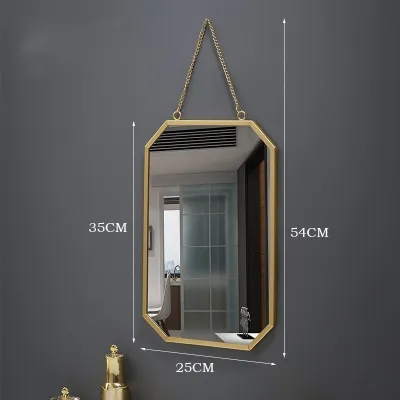
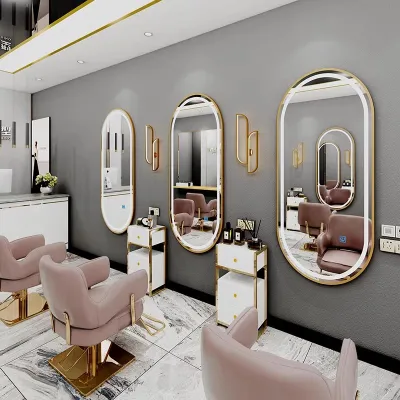
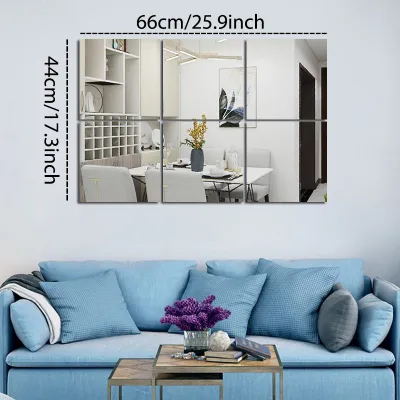

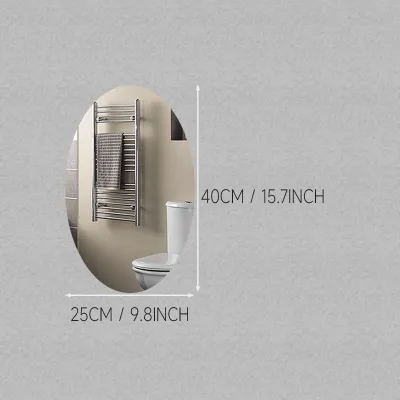
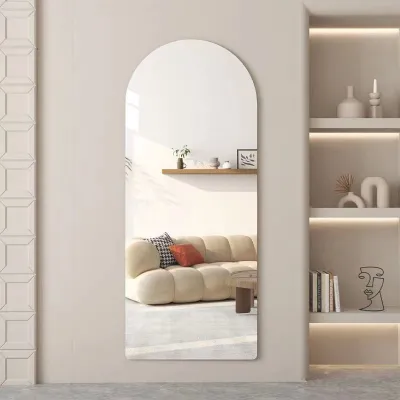
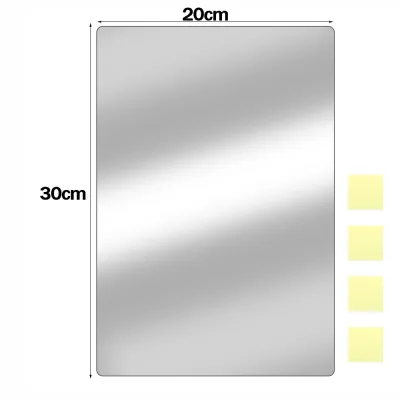
Prices are valid at publication and may change. Please refer to the product page for the latest price.
Finally, mirrors break up visual continuity. Solid walls, especially those made of heavy concrete or masonry common in local construction, can feel imposing. Introducing a reflective surface breaks up these heavy planes, reducing the sense of enclosure and making the entire structure feel lighter and more dynamic.
Matching Mirror Styles to Specific Small Room Challenges
Every small space suffers from a unique spatial bottleneck. A narrow corridor requires a different visual correction than a square, low-ceilinged bedroom. To achieve the best results, you must analyze the specific limitations of your layout and select a mirror style that directly addresses those constraints.

Compact Living Rooms: Expanding the Social Area
In a compact living room, the goal is to make the social area feel open and inviting. A large framed or decorative mirror wall installation serves as an intentional focal point, drawing the eye and establishing a sense of grandeur. Placing a substantial mirror above a sofa or console table anchors the room while visually doubling the seating area.
To maximize illumination, position the mirror opposite or adjacent to your primary light sources, such as a balcony door or a large window. This placement catches the natural daylight and distributes it across the living space. However, be mindful of what the mirror will reflect. Avoid placing it directly opposite cluttered shelving, busy utility areas, or high-traffic walkways, as reflecting clutter only doubles the visual noise.
Additionally, consider the angle of artificial light. If you have bright overhead fixtures or spotlights, positioning a mirror directly underneath or opposite them can cause harsh glare. Angle your lighting or choose a matte-framed mirror to soften the reflection and maintain a comfortable ambiance during evening hours.
Narrow Hallways: Adding Depth and Width
Narrow hallways often suffer from a “tunnel effect,” feeling dark, cramped, and purely functional. You can counteract this by choosing frameless or slim-profile gallery-style mirrors. Frameless designs are particularly effective here because they lack bulky borders, allowing the reflective surface to blend seamlessly into the wall and reducing visual weight in tight quarters.
The orientation of the mirror plays a critical role in correcting hallway proportions. Hanging a long, rectangular mirror horizontally along the side wall emphasizes width, making the corridor feel wider than it is. Conversely, if your hallway has a low ceiling, hanging multiple vertical mirrors in a gallery-style sequence can draw the eye upward, emphasizing height and creating a rhythmic, open feel.
A common mistake in narrow entryways is placing a large mirror directly facing the front door. While this might seem convenient for a quick check before leaving, it can cause a visual startle for guests entering the home. It also reflects the back of the door directly, which can feel abrupt. Instead, offset the mirror slightly down the hall to guide the eye naturally into the living spaces.
Small Bedrooms: Maximizing Function and Light
Small bedrooms require a delicate balance between spatial expansion, practical daily use, and personal comfort. Integrating a full-length mirror is highly effective for dressing, but finding floor space for a free-standing easel mirror can be difficult. Wall-mounted full-length options solve this by utilizing vertical space without encroaching on your walking paths.
For an even more space-saving solution, consider utilizing closet doors or wardrobe fronts. Mounting lightweight mirrors directly onto wardrobe panels or using sliding mirrored closet doors can turn an entire storage unit into a functional mirror wall. This hidden integration keeps the bedroom looking clean and uncluttered while providing a massive reflective surface that opens up the sleeping area.
When positioning a mirror in the bedroom, personal and cultural preferences regarding sleep quality should be considered. Many people find that having a mirror directly facing the bed can disrupt sleep due to movement reflections in the dark. Placing the mirror on the same wall as the headboard or inside a closet door allows you to enjoy the spatial benefits during the day while keeping the sleeping area calm and restful at night.
Key Factors to Check Before Buying and Installing
Before purchasing and mounting a heavy wall mirror, a thorough safety and compatibility check is essential. First, verify your wall material. Many homes feature solid concrete, masonry, or brick walls, while others use gypsum board or drywall partitions. Solid concrete requires masonry drill bits and heavy-duty plastic or metal wall anchors (often referred to locally as tox screws) to ensure a secure hold. Drywall, on the other hand, requires specialized hollow-wall anchors or toggle bolts, and heavy mirrors should ideally be anchored directly into the wooden or metal wall studs.
Always check the mirror’s total weight against the load-bearing capacity of both the wall and the mounting hardware. Do not rely on simple adhesive strips or light-duty nails for large glass pieces. If you are planning a complex installation—such as an oversized mirror wall, a ceiling-height panel, or working at a significant height—stop and hire a qualified professional. Professional installers have the specialized tools and experience to handle heavy glass safely, preventing dangerous falls and wall damage.
Environmental conditions also dictate your choice of materials. In tropical climates with high ambient humidity, standard mirror backings can deteriorate over time, leading to desilvering or dark spots along the edges. Ensure that any mirror intended for a bathroom or a semi-outdoor area features a moisture-resistant backing and a frame material, such as treated wood, metal, or durable synthetic composites, that will not warp or rust.
If you select a modern backlit or LED mirror, additional electrical safety checks are required. Verify the voltage compatibility (typically 220V in local grids), the base or interface type, the wattage limits, and whether the unit has proper electrical certification for damp environments. Always isolate the power supply at the circuit breaker before attempting any fixed wiring installation, and consult a licensed electrician to handle the electrical connections safely.
Frequently Asked Questions (FAQ)
Can a mirror be too big for a small wall?
Yes, a mirror can overwhelm a small wall if it lacks proper proportion. While large mirrors are excellent for expanding space, they still carry visual weight. A good practice is to leave adequate breathing room—typically a few inches of exposed wall—around the edges of the mirror. This prevents the installation from looking cramped or forced into the space.
Before buying, carefully check the clearances for adjacent architectural features. Ensure the mirror will not block or interfere with light switches, electrical outlets, door frames, baseboards, or crown moldings. Measuring these clearances beforehand ensures the mirror integrates harmoniously with the room’s existing structure.
How do I clean large wall mirrors without leaving streaks?
To maintain the clarity of a large mirror wall, use a dedicated, non-abrasive glass cleaner or a mild solution of water and a few drops of dish soap. Always apply the cleaner with a lint-free microfiber cloth. Avoid using paper towels, which can leave behind lint and fine scratches, or rough scrubbing pads that can damage the glass surface.
When cleaning, spray the solution directly onto the cloth rather than spraying it onto the mirror itself. This prevents liquid from running down the glass and pooling at the bottom edge or seeping behind the frame. Excessive moisture or harsh chemicals can penetrate the protective backing of the mirror, leading to permanent black edge damage and desilvering.
Community discussion
Share your experience or ask a question. Comments are reviewed before publication.