
Selecting the right Wellmax lighting fixtures for your Philippine garden requires matching the specific environmental demands of each garden zone with the appropriate technical specifications. Because a tropical outdoor space experiences extreme conditions—ranging from intense summer heat to heavy monsoon downpours—a single, uniform lighting style will not suffice. To achieve a balanced, safe, and visually appealing landscape, you must evaluate pathways, planting beds, and patio areas individually, selecting fixtures based on their ingress protection (IP) ratings, voltage requirements, and light distribution patterns.
By taking a systematic approach to your outdoor layout, you can ensure that your Wellmax lighting products provide adequate illumination where safety is paramount, subtle accents where natural beauty should shine, and comfortable ambiance where family and friends gather. This guide outlines how to assess your garden zones, select the proper fixtures, and install them safely under local tropical conditions.
Assessing Your Garden Zones and Lighting Goals
Designing an effective outdoor lighting layout begins with dividing your garden into distinct functional zones. A typical residential landscape in the Philippines contains three primary areas: pathways, planting beds, and patios or dining spaces. Each of these zones serves a different purpose, meaning the lighting fixtures you select must fulfill specific functional roles rather than just decorative ones.
Products mentioned in this guide
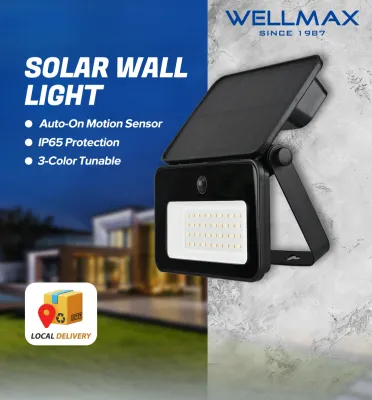
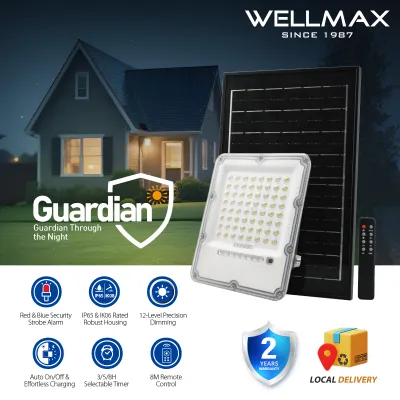
Prices are valid at publication and may change. Please refer to the product page for the latest price.
Pathways require high-utility lighting focused on safety and navigation, helping residents and guests traverse the garden without tripping over uneven ground or stepping on stray foliage. Planting beds and trees, on the other hand, benefit from accent lighting that highlights natural textures, vertical structures, and organic shapes. Patios, decks, and outdoor dining areas demand ambient and task lighting that creates a comfortable, welcoming environment for socializing and dining during warm tropical evenings.
When planning your layout, you must account for the unique tropical climate of the Philippines. High humidity levels, salt air in coastal regions, and intense seasonal rainfall can rapidly degrade poorly chosen electrical fixtures. Consequently, mapping your garden zones is not merely an aesthetic exercise; it is a critical step in identifying which areas will expose your Wellmax lighting products to direct water, high moisture, or physical contact, allowing you to select fixtures with the appropriate durability specifications.
Pathways and Walkways: Safe and Glare-Free Navigation
Illuminating walkways and garden paths is essential for preventing accidents, but improper fixture selection can lead to blinding glare or an unattractive, institutional look. For safe navigation, the goal is to direct light downward onto the walking surface rather than outward into the eyes of pedestrians. Low-glare, downward-facing fixtures, such as bollard lights or low-profile pathway lights, are highly effective for this application because their design shields the light source from direct view while casting a broad pool of light on the ground.

To avoid the rigid, monotonous look often referred to as the “runway effect,” avoid placing fixtures in perfectly straight, symmetrical lines directly opposite one another. Instead, stagger the lights on alternating sides of the path. This staggered placement creates a more natural, flowing visual rhythm that guides the eye gently through the landscape while still providing continuous, overlapping pools of illumination along the walking surface.
When evaluating Wellmax pathway options, pay close attention to the physical dimensions, height, and beam angles of the fixtures. A fixture that is too short may have its light output blocked by growing grass or low-hanging leaves, while a fixture that is too tall might expose the bare bulb to eye level. Ensure the light spread covers the width of the walking surface evenly. Additionally, always verify the voltage requirements, base or interface types, and electrical certifications on the product packaging to ensure compatibility with your existing outdoor electrical lines.
Flower Beds and Trees: Accenting Natural Textures
Accent lighting allows you to showcase the unique shapes, colors, and textures of your garden’s flora after dark. However, different types of plants require different lighting techniques to look their best. For mature trees, large palms, or substantial shrubs, uplighting—placing a fixture at the base of the plant and directing the beam upward—creates a dramatic focal point by highlighting the trunk structure and canopy. For delicate flower beds, low-lying shrubs, or ground cover, spotlighting from a higher vantage point (downlighting) or using small, well-placed garden spikes offers a softer, more natural appearance.
Selecting the correct beam angle and color temperature is critical to enhancing, rather than washing out, the natural beauty of your plants. Narrow beam angles (15 to 30 degrees) are ideal for tall, slender trees, while wider beam angles (60 degrees or more) are better suited for broad canopies and wide flower beds. Warm white light (typically 2700K to 3000K) is generally preferred for residential gardens because it brings out the rich greens of tropical foliage and the warm tones of wooden structures, though perceived color temperature remains a matter of personal preference.
Before placing any accent light close to living tissue, check the fixture’s heat output and the manufacturer’s recommended placement distances. High-heat fixtures placed too close to delicate leaves or flowers can scorch the foliage, stunt plant growth, or dry out the surrounding soil prematurely. Opt for cool-running LED options from the Wellmax lighting range, and always refer to the product manual to verify safe operating distances from organic materials.
Patios and Dining Areas: Creating a Comfortable Ambiance
Patios, decks, and outdoor dining areas serve as extensions of the home, requiring a thoughtful combination of light layers to support various activities. To build a comfortable environment, you should avoid relying on a single, bright overhead light. Instead, combine ambient lighting, such as dimmable overhead fixtures or decorative string lights, with focused task lighting, such as wall-mounted sconces near cooking stations, outdoor prep tables, or steps.
Using warmer color temperatures in seating areas helps establish a relaxing, intimate atmosphere that encourages lingering. An added benefit of warm, low-kelvin lighting in tropical environments is that it is generally less attractive to nocturnal insects than bright, cool-blue light. If your outdoor living area features dimming capabilities, ensure that both the Wellmax bulbs and the dimming switches are explicitly rated as compatible to prevent flickering, buzzing, or premature driver failure.
When integrating new fixtures into existing patio structures, such as pergolas, concrete walls, or wooden posts, carefully check the physical dimensions, mounting hardware, and weight limits. The fixtures must align with the structural capacity of the mounting surface. Always verify that the electrical interface matches your home’s wiring system, and ensure that any exposed wiring is fully protected from physical wear and environmental exposure.
Weather Resistance and Electrical Safety in Tropical Climates
Operating electrical systems outdoors in a tropical climate like the Philippines introduces significant safety risks that do not exist indoors. The primary defense against water damage and electrical short circuits is the Ingress Protection (IP) rating of the fixture. For areas completely exposed to heavy tropical downpours, such as open lawns or unshaded pathways, select fixtures with a minimum rating of IP65, which indicates protection against dust ingress and low-pressure water jets from any direction. For partially covered areas, such as under a deep patio roof, a lower rating of IP44 may be acceptable, but you must verify the specific exposure level first.
Before purchasing or installing any Wellmax lighting products, verify that the voltage matches the standard Philippine residential grid, which is typically 220V at 60Hz. Check the wattage limits of your outdoor circuits and transformers to avoid overloading the system. If you are using a low-voltage system (such as 12V or 24V), ensure that your transformer is housed in a weatherproof enclosure and that you account for voltage drop over long cable runs by using the correct gauge of outdoor-rated, UV-resistant cabling.
Electrical safety boundaries must be strictly observed during installation. Always isolate the power by turning off the main circuit breaker before handling any wiring or replacing fixtures. Do not attempt DIY hardwiring, trenching, or splicing in damp or wet conditions. For all fixed wiring installations, high-voltage connections, underground conduit laying, or complex multi-zone layouts, you must hire a licensed electrical professional to ensure compliance with the Philippine Electrical Code and to prevent fire or shock hazards.
Frequently Asked Questions (FAQ)
Can I use indoor Wellmax lights outdoors if they are under a covered patio?
No, you should not use indoor-rated Wellmax fixtures in any outdoor or semi-outdoor space, even if it is fully covered by a patio roof. Indoor fixtures are not sealed against the high ambient humidity, salt-laden air, and temperature fluctuations common in the Philippines. Over time, moisture will penetrate the unsealed housing of an indoor bulb or fixture, leading to internal corrosion, short circuits, or electrical shock hazards. Additionally, strong winds during tropical storms can blow rain horizontally, directly exposing covered areas to liquid water. Always check the product label for an explicit outdoor, damp-location, or wet-location rating before installation.
How should I clean and maintain landscape fixtures after heavy rain?
Maintaining your outdoor fixtures after heavy rain helps preserve their light output and extends their operational lifespan. Before performing any maintenance or inspection, always isolate the power supply at the breaker to eliminate the risk of electrical shock. Once the power is safely turned off, gently wipe away mud, wet soil, and fallen leaves from the fixture body and lenses using a soft, damp microfiber cloth. Avoid using harsh chemical cleaners or abrasive brushes that could scratch the protective coatings on the lenses or housings. Finally, inspect the ground around the fixtures to ensure water is draining properly and not pooling around the base of the lights, and check the seals for any visible signs of moisture penetration.
Community discussion
Share your experience or ask a question. Comments are reviewed before publication.