
Selecting the right outdoor security lighting is one of the most effective ways to protect your home, deter potential intruders, and ensure safe navigation around your property at night. In the Philippines, where tropical weather brings both heavy rainstorms and high humidity, outdoor fixtures must be chosen with care. A single, overly bright light mounted arbitrarily on a wall rarely provides effective security. Instead, successful outdoor illumination relies on matching specific fixtures to the unique physical layouts of your driveways, gates, and perimeters.
Using Wellmax lighting solutions allows homeowners to address these distinct zones with targeted features. Rather than simply purchasing the highest wattage available, a strategic approach looks at sensor ranges, weatherproofing, and beam angles. By understanding how different areas of your property function, you can select the exact Wellmax models designed to secure those spaces reliably throughout the year.
Understanding Your Outdoor Security Needs with Wellmax Lighting
Effective security lighting does not merely flood an entire property with harsh, blinding glare. Instead, it establishes controlled zones of visibility that eliminate dark hiding spots while allowing residents to identify movement from inside the home. When planning your layout, consider how light behaves in different areas. A gate requires focused, clear illumination for visitor identification, whereas a long boundary wall demands wide, continuous coverage to prevent blind spots.
Products mentioned in this guide
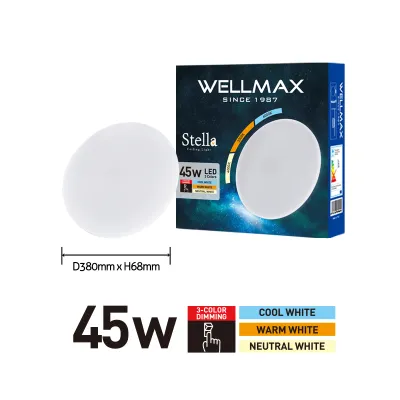
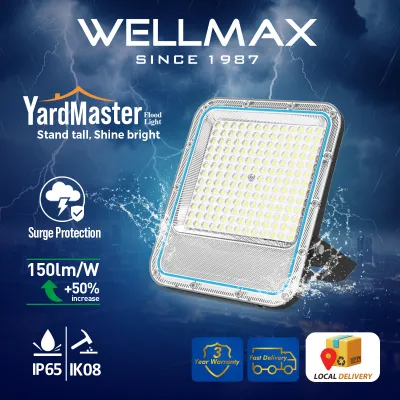
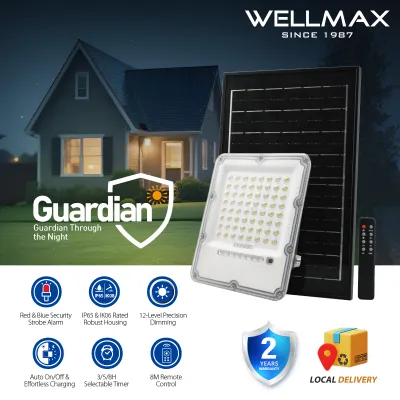
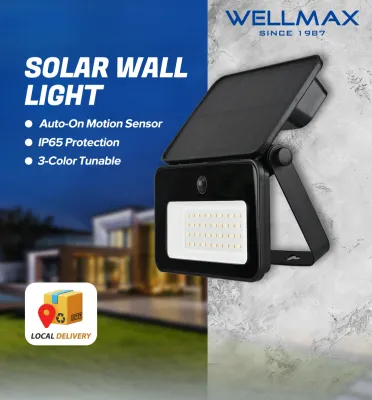
Prices are valid at publication and may change. Please refer to the product page for the latest price.
Using Wellmax lighting products allows you to customize your setup based on these specific environmental demands. The brand offers a range of options, from high-output floodlights to highly sensitive motion-activated models. To achieve the best results, you must evaluate the physical characteristics of each zone—such as mounting heights, exposure to wind and rain, and proximity to power sources—before selecting a fixture. This ensures your security system operates efficiently without wasting energy or causing light pollution.
Driveway Lighting: Long-Range Coverage and Motion Detection
Driveways are transition zones that require early detection of vehicles and pedestrians approaching from the street. Because these areas are often long and narrow, the primary goal is to project light far enough to cover the entire path of travel. Standard outdoor lights often fail to reach the end of a long driveway, leaving the entrance in darkness and reducing the reaction time of your security system.

To address this, look for fixtures equipped with long-range motion sensors. These sensors should ideally detect movement from a significant distance, giving you immediate notice when someone enters the property. When browsing Wellmax lighting options, check the product packaging for the specific sensor range, which is typically listed in meters, as well as the detection angle. A wider detection angle ensures that visitors approaching from the side are noticed just as quickly as those coming straight down the center.
Adjustability is equally critical for driveway installations. Because driveways often run parallel to public sidewalks or streets, highly sensitive sensors can easily trigger false alarms from passing cars, stray animals, or neighbors walking by. Selecting a model with adjustable detection zones and sensitivity settings allows you to narrow the sensor’s field of view. This ensures the light activates only when someone crosses onto your actual property line.
For optimal coverage, multi-head or adjustable fixtures are highly recommended for driveways. These designs allow you to point one light head down the length of the driveway to illuminate the incoming path, while directing a second head toward the garage or parking area. This dual-direction capability ensures that you can park, unload packages, and walk to your front door under continuous, safe illumination without needing to install multiple separate fixtures.
Gate and Entryway Lighting: Clear Visibility and Weather Resistance
Your main gate is the primary point of interaction between your home and the outside world. Security lighting at this location serves two main purposes: it allows you to clearly identify visitors at night, and it acts as a strong visual deterrent to unauthorized entry. To achieve clear facial recognition, the light must be even and glare-free. Harsh, direct glare can blind both your guests and your security cameras, rendering video doorbells or CCTV systems ineffective.
Gate pillars and entryways present unique structural challenges. These fixtures are completely exposed to the elements, meaning they must withstand direct sunlight, high winds, and intense tropical downpours. When selecting a light for your gate, pay close attention to the Ingress Protection (IP) rating printed on the Wellmax packaging. For gate pillars that have no roof or canopy overhead, look for fixtures with an IP65 rating or higher, which guarantees protection against dust ingress and low-pressure water jets from any direction.
Adjustable dual-head fixtures are highly effective for gate entryways. By mounting a dual-head unit on or near a gate pillar, you can position one light to illuminate the exterior approach—allowing you to see who is knocking or ringing the bell—while directing the second light inward to illuminate the interior steps or walkway. This setup ensures a seamless, safe transition as you or your guests step through the gate.
Additionally, consider the color temperature of the light used at your entryway. While cool white light is excellent for high-visibility areas like perimeters, a slightly warmer or neutral white light at the gate can make the entrance feel welcoming to invited guests while still providing sufficient contrast for security cameras to capture clear color details and facial features.
Perimeter Lighting: Wide Angles and Continuous Deterrence
Perimeter walls and boundary fences define the outer limits of your property. The main objective of perimeter lighting is to eliminate dark corners and shadows where intruders could hide undetected. Because perimeter walls often span long distances, using narrow-beam spotlights is inefficient, as it creates a patchy, high-contrast environment with alternating bright spots and deep shadows.
To secure these boundaries, wide-angle floodlights are the preferred choice. These fixtures cast a broad, uniform beam of light along the length of the wall, making it difficult for anyone to approach unseen. When planning your perimeter layout, verify the beam angle and lumen output on the Wellmax product label. This information helps you calculate how many units you will need to install to achieve overlapping coverage along the entire length of your wall.
Layered security can be achieved by combining dusk-to-dawn photocells with motion sensors. A highly effective strategy is to keep the perimeter illuminated at a low, energy-saving ambient level throughout the night using a photocell. When the motion sensor detects movement near the wall, the fixture instantly switches to full brightness. This sudden change in light intensity draws immediate attention to the area and often startles intruders into leaving.
Mounting height and spacing play a major role in the effectiveness of perimeter lighting. Fixtures should be mounted high enough—typically between 2.5 to 3 meters—to prevent tampering, but not so high that the light disperses too widely and loses its intensity before reaching the ground. Spacing the lights so that their beams slightly overlap ensures there are no dark gaps along your property line, creating a continuous barrier of light.
Key Specifications to Verify on Wellmax Product Labels
Before purchasing any security light, it is essential to read the product label carefully to ensure the fixture is compatible with your home’s infrastructure and environmental conditions. Checking these technical details beforehand prevents installation issues and premature product failure.
- Power Source: Decide whether a hardwired (AC) or solar-powered model is best for your location. Hardwired fixtures provide reliable, continuous power regardless of weather conditions but require proximity to existing electrical lines. Solar-powered models offer excellent energy savings and do not require complex wiring, but they must be installed in unshaded locations that receive direct sunlight for several hours daily to ensure the battery charges fully.
- Voltage Compatibility: If you choose a hardwired model, verify that it is rated for the standard electrical grid in the Philippines, which operates at 220V/60Hz. Installing a fixture designed for a different voltage or frequency can damage the internal driver, shorten the lifespan of the LEDs, or create an electrical safety hazard.
- Weatherproofing (IP Rating): Outdoor lights face harsh environmental conditions. Always check the IP rating on the packaging. An IP65 rating is the recommended minimum for general outdoor use, as it protects against heavy rain. If the light will be installed in a highly exposed area subject to severe wind-driven rain, look for an IP66 or higher rating.
- Material Build: High humidity and salty air in coastal regions can quickly corrode low-quality metal fixtures. Look for Wellmax models constructed from rust-resistant materials, such as treated aluminum or high-grade polycarbonate. These materials resist UV degradation from intense sunlight and will not rust or crack over time.
- Certifications: Look for recognized electrical safety marks and certifications on the packaging. These symbols indicate that the product has undergone rigorous testing for electrical safety, thermal management, and manufacturing quality, giving you peace of mind that the fixture is safe to operate continuously outside your home.
Installation Safety and Maintenance Boundaries
Installing outdoor lighting requires strict adherence to safety protocols to prevent electrical shocks, short circuits, or damage to your property. Before beginning any installation or maintenance work on a hardwired fixture, always turn off the main circuit breaker controlling that electrical line. Never rely solely on the wall switch to isolate the power.
Knowing when to call a professional is key to a safe and successful installation. While mounting a basic solar-powered light is a straightforward task that many homeowners can handle, hardwired installations are different. You should always hire a licensed electrician if you need to run new outdoor electrical conduits, mount fixtures at high heights requiring tall ladders or scaffolding, or integrate your security lights with automated gate systems or smart home networks.
When positioning your security lights, be mindful of light trespass. Pointing high-intensity floodlights directly into your neighbor’s windows or toward a public street can cause severe glare, creating friction with neighbors and blinding passing motorists. Always angle your fixtures downward and inward toward your own property. If necessary, use physical shields or visors on the light heads to direct the beam precisely where it is needed.
Regular maintenance is essential to keep your security lights operating at peak performance. Over time, dust, cobwebs, pollen, and salt residue can accumulate on the motion sensor lens and solar panels, reducing detection sensitivity and charging efficiency. At least twice a year, gently wipe the sensor lens and solar panels with a soft, damp cloth. Avoid using harsh chemical cleaners or abrasive pads, which can scratch the protective covers and degrade the performance of the sensors and LEDs.
Frequently Asked Questions (FAQ)
Can solar-powered security lights handle heavy tropical rain?
Yes, solar-powered security lights can handle heavy tropical rain, provided they have an appropriate Ingress Protection (IP) rating. When purchasing a Wellmax solar fixture, check the label to ensure it has a rating of IP65 or higher. This rating indicates that the light housing, battery compartment, and solar panel are sealed against heavy rain and water splashes. Additionally, ensure that all cable connections between the solar panel and the light fixture are tightly secured and weatherproofed according to the manufacturer’s instructions.
How do I prevent false motion triggers from passing cars or animals?
To prevent false triggers, start by adjusting the sensitivity dial on the motion sensor, which is usually located on the bottom or back of the sensor head. Lowering the sensitivity prevents the sensor from reacting to small animals or distant movement. You can also physically adjust the angle of the sensor head, pointing it downward so its field of view ends before reaching the public street. If your model supports them, you can apply physical shields or tape over specific sections of the sensor lens to block detection from directions where passing traffic occurs.
Community discussion
Share your experience or ask a question. Comments are reviewed before publication.