
To make a small bathroom feel significantly larger without the hassle of drilling into delicate tiles, a strategically placed adhesive bathroom mirror is one of the most practical design upgrades you can make. By reflecting both natural and artificial light, these mirrors visually double the depth of a compact room while maintaining a clean, flush profile against the wall. Because they do not require bulky brackets or heavy frames, they eliminate visual clutter, allowing the eye to travel uninterrupted across the space. This seamless integration is especially valuable in tight layouts where every centimeter of physical and visual space counts.
How Mirrors Create the Illusion of Space in Compact Bathrooms
The physics of reflection play a fundamental role in how we perceive interior spaces. In a tight bathroom, light often gets trapped in dark corners, making the room feel restrictive and closed in. Placing an adhesive mirror directly opposite a light source—such as a window, a wall sconce, or an overhead fixture—redirects that light into the darker areas of the room. This bounce effect instantly brightens the space, making the walls feel as though they are expanding outward. The increased illumination reduces shadows, which are a primary cause of a room feeling cramped.
The shape of the mirror you choose also has a profound impact on spatial perception. Rectangular mirrors are excellent for narrow bathrooms because they can be oriented horizontally to stretch the perceived width of a wall, or vertically to draw the eye upward in rooms with low ceilings. Round mirrors, on the other hand, soften the harsh, angular lines of standard bathroom fixtures like sinks, toilets, and tiles. Geometric shapes, such as hexagons or arched designs, add a modern architectural element that distracts from the limited square footage by creating a distinct focal point. These shape choices are highly subjective and depend on your existing decor, serving as conditional preferences rather than universal rules for spatial expansion.
Products mentioned in this guide
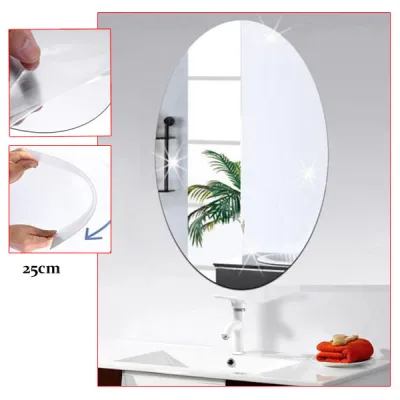
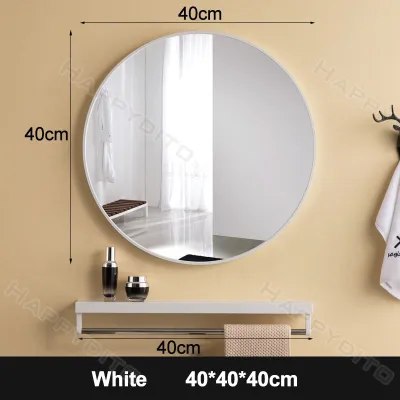
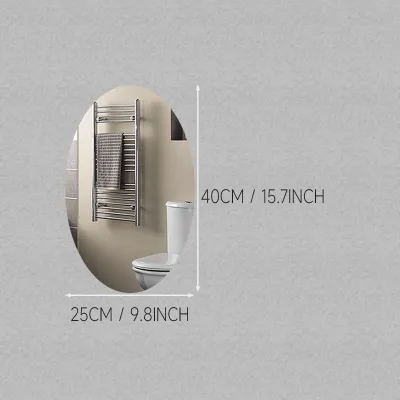
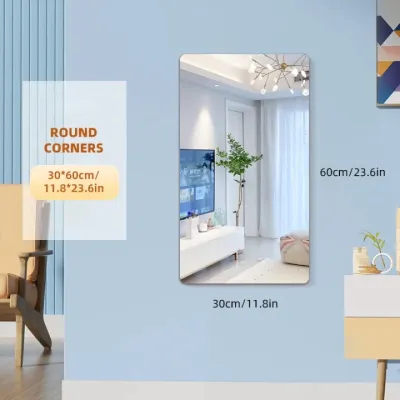
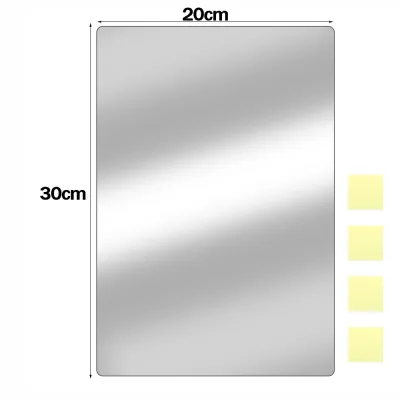
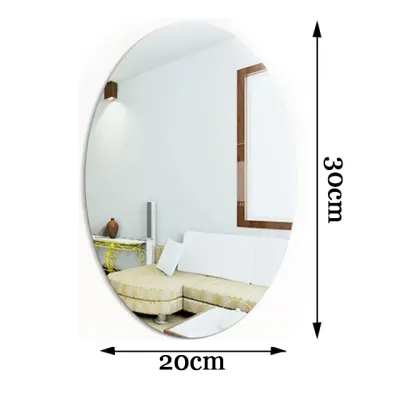
Prices are valid at publication and may change. Please refer to the product page for the latest price.
Visual weight is another critical factor when designing for small spaces. Framed mirrors, while decorative, introduce a physical border that defines where the wall ends and the mirror begins, which can make a small room feel boxed in. Frameless adhesive mirrors blend seamlessly into the surrounding wall surface, creating a minimalist aesthetic. This lack of a defined boundary tricks the brain into perceiving the reflection as an actual extension of the room, effectively erasing the physical limits of the wall. By eliminating the visual weight of a heavy frame, you allow the wall to feel continuous and open.
Essential Selection Criteria for Adhesive Bathroom Mirrors
The high humidity levels typical of tropical climates like the Philippines present a major challenge for wall-mounted mirrors. Standard mirrors often suffer from desilvering—a chemical reaction where moisture penetrates the backing material, causing the silver reflective layer to oxidize and form unsightly black spots around the edges. When selecting an adhesive mirror, look for products specifically labeled as copper-free or those featuring a multi-layered, moisture-resistant protective backing and sealed edges to ensure long-term durability in damp environments. Verifying these material specifications before purchase is essential to prevent premature deterioration.

You must also carefully evaluate the relationship between the mirror’s weight, thickness, and material composition. Glass mirrors offer superior optical clarity and are highly resistant to scratching, but they are heavy and fragile, requiring exceptionally strong adhesives to stay secure on the wall. Shatterproof alternatives, such as acrylic or polycarbonate mirror sheets, are significantly lighter and much easier to mount with standard adhesive tapes. However, because these synthetic materials are flexible, they require a perfectly flat surface to prevent warping and distortion. Always weigh the mirror before installation and compare its weight against the manufacturer’s specified adhesive load capacity, ensuring a generous safety margin.
Size and proportion guidelines are vital to ensure the mirror complements the room rather than overwhelming it. A mirror that is too small will look lost and fail to create the desired illusion of space, while one that is too large can make the bathroom feel unbalanced. As a general guideline, the mirror should be slightly narrower than the vanity cabinet or sink basin below it, typically leaving a margin of five to ten centimeters on either side. For frameless adhesive panels, mapping out the dimensions on the wall using painter’s tape before purchasing helps visualize the final spatial impact and ensures a precise fit.
If you are considering an adhesive mirror with integrated LED lighting, additional technical verifications are required. You must verify the voltage compatibility, interface type, wattage limits, and dimming methods to ensure they match your bathroom’s electrical setup. Because bathrooms are wet environments, any electrical components must carry appropriate ingress protection (IP) ratings to certify they are safe for damp areas. For any installation involving fixed wiring or connection to the home’s electrical grid, always isolate the power at the circuit breaker and consult a qualified professional to handle the wiring safely.
Safe Installation and Weight Limits in Humid Environments
The success of any adhesive mirror installation depends entirely on the quality of the bond between the adhesive and the wall. In a bathroom, surfaces are often coated with a thin layer of soap scum, dust, or condensation, all of which prevent proper adhesion. Before mounting, clean the target area thoroughly with isopropyl alcohol or a specialized degreaser, ensuring the substrate—whether ceramic tiles, glass, or sealed paint—is completely dry and free of residue. Avoid applying adhesive mirrors to textured walls, wallpaper, or unsealed plaster, as these materials do not provide a stable foundation and can lead to adhesive failure.
Adhesive tapes and liquid silicones require a specific curing window to reach their maximum holding strength. In warm, humid environments, this chemical process cannot be rushed. After applying the adhesive and pressing the mirror firmly against the wall, you must allow the bond to cure completely—often between 24 to 72 hours, depending on the product instructions—before exposing the bathroom to steam, hot showers, or splashing water. Introducing moisture too early can compromise the chemical bond, leading to premature failure and a falling hazard. Keeping the room well-ventilated during this curing phase is highly recommended.
To prevent localized stress points, distribute the adhesive evenly across the back of the mirror. Use vertical strips of heavy-duty mounting tape rather than horizontal ones, as horizontal strips can trap moisture behind the glass and accelerate desilvering. For larger or heavier glass panels, adhesive alone may not be sufficient to guarantee safety over time. If a mirror exceeds the recommended weight limit of the adhesive, or if you are mounting it directly above a high-traffic area like a bathtub or toilet, you must transition to mechanical mounting methods, such as mirror clips or brackets anchored into the wall studs, to prevent serious injury or property damage. Working at height or handling large glass panels always carries risk, so do not hesitate to seek professional assistance if the installation feels unsafe.
Building Your Shortlist on E-Commerce Platforms
When browsing online marketplaces, finding the right product requires precise search terms to filter out low-quality decorative stickers that offer poor reflection. Use specific keywords such as “shatterproof glass mirror,” “humidity-resistant bathroom mirror,” or “heavy-duty adhesive wall mirror.” Look for listings that explicitly detail the backing material, thickness (typically 3mm to 5mm for glass to ensure stability), and the type of adhesive included, such as double-sided foam tape or specialized silicone glue. Avoid generic “mirror stickers” if you want a clear, undistorted reflection.
Customer reviews are an invaluable resource for identifying potential product failures before making a purchase. Pay close attention to feedback mentioning adhesive failure within the first few weeks, as this often indicates the included tape is not suited for humid bathroom conditions. Other critical red flags include reports of rapid edge corrosion, black spots appearing shortly after installation, or “funhouse” distortions in the reflection, which are common in cheap, thin acrylic sheets. Look for reviews that include photos or videos to verify the actual optical quality of the mirror in real-world settings.
Do not rely solely on promotional images that make small mirrors look deceptively large. Always check the technical specifications section for the exact dimensions and weight of the product. Cross-reference the weight of the mirror with the rated capacity of the provided adhesive; if the seller does not provide this information, plan to purchase a separate, reputable brand of heavy-duty, moisture-resistant mounting tape to ensure a secure installation. Budgeting a small amount, perhaps around ₱200 to ₱500, for high-quality, brand-name mounting tape is a wise investment to protect your mirror and your walls.
Frequently Asked Questions (FAQ)
Can adhesive mirrors be safely removed without damaging painted walls?
Removing strong adhesives from painted walls carries a high risk of peeling the paint or tearing the underlying drywall paper. To minimize damage, use a hair dryer on a low-heat setting to gently warm the adhesive, softening it enough to lose its grip. Once softened, slide a piece of dental floss or fishing line behind the mirror and use a gentle sawing motion to slice through the adhesive layer. If the mirror is exceptionally large or the wall surface feels unstable, it is best to consult a professional handyman to avoid structural damage.
Are acrylic adhesive mirrors a good alternative to glass for small bathrooms?
Acrylic mirrors are an excellent, lightweight, and shatterproof alternative to glass, making them highly suitable for easy adhesive mounting without the risk of heavy glass falling. However, they do come with optical trade-offs; because acrylic is flexible, any slight imperfection on the wall surface can cause the mirror to bend, resulting in a distorted or warped reflection. Additionally, acrylic scratches much more easily than glass, requiring gentle cleaning with a soft microfiber cloth and mild soapy water rather than harsh chemical sprays or abrasive sponges.

Community discussion
Share your experience or ask a question. Comments are reviewed before publication.