
The raw, utilitarian appeal of an industrial wall lamp—characterized by exposed metal pipes, wire cages, matte black finishes, and vintage-style Edison bulbs—can instantly elevate the character of a home. However, deploying this distinct aesthetic successfully requires recognizing that a corridor and a bedside serve entirely different daily functions. A corridor is a high-traffic transit zone where lighting must guide movement safely and eliminate shadows. In contrast, a bedside is a sanctuary of rest and focused task work, where lighting must support winding down, reading, and sleeping without causing eye strain.
Choosing the right industrial wall lamp is not merely a matter of matching a design theme across your floor plan. It demands a deliberate adjustment of light direction, physical size, mounting height, and control mechanisms to suit the specific activities of each space. While a rugged, open-cage fixture might cast a beautiful, wide shadow pattern along a hallway, that same unshielded bulb would create an uncomfortable, blinding glare when you are lying down in bed. By analyzing how these environments differ, you can select fixtures that deliver both the bold industrial look you desire and the precise functional performance you need.
Brightness and Beam Angle: Navigating vs. Reading
Lighting design relies on matching the lumen output and beam spread to the spatial task. In industrial design, where fixtures often feature minimal shading or highly directional metal hoods, managing how light is dispersed is critical to maintaining visual comfort.
Products mentioned in this guide
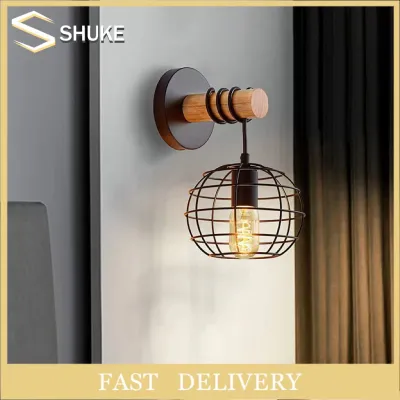
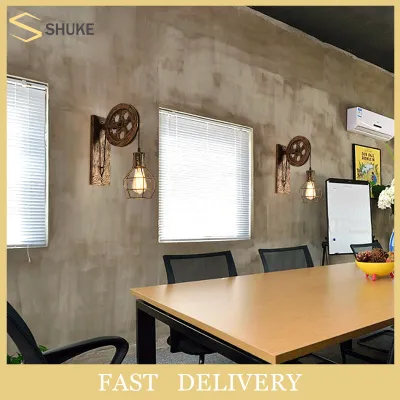
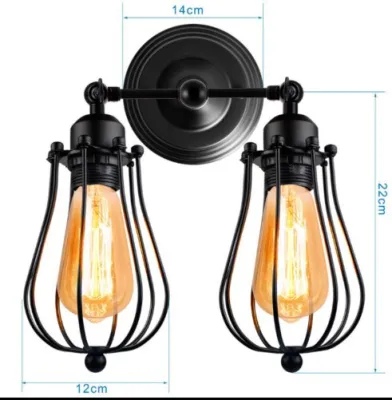
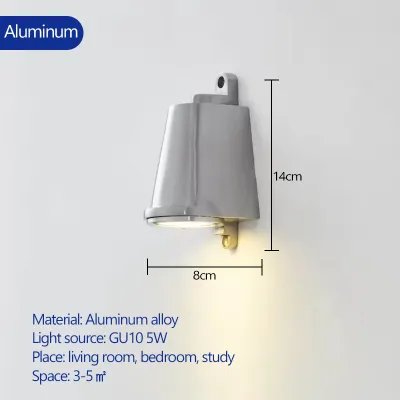
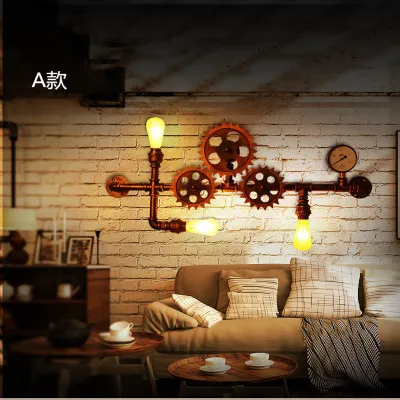
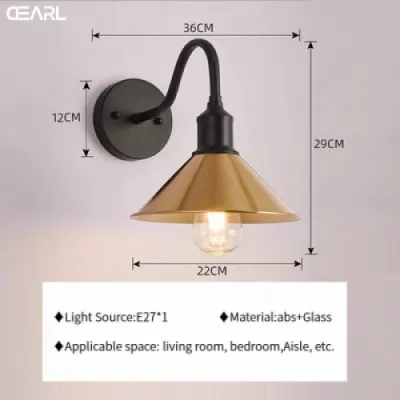
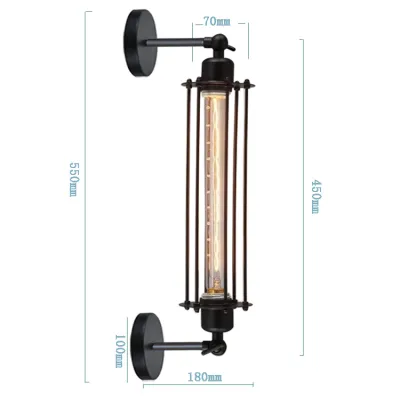
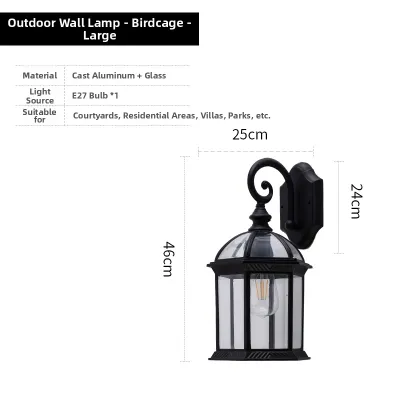
Prices are valid at publication and may change. Please refer to the product page for the latest price.
Corridor: Safe Navigation and Ambient Glow
For hallways, stairwells, and transitional corridors, the primary goal of lighting is to provide uniform, ambient illumination that makes walking safe and comfortable. Because these spaces are typically narrow, you want to avoid harsh, concentrated beams that create dark corners or blind someone walking down the hall at night.
- Lumen Output: Aim for a moderate brightness level of roughly 300 to 500 lumens per fixture. This is sufficient to illuminate the floor path clearly without feeling overly bright or clinical.
- Light Direction and Diffusion: Look for industrial fixtures that offer diffuse or downward-directed light. Sconces with frosted glass covers, opal globes, or wide metal shades that point downward (such as classic barn-style lights) are excellent choices. They direct the light toward the floor where it is needed most while shielding the eyes from direct bulb glare.
- Bulb Selection: If you opt for vintage-style LED filament bulbs to complement your industrial theme, select a warm color temperature between 2200K and 2700K. This warm amber glow mimics traditional carbon-filament bulbs, creating a welcoming atmosphere. Ensure the bulb glass is slightly amber-tinted or clear, but pair it with a shade that prevents the glowing filaments from being directly at eye level as you walk past.
Bedside: Focused Reading and Glare Control
In the bedroom, the lighting requirements shift from general transit illumination to localized task and accent lighting. Your bedside lamp must provide enough focused light for reading or working on a tablet, but it must also be capable of softening into a relaxing glow that prepares your body for sleep.
- Lumen Output: A lower brightness of 150 to 300 lumens is generally ideal for bedside reading. This prevents high-contrast eye strain in an otherwise dark room and avoids disturbing a sleeping partner.
- Adjustability and Beam Control: Choose industrial fixtures with deep, solid metal shades—such as mechanical swing-arm lamps, pulley-style sconces, or adjustable spot designs. These fixtures allow you to physically direct the beam of light precisely onto your book or lap, keeping the rest of the bed in comfortable shadow.
- Glare Reduction: Avoid open wire-cage designs or bare bulb fixtures for the bedside. When lying down, your viewing angle is much lower than when standing, which makes exposed bulbs highly uncomfortable. If you must use an open fixture, equip it with a dimmable LED bulb and a physical dimmer switch so you can dial down the intensity to a bare whisper of light.
Sizing and Mounting: Clearance vs. Reachability
The physical dimensions of your industrial wall lamp and its placement on the wall are just as important as the light it emits. An incorrectly sized or poorly positioned fixture can become a physical hazard in a hallway or an ergonomic nuisance in the bedroom.

Corridor: Space-Saving and Traffic Clearance
Corridors are functional pathways where spatial clearance is the absolute priority. In typical residential layouts, hallways can be narrow, making it easy to accidentally bump into protruding objects.
- Fixture Depth and Profile: Select low-profile, flush-mount, or semi-flush industrial sconces. Ideally, the fixture should not protrude more than 10 to 15 centimeters (4 to 6 inches) from the wall. Avoid oversized industrial lanterns, long articulating arms, or deep cage fixtures that extend far into the walking path, as these can easily catch on clothing, bags, or shoulders.
- Mounting Height Guidelines: Install corridor sconces so that the bottom of the fixture is approximately 1.5 to 1.7 meters (60 to 66 inches) above the finished floor. This height keeps the light source slightly above average eye level for most people, preventing direct glare while ensuring the light casts downward and outward to illuminate the pathway evenly.
- Spacing Along the Wall: If you are installing multiple fixtures along a long hallway, space them roughly 1.8 to 2.4 meters (6 to 8 feet) apart. This consistent spacing ensures an even distribution of light, eliminating dark pockets without overcrowding the wall with heavy metal fixtures.
Bedside: Nightstand Proportions and Ergonomics
Bedside placement is highly personal and must be tailored to the height of your bed, the size of your nightstand, and your physical reach.
- Proportional Scaling: The scale of the wall lamp should complement your headboard and nightstand. A massive, heavy iron pipe fixture can overwhelm a delicate wooden bedside table, while a tiny sconce might look lost next to a tall, padded headboard. Choose a fixture whose physical size feels balanced within the immediate bedside vignette.
- Ergonomic Mounting Height: When sitting up in bed, the bottom of the lampshade should be roughly at your shoulder height—typically 1.2 to 1.4 meters (48 to 55 inches) from the floor. This positioning ensures that the light shines directly onto your reading material rather than directly into your eyes.
- Reach and Articulation: If you select a swing-arm or scissor-arm industrial lamp, mount it close enough to the bed so you can easily adjust the arm, tilt the shade, or reach the power switch without having to sit up completely or strain your back. The fixture should extend far enough to light your reading area but fold back neatly against the wall when not in use to keep the bedside table surface clear.
Switch Placement and Control Convenience
How you turn your lights on and off dictates your daily comfort. The ideal control method for a transitional space like a corridor is completely different from the convenient, low-effort control required at your bedside.
For corridor lighting, convenience means centralized control. These fixtures are almost always hardwired into the home’s electrical system and controlled by standard wall switches located at both ends of the hallway (known as three-way switches). This setup allows you to turn the lights on as you enter the corridor and turn them off as you exit. For modern convenience, you can also integrate motion-sensor switches or smart wall switches, allowing the corridor lights to illuminate automatically when someone walks by’a highly practical feature for late-night trips to the bathroom or kitchen.
At the bedside, convenience means physical accessibility from a lying position. Leaning out of bed to reach a wall switch or fumbling in the dark for a tiny toggle on a hot metal fixture is frustrating and unsafe.
- Integrated Switches: Look for bedside industrial sconces that feature built-in rotary dimmers, vintage toggle switches, or paddle switches directly on the backplate or the base of the lamp.
- Plug-In Cord Switches: If hardwiring is not an option, many industrial sconces are designed as plug-in fixtures. Ensure the cord features an inline rocker switch or a foot pedal switch positioned at a height that is easy to reach from your mattress.
- Smart Control Workarounds: Retrofitting your industrial fixtures with smart LED bulbs is an excellent way to bridge the gap between vintage style and modern convenience. By using a smart bulb, you can adjust the brightness, change the color temperature, and turn the light off using a smartphone app, a voice assistant, or a wireless smart button placed directly on your nightstand.
Design Consistency: Using the Same Fixture in Both Spaces
Achieving a cohesive interior design throughout your home is a common goal, and using matching lighting fixtures can help tie different rooms together. However, because corridors and bedsides have such different functional needs, using the exact same industrial wall lamp model in both locations can introduce practical challenges.
If you are determined to use the same fixture model, look for highly versatile industrial designs that can adapt to both environments. For example, a simple, minimalist industrial bulkhead light or a compact, hooded barn sconce can work in both spaces. In the corridor, you can mount these fixtures flush to the wall with medium-output bulbs. At the bedside, you can install the same model but equip it with a lower-wattage, warm-toned, dimmable bulb to soften the light output.
Alternatively, you can achieve visual consistency without sacrificing functionality by selecting different fixture models from the same design collection or brand. This approach allows you to use a fixed, low-profile sconce in the narrow corridor and a flexible, matching swing-arm lamp next to the bed. By keeping key design elements consistent—such as using the same matte black or antique brass metal finish, matching the industrial pipe detailing, and utilizing the same style of warm LED filament bulbs—you create a unified aesthetic thread that runs seamlessly from your hallway into your bedroom.
Pre-Installation Checks and Electrical Safety
Installing industrial wall lamps requires careful preparation, as these fixtures are often constructed from heavy materials like cast iron, steel, and thick glass, making them significantly heavier than standard plastic or thin aluminum sconces.
Before purchasing or mounting any fixture, perform these essential safety and compatibility checks:
- Verify Wall Structural Integrity: Ensure your wall can support the weight of a heavy industrial fixture. In many homes in the Philippines, interior walls are constructed of solid concrete or concrete hollow blocks (CHB). Mounting heavy fixtures on concrete requires a hammer drill, masonry drill bits, and heavy-duty wall plugs (tox) to ensure the screws remain secure. If you are mounting to drywall or wood paneling, you must secure the mounting bracket directly into a wall stud or use high-quality toggle bolts rated for the fixture’s weight.
- Check Voltage and Electrical Standards: Always verify that the fixture and the bulbs you choose are fully compatible with the local electrical grid in the Philippines, which operates at 220V and 60Hz. Using fixtures or bulbs designed solely for 110V systems without a proper transformer can cause immediate electrical failure, fire hazards, or permanent damage to the LEDs. Ensure the products carry recognized electrical safety certifications.
- Isolate the Power: Before attempting any electrical work, locate your home's main breaker panel and turn off the power to the specific lighting circuit you will be working on. Use a reliable non-contact voltage tester to verify that the wires inside the junction box are completely dead before touching them.
- Consult a Professional: If your chosen location does not have an existing junction box, if you need to run new wiring through concrete walls, or if you are dealing with older electrical systems that lack proper grounding, do not attempt a DIY installation. Always consult a licensed electrician to handle the wiring, ensure code compliance, and guarantee a safe, durable installation.
Community discussion
Share your experience or ask a question. Comments are reviewed before publication.