
Creating a cozy, restful sanctuary in your bedroom relies heavily on soft, indirect lighting that helps your mind wind down after a long day. Bendable Christmas lights offer a highly customizable way to achieve this, allowing you to shape, wrap, or outline your space to match your personal style. The ideal bendable lights for bedroom ambiance are those that emit a warm, gentle glow, operate at safe, low temperatures, and offer physical flexibility tailored to your specific decor project.
For delicate, intricate designs like wrapping a headboard or weaving lights through indoor plants, ultra-thin copper wire fairy lights are the most effective choice. If your goal is to create clean, modern geometric shapes or glowing wall art, flexible silicone neon rope lights provide the structural rigidity and diffused output needed for a polished look. By focusing on adjustable brightness, safe power sources, and proper installation techniques, you can transform your sleeping space into a warm, inviting retreat.
Understanding Bendable Light Types for Bedroom Use
When planning your bedroom lighting layout, the physical structure of the bendable lights determines how easily you can execute your design. Copper wire fairy lights consist of micro-LEDs embedded directly into thin, insulated metallic wires. This construction offers extreme flexibility, allowing you to bend the string into tight angles, wrap it around thin bedposts, or coil it neatly inside decorative glass jars. Because the wire holds its shape with minimal tension, it is perfect for delicate, detailed styling where you want the light source itself to remain almost invisible when turned off.
Products mentioned in this guide
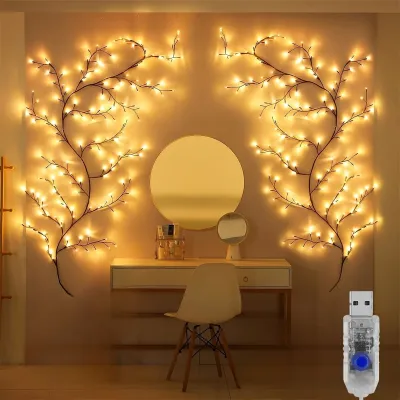
Prices are valid at publication and may change. Please refer to the product page for the latest price.
In contrast, flexible silicone neon rope lights utilize a thicker, continuous silicone sleeve that houses a dense strip of LEDs. This design diffuses the individual light points into a single, seamless line of color, mimicking traditional neon signs. While they are still bendable, neon ropes have a much larger bending radius and are designed to hold broader, structural shapes. They are ideal for mounting flat against walls to outline geometric patterns, spell out words, or frame large pieces of art, providing a bold and modern visual profile.
Choosing between these two types requires evaluating the trade-off between intricate malleability and structural stability. Copper wire lights are incredibly lightweight and require very little support, making them easy to drape over soft fabrics or weave through artificial vines. However, they can easily tangle and are susceptible to snapping if bent repeatedly in the exact same spot. Silicone neon ropes are highly durable and resist moisture well, but their heavier weight requires more robust mounting hardware and they cannot be wrapped tightly around small objects.
Key Features to Check for a Warm and Cozy Ambiance
Achieving a relaxing bedroom atmosphere depends heavily on selecting the correct light quality to avoid eye strain and sleep disruption. When browsing online marketplaces, pay close attention to the color temperature labels on the product packaging. For a cozy, candle-like glow, look for lights specified as “warm white,” which typically fall within a Kelvin range of 2200K to 2700K. Avoid lights labeled “cool white” or “daylight” (often 5000K or higher), as these emit a blue-toned light that can interfere with your body’s natural sleep cycle and feel clinical in a bedroom setting. Note that perceived color temperature and its spatial effect are highly subjective; what feels cozy to one person may feel too dim to another, so personal preference plays a significant role.

Control over brightness is another essential feature for bedroom ambient lighting. Look for bendable lights that feature integrated dimming capabilities, either through an inline controller, a remote, or a compatible mobile application. Having multiple dimming levels allows you to transition the room from a functional reading environment to a soft, low-light setting conducive to sleep. Additionally, verify that the light controller includes a “steady-on” mode; many holiday lights default to aggressive flashing, chasing, or strobe patterns that are highly distracting in a quiet sleeping space.
The physical design of the light source also dictates how the light is dispersed across your room. Exposed micro-LEDs on copper wire emit light in a 360-degree beam angle, creating bright, sparkling points of light that can cause glare if positioned directly in your line of sight from the bed. To minimize glare, you can position wire lights behind a headboard or drape them behind sheer curtains to naturally diffuse the output. Silicone neon ropes, on the other hand, feature built-in frosted covers that diffuse the light evenly, eliminating harsh hotspots and providing a smooth, comfortable glow even when mounted in direct view.
Power Options and Safety Considerations for Bedrooms
Selecting the right power source for your bedroom lights involves balancing convenience, aesthetics, and safety. Battery-operated bendable lights offer excellent mobility, allowing you to place them in areas without nearby wall outlets, such as inside a closet or on a floating shelf. However, continuous bedroom use can quickly drain standard batteries, leading to recurring replacement costs and unnecessary waste. For daily ambient lighting, USB-powered or traditional plug-in models are generally more practical and sustainable, provided you can safely route the cables along your walls or furniture.
Safety is paramount when installing electrical decor near your sleeping area, particularly regarding heat emission and electrical specifications. Because bedroom styling often involves placing lights in close contact with flammable materials like bed linens, wooden headboards, or paper decorations, you must verify that the lights operate at a low temperature. High-quality LED bendable lights are inherently efficient and emit very little heat, but it is still crucial to check the manufacturer’s specifications to ensure they are rated for low-voltage operation (typically 5V for USB or 12V/24V via an adapter) and have a low wattage limit. Avoid high-wattage, line-voltage incandescent strings, which can become hot to the touch and pose a fire hazard when covered or left on for extended periods.
If your installation involves work at height—such as mounting lights along high ceilings or cornices—or if you plan to integrate fixed wiring into your bedroom walls, always prioritize safety boundaries. Ensure complete power isolation before beginning any installation, follow the manufacturer’s instructions carefully, and consult a qualified professional for any complex electrical work. To enhance daily safety and convenience, prioritize bendable lights that include built-in timers or remote control functions. A timer allows you to program the lights to turn off automatically after a set number of hours, ensuring they do not run all night while you sleep, which conserves energy and minimizes wear on the electrical components.
Creative Shaping and Positioning Ideas for Your Space
Installing your bendable lights securely without damaging your bedroom’s surfaces requires careful planning and the right tools. For renters or those concerned about wall paint, damage-free mounting solutions are essential. Lightweight copper wire lights can be easily held in place using small, clear adhesive clips, mounting putty, or even wrapped gently around existing fixtures like tension rods or bedposts. When dealing with the humid tropical climate of the Philippines, standard adhesives can sometimes lose their grip over time; look for moisture-resistant adhesive strips specifically rated for indoor use to ensure your lights stay securely mounted.
Creating a clear focal point helps anchor the room’s design and prevents the lighting from looking cluttered. Consider outlining the perimeter of your headboard with copper wire lights to create a soft halo effect against the wall, or frame a vanity mirror to provide functional yet warm illumination. If you have a canopy bed, draping lightweight fairy lights across the top frame creates a starry, whimsical canopy. For a more modern aesthetic, use flexible silicone neon ropes to create minimalist line art on an empty wall, such as a simple wave pattern or a geometric silhouette that complements your bedroom furniture.
Before finalizing your layout, always consider the weight and support limits of your chosen mounting method. While a few pieces of mounting putty can easily support a delicate copper wire string, a thicker silicone neon rope requires sturdier backing. Neon ropes often come with mounting brackets or tracks that must be screwed or firmly adhered to the wall. Ensure that your wall surface—whether it is painted drywall, concrete, or wallpaper—is clean, dry, and compatible with the mounting hardware to prevent the heavy silicone tubing from sagging or falling over time.
Building Your Shortlist: What to Verify Before Buying
Before purchasing your bendable lights from an online marketplace or local home store, take a few minutes to verify the physical specifications against your planned layout. Measure the exact area you want to illuminate and compare it to the total illuminated length of the light string. Equally important is the lead wire length—the distance from the first light bulb to the plug or battery pack. A short lead wire can leave your power adapter dangling awkwardly in mid-air or force you to use unsightly extension cords, so ensure the lead wire is long enough to reach your nearest outlet discreetly.
Next, carefully inspect the product packaging or online specifications for safety certifications, base/interface compatibility, and environmental ratings. Verify whether the lights use a standard USB interface, a proprietary DC adapter, or a standard wall plug, and ensure your bedroom outlets can accommodate them safely. In tropical environments where indoor humidity can fluctuate, checking for a basic IP (Ingress Protection) rating, such as IP44, can provide peace of mind against accidental spills or moisture buildup. Never assume a product is safe for bedroom use based on its visual appearance alone; always verify the technical labels and electrical certifications.
Finally, review the seller’s return policies and warranty terms before completing your transaction. Bendable lights, particularly delicate copper wire models, can occasionally suffer damage during shipping or have manufacturing defects like dead LED segments or faulty controller chips. Choosing a seller that offers a straightforward return window or a basic warranty ensures you can easily exchange the product if it arrives with stiff, un-bendable sections or fails to light up upon arrival. Taking these precautionary steps helps guarantee a smooth installation and a long-lasting, cozy addition to your bedroom.
Frequently Asked Questions (FAQ)
Can I leave bendable Christmas lights on all night?
While modern LED bendable lights are highly efficient and generate minimal heat, it is generally not recommended to leave them running unattended all night. Always consult the manufacturer’s instructions for the maximum recommended continuous run times and specific heat dissipation guidelines. To ensure safety and prolong the lifespan of the lights, utilize built-in timers, remote controls, or smart plugs to automatically shut the system off after you fall asleep.
How do I untangle or store wire fairy lights without breaking them?
To prevent damaging the delicate internal connections of copper wire lights, always unspool them slowly and avoid making sharp, aggressive bends, especially near the solder joints or power connections. When storing the lights after the holiday season, wrap them gently around a piece of clean cardboard, a plastic spool, or use Velcro straps to secure the coils. Storing them flat in their original packaging prevents severe knotting and protects the thin wires from being crushed or stretched.
Community discussion
Share your experience or ask a question. Comments are reviewed before publication.