
Moroccan ball solar string lights offer an elegant way to transform outdoor gardens, patios, and balconies into inviting, glowing sanctuaries. The intricate metal cutouts of these spherical lanterns cast beautiful, exotic shadow patterns across pathways and foliage, creating a cozy ambiance without adding to your household electricity bill. However, selecting the right set for a tropical environment requires looking beyond aesthetics to evaluate weatherproofing, battery capacity, and material durability.
The climate in the Philippines presents unique challenges for outdoor electronics, characterized by intense heat, high humidity, and sudden torrential downpours. To ensure your decorative lighting survives the elements and performs consistently year-round, you must understand how to evaluate technical specifications and material builds. This guide provides a practical framework for choosing, planning, and maintaining Moroccan ball solar string lights to achieve a reliable and visually stunning garden display.
Key Selection Criteria for Moroccan Ball Solar Lights
When browsing online marketplaces, the product descriptions can often feel overwhelming with technical jargon. The first step in filtering your options is understanding the solar panel and battery specifications, which directly dictate how long and how brightly your lights will shine. Look for monocrystalline solar panels if your garden receives partial shade or if you want better charging efficiency during overcast days. Polycrystalline panels are more common and budget-friendly, but they require longer exposure to direct, unobstructed sunlight to achieve a full charge.
Products mentioned in this guide
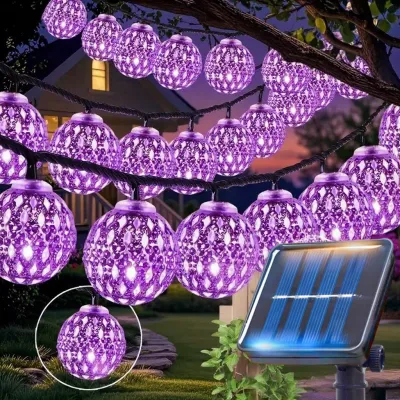
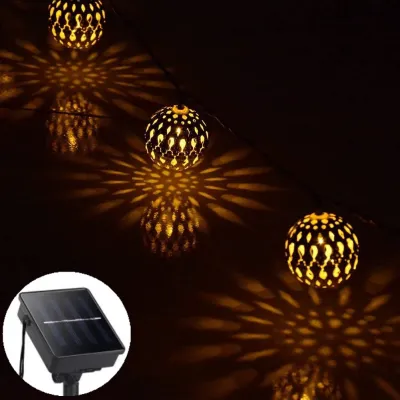
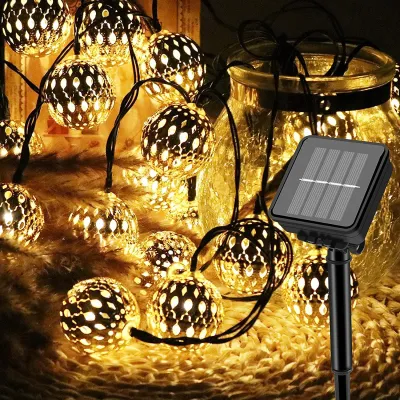
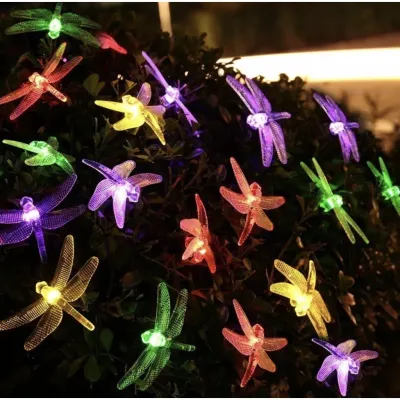
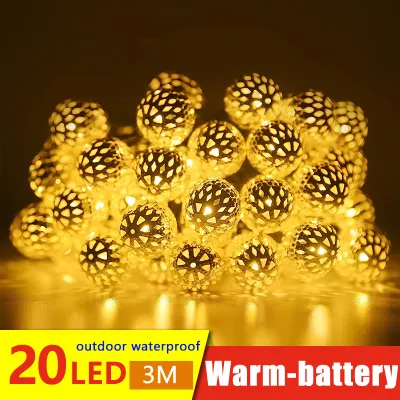
Prices are valid at publication and may change. Please refer to the product page for the latest price.
The battery housed inside the solar panel unit acts as the engine for your nighttime display. Most standard solar string lights utilize rechargeable Nickel-Metal Hydride (Ni-MH) batteries, typically rated between 600mAh and 800mAh. For longer runtimes, look for upgraded models featuring Lithium-ion (Li-ion) batteries or higher-capacity Ni-MH cells rated at 1200mAh or above. A higher milliampere-hour (mAh) rating means the battery can store more energy, allowing the lights to remain illuminated deep into the night.
Waterproofing is non-negotiable for any outdoor lighting installation in a tropical climate. Always verify the Ingress Protection (IP) rating of the string lights before making a purchase. An IP65 rating is the recommended baseline for outdoor gardens, indicating that the system is completely dust-tight and protected against water jets from any angle. Avoid lower ratings like IP44 for fully exposed areas, as they only protect against light splashes and are highly prone to water ingress during heavy monsoon rains.
Lighting modes and color temperatures are conditional preferences that depend entirely on your desired spatial effect. Many Moroccan ball sets offer multiple operating modes, such as steady-on, slow fade, sequential, and flashing, allowing you to customize the atmosphere for quiet evenings or festive gatherings. Warm white LEDs (ranging from 2700K to 3000K) are highly popular for these lights because they enhance the golden, metallic warmth of the spheres. Cool white LEDs (5000K or higher) provide a brighter, crisper light but can sometimes make the intricate shadow patterns look sharp or clinical.
Finally, check for electrical certifications such as CE or RoHS on the product packaging or specifications sheet. Even though solar string lights operate on safe, low-voltage direct current (typically 1.2V to 3.7V), these certifications ensure the internal circuitry and batteries have been manufactured to basic safety and environmental standards. If you plan to purchase a model that includes a backup USB charging port for rainy days, verifying these safety standards is even more critical to prevent short circuits.
Matching Light Specifications to Your Garden Layout
Before ordering your lights, take precise measurements of the garden features you plan to decorate. Whether you are wrapping the string around a wooden pergola, draping it along a concrete fence, or weaving it through tree branches, knowing the exact distance is crucial. Always check the product specifications for the “lead cable” length, which is the distance from the solar panel to the very first bulb. A generous lead cable of two to three meters allows you to position the solar panel in a sunny spot while keeping the decorative balls in a shaded seating area.

Bulb spacing is another critical factor that influences the overall visual density of your display. Moroccan ball string lights typically feature spacing ranging from 10 to 20 centimeters between each sphere. Closer spacing creates a concentrated, dramatic pattern of light and shadow, making it ideal for compact spaces like balconies, small patios, or tightly wound tree trunks. Wider spacing is better suited for spanning long fences or outlining large garden perimeters where a subtle, twinkling accent is preferred.
To determine how many strings you need, calculate the total length required and compare it to the standard lengths available on online marketplaces, which often range from 5 meters (with 20 to 30 bulbs) to 10 meters (with 50 to 60 bulbs). While basic plastic models might cost under ₱300, investing in durable, rust-resistant metal sets priced between ₱500 and ₱1,500 often saves money in the long run. If your layout requires multiple strings, ensure you plan the placement of multiple solar panels, as most low-voltage solar strings cannot be safely connected end-to-end like traditional high-voltage mains-powered lights.
Solar panel placement requires careful observation of your garden’s daily sun patterns. The panel must receive at least six to eight hours of direct, unobstructed sunlight to charge the battery fully. Avoid placing the panel directly under roof gutters, dense tree canopies, or garden walls that cast long shadows during the peak hours of 10:00 AM to 2:00 PM. If your ideal garden layout is heavily shaded, look for a light set with a detachable solar panel that can be mounted on a nearby sunny roof or fence post.
Material and Build Quality Checks
The physical materials of the Moroccan balls themselves play a massive role in how well they withstand the local climate. Authentic Moroccan-style spheres are made of metal, which allows for precise, intricate cutouts that project beautiful geometric shadows. However, untreated iron or cheap steel will rust rapidly when exposed to high humidity and rain. Look for spheres made of corrosion-resistant materials such as brass, copper, or aluminum, or ensure the product description explicitly states that the metal has been treated with a rust-resistant, outdoor-grade coating.
As an alternative, some manufacturers offer Moroccan-style balls made of metallic-finished plastics or synthetic resins. While these plastic options are completely immune to rust and are highly shatterproof, they have their own trade-offs. Over time, intense ultraviolet (UV) exposure from the sun can cause cheap plastics to become brittle, crack, or lose their metallic luster. If you choose plastic spheres, verify that they are rated as UV-resistant to ensure they do not degrade prematurely under the sun.
The quality of the wiring is just as important as the bulbs themselves. Outdoor string lights require durable, insulated copper wires to carry the low-voltage current safely. Look for wires insulated with thick, flexible PVC or rubber rather than thin, fragile plastic coatings. Thick insulation protects the copper core from moisture ingress, physical wear from wind movement, and degradation from constant sun exposure. Flimsy wires are highly prone to snapping under the weight of the metal balls or cracking after a few months outdoors.
Finally, inspect the sealing quality at the critical connection points of the light string. The areas where the wires enter the individual bulb sockets and the solar panel housing are the most common entry points for moisture. High-quality outdoor lights feature rubber gaskets, silicone seals, or tight-fitting plastic collars at these joints to keep water out. Reading user reviews on online marketplaces can provide valuable clues; look for feedback mentioning whether the lights stopped working after a heavy downpour, which often points to poor sealing.
Installation and Maintenance Best Practices
Proper installation is key to maximizing the lifespan of your Moroccan ball solar lights. When mounting the string, always follow the manufacturer’s instructions and avoid using metal staples, nails, or tight wire ties that can pinch, cut, or wear down the wire insulation. Instead, use plastic zip ties, insulated cable clips, or outdoor-rated adhesive hooks to secure the string. If you are hanging the lights at a height, such as along a high pergola or roofline, prioritize safety by using a sturdy, stable ladder and ensuring the power is off if you are working near any existing electrical fixtures.
When positioning the solar panel, mount it at an angle of approximately 15 to 20 degrees facing south. This angle is highly effective for capturing the maximum amount of sunlight throughout the year in the northern hemisphere. Additionally, a tilted panel allows rainwater to run off the surface naturally, which helps wash away loose dust and prevents water pooling on the solar cells. Ensure the mounting bracket is screwed tightly to its stake or wall mount so it does not shift during strong winds.
Routine maintenance is essential to keep your solar lights operating at peak brightness. Dust, pollen, and bird droppings can quickly accumulate on the solar panel, blocking sunlight and drastically reducing charging efficiency. Wipe the surface of the panel with a soft, damp microfiber cloth every few weeks; avoid using abrasive scrubbers or harsh chemical cleaners that could scratch or cloud the protective cover. At the same time, gently wipe down the Moroccan ball shades to remove dirt or cobwebs that might dull the light output.
If you notice a significant drop in the runtime of your lights after several months of use, the rechargeable battery inside the solar panel housing may need to be replaced. Most solar panels feature a small compartment on the back secured by screws, allowing you to swap out the old battery easily. Always replace it with a battery of the same chemistry (such as Ni-MH) and voltage, and ensure the compartment cover is screwed back on tightly to maintain the waterproof seal. If you must perform any maintenance on the internal wiring, ensure the system is completely powered down first.
Frequently Asked Questions (FAQ)
How long do solar string lights typically stay on at night?
Under optimal conditions with a full charge, high-quality solar string lights typically stay illuminated for eight to ten hours. However, the actual runtime depends heavily on the amount of direct sunlight the panel received during the day, the capacity of the battery, and the selected operating mode. On heavily overcast or rainy days, the charging efficiency drops, which may reduce the nighttime runtime to three to five hours. Selecting a flashing or dimming mode instead of a steady-on mode can help conserve battery power and extend the illumination time on cloudy days.
Can I leave solar string lights outside during heavy rain?
Yes, provided your string lights have an IP65 or higher waterproof rating, they are designed to withstand typical tropical rain showers and high humidity. However, they are not designed to be submerged in standing water or subjected to high-pressure water streams. During severe weather events, such as typhoons or localized flooding, it is highly recommended to temporarily take down the lights and store the solar panel indoors. This simple precautionary step protects the delicate internal electronics from physical damage caused by strong winds, flying debris, and extreme water exposure.
Community discussion
Share your experience or ask a question. Comments are reviewed before publication.