
Choosing the right bedroom lights ceiling fixtures—specifically recessed LED panels—requires balancing visual comfort with technical compatibility. Unlike high-activity spaces, a bedroom is a sanctuary for rest, meaning the lighting must support relaxation while remaining functional. To select the ideal fixtures, you must focus on key specifications: a warm color temperature, an appropriate lumen output distributed to prevent harsh glare, an edge-lit design for uniform illumination, and robust dimming capabilities. Additionally, verifying physical ceiling depth, local electrical standards, and proper installation protocols ensures safety and long-term performance.
Decoding Color Temperature for Better Sleep
Color temperature, measured on the Kelvin (K) scale, dictates the visual warmth or coolness of the light. This metric directly influences the bedroom’s ambiance and your body’s natural circadian rhythm. Lower Kelvin ratings represent warmer, amber light, while higher ratings lean toward cool, blue-toned white light.
For general bedroom ambient lighting, warm white light within the 2700K to 3000K range is the ideal choice. This spectrum mimics the gentle glow of a setting sun, helping signal the brain to relax and supporting natural melatonin production.
Products mentioned in this guide
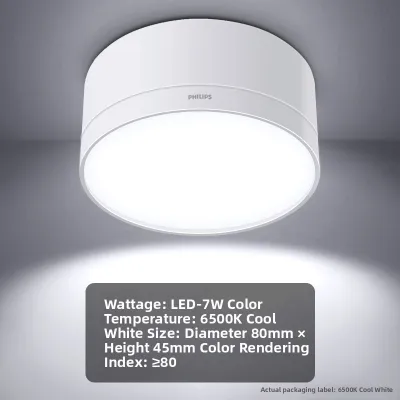
Prices are valid at publication and may change. Please refer to the product page for the latest price.
In contrast, cool white light of 4000K and above should generally be avoided in main sleeping areas. Cool white light contains higher blue wavelengths, which can suppress melatonin and keep you alert. However, cool white light remains conditionally useful if restricted to dedicated task zones, such as a study desk or a makeup vanity.
When shopping, avoid relying on vague marketing terms like “soft white,” which vary significantly between brands. Instead, always inspect the product packaging or specification sheet to verify the exact Kelvin rating to ensure a consistent color temperature across all installed fixtures.
Lumens vs. Watts: Calculating the Right Bedroom Brightness
Transitioning to modern LED technology requires shifting focus from power consumption to actual light output. Watts measure the electrical energy a fixture consumes, whereas lumens measure the actual brightness emitted. Because modern LEDs are highly efficient, a lower-wattage panel can produce the same brightness as older, high-wattage fixtures.

To determine the correct brightness, you should calculate the total lumen requirement based on your bedroom’s square footage. Generally, bedrooms require lower ambient light levels compared to kitchens or workspaces. A standard baseline for bedroom ambient lighting is approximately 10 to 20 lumens per square foot. For example, a 150-square-foot bedroom would require roughly 1,500 to 3,000 total lumens.
Instead of installing a single, high-output panel that creates harsh shadows, it is better to distribute this total lumen requirement across multiple smaller recessed panels. Spacing out several low-lumen fixtures provides even, diffused illumination. You can also supplement these panels with secondary accent lighting, such as bedside lamps, to create adjustable layers of light.
When evaluating products, prioritize checking the certified “lumen output” specification on the manufacturer’s technical sheet rather than relying on “wattage equivalent” marketing claims. The wattage equivalent is often a generalized estimate, whereas the lumen rating provides the precise measurement needed to plan your layout.
Edge-Lit vs. Direct-Lit: Choosing the Best Panel Design
Recessed LED panel lights generally feature one of two internal structural designs: edge-lit or direct-lit. Understanding the optical differences between these designs is crucial for maximizing visual comfort in a bedroom, where you will frequently look upward from a bed.
Edge-lit panels house the LED chips along the inner perimeter of the frame. The light is directed inward and channeled through a specialized light guide plate and diffuser, resulting in a thin physical profile and a highly uniform, glare-free output. Direct-lit panels feature LEDs mounted directly behind the diffuser, pointing straight down. This design requires a deeper housing to allow the light to spread, and lower-quality models can sometimes produce visible hotspots or uneven patches of brightness.
For most bedroom applications, edge-lit designs are highly recommended. Their ultra-slim profile makes them easier to install in shallow ceiling cavities, and their highly diffused light distribution prevents the uncomfortable glare that can strain your eyes when looking up at the ceiling.
Direct-lit panels may be chosen if higher lumen output is strictly required and ceiling depth is not a constraint. However, because bedrooms rarely require intense, high-output illumination, the visual comfort and sleek aesthetics of edge-lit panels make them the superior choice for a relaxing environment.
Dimmability and Smart Controls for Evening Routines
The ability to adjust your light levels is essential for transitioning from daytime activities to a restful night’s sleep. Dimmable recessed panel lights allow you to lower the brightness for reading or winding down, helping your mind prepare for rest.
To achieve smooth dimming without issues, you must ensure hardware compatibility. The LED panel and its dedicated driver must be explicitly certified as “dimmable” by the manufacturer. Operating a non-dimmable panel on a dimmer switch can damage the internal driver, cause persistent flickering, or produce an audible buzzing sound. Furthermore, you must pair the dimmable panel with a compatible LED-rated dimmer switch, as older incandescent dimmers are often incompatible with low-wattage LED drivers.
For enhanced flexibility, consider smart panel specifications such as “tunable white” technology. Tunable panels allow you to adjust both the brightness and the color temperature via a smartphone app or voice commands. This means you can program the lights to emit a brighter, cooler light in the morning to help you wake up, and automatically transition to a dim, warm amber glow as bedtime approaches.
Before purchasing, always verify the specific dimming protocol used by the fixture, such as TRIAC, 0-10V, or wireless protocols like Wi-Fi or Zigbee. Confirming that the fixture matches your existing wall switches or smart home ecosystem prevents costly compatibility errors.
Sizing, Trims, and Ceiling Installation Specs
Selecting the right recessed panel lights also involves matching the physical dimensions and electrical requirements of the fixtures to your bedroom’s ceiling structure and local safety standards. Recessed panels come in standard cut-out sizes—typically ranging from 3 inches to 8 inches—and are available in round, square, or rectangular shapes. It is vital to measure both the visible ceiling surface and the depth of the ceiling cavity before finalizing your purchase.
The visual integration of the fixture depends heavily on the trim or bezel finish. White trims are popular because they blend seamlessly with standard white ceiling paint, while black or metallic trims can create a modern, high-contrast architectural look. Frameless or ultra-thin bezels offer a minimalist, flush appearance that minimizes visual clutter on the ceiling.
Safety must remain your top priority during selection and installation. In the Philippines, the standard electrical grid operates at 230V. You must verify that the LED driver is rated to handle this specific voltage to prevent premature component failure or electrical hazards. Additionally, ensure the ceiling cavity has adequate ventilation and clearance from insulation to dissipate the heat generated by the driver, particularly in warm, humid tropical climates.
Because installing recessed panels involves fixed electrical wiring, always isolate the power supply at the main circuit breaker before attempting any work. Follow the manufacturer’s installation instructions precisely, and consult a qualified professional or licensed electrician to handle the wiring, verify load limits, modify ceiling structures, or integrate new dimming circuits safely.
Frequently Asked Questions (FAQ)
Do I need a high CRI (Color Rendering Index) for bedroom panel lights?
The Color Rendering Index (CRI) measures how accurately a light source reveals the true colors of objects compared to natural sunlight, rated on a scale up to 100. While a high CRI of 90 or above is highly beneficial for areas where color accuracy is critical—such as walk-in closets, dressing areas, or makeup vanities—a standard CRI of 80 or above is perfectly sufficient for general bedroom ambient lighting. For the main ceiling panels, prioritizing features like smooth dimmability and correct color temperature will offer more practical comfort than investing extra in premium high-CRI fixtures.
Can I install recessed panel lights in a bedroom with a solid concrete ceiling?
True recessed panel lights require a hollow cavity, such as a gypsum, plasterboard, or acoustic tile drop ceiling, to house the fixture body and its external driver. Cutting deep recesses or routing wires directly into solid concrete structural slabs is unsafe, structurally prohibited, and can compromise the integrity of your home. If your bedroom has a solid concrete ceiling, you can opt for surface-mounted LED panels that attach directly to the concrete surface, or consider installing a localized faux drop ceiling to create the necessary cavity for recessed fixtures. Always consult a structural engineer or a qualified professional to assess your ceiling before planning any modifications.
Community discussion
Share your experience or ask a question. Comments are reviewed before publication.