
Decorating the exterior of a Filipino home for the holidays brings a unique sense of warmth and community, but running traditional plug-in lights across gates, gardens, and roofs can quickly drive up electricity bills. Solar Christmas lights offer an energy-efficient, self-sustaining alternative that harnesses the abundant tropical sunshine of the Philippines. To find the best options for your home, you must look beyond festive aesthetics and evaluate how well these fixtures can withstand local weather conditions, such as high humidity, sudden downpours, and intense heat. Choosing the right solar holiday lighting requires a systematic approach: verifying technical specifications, matching specific light styles to your home’s layout, and adhering to safe installation practices.
Key Specifications to Check Before Buying
Before purchasing any solar lighting setup from an online marketplace or local retailer, reviewing the manufacturer’s technical specifications on the packaging is essential for ensuring long-term performance and safety. The first and most critical specification to verify is the Ingress Protection (IP) rating. For outdoor holiday decorations exposed to the elements, look for a minimum rating of IP44, which protects against splashing water from any direction. If you plan to install lights in highly exposed areas like open lawns or roof eaves that face heavy monsoon rains, opting for an IP65 or IP66 rating provides superior protection against dust ingress and high-pressure water jets.
Next, examine the solar panel type and battery specifications listed by the manufacturer. Solar panels generally come in two types: monocrystalline and polycrystalline. Monocrystalline panels are typically more efficient at converting sunlight into electricity, making them highly suitable for areas that experience intermittent cloud cover. Polycrystalline panels are often more budget-friendly but may require longer exposure to direct sunlight to achieve a full charge. Pair this choice with a close look at the battery capacity, usually measured in milliampere-hours (mAh). A higher mAh rating indicates a larger energy storage capacity, which helps keep your holiday display illuminated deeper into the night.
Products mentioned in this guide
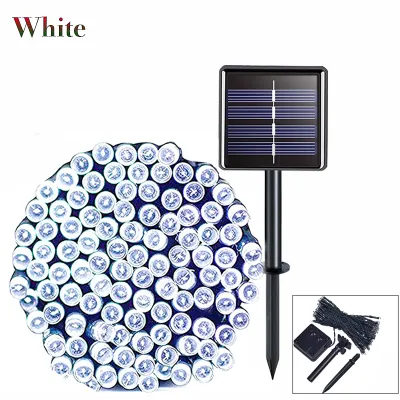
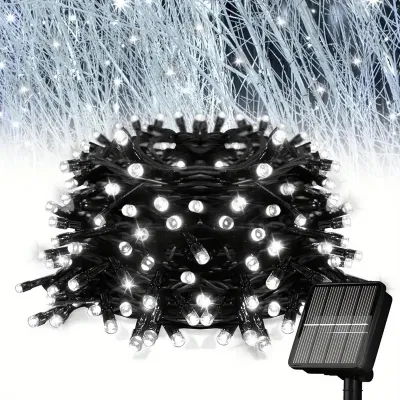
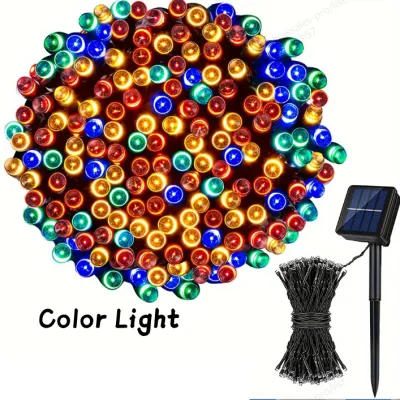
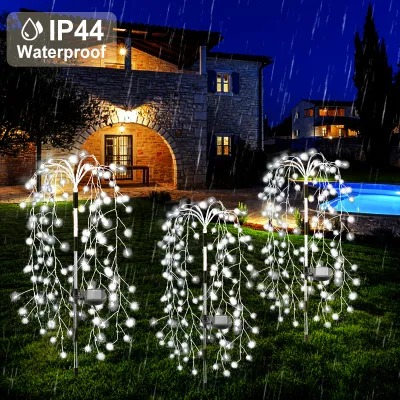
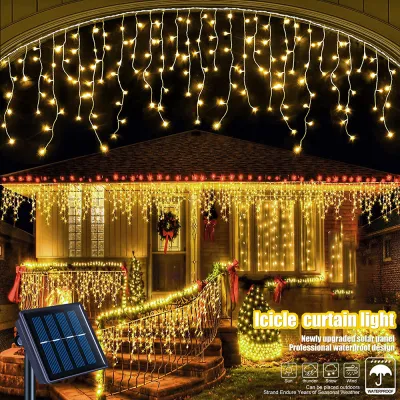
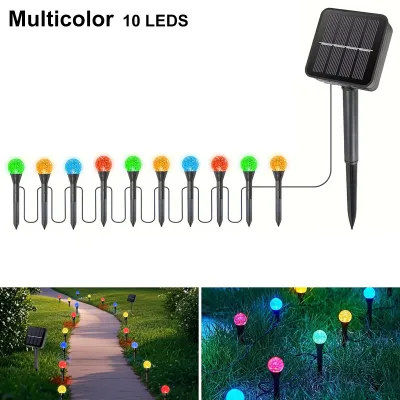
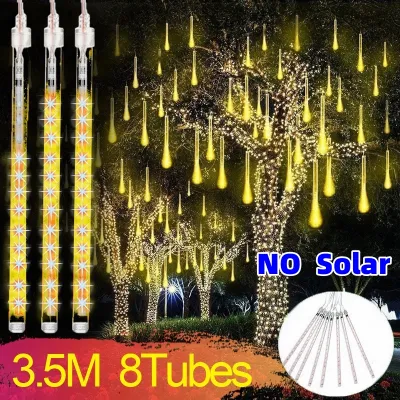
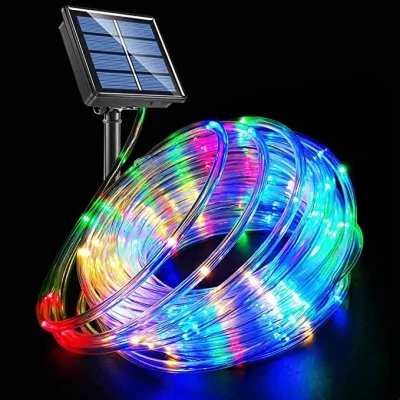
Prices are valid at publication and may change. Please refer to the product page for the latest price.
Establishing a realistic budget requires comparing the cost per meter or cost per unit in ₱. Outdoor holiday displays often require extensive coverage, so calculating the total cost of multiple interconnected strings or individual fixtures prevents unexpected expenses. While cheaper options might seem appealing initially, they may lack durable weatherproofing or efficient solar cells, leading to premature failure. Investing in mid-range or premium fixtures with clear manufacturer warranties and robust housing materials often yields better value over multiple holiday seasons.
Finally, check the listed working hours, charging time requirements, and electrical certifications on the product label. A reliable solar Christmas light set should specify how many hours of direct sunlight are needed to achieve a full charge and how long the lights will remain illuminated under optimal conditions. In the Philippines, where daylight hours remain relatively consistent but afternoon rain showers can limit direct sun exposure, look for fixtures that offer a favorable charging-to-working ratio. Additionally, verify the voltage and wattage limits of the solar controller, especially if the system allows for expansion or uses a hybrid plug-in adapter.
Matching Solar Light Styles to Outdoor Areas
Achieving a balanced and visually appealing holiday display involves pairing specific solar light form factors with the distinct architectural and landscape features of your exterior property. String lights, net lights, pathway stakes, and spotlights each serve a unique decorative purpose. For instance, draping net lights over shrubs creates a uniform glow, while wrapping flexible string lights around pillars highlights structural lines.

Visual trade-offs also extend to color temperatures and lighting modes. Warm white lights (typically around 2700K to 3000K) evoke a traditional, cozy atmosphere, whereas cool white lights (5000K to 6500K) deliver a bright, modern, and snowy aesthetic. Multi-color (RGB) lights offer dynamic, festive energy but can sometimes look chaotic if not coordinated. Many solar controllers feature multiple lighting modes, such as steady-on, slow fade, or flashing; select a mode that complements your neighborhood’s environment without causing a visual distraction.
Gates, Fences, and Driveways
The entrance of your home sets the tone for your holiday decor, making gates, fences, and driveways prime locations for solar lighting. When planning these installations, check the manufacturer’s mounting options to ensure secure attachment to concrete gate pillars, metal grilles, or wooden fences. Some fixtures include brackets, zip-tie channels, or screw mounts; verify that these accessories are compatible with your gate’s material to avoid damaging your property.
Positioning the solar panel is critical in these entry zones. Gates and fences are often shaded by overhanging roofs, nearby trees, or adjacent streetlights. Ensure the solar panel is mounted in a spot that receives unobstructed sunlight during the day, away from the shadows cast by the gate structure itself. Additionally, avoid placing the panel directly beneath streetlights or bright security lamps, as the ambient light can trick the solar sensor into thinking it is still daytime, preventing the holiday lights from turning on automatically at night.
Lastly, evaluate the listed brightness (measured in lumens) and the beam angle of the fixtures. For driveways and pathways, you want sufficient illumination to guide vehicles and pedestrians safely. A wider beam angle helps distribute light evenly across flat surfaces, while a narrower, focused beam is excellent for highlighting decorative gate posts or address plaques.
Roofs, Eaves, and Balconies
Elevating your holiday display to the roofline, eaves, or balconies creates a striking visual impact, but these high areas are highly exposed to strong winds and tropical weather. Before hanging any lights, check the product’s weight limits and the manufacturer’s recommended fastening methods. Heavy fixtures can sag or pull down delicate guttering, so lightweight solar string lights are generally preferred for elevated installations.
Plan your solar panel placement carefully to account for roof pitch, overhangs, and the sun’s path. The panel must be positioned where it can capture maximum sunlight throughout the day without being shaded by the roof itself. Since these areas are difficult to access, secure the panel firmly using brackets designed to withstand high wind speeds during sudden tropical storms.
To protect your home’s structural integrity, avoid drilling screws directly into waterproof roofing materials, shingles, or metal flashing, as this can create pathways for water leaks during heavy rains. Instead, use manufacturer-approved plastic clips, gutter hooks, or heavy-duty outdoor adhesive hooks designed for temporary holiday installations. These non-destructive mounting solutions keep the lights secure while allowing for easy removal after the holiday season.
Gardens, Lawns, and Pathways
Integrating solar lights into your garden or lawn adds depth to your holiday display, transforming dark landscaping into a festive wonderland. When selecting stake lights or ground-level fixtures, guide your choice based on the manufacturer’s specified height and light spread. Taller stake lights work well in dense flowerbeds to rise above foliage, while low-profile ground lights are ideal for defining the edges of walkways and lawns.
Be mindful of the solar panel’s sensitivity to ambient light in garden settings. If your garden is equipped with bright outdoor security lamps or motion-sensor floodlights, ensure the solar Christmas light panels are positioned far enough away from these light sources. If a security light shines directly onto the solar panel, it may disrupt the automatic dusk-to-dawn sensor, causing your holiday lights to flicker or remain off.
Additionally, verify the casing material listed on the product label. Garden fixtures are subject to direct soil contact, moisture from lawn sprinklers, and potential impacts from lawnmowers or weed trimmers. Look for durable, corrosion-resistant materials such as heavy-duty ABS plastic or stainless steel. Avoid flimsy plastics that can degrade quickly under intense tropical UV exposure or crack when inserted into dry, compacted soil.
Installation and Safety Boundaries
While solar Christmas lights operate on low-voltage direct current (DC) and are generally safer than high-voltage alternating current (AC) mains-powered lights, proper installation practices are still vital to prevent accidents and property damage. If you are installing solar lights near existing fixed outdoor wiring, such as exterior outlets, security cameras, or wall sconces, always turn off or disconnect those electrical circuits at the main breaker panel before beginning your work. This eliminates the risk of accidental electrical shock if you inadvertently contact damaged wiring.
For complex installations that require modifying existing exterior fixtures, running permanent conduits, or mounting heavy brackets to structural concrete, consult a qualified electrician. Attempting to splice solar wiring into your home’s main electrical system or mounting heavy loads at height without professional guidance can lead to electrical hazards, short circuits, or structural failures. For any installation involving fixed wiring, damp areas, work at height, or suspended loads, always prioritize power-isolation, follow the manufacturer’s installation instructions precisely, and consult a qualified professional if you lack the necessary tools or experience.
Managing cables properly is another key safety consideration. Route all connecting wires along walls, fences, or garden borders where they do not present a tripping hazard for family members or visitors. Secure the cables using outdoor-rated cable ties or insulated clips. Avoid leaving loose wires dangling across pathways or lawns where they can be damaged by pets, pests, or lawn maintenance equipment. If cables must cross a walkway, use a heavy-duty rubber cable protector ramp to shield the wires and prevent trips.
Finally, always follow the manufacturer’s maximum connection limits if you are linking multiple solar light strings together. Even though solar systems run on low voltage, overloading a single solar controller or battery pack with too many connected light strands can cause overheating, dim performance, or permanent damage to the control unit. Check the product manual to verify the maximum number of meters or individual bulbs that a single solar panel and battery assembly can safely support.
Weather Maintenance and Seasonal Storage
To maximize the lifespan of your solar Christmas lights and ensure they remain functional for future holiday seasons, establishing a routine maintenance schedule is essential. Tropical environments in the Philippines present unique challenges, including high humidity, salt air in coastal areas, and heavy dust accumulation during dry spells. Regularly clean the solar panels using a soft, damp microfiber cloth and mild soapy water, following the manufacturer’s care instructions. Removing accumulated dust, bird droppings, and rain spots ensures the solar cells can absorb maximum sunlight and maintain peak charging efficiency.
After periods of heavy tropical rains or typhoons, conduct a thorough inspection of the battery compartments and control boxes. Check for any signs of moisture ingress, water pooling, or corrosion on the battery terminals. If you notice white or green powdery deposits on the metal contacts, carefully clean them off with a dry cotton swab or a small brush, and ensure the compartment seals are intact and properly seated.
When the holiday season ends, do not leave temporary decorative lights exposed to the elements year-round unless they are explicitly rated for permanent outdoor installation. Disconnect and store the lights based on the manufacturer’s recommended operating temperature and weather limits. Store the fixtures, cables, and solar panels in a cool, dry indoor location, away from direct sunlight and pests. Before packing them away, remove any disposable or rechargeable batteries from the compartments to prevent leakage and corrosion during the off-season.
Lastly, check the manufacturer’s battery replacement policy and the availability of compatible rechargeable cells. Over time, all rechargeable batteries lose their capacity to hold a charge. Knowing whether your solar lights use standard, easily replaceable rechargeable batteries (such as AA or AAA Ni-MH cells) or proprietary battery packs will help you plan for simple maintenance rather than replacing the entire light fixture when the battery eventually degrades.
Frequently Asked Questions (FAQ)
How do solar Christmas lights perform during prolonged cloudy or rainy weather?
During extended periods of overcast skies or heavy rain, the performance of solar Christmas lights will naturally decrease because the solar panels receive less direct sunlight. The actual runtime on these days depends heavily on the battery capacity and solar panel efficiency specified by the manufacturer. To mitigate this, check if your chosen model includes a USB charging port or an alternative power input, allowing you to manually charge the battery indoors before a festive gathering. If no alternative charging method is available, expect a shorter illumination time at night, as the system relies on the limited charge accumulated during the cloudy day.
Can I leave solar holiday lights installed outside year-round?
Whether you can leave your solar holiday lights outside permanently depends on their design and materials. Verify the manufacturer’s stated UV resistance and weatherproofing ratings on the packaging; temporary decorative lights are often not built to withstand continuous, year-round exposure to intense tropical sun and heavy seasonal rains. Leaving seasonal novelty lights outdoors permanently can cause the plastic casings to become brittle, the wiring insulation to crack, and the solar panels to degrade prematurely. For best results, take down seasonal decorations after the holidays, inspect the wiring and casing for any wear or fading, and store them safely until the next festive season.
Community discussion
Share your experience or ask a question. Comments are reviewed before publication.