
Selecting the ideal material for an outdoor Mama Mary statue requires balancing spiritual reverence with practical durability. A garden altar or grotto serves as a peaceful sanctuary, but it also exposes sacred images to harsh weather. In tropical climates, where intense heat, torrential rains, and high humidity are daily realities, choosing the wrong material can lead to rapid deterioration, cracking, and fading. Finding the right mama mary for altar setups involves evaluating how different materials interact with these elements to ensure your statue remains beautiful for generations.
While aesthetic appeal is vital, structural integrity must be your primary consideration. The ideal outdoor statue material must withstand moisture, UV radiation, and physical stress without losing its fine details. From traditional cast stone and natural marble to modern fiberglass-reinforced resins, each material offers distinct advantages and trade-offs. Understanding these properties allows you to make an informed decision that aligns with your garden’s design, your maintenance capacity, and your budget.
Key Durability Factors for Tropical Garden Altars
Evaluating materials for an outdoor garden grotto requires understanding what “weather-resistant” actually means in a tropical context. Tropical climates present unique challenges that differ from temperate regions, making standard material recommendations less effective. To protect your investment and maintain the beauty of your altar, you must assess how potential materials handle several critical environmental factors.
Products mentioned in this guide
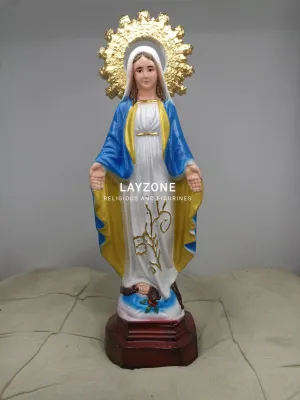
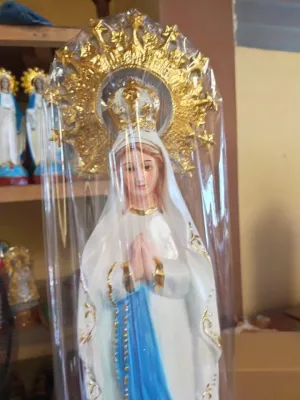
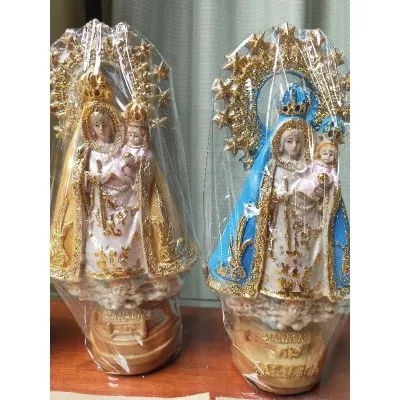
Prices are valid at publication and may change. Please refer to the product page for the latest price.
Humidity and Moisture Resistance Constant exposure to high humidity and heavy seasonal rainfall can quickly damage low-quality materials. Porous surfaces absorb water, which can trap moisture inside the statue’s core and cause internal structural decay. Over time, this trapped water leads to micro-cracks, paint peeling, and the rapid growth of mold, mildew, and black algae. Ensuring your chosen material has low porosity or can be effectively sealed is the first line of defense against moisture-related degradation.
UV Resistance Direct, intense sunlight is highly destructive to paints, binders, and synthetic compounds. Ultraviolet (UV) rays break down chemical bonds, leading to fading, yellowing, and chalking of the surface finish. In cheaper plastics and non-stabilized resins, prolonged UV exposure causes the material to become brittle and highly susceptible to cracking under minor impacts. Choosing a material that naturally resists UV damage or verifying that synthetic materials contain UV-inhibiting additives is crucial for long-term color preservation.
Weight and Wind Stability Tropical regions are frequently subjected to strong winds, seasonal monsoons, and severe typhoons. A lightweight statue placed on an elevated altar can easily be toppled by high winds, resulting in catastrophic damage. Your statue must either possess sufficient natural mass—such as solid concrete or natural stone—or be designed with a structure that allows for secure mechanical anchoring. Balancing weight and ease of installation is a key step in planning your outdoor altar.
Detail Preservation The spiritual and artistic value of a Mama Mary statue lies in its intricate details, such as the delicate folds of her veil, her facial expression, and her clasped hands. Some materials erode gradually when exposed to acidic rain, wind-blown dust, and routine cleaning. Harder, non-reactive materials maintain these fine artistic features for decades, whereas softer or poorly sealed materials may lose their definition, leaving the statue looking worn and weathered.
Comparing Common Statue Materials for Outdoor Use
Selecting the right material involves comparing several widely available options, each with its own set of characteristics, maintenance requirements, and installation considerations. By analyzing these materials through a conditional framework, you can determine which option best suits your specific garden environment.

Cast Stone and Concrete Cast stone and concrete are traditional favorites for outdoor religious statuary due to their exceptional durability and substantial weight. Their natural mass provides excellent stability against strong winds, making them highly unlikely to tip over during storms. However, concrete is naturally porous and absorbs water. If left unsealed, moisture ingress leads to dark algae staining and surface erosion. Before purchasing, verify if the manufacturer has pre-sealed the statue with a silane-siloxane water repellent, or plan to apply a high-quality masonry sealer yourself prior to installation.
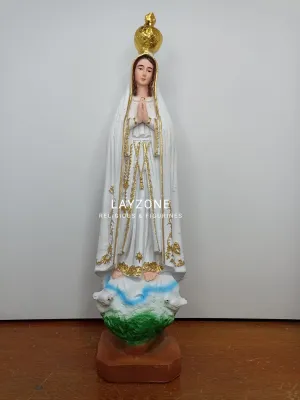
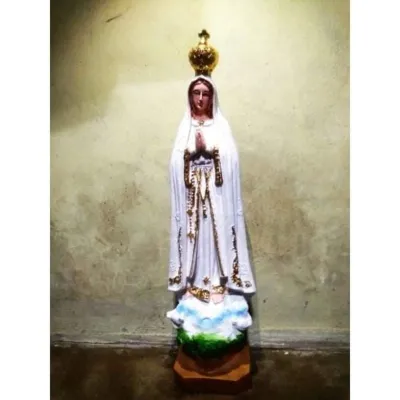
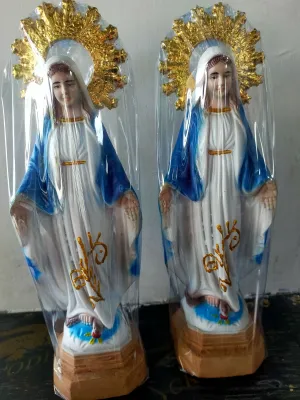
Resin and Fiberglass Modern resin and fiberglass-reinforced statues offer a versatile and highly detailed alternative to heavy stone. These materials allow artisans to capture fine details and vibrant paint finishes, creating highly expressive statues. They are lightweight, making transport and initial placement simple. However, their low weight makes them vulnerable to being blown over by strong winds, meaning they must be securely anchored. Furthermore, you must strictly verify with the manufacturer that the resin formulation is UV-stabilized and rated specifically for outdoor use; indoor-grade resins will degrade rapidly in direct sunlight.
Natural Stone (e.g., Marble, Granite) Natural stone statues, particularly those carved from solid marble or granite, represent the pinnacle of elegance and longevity. Granite is virtually impervious to the elements, resisting scratches, acid rain, and UV fading without losing its polished finish. Marble offers classic, smooth aesthetics but is slightly softer and more porous, requiring periodic sealing to prevent organic staining. The primary trade-offs of natural stone are its extreme weight and premium cost, with prices often starting at ₱30,000 and scaling significantly with size. You must ensure your altar base is structurally engineered to support such heavy loads safely.
Ceramic and Terracotta Ceramic and terracotta statues offer a warm, earthy, and traditional aesthetic that blends beautifully with natural garden settings. However, these materials are brittle and highly susceptible to cracking when exposed to heavy rain and rapid temperature fluctuations. Water absorbed by unglazed terracotta can cause the material to flake or fracture over time. If you choose ceramic or terracotta, verify that the piece is fully glazed and explicitly rated for continuous outdoor exposure, and consider placing it in a well-sheltered niche rather than an open-air grotto.
Metals (e.g., Bronze, Brass) Bronze and brass statues provide an elegant, timeless look that develops a unique greenish patina over time due to natural oxidation. This patina is highly valued by many as a symbol of enduring faith and character, but it is a conditional preference rather than a universal performance standard. Metal statues are highly durable and resistant to physical impact. However, you must verify if the specific alloy and surface finish are intended for continuous outdoor exposure, as lower-grade metals can rust or leave unsightly metallic stains on the concrete or stone pedestal below.
| Material | Relative Weight | UV Resistance Verification | Moisture Management | Routine Maintenance Needs |
|---|---|---|---|---|
| Cast Stone & Concrete | Heavy (High wind stability) | Excellent (Naturally resistant) | Porous; requires periodic masonry sealer | Annual wash and resealing |
| Resin & Fiberglass | Light (Requires anchoring) | Variable; must verify UV-stabilized formula | High resistance; non-porous surface | Clean with mild soap; apply UV spray |
| Natural Stone | Very Heavy (Excellent stability) | Outstanding (Immune to UV fade) | Moderate; marble requires sealing | Wipe down; check for organic stains |
| Ceramic & Terracotta | Medium to Light | Good (Glazed colors resist fade) | High risk of cracking if unglazed | Keep dry; store indoors in storms |
| Metals (Bronze/Brass) | Heavy to Medium | Excellent (Develops natural patina) | Corrosion-resistant if properly finished | Periodic waxing or oiling |
Preparing the Grotto and Installing the Statue Safely
Creating a safe and stable environment for your outdoor statue is just as important as choosing the right material. Proper installation protects the statue from ground-level hazards and ensures the structural integrity of your garden altar.
Base Preparation Never place your statue directly on soil, grass, or gravel. Soil acts as a moisture reservoir, constantly transferring water up into the base of the statue through capillary action. This continuous exposure leads to rapid discoloration, mold growth, and structural weakening of materials like concrete, plaster, or low-grade stone. Instead, elevate the statue using a solid concrete pedestal, a stone plinth, or a tiled platform that keeps the base of the statue at least 15 to 30 centimeters above the surrounding ground level.
Drainage Planning Water must never be allowed to pool around the base of your statue or inside the grotto niche. When designing your altar, ensure the floor of the grotto or the top surface of the pedestal has a subtle slope—approximately a 1% to 2% grade—directed away from the statue. This allows rainwater to run off quickly rather than pooling. If your grotto is an enclosed or semi-enclosed niche, incorporate a small drainage hole at the lowest point of the floor to prevent water accumulation during heavy downpours.
Anchoring and Stability For lightweight materials like resin, fiberglass, or hollow ceramic, securing the statue against strong winds is a critical safety step. You can increase the stability of hollow statues by carefully filling the interior cavity with dry sand or pea gravel before sealing the base. To secure the statue permanently to its pedestal, apply a generous bead of high-quality, outdoor-rated polyurethane construction adhesive to the bottom of the base. For larger or more valuable statues, consider using stainless steel tethers or mounting brackets anchored directly into the back wall of the grotto.
Safety and Professional Boundaries While simple installations of lightweight statues can be completed as a weekend DIY project, certain scenarios require professional assistance. If your project involves constructing a large stone or concrete grotto, working with heavy natural stone statues weighing over 50 kilograms, or executing complex masonry work, do not attempt to lift or build it alone. Hire a qualified local mason or structural professional to design and construct a stable, reinforced foundation, preventing structural collapse or injury.
Maintaining and Protecting Your Outdoor Statue
Regular maintenance is essential to preserve the beauty and structural integrity of your outdoor statue. Implementing a gentle, consistent care routine prevents the buildup of dirt and organic growth without damaging the statue’s surface.
Gentle Cleaning Clean your outdoor statue at least twice a year to remove dust, pollen, bird droppings, and fallen leaves. Use a soft-bristled nylon brush or a clean microfiber cloth, lukewarm water, and a mild, pH-neutral dish soap. Avoid using pressure washers, stiff wire brushes, or harsh chemical cleaners containing bleach, ammonia, or acid. These abrasive tools and chemicals can strip away protective sealants, erode concrete, scratch natural stone, and peel the paint off resin surfaces.
Moss and Algae Management In humid and shaded garden environments, green algae and black mold can quickly colonize the damp surfaces of your statue. If you notice organic growth, gently scrub the area with a highly diluted solution of mild soap and water. If the growth is stubborn, stop scrubbing immediately to avoid rubbing the paint or surface finish away. Instead, consult the manufacturer’s care instructions or use a specialized, non-acidic outdoor cleaner that is explicitly labeled as safe for your statue’s specific material.
Sealing and Protection For porous materials like concrete, cast stone, and marble, periodic resealing is necessary to maintain moisture resistance. Check the manufacturer’s guidelines to determine the appropriate type of sealer and the recommended application frequency, which is typically every one to two years. Applying an incompatible sealer can trap moisture inside the material, leading to internal cracking, or cause the surface to turn cloudy and yellow. For painted resin statues, applying a clear, UV-resistant acrylic spray coat annually can help prevent color fading.
Extreme Weather Prep The tropical monsoon season can bring severe typhoons with destructive winds and flying debris. If a major storm warning is issued, take proactive steps to protect your altar. For lightweight resin, ceramic, or metal statues, temporarily relocate them to an indoor area, garage, or secure storage shed. For heavy concrete or stone statues that cannot be easily moved, ensure they are anchored securely, and wrap them tightly in a heavy-duty, padded tarp secured with tie-down straps to shield them from flying branches and debris.
Frequently Asked Questions (FAQ)
Can I place a standard indoor resin statue in an outdoor grotto?
No, placing an indoor-rated resin statue in an outdoor garden altar is highly discouraged and will lead to rapid damage. Indoor statues are not formulated with UV-stabilizers, meaning direct sunlight will quickly cause the resin to become brittle, yellow, and crack. Additionally, the paints and clear coats used on indoor statues are not designed to withstand continuous moisture exposure, leading to bubbling, peeling, and fading within a few months. Always verify with the seller or manufacturer that a statue is explicitly rated and warranted for continuous outdoor use before exposing it to the elements.
How do I prevent a concrete Mama Mary statue from turning green?
Preventing a concrete statue from turning green requires managing moisture and applying the right protective barriers. Concrete is highly porous, absorbing rainwater and dew to create an ideal environment for algae, moss, and mold growth. To prevent this, elevate your statue on a pedestal to stop ground moisture from wicking upward, and place the altar in an area that receives adequate sunlight and airflow to promote rapid drying. Finally, apply a high-quality, breathable silane-siloxane masonry sealer, which penetrates the concrete’s pores to repel liquid water while allowing internal moisture vapor to escape safely.
Is it safe to add solar lights inside a garden grotto with a statue?
Yes, adding solar lighting is a highly effective way to illuminate your garden altar, provided you select the correct fixtures and follow basic safety guidelines. Ensure any solar light fixture you install has an Ingress Protection (IP) rating of at least IP65, which certifies that it is completely dust-tight and water-resistant against heavy tropical downpours. Keep any heat-generating light fixtures positioned away from heat-sensitive materials like painted resin or plastics to prevent warping or paint damage. If you choose to install a low-voltage, hardwired lighting system instead of solar, always isolate the power supply before beginning work, use outdoor-rated cables, and consult a qualified electrician to ensure the entire installation complies with local electrical safety standards.
Community discussion
Share your experience or ask a question. Comments are reviewed before publication.