
For typical modern condominiums in the Philippines, ceiling heights often hover around 2.4 to 2.6 meters, leaving very little vertical clearance. To maintain an open feel and prevent tall residents from bumping into fixtures, the ideal flush mount ceiling light thickness is between 0.5 inches (approx. 1.3 cm) and 2 inches (approx. 5 cm). Choosing an ultra-thin integrated LED panel within this range ensures the light sits almost flush with the ceiling, preserving precious headroom while delivering bright, even illumination. Standard flush mounts using replaceable bulbs typically require a thickness of 3 to 5 inches, which can make a low ceiling feel even lower and create a cramped visual environment.
Assessing Your Condo Ceiling Height and Clearance Needs
To find the right fixture thickness, measure the distance from your finished floor to the ceiling surface. Take measurements in multiple areas of the room, as concrete slab ceilings in high-rise buildings can sometimes have slight variations in level.
Next, calculate the minimum safe headroom required. A standard rule of thumb is to maintain at least 2.1 meters of clear space between the bottom of the light fixture and the floor. This clearance ensures that residents and guests can walk freely without any risk of head contact.
Products mentioned in this guide
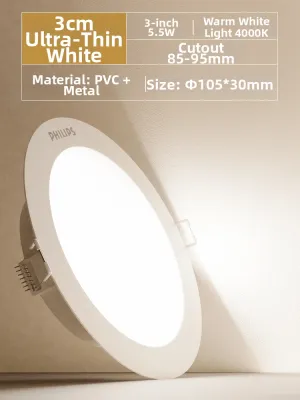
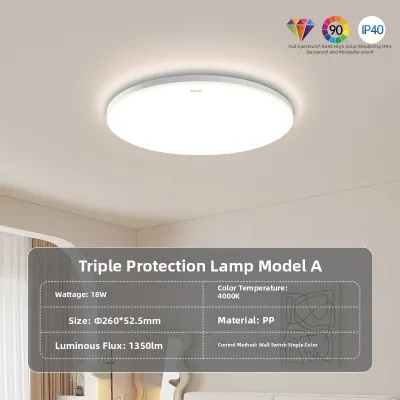
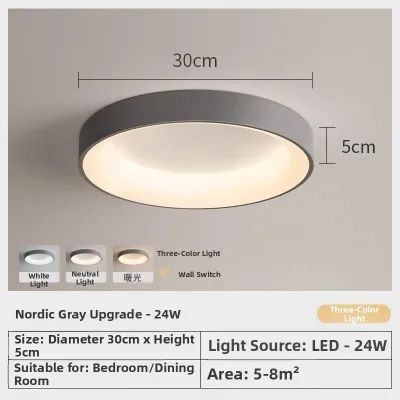
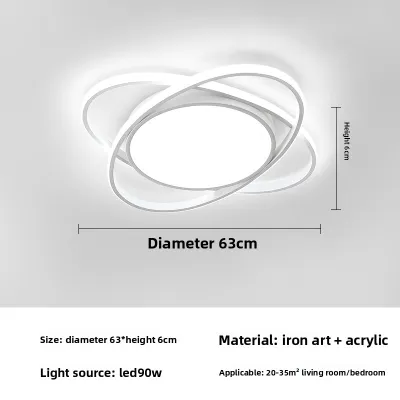
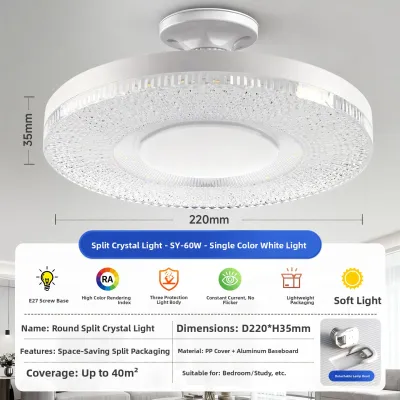
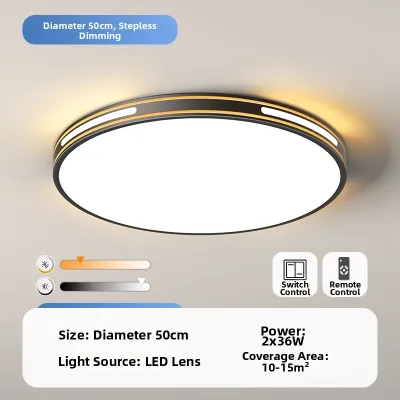
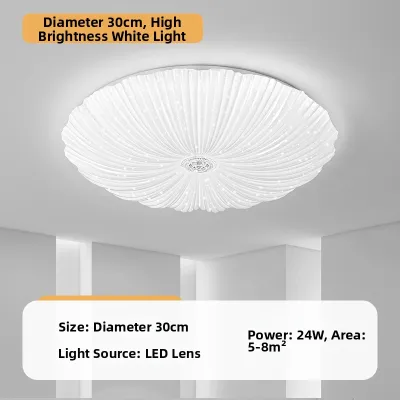
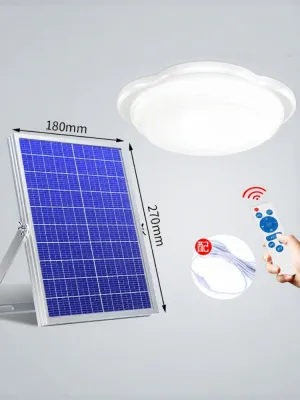
Prices are valid at publication and may change. Please refer to the product page for the latest price.
Account for dynamic daily movements within the space, such as raising your arms, changing bedsheets, or moving tall furniture. If a ceiling light is too thick, even a simple stretch can lead to accidental damage to the fixture.
Finally, inspect your ceiling for existing structural obstacles like smoke detectors, emergency sprinkler heads, exposed concrete beams, or utility access panels. Your chosen fixture must clear these elements physically and avoid casting awkward shadows or interfering with safety systems.
Choosing the Right Flush Mount Light Profile
Selecting a ceiling light involves understanding how the internal light source dictates the physical profile. Traditional flush mounts rely on standard screw-in bulbs, which require a deeper housing to accommodate the socket and the bulb itself. This mechanical design limits how thin a traditional fixture can actually be.

In contrast, modern integrated LED technology eliminates the need for bulky bulbs. Integrated LEDs use tiny light-emitting diodes mounted directly onto a flat circuit board, allowing for very slim profiles. These ultra-thin fixtures can easily achieve a thickness of less than an inch, making them highly suitable for low-ceiling environments.
When evaluating these slim profiles, consider heat dissipation. Even though LEDs are highly efficient, they still generate heat that must be directed away from the diodes to prevent premature failure. High-quality ultra-thin fixtures use their aluminum backplates as heat sinks, balancing a slim profile with effective thermal management.
Ultra-Thin vs. Standard Flush Mounts
Ultra-thin integrated LED fixtures offer excellent space-saving benefits for extremely low ceilings. Because they sit almost flush against the concrete slab, they virtually disappear into the ceiling plane, creating an illusion of a higher ceiling. This minimalist aesthetic is highly favored in modern studio units and compact one-bedroom condos.
However, standard flush mounts with replaceable bulbs hold distinct advantages if your clearance allows for a slightly thicker profile. The primary benefit is long-term maintenance; when a bulb burns out, you simply replace it. With an integrated LED fixture, if the driver or diodes fail, you generally must replace the entire unit.
Standard fixtures also offer a wider, more classic light diffusion pattern because the bulb sits further from the cover. This gap allows the light to bounce around the interior of the shade, softening the output. If your ceiling is closer to 2.6 meters, a standard 3-inch flush mount can provide a warm, traditional look.
Balancing Light Output and Fixture Thickness
As fixture thickness decreases, the optical design must work harder to distribute brightness evenly. In very thin fixtures, the distance between the LED chips and the outer diffuser is extremely small. If the diffuser is poorly designed, you may see bright hot spots or experience harsh glare when looking directly at the ceiling.
To avoid this, look for ultra-thin panels utilizing edge-lit technology. In an edge-lit panel, the LEDs are arranged around the frame pointing inward, and a light guide plate distributes the illumination downward through a micro-textured diffuser. This design provides soft, uniform light without requiring extra physical depth in the fixture housing.
When shopping, do not rely on physical size to guess brightness. Instead, verify the lumen output and color temperature specifications on the product label. For a functional space like a kitchen, aim for a fixture that delivers sufficient lumens while offering a warm-to-neutral color temperature, such as 3000K to 4000K, to keep the space bright.
Visual Proportions and Room-Specific Guidelines
Achieving a balanced look requires matching the physical diameter of the ceiling light to the room’s square footage. A tiny, ultra-thin light in a spacious living room looks lost and underpowered, while an oversized fixture makes a small bedroom feel claustrophobic. A helpful guideline is to add the room’s length and width in feet, using that sum in inches as a starting diameter.
The room’s function should also dictate your thickness expectations. High-traffic zones like hallways and entryways demand maximum headroom, making ultra-thin 0.5-inch LED discs the ideal choice. In contrast, you can often afford a slightly thicker, more decorative 2-inch or 3-inch fixture in the bedroom, where people are mostly sitting or lying down.
If you have a large but low-ceilinged living area, consider installing multiple smaller, ultra-thin fixtures instead of a single massive light. Spacing out two or three slim LED panels distributes light more evenly, eliminates dark corners, and maintains a clean ceiling line. This approach prevents the visual weight of a single large fixture from pulling the ceiling down.
Installation Constraints in Condo Units
Condominium construction introduces unique structural challenges. Many condos in the Philippines feature solid concrete slab ceilings, which means you cannot easily cut holes to recess a fixture or hide bulky wiring connections. Any fixture you choose must be strictly surface-mounted unless there is a dropped gypsum ceiling installed.
Before mounting a new light, inspect the existing junction box to ensure it is securely anchored and capable of supporting the fixture’s weight. While ultra-thin plastic and aluminum LED panels are lightweight, older standard flush mounts with thick glass shades can be heavy. A weak junction box can sag over time, creating a safety hazard.
Because condo living involves shared structural elements and strict building codes, always consult your condo management’s fit-out guidelines before undertaking any electrical work. Some properties require permits for modifications to concrete slabs. To ensure safety and compliance with local electrical codes, hire a qualified electrician to handle the installation and verify your unit’s voltage compatibility.
Frequently Asked Questions (FAQ)
Can I use a semi-flush mount light in a condo with low ceilings?
Semi-flush mount lights typically hang down by 4 to 8 inches from the ceiling, creating a small gap that allows light to reflect upward. While they offer beautiful ambient lighting, they are generally not recommended for ceilings lower than 2.5 meters. If you are considering a semi-flush mount, measure the total drop of the fixture, subtract it from your ceiling height, and ensure the remaining clearance is at least 2.1 meters. If the remaining space is less than this, stick to a true flush mount to prevent the room from feeling cramped.
Do thinner flush mount lights get hotter?
Ultra-thin flush mount lights do not necessarily get hotter than standard fixtures, but their heat management works differently. Because integrated LED panels are very slim, they rely on the metal housing of the fixture to act as a heat sink, drawing warmth away from the internal electronics and dissipating it into the surrounding air. To ensure safe operation in tropical climates like the Philippines, check the product specifications for proper thermal ratings. Ensure the fixture is rated for your specific ceiling type, especially if mounted directly against a concrete slab, to prevent heat buildup.
Community discussion
Share your experience or ask a question. Comments are reviewed before publication.