
To make a small bedroom feel significantly more spacious, choose a wall body mirror that is at least 24 inches wide and 48 to 60 inches tall. Ideally, the mirror should cover at least half of the wall’s vertical height. This proportion ensures you can view your entire reflection while allowing the glass surface to capture and bounce light across the room. By selecting a mirror that scales harmoniously with your wall space, you create a convincing illusion of depth that visually doubles the footprint of a compact bedroom.
Understanding How Mirror Proportions Expand Small Bedrooms
A body mirror for wall mounting acts as an optical illusion tool in a confined space. When you place a large reflective surface on a wall, it breaks the visual boundary of the room. The eye does not stop at the solid wall surface; instead, it perceives the reflected space as an extension of the actual room. This effect is highly dependent on the surface area of the mirror. A tiny decorative mirror will only look like a picture frame, whereas a tall body mirror mimics the appearance of an open doorway or a window.
Proportional scaling is far more effective than simply buying the largest mirror you can find. An oversized mirror that stretches from the floor to the ceiling without any breathing room can overwhelm a small bedroom, making the space feel cramped and top-heavy. The goal is to balance the mirror’s dimensions with the surrounding wall area. Leaving a clear border of exposed wall around the mirror helps define its shape and prevents the room from feeling like a commercial fitting room.
Products mentioned in this guide

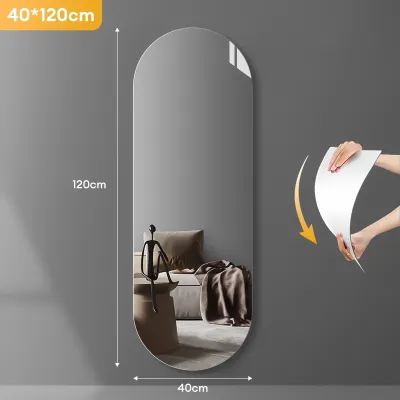
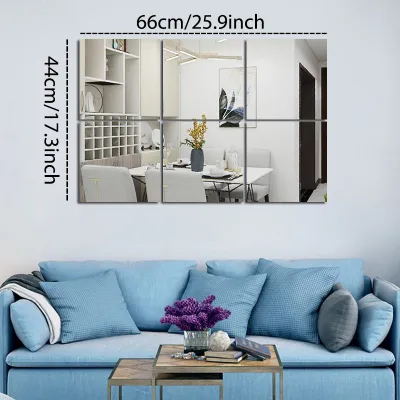
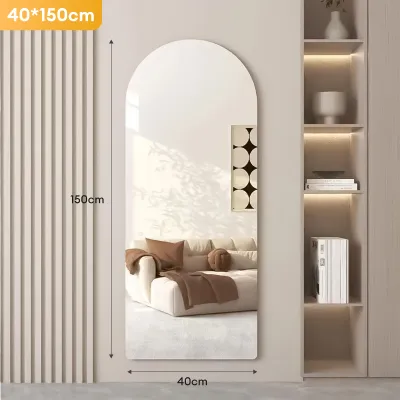
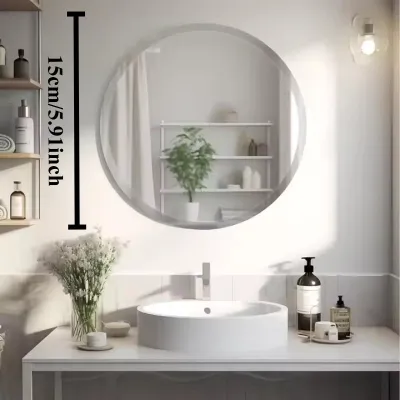

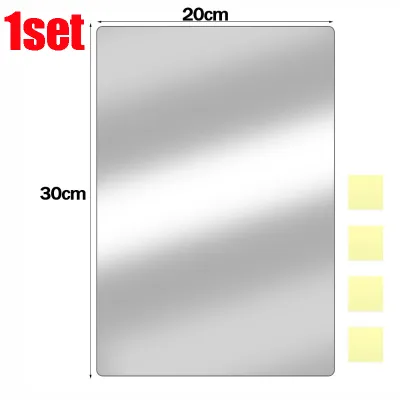
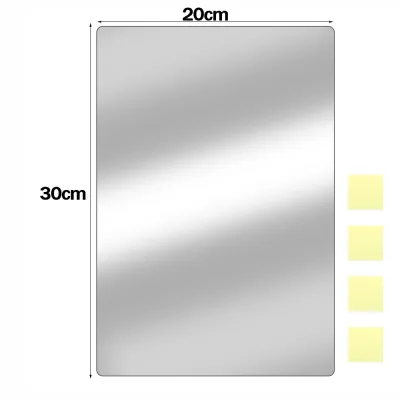
Prices are valid at publication and may change. Please refer to the product page for the latest price.
Light reflection is the second major factor in spatial expansion. In tropical climates where natural light can be intense yet unevenly distributed, a strategically placed mirror captures incoming sunlight and disperses it into darker corners. This brightens the entire room, reducing shadows that make small spaces feel closed in. Even during evening hours, the mirror reflects artificial light from bedside lamps or ceiling fixtures, maintaining a bright and open atmosphere.
Calculating the Ideal Width and Height for Your Wall
Determining the correct dimensions for your body mirror for wall installation requires a mix of physical measurements and visual rules. For height, the mirror must be tall enough to show your full figure from a reasonable standing distance. A practical guideline is to choose a mirror that is at least 48 inches tall. If your bedroom has standard ceilings, a 60-inch mirror is often the sweet spot, as it provides a generous vertical reflection without crowding the ceiling line or the baseboards.

Width is equally critical for maintaining visual balance. A mirror that is too narrow, such as 12 to 15 inches, will feel restrictive and fail to create a significant spatial impact. For a small bedroom, aim for a width between 24 and 30 inches. This range provides a wide enough field of view to make the wall feel like it is opening up, while still leaving enough wall space for adjacent furniture like a wardrobe, desk, or nightstand.
To calculate the ideal proportions for your specific wall, look at the empty wall space where you plan to mount the mirror. The mirror should ideally occupy between 50% and 70% of the wall’s total height. For width, the mirror should take up no more than half of the active wall segment. You can test these proportions before purchasing by using painter’s tape to outline the proposed mirror dimensions on your wall. Step back to the doorway and observe how the outlined shape interacts with your furniture and sightlines.
Positioning the Mirror to Bounce Light and Create Depth
Where you mount your mirror is just as important as its size. To maximize the distribution of light, position the mirror on a wall adjacent to or opposite a window. In the Philippines, where homes often experience bright, sunny days, this placement allows the mirror to catch natural light and bounce it deep into the room. Avoid placing the mirror in a spot where it directly reflects the sun at its peak intensity, as this can cause uncomfortable glare.
The reflection itself should always be intentional. Align the mirror so that it reflects an open pathway, a tidy corner, or an attractive focal point like a potted plant or a piece of art. If the mirror reflects a cluttered desk, an unmade bed, or an open closet, it will double the visual noise, making the bedroom feel smaller and more chaotic. The goal is to reflect empty space or clean lines to enhance the feeling of openness.
When deciding between a wall-mounted mirror and a floor-leaning mirror in a tight layout, wall mounting is almost always the superior choice. Floor-leaning mirrors require dedicated floor space and lean backward at an angle, which can distort the reflection of the ceiling and take up valuable square footage. Wall-mounted mirrors sit flat against the wall, preserving precious floor space and providing a straight, true reflection that aligns perfectly with the room’s natural architectural lines.
Evaluating Wall Strength and Mounting Safety for Heavy Mirrors
Because a large body mirror for wall mounting is a heavy, suspended load, safety must be your top priority during installation. Before purchasing, verify the weight of the mirror and inspect the construction of your bedroom wall. In many local homes, walls are made of solid concrete or concrete hollow blocks, while others may use drywall over metal or wood studs. Each wall type requires specific hardware to ensure the mirror remains securely anchored.
For concrete or masonry walls, you must use a hammer drill, masonry drill bits, and high-quality plastic expansion plugs or sleeve anchors. For drywall, never rely on simple plastic self-drilling anchors for a heavy mirror; instead, locate the wall studs using a stud finder and secure the mounting brackets directly into the studs. If stud placement does not align with your desired mirror position, use heavy-duty toggle bolts rated for at least double the weight of your mirror.
Always check the manufacturer’s instructions for the mirror’s specific mounting points. Many large mirrors come with pre-installed D-rings or a French cleat system. Budgeting around ₱200 to ₱500 for heavy-duty, professional-grade mounting hardware is a small price to pay for peace of mind. If you are uncomfortable using power tools, dealing with high installations, or handling fragile glass that weighs more than 15 kilograms, stop and hire a qualified local handyman or professional installer to complete the job safely.
Avoiding Visual Clutter and Sizing Mistakes in Compact Rooms
One of the most common mistakes in small bedrooms is choosing a mirror that is too narrow. A narrow mirror creates a vertical stripe on the wall that chops up the room’s visual flow. Instead of making the room feel larger, it draws attention to the limited wall space and makes the ceiling feel lower. If you are limited on width, it is better to choose a slightly shorter but wider mirror to maintain a balanced aspect ratio.
Mounting height errors can also ruin the spatial effect. Hanging a mirror too high forces the eye upward and cuts off the lower half of the reflection, while hanging it too low makes the room feel grounded and heavy. The center of the mirror should generally sit at eye level, which is approximately 57 to 60 inches from the floor for the average adult. Ensure the bottom of the mirror sits at least 12 to 18 inches above the floor to prevent accidental kicks or damage during cleaning.
Finally, be mindful of what the mirror reflects during different times of the day. Avoid positioning it directly opposite harsh, unshaded light bulbs or fluorescent fixtures, as the reflected glare can cause eye strain. Additionally, avoid placing the mirror where it reflects high-traffic, cluttered zones. By keeping the reflected view clean and simple, you ensure the mirror serves its purpose of expanding the room rather than multiplying its clutter.
Frequently Asked Questions (FAQ)
Can a mirror be too large for a small bedroom?
Yes, a mirror can overwhelm a small room if it lacks proper framing or visual boundaries. If a mirror covers an entire wall from corner to corner without any exposed wall space, it can create a disorienting funhouse effect. To prevent this, ensure the mirror’s frame or edges are clearly defined, and leave at least a few inches of wall space visible on all sides to anchor the mirror within the room’s decor.
Should I choose a framed or frameless mirror to maximize space?
Frameless mirrors are highly effective for maximizing space because their edges blend seamlessly with the wall, creating a clean, window-like appearance that offers an uninterrupted reflection. However, if you prefer a framed look, choose a thin, low-profile frame in a light color or natural wood finish. Avoid thick, heavy, or ornate dark frames, as they add unnecessary visual weight and can make the mirror feel like a bulky piece of furniture rather than an expansive architectural feature.
Community discussion
Share your experience or ask a question. Comments are reviewed before publication.