
Choosing the right waterproof rating for outdoor solar strip lights in the Philippines depends entirely on where you plan to install them. While a standard IP65 rating is often sufficient for sheltered areas like covered patios or under roof eaves, fully exposed locations—such as garden pathways, fences, or open lawns—require the more robust protection of IP67 or even IP68 to withstand intense tropical downpours and seasonal typhoons. Matching the specific installation zone to the correct Ingress Protection (IP) rating ensures your outdoor lighting remains functional and safe throughout the year.
In the Philippines, weather conditions transition rapidly from intense heat to torrential rains, putting significant stress on outdoor electronics. Evaluating the exact exposure level of your mounting site helps you select the correct rating, avoiding overpaying for unnecessary specifications while ensuring your lights survive the wet season.
Decoding IP65, IP67, and IP68 for Outdoor Lighting
When shopping for solar strip lights waterproof options, you will consistently encounter the term “IP” followed by two digits. This Ingress Protection rating is an international standard defining how effectively an electrical enclosure seals against foreign bodies and moisture. Understanding these numbers allows you to look past marketing buzzwords and verify the actual protective capabilities of a product.
Products mentioned in this guide
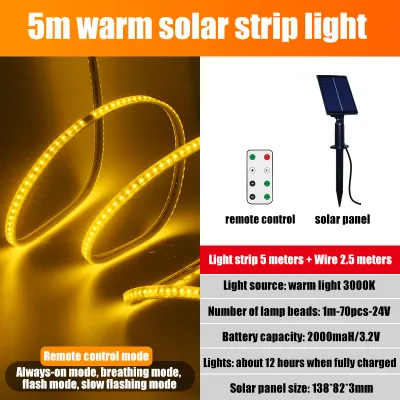
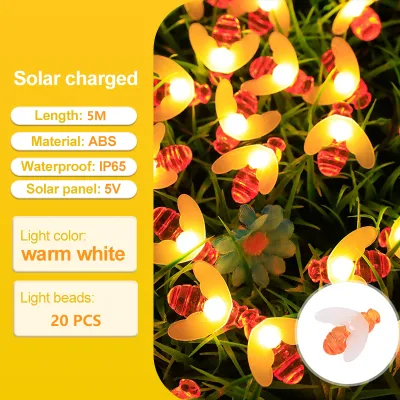
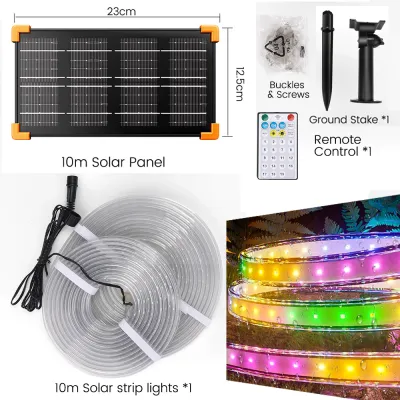
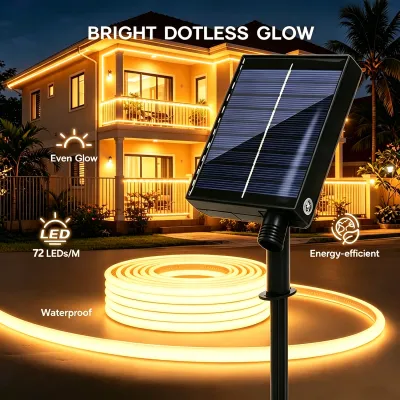
Prices are valid at publication and may change. Please refer to the product page for the latest price.
The first digit, ranging from 0 to 6, indicates protection against solid objects like dust and dirt. For outdoor solar strip lights, a first digit of “6” is standard, meaning the housing is completely dust-tight, preventing fine tropical dust or windblown soil from penetrating the internal circuitry.
The second digit, ranging from 0 to 9, measures protection against liquids. A second digit of “5” indicates that the light strip can withstand low-pressure water jets from any direction. An IP65-rated strip can handle normal rainfall and splashes, but it is not designed to survive standing water or heavy flooding.
A second digit of “7” signifies protection against temporary immersion in water. Typically, this means the device can be submerged up to one meter for a limited duration, such as 30 minutes. Because these limits vary, you must verify the manufacturer’s specific depth and time parameters on the product packaging.
A second digit of “8” represents protection against continuous immersion under deeper conditions. This rating is generally reserved for equipment designed to operate underwater, such as pool lights. For standard decorative solar strip lights, an IP68 rating is rarely necessary unless the strip is permanently submerged or placed in a high-risk drainage path.
Matching the IP Rating to Your Installation Zone
To choose the correct waterproof rating, you must assess the physical layout of your outdoor space. Different areas of your home offer varying levels of shelter from the elements, meaning you do not need the highest rating for every single light strip. While decorative style and perceived color temperature are conditional preferences that enhance your spatial design, physical waterproofing remains a strict technical requirement for safety.

Zone 1: Sheltered Outdoors Sheltered outdoor areas include spaces under roof eaves, covered patios, verandas, or deep balconies. Here, the light strip is protected from direct vertical rainfall and only experiences occasional wind-drifted moisture or high humidity. An IP65 rating is typically sufficient for Zone 1, providing ample protection against ambient moisture.
Zone 2: Exposed Vertical Mounts Exposed vertical surfaces include exterior walls, fences, columns, and balcony railings with no overhead cover. During heavy tropical storms, wind-driven rain can strike these surfaces horizontally. While some high-quality IP65 strips can handle this, upgrading to an IP67 rating offers a safer margin of protection against prolonged, high-velocity rainfall.
Zone 3: Ground Level and Water-Adjacent Ground-level installations present the highest risk of water accumulation. If you plan to place solar strip lights along garden pathways, flower bed borders, or near swimming pools, they will encounter pooling water, mud, and heavy splashes. For these vulnerable areas, IP67 is the minimum requirement to survive temporary puddles, while IP68 is recommended for water features.
Checking the Solar Panel and Battery Housing
A common mistake when purchasing solar strip lights waterproof systems is focusing solely on the LED strip itself. A complete solar lighting setup consists of three distinct components: the flexible LED strip, the solar panel, and the battery or control box housing. Each of these components may carry a completely different IP rating. Before purchasing, always verify the system’s voltage, interface connections, wattage limits, and electrical certifications to ensure compatibility with your existing outdoor setup.
When evaluating a product, you must identify the lowest IP rating among these three parts, as the entire system is only as waterproof as its weakest link. Frequently, manufacturers advertise a highly waterproof LED strip (such as IP67) while equipping the system with a lower-rated battery box (such as IP44). If the battery box is exposed to heavy rain, water ingress can ruin the controller.
Additionally, you should carefully inspect the physical connection points, cable entry seals, and mounting brackets. Moisture often penetrates systems through loose rubber gaskets, poorly sealed wire entries, or screw holes. Ensure all connectors are tightly screwed together and that any rubber protective caps are firmly seated before leaving the unit outdoors.
Safety and Maintenance Limits in Wet Conditions
Maintaining the waterproof integrity of your solar strip lights requires regular inspection. Over time, exposure to intense tropical sunlight and fluctuating temperatures can degrade protective materials. You should periodically inspect the outer silicone coatings, protective sleeves, and end-cap seals for signs of cracking, peeling, hardening, or yellowing, which indicate that the waterproof barrier is failing.
Never submerge any part of your solar lighting system unless the manufacturer’s instructions explicitly guarantee that the specific model is rated for continuous underwater use. Furthermore, avoid using high-pressure garden hoses or pressure washers near your outdoor lights, as high-velocity water streams can easily bypass rubber seals and force moisture into waterproof compartments.
If your installation requires drilling into structural walls, routing fixed wiring through exterior barriers, or mounting components in high-risk electrical zones, prioritize safety. Always isolate the power source before handling any electrical connections. For complex setups, or if you are unsure about structural integrity and local electrical codes, consult the product manual or hire a qualified professional.
Frequently Asked Questions (FAQ)
Can I cut and reconnect waterproof solar strip lights?
Cutting a waterproof solar strip light typically breaks the factory-engineered silicone sleeve or protective coating, immediately compromising its IP rating. While some strips feature designated cut points, re-establishing a reliable waterproof seal requires specialized waterproof connectors, heat-shrink tubing, and outdoor-grade silicone sealant. If these seals are not applied perfectly, moisture will seep into the cut end and corrode the internal copper circuitry. Additionally, modifying the strip in this manner often voids the manufacturer’s warranty, so it is generally safer to purchase the exact length needed for your project.
Does a higher IP rating protect against sun damage?
No, a high IP rating does not indicate protection against ultraviolet (UV) radiation or extreme heat. IP ratings strictly measure a product’s resistance to solid dust particles and liquid water ingress. Long-term durability against sun damage, yellowing, and material degradation depends entirely on the quality of the outer materials, such as UV-stabilized silicone or heavy-duty PVC. To ensure your lights survive both heavy rain and intense tropical sunlight, you must verify the material specifications and UV-resistance ratings separately on the product label.
Community discussion
Share your experience or ask a question. Comments are reviewed before publication.