
Quick Answer: Which Reading Light Should You Choose?
Choosing between a clip-on book light and a traditional bedside lamp depends on your physical space, reading habits, and how much you share your sleeping area. If you frequently read in a shared bed, travel often, or have limited space, a portable clip-on book light is generally the most practical choice because it directs a narrow beam of light only where you need it.
Conversely, if you have a dedicated nightstand, prefer a warm ambient glow that illuminates the entire bedside area, and read from a fixed position, a traditional bedside lamp is usually the better option. Your final decision should rely on verifying specific product labels, measuring your physical furniture, and assessing your daily reading routines to ensure the fixture fits your lifestyle.
Evaluating Your Space and Nightstand Constraints
Before purchasing any lighting fixture, you must assess the physical layout of your bedroom. Start by measuring the surface area of your nightstand or bedside table. If your table is already crowded with essentials like a smartphone charger, a glass of water, eyeglasses, or a small cooling fan to combat tropical humidity, adding a large bedside lamp can create clutter and increase the risk of accidental spills.
Products mentioned in this guide
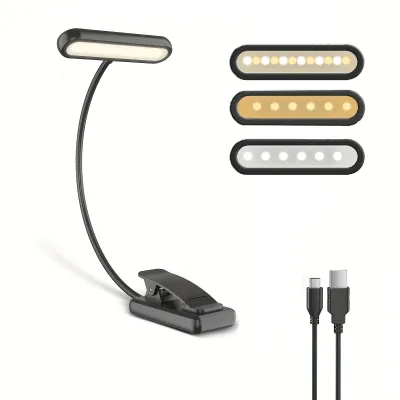
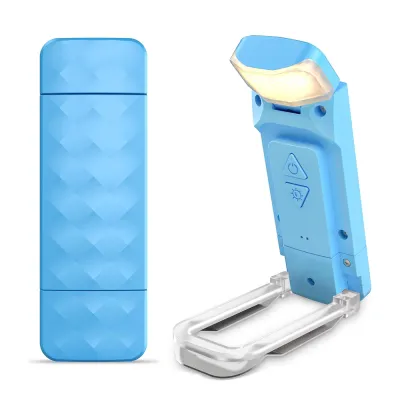
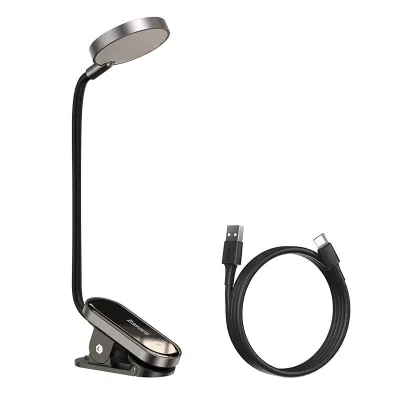
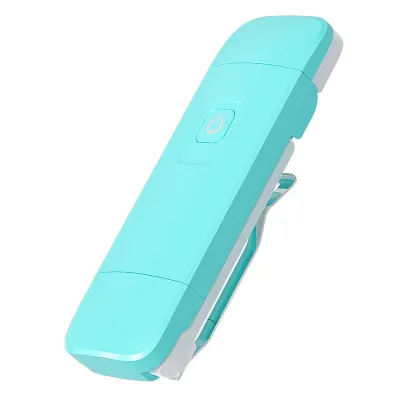
Prices are valid at publication and may change. Please refer to the product page for the latest price.

Traditional bedside lamps require a flat, stable surface and have a physical footprint that varies widely based on the base design. A heavy ceramic or wooden base provides stability but occupies valuable real estate. If your nightstand space is limited, a lamp with a slim metal base or an integrated clamp might be necessary to keep the surface organized.
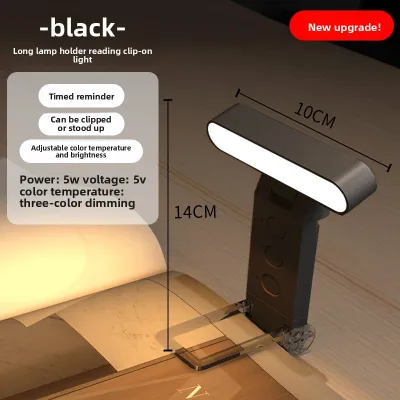
If you are leaning toward a clip-on book light, you must inspect the structure of your bed frame, headboard, or nearby shelving. These compact lights rely on a spring-loaded clamp to secure themselves. You will need to check the thickness of your headboard or the edge of your book to ensure the clamp can open wide enough to grip the surface securely without slipping or leaving indentations on the material.
Matching the Light to Your Reading Posture and Mobility
Your physical reading posture plays a significant role in determining which light source will keep your eyes comfortable. A traditional bedside lamp provides a fixed zone of illumination. If you sit upright in the center of the bed or lean to one side, you may find yourself moving out of the lamp’s primary light path, casting shadows across your pages.
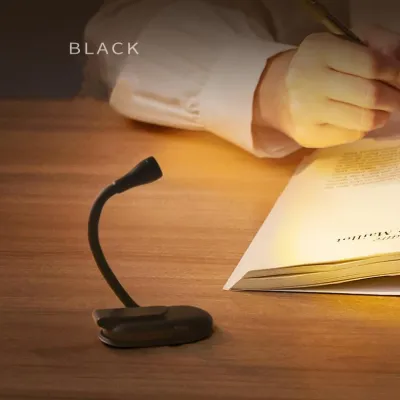
In contrast, a clip-on book light attaches directly to your reading material, meaning the light source moves dynamically with you. Whether you lie flat on your back, prop yourself up with pillows, or turn onto your side, the targeted beam remains focused on the text. This makes clip-on models highly adaptable for active readers who shift positions frequently.
However, you must consider the physical weight and balance of a clip-on light. When attached directly to a paperback book or a lightweight e-reader, a heavy clip-on light can cause the pages to bend or make the device top-heavy. If you prefer reading physical books with thin pages, look for a clip-on light with a lightweight, ergonomic design and a padded grip to prevent paper damage.
Comparing Power Options and Cord Management
Power delivery is a key differentiator that affects both convenience and safety. Traditional bedside lamps rely on continuous AC power from a wall outlet. This setup eliminates the worry of a battery dying mid-chapter, but it requires careful cord management to prevent tripping hazards or strained cables behind your headboard.
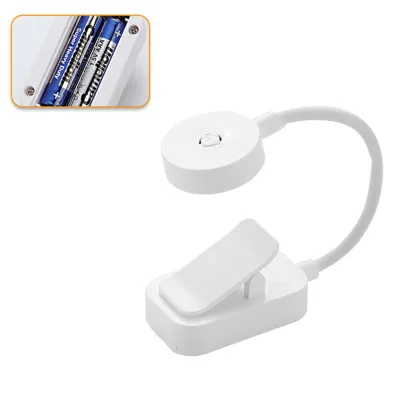
Most clip-on book lights operate on rechargeable lithium-ion batteries or replaceable AAA batteries. When evaluating these portable options, always check the product packaging or manufacturer specifications for the estimated battery run time and charging port type. Models utilizing USB-C ports generally offer faster, more convenient charging using standard mobile phone adapters.
If you choose a plug-in bedside lamp, inspect the cord path from the nightstand to the nearest outlet. Avoid routing power cords under rugs or pinching them behind heavy wooden bed frames, as this can damage the insulation over time. Utilizing adhesive cord clips along the back of your nightstand can keep cables organized, clean, and out of sight.
Checking Light Quality and Eye Comfort Specifications
To protect your eyes during late-night reading sessions, you must look closely at the light quality specifications listed on the product packaging. Do not rely solely on decorative style; instead, verify the color temperature, which is measured in Kelvins (K). For nighttime reading, a warm color temperature between 2700K and 3000K is generally preferred as it is gentler on the eyes compared to cool blue light.
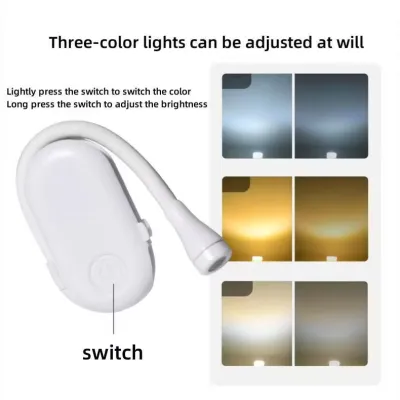
Many modern reading lights, both clip-on and bedside styles, offer adjustable color modes and dimming capabilities. Look for products that explicitly state they have multiple brightness levels or step-less dimming. This allows you to lower the intensity as your eyes adjust to the dark, preventing glare and reducing eye strain.
Additionally, check the product specifications for flicker-free technology and integrated diffusers. A high-quality diffuser softens the light output, preventing harsh hot spots on the page. This is particularly important when reading glossy book pages or using e-readers with reflective screens under a direct light beam.
Final Decision Framework: Clip-On vs. Bedside Lamp
To finalize your choice, compare your personal habits against the following practical criteria.
Choose a clip-on book light if:
- Portability is a priority: You want a light that easily packs into a travel bag or moves from the bedroom to the living room.
- You share a bed: You need a highly targeted beam of light that illuminates only your book, allowing your partner to sleep undisturbed.
- Space is extremely limited: Your bedside area lacks a nightstand, or your table is already fully occupied by other daily essentials.
Choose a bedside lamp if:
- You want ambient room lighting: You prefer a fixture that can illuminate the entire bedside area for activities other than reading, such as dressing or relaxing.
- You prefer stable, continuous power: You do not want to manage charging schedules or worry about battery degradation over time.
- Aesthetics matter: You want a decorative piece that complements your bedroom interior design and serves as a permanent styling element.
Verify first if:
- The mounting surface is compatible: Ensure your headboard thickness matches the clamp capacity of the clip-on light.
- The electrical specifications match: Confirm that any plug-in lamp is compatible with your local household voltage and outlet types.
Installation and Electrical Safety Checks
When installing any electrical fixture in your home, safety must come first. In the Philippines, the standard household electrical grid operates at 220 volts and 60 hertz. Before plugging in a traditional bedside lamp, verify that the product label explicitly states compatibility with these electrical specifications to prevent overheating or short circuits.
Ensure that the lamp’s plug matches your wall outlets, which are typically Type A or Type B. Avoid using loose-fitting adapters or overloading nightstand power strips with multiple high-draw appliances like hair dryers or space heaters alongside your reading lamp. If your power cord feels warm to the touch during use, disconnect the lamp immediately and inspect it for damage.
If your ideal bedroom layout requires installing new wall-mounted reading sconces or hardwired fixtures, do not attempt to modify your home’s electrical wiring yourself. Always consult a qualified professional electrician to handle the installation safely, ensuring all connections comply with local electrical codes and safety standards.
Frequently Asked Questions (FAQ)
Can I use a clip-on book light on a thick headboard?
Whether a clip-on book light will fit a thick headboard depends entirely on the maximum jaw opening of the clamp, which is usually listed in the product specifications. Before purchasing, measure the thickness of your headboard with a ruler and compare it to the clamp’s capacity. If your headboard is too thick, you can clip the light onto a nearby wall shelf, a sturdy pillowcase, or directly onto the back cover of your book.
Do bedside lamps provide enough light for detailed crafts or hobbies?
Standard bedside lamps are generally designed to provide soft, ambient light or general reading illumination rather than high-intensity task lighting. If you plan to use your bedside area for detailed crafts, sewing, or hobbies, check the product’s lumen output and beam angle. For detailed work, you will likely need a lamp that supports a higher-wattage bulb or features an adjustable neck that lets you direct a concentrated beam close to your hands.
Community discussion
Share your experience or ask a question. Comments are reviewed before publication.