
Winding down with a book at the end of a long day is a cherished ritual for many, offering a quiet escape before sleep. However, the quality of this experience depends heavily on your choice of bedroom lighting. When setting up your sleep environment, deciding between a traditional bedside lamp and a versatile desk lamp clip model—commonly referred to as a clip-on desk lamp—is a critical choice. Neither option is universally superior; the right choice for your bedroom depends on your available space, your preferred reading posture, and whether you share your bed with a partner.
A clip-on desk lamp excels in compact spaces, offering highly targeted task lighting that directs illumination precisely onto your pages while minimizing light spill across the room. This makes it an exceptional tool for late-night readers who want to avoid waking a sleeping partner. In contrast, traditional bedside lamps provide a broader, softer ambient glow that helps transition the entire room into a relaxing evening atmosphere. They also serve as permanent, stable decorative pieces, though they require a dedicated, flat nightstand surface. By evaluating your space, light control needs, and aesthetic preferences, you can easily determine which fixture will best support your nightly reading habits.
Key Differences at a Glance
To help you quickly compare these two popular lighting options, the table below outlines the primary structural, functional, and spatial differences between clip-on desk lamps and traditional bedside lamps.
Products mentioned in this guide
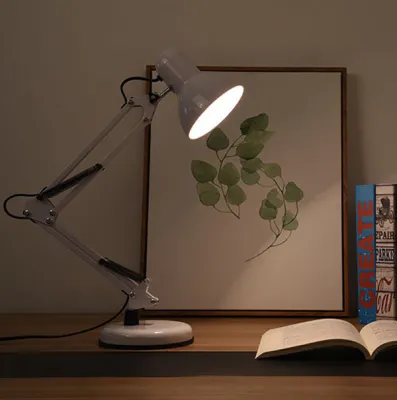
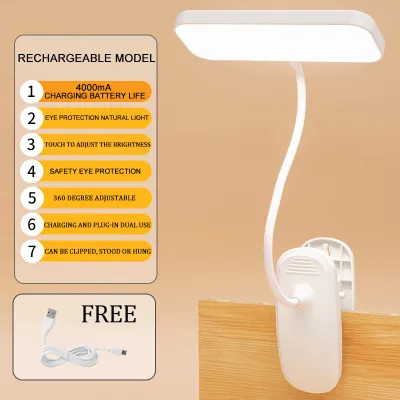
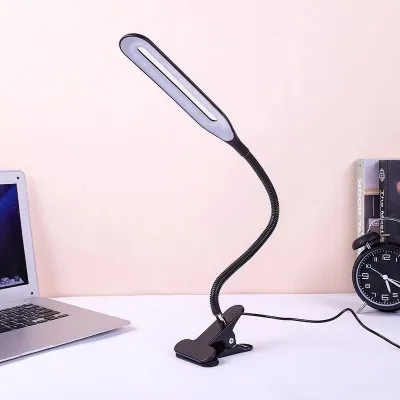
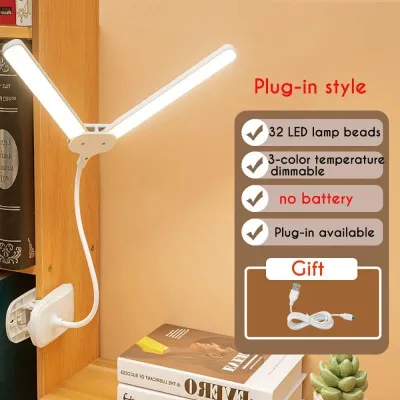
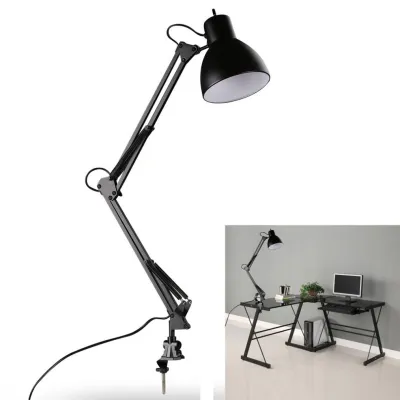
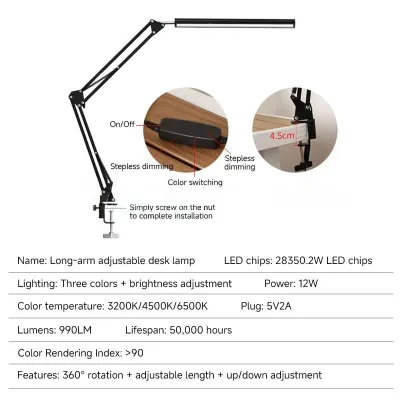
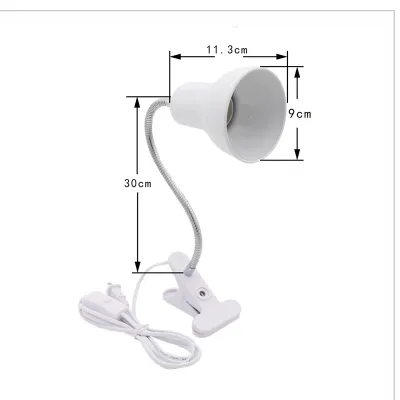
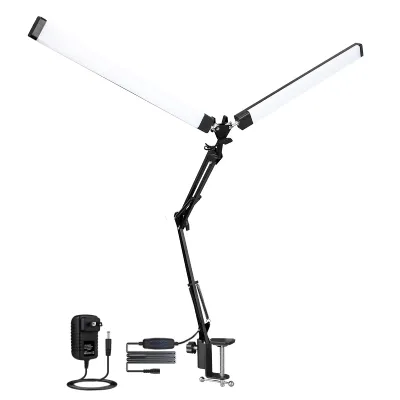
Prices are valid at publication and may change. Please refer to the product page for the latest price.
| Feature | Clip-On Desk Lamp | Traditional Bedside Lamp |
|---|---|---|
| Space Required | Zero nightstand footprint; clamps directly to furniture | Requires a flat, stable table or nightstand surface |
| Adjustability | High; features flexible goosenecks or articulated arms | Fixed position; light direction is generally static |
| Light Spread | Narrow, focused beam (targeted task lighting) | Wide, diffused glow (ambient and accent lighting) |
| Installation | Quick clamp-on setup; highly portable | Plug-and-play; stationary placement |
| Aesthetic Impact | Minimalist, functional, and modern | Decorative focal point; anchors bedroom styling |
| Best Use Case | Shared beds, small bedrooms, or dynamic reading postures | Single sleepers, spacious rooms, and general ambient use |
Space and Setup: Desk Lamp Clip Footprint vs. Traditional Bedside Bases
Clip-On Lamps: Zero Footprint, High Adjustability
In many modern homes, especially urban apartments and condominiums where bedroom square footage is limited, maximizing vertical space is essential. A clip-on model completely eliminates the need for a bulky nightstand. By utilizing a sturdy desk lamp clip, these fixtures can attach directly to your headboard, a floating wall shelf, or even the edge of a nearby bookshelf. This zero-footprint design frees up valuable tabletop space for other bedtime essentials like a glass of water, eyeglasses, or your current book pile.

Beyond saving physical space, clip-on lamps offer unmatched physical flexibility. Most models are engineered with highly adjustable goosenecks or multi-jointed articulated arms. This allows you to position the light source precisely where you need it, whether you prefer sitting upright against a stack of pillows, reclining at an angle, or lying down on your side. As you shift your reading posture, you can easily adjust the lamp head with one hand to keep the text perfectly illuminated without moving your entire body.
Before purchasing a clip-on lamp, it is crucial to measure the thickness of your headboard or bed frame. Most spring-loaded clamp mechanisms have a specified maximum opening width, typically ranging from 1.5 to 2.5 inches. Attempting to force a clip onto a frame that is too thick can damage the clamp spring, compromise its grip, or cause the lamp to snap off unexpectedly. Always verify that your bed frame’s dimensions fall safely within the manufacturer’s specified clamping range to ensure a secure, slip-free installation.
Traditional Bedside Lamps: Stable Base, Fixed Placement
Traditional bedside lamps require a flat, level, and highly stable nightstand surface to perform safely. The nightstand must be wide enough to accommodate the lamp’s base comfortably, leaving a safe margin around the edges to prevent the fixture from being accidentally knocked over in the dark or while reaching for an alarm clock. This setup is permanent and stationary, offering a reliable, classic look that does not require regular clamping, unclamping, or mechanical adjustments.
While traditional lamps lack the pinpoint physical adjustability of a flexible gooseneck, they excel at anchoring bedroom decor. A pair of matching bedside lamps placed on either side of a double or queen-sized bed creates a sense of visual symmetry and balance, elevating the overall design of the room. Because they come in an endless variety of materials—such as ceramic, glass, wood, and metal—traditional lamps act as key styling elements that reflect your personal taste, turning a simple light source into a decorative statement piece.
Lighting Quality and Eye Comfort
Evaluating how a lamp performs during the visual task of reading is essential for preventing eye strain and supporting long-term eye comfort. The primary difference lies in how each fixture manages light distribution, contrasting focused task lighting with diffused ambient illumination.
Clip-on lamps are dedicated task lights, designed to project a concentrated, directional beam of light directly onto your reading material. This high-contrast illumination makes printed text sharp and easy to read. However, reading a bright book in an otherwise pitch-black room can cause contrast glare, which forces your eyes to adjust constantly between the bright page and the dark surroundings, leading to rapid eye fatigue. To mitigate this, look for clip-on models that feature built-in dimming controls or multiple brightness levels. This allows you to lower the intensity of the light, reducing glare on glossy book pages or e-reader screens.
Traditional bedside lamps distribute light much more widely, softening the output through a shade made of fabric, paper, or frosted glass. This diffusion creates a gentle, low-contrast ambient glow throughout the immediate sleeping area, which is highly relaxing for the eyes as you wind down. However, because the light is scattered, traditional lamps can sometimes fail to provide enough direct illumination on your book, casting shadows if your body or head blocks the light path. If the shade is positioned too high, the exposed light bulb can also shine directly into your eyes, causing discomforting glare.
To ensure optimal eye comfort and safety, always verify the technical specifications on the lamp’s physical label before installation. Check the maximum allowable wattage limit and compatible bulb bases, such as the standard E27 or smaller E14 screw bases. Ensure the bulb’s operating voltage matches your local electrical supply, which is standard 220V in the Philippines. For bedtime reading, look for bulbs explicitly labeled with a warm color temperature, ideally between 2700K and 3000K. Warm, amber-toned light mimics the natural sunset, helping your body prepare for sleep, whereas cool daylight bulbs (5000K to 6500K) emit blue wavelengths that can suppress melatonin production and disrupt your natural sleep cycle.
Partner Disturbance and Light Spill
For couples sharing a bed, managing light spill—the stray light that illuminates areas outside your immediate reading zone—is a common challenge. A reading lamp that scatters light too widely can easily disrupt a sleeping partner, making precise beam control highly desirable.
Clip-on lamps are the superior choice for minimizing partner disturbance. Thanks to their narrow beam angles and highly directional heads, you can position the light source close to your book and angle it downward, away from your partner’s side of the bed. Many modern clip-on LED lamps feature focused lenses or integrated hoods that restrict the light to a tight, localized circle. This design ensures that your reading material remains brightly lit while the rest of the bed stays cast in shadow, allowing your partner to sleep undisturbed.
Traditional bedside lamps, by design, scatter light in all directions. A standard translucent fabric or paper shade allows light to spill across the entire bed, making it difficult for a partner to sleep nearby. If you prefer the look of a traditional lamp but share a sleeping space, you can minimize light spill by choosing an opaque shade made of metal or thick, dark-colored fabric lined with a reflective interior. This style of shade directs light strictly downward and upward, preventing horizontal spill. Alternatively, you can position the lamp lower than eye level when lying down, or select a hybrid bedside lamp that includes a small, dedicated flexible reading arm alongside the main shaded light.
Power, Safety, and Bedside Compatibility
Ensuring a safe, reliable bedside setup requires careful attention to electrical safety, cord routing, and physical stability. Both lamp types present unique safety considerations that should be addressed during installation.
Cord Management and Electrical Safety
Because clip-on lamps are clamped to elevated surfaces like headboards, their power cords naturally dangle down the back or side of the bed. This can create a cluttered appearance and poses a physical tangling hazard, especially if the cord hangs near moving bedding or walkways. To maintain a clean and safe setup, secure loose cords to the back of your headboard or bed frame using adhesive cable clips or hook-and-loop ties. Traditional lamps allow for much cleaner cord routing, as their cords can run directly from the table surface down behind the nightstand, keeping them hidden and out of reach.
Regardless of the lamp style you choose, electrical safety is paramount, particularly in humid tropical climates where moisture and dust can accumulate over time. Always verify that your lighting fixtures carry recognized national or international safety certifications, such as the Philippine Standard (PS) mark or the Import Commodity Clearance (ICC) sticker. Avoid overloading wall outlets by daisy-chaining multiple extension cords near your bed. To prevent electrical shocks, always isolate the power by unplugging the lamp before changing a bulb or performing routine cleaning.
Physical Safety and Heat Dissipation
When installing a clip-on lamp, pay close attention to the clamp’s contact surfaces. Ensure the clamp is equipped with protective foam, rubber, or silicone pads. High-tension metal or hard plastic clamps can easily scratch, dent, or strip the finish off wooden, veneered, or upholstered headboards if they lack adequate padding. If your chosen lamp does not include built-in pads, you can easily apply self-adhesive felt or silicone strips to the clamp jaws before mounting it.
For traditional bedside lamps, physical stability is the primary safety concern. Choose a lamp with a heavy, weighted base that resists tipping, especially if you live in an area prone to seismic activity or tend to toss and turn during the night. A top-heavy lamp placed on a narrow nightstand can easily fall, causing damage or creating a hazard.
Finally, manage heat dissipation carefully. Never place any lamp fixture in direct contact with pillows, blankets, curtains, or other flammable materials. While modern LED bulbs run significantly cooler than older incandescent or halogen options, their internal driver components still generate heat that requires proper ventilation. High-wattage traditional bulbs can reach high temperatures and pose a serious fire hazard if they come into contact with bedding. Always maintain a safe clearance of at least several inches between your light source and any fabric surfaces.
How to Choose: The Final Decision Framework
To make your final decision, evaluate your specific bedroom layout, lifestyle, and reading habits against the practical guidelines below.
- Choose a clip-on desk lamp if:
- You have a small bedroom, a floating shelf, or no nightstand at all, and need a zero-footprint lighting solution.
- You share a bed and need to strictly minimize light spill to avoid disturbing your partner.
- You frequently adjust your reading posture (such as sitting, reclining, or lying down) and require a highly flexible light source that can easily follow your movement.
- Choose a traditional bedside lamp if:
- You have a spacious nightstand and prefer a permanent, stationary light source.
- You want your lighting fixture to serve as a key decorative element that anchors your bedroom's interior design.
- You prefer a soft, diffused ambient glow that gently illuminates the entire room to help you wind down before sleep.
- You sleep alone and do not need to worry about containing light spill to one side of the bed.
- Verify first if:
- Your headboard's material and thickness can safely accommodate a high-tension clamp without sustaining structural or cosmetic damage.
- Your nightstand surface is wide, flat, and stable enough to support a traditional lamp base without any risk of tipping over.
- The fixture's electrical specifications, including voltage compatibility (220V) and maximum wattage limits, match your local standards and chosen bulb type.
Frequently Asked Questions (FAQ)
Can I use a regular desk lamp with a clip for my bed?
Yes, you can use a standard clip-on desk lamp for your bed, provided you verify a few physical requirements first. Ensure the clamp’s maximum opening width is compatible with the thickness of your headboard or bed frame to guarantee a secure grip. Additionally, check the length of the power cord; office desk lamps often have shorter cords designed for desk-height outlets, so you must ensure the cord can safely reach your nearest wall outlet without being stretched tight or creating a tripping hazard across your sleeping area.
What color temperature is best for reading in bed?
A warm white color temperature between 2700K and 3000K is highly recommended for bedtime reading. This warm, amber-toned light mimics natural evening light, which helps signal your brain that it is time to rest. You should avoid using cool white or daylight bulbs (ranging from 4000K to 6500K) near your bed, as their high concentration of blue light wavelengths can suppress melatonin production, making it more difficult to fall asleep after you finish reading.
Community discussion
Share your experience or ask a question. Comments are reviewed before publication.