
To read comfortably in bed without straining your eyes, you must prioritize a desk lamp that offers adjustable brightness (ideally with stepless dimming), customizable color temperature (ranging from warm 2700K to neutral 4000K), and precise physical adjustability to direct light only where it is needed. Unlike general workspace lighting, bedside reading requires a delicate balance between focused illumination and low ambient contrast, ensuring your eyes can transition easily to sleep while keeping glare and light spill to an absolute minimum.
Why Your Bedside Environment Changes Lighting Needs
Reading in bed is fundamentally different from working at an office desk. In a dark or dimly lit bedroom, your eyes are subjected to a high-contrast environment if you use an unsuitable light source. A harsh, direct beam of light cutting through a dark room forces your pupils to constrict and dilate repeatedly as your gaze shifts between the illuminated page and the dark surroundings, leading to rapid eye fatigue.
This high-contrast environment is further complicated by the \”partner factor.\” If you share your bed, a lamp with a wide, uncontrolled beam will spill light across the entire mattress, disrupting your partner’s sleep. Bedside reading lights must therefore be highly directional, focusing their output strictly on your book or tablet while keeping the rest of the room in comfortable shadow.
Products mentioned in this guide
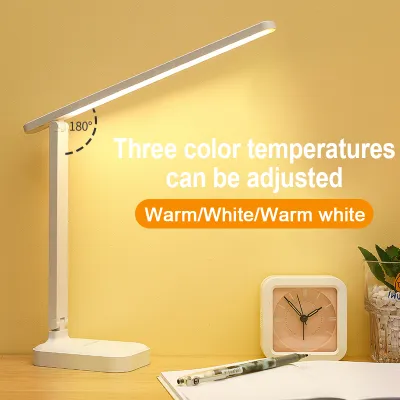
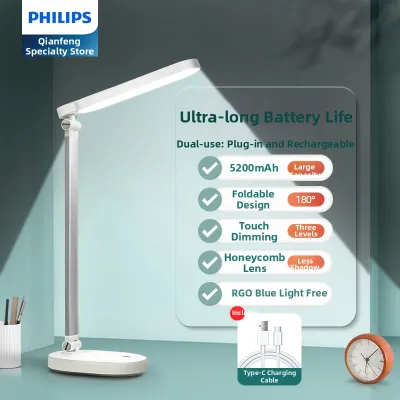
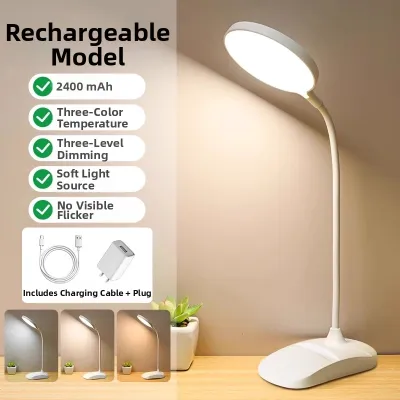
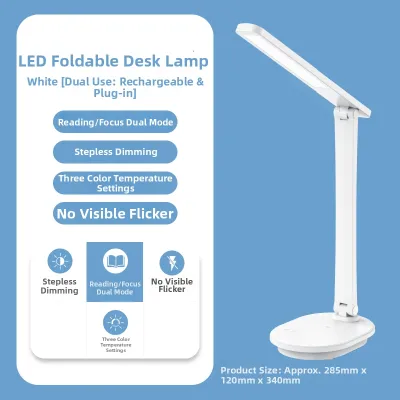
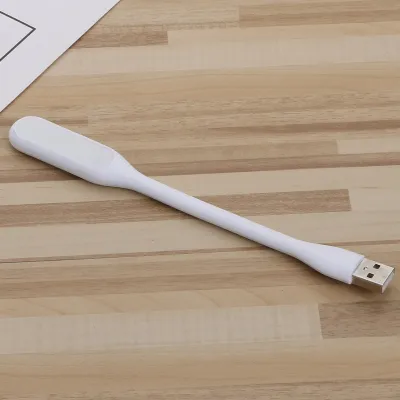
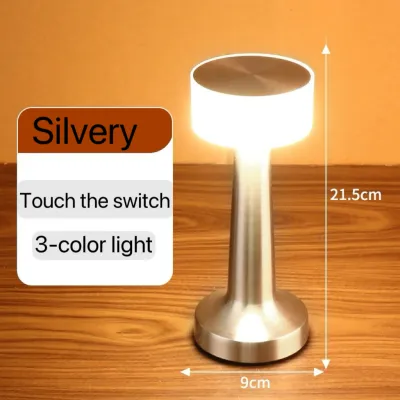
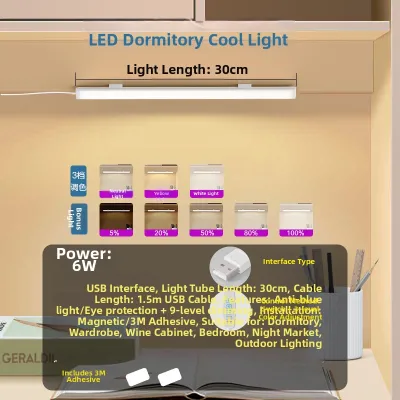
Prices are valid at publication and may change. Please refer to the product page for the latest price.
Furthermore, your biological clock relies heavily on environmental lighting cues. Exposure to high-intensity cool blue light late in the evening suppresses the production of melatonin, a hormone essential for sleep regulation. Transitioning from the high-energy focus of the daytime to a relaxed evening state requires lighting that mimics the warm, soft tones of sunset, signaling to your brain that it is time to wind down.
Key Light Specifications to Prevent Eye Strain
Selecting the right desk lamp for your bedside requires looking beyond aesthetic appeal to understand the technical specifications that govern optical comfort. The right metrics ensure that the text on the page remains sharp and legible without forcing your eyes to overwork.

Brightness and Dimming Capabilities
When choosing a lamp, it is vital to distinguish between raw lumen output and perceived brightness in a dark room. An office lamp might boast high lumen values to flood a large desk with light, but at your bedside, this level of intensity will cause severe glare. A suitable bedside lamp should offer a lower minimum brightness threshold, allowing you to read comfortably in a dark room without feeling blinded by the reflection off white pages.
To achieve this, prioritize lamps with stepless dimming or multiple pre-set brightness levels. Stepless dimming, often controlled via a touch-sensitive slider, allows you to fine-tune the light output to the exact level required by your current ambient conditions. This flexibility prevents both under-illumination, which causes squinting, and over-illumination, which causes reflective glare.
Color Temperature and Circadian Impact
Color temperature is measured on the Kelvin (K) scale and dictates how warm (yellowish) or cool (bluish) the light appears. For bedside reading, a lamp with adjustable color temperature is highly beneficial. Warm light, typically between 2700K and 3000K, creates a cozy, relaxing atmosphere that minimizes blue light exposure and supports your natural circadian rhythm as you prepare for sleep.
However, there are times when a slightly cooler, neutral light is necessary. If you are reading dense academic textbooks, complex diagrams, or small print, a neutral white light of around 4000K can improve contrast and visual clarity. Having a lamp that can transition seamlessly from a focused 4000K down to a soothing 2700K ensures you have the right light for both active studying and pre-sleep relaxation.
Flicker-Free Technology and High CRI
Invisible properties of light can cause significant eye strain even if you do not consciously notice them. Many low-quality LED lamps exhibit micro-stroboscopic flicker, which is a rapid, imperceptible pulsing of light caused by cheap drivers. Although invisible to the naked eye, this flicker forces the muscles in your eyes to adjust continuously, leading to headaches, dry eyes, and fatigue during extended reading sessions. Always look for lamps specifically certified as \”flicker-free.\”
Color Rendering Index (CRI) is another critical metric, measuring how accurately a light source reveals the true colors of objects compared to natural sunlight. A low CRI light makes text and paper look dull, reducing contrast and making it harder for your eyes to distinguish characters. Choosing a desk lamp with a high CRI (ideally 80 or above, and preferably 90+) ensures sharp text contrast and a more natural, comfortable viewing experience.
Beam Control and Physical Adjustability
The physical design of your lamp determines how effectively you can control the light beam. Proper beam control ensures that light goes exactly where you need it, rather than spilling into your eyes or across the bedroom.
Glare Reduction and Asymmetric Optics
Direct glare occurs when you can see the light source itself, while reflective glare occurs when light bounces off the page directly into your eyes. To combat this, many modern task lamps utilize asymmetric optics. This technology directs the light downward and forward at an angle, illuminating your reading material while keeping the light source hidden from your direct line of sight.
In addition to asymmetric distribution, look for physical glare-control features built into the lamp head. Frosted diffusers help soften the light, spreading it evenly across the page to eliminate harsh hotspots. Honeycomb louvers and deeply recessed LED beads also help shield your eyes from direct exposure to the light source, ensuring a much softer and more comfortable reading experience.
Form Factor and Articulation
A bedside table or nightstand is often crowded with essentials like phone chargers, water glasses, and books. Therefore, the lamp’s physical footprint is a major consideration. A compact, weighted base is ideal, as it prevents the lamp from tipping over when you adjust it in the dark, while taking up minimal space on your nightstand.
To direct the light precisely, consider the articulation of the lamp arm. A flexible gooseneck offers infinite adjustability, allowing you to bend and twist the lamp into any position. Alternatively, an articulated multi-joint arm provides sturdy, precise positioning over a larger area. Whichever style you choose, ensure the joints are robust enough to hold their position over time without drooping.
Bedroom-Specific Controls and Convenience
The usability of a bedside lamp depends heavily on how easy it is to operate when you are half-asleep. Complex or loud controls can ruin the relaxing pre-sleep experience.
Look for intuitive control interfaces that are easy to locate in the dark. Touch-sensitive bases are highly convenient, allowing you to turn the lamp on or adjust the brightness with a simple tap, eliminating the need to fumble for a tiny inline switch along the power cord. Some advanced models also offer remote controls or smart app integration, allowing you to turn off the light without reaching out of bed.
Automated features can also enhance your evening routine. An auto-off timer (often set to 30 or 45 minutes) is excellent for those who tend to fall asleep while reading, ensuring the light does not stay on all night. Gradual dimming or sleep modes slowly lower the light intensity over several minutes, helping your body ease into sleep naturally.
When purchasing a lamp, especially from online marketplaces, always verify its electrical specifications to ensure compatibility with your home. In the Philippines, the standard electrical supply is 220V at 60Hz. Ensure the lamp’s adapter or internal ballast is rated for this voltage to prevent overheating or premature failure. Additionally, look for recognized safety certifications on the product label, such as the Philippine Standard (PS) mark or Import Commodity Clearance (ICC) sticker, to guarantee the device has undergone rigorous electrical safety testing.
How to Position Your Lamp for Maximum Comfort
Even the most advanced bedside lamp will cause discomfort if it is positioned incorrectly. To maximize the ergonomic benefits of your lamp, proper placement is essential.
Start by adjusting the height of the light source. Ideally, the bottom of the lamp shade or the light head should be slightly above your eye level when you are sitting up in bed. This positioning allows the light to cast downward onto your book without shining directly into your eyes. Angle the lamp head slightly away from your face so that the light bounces off the page at an angle, rather than reflecting straight back into your eyes.
To minimize contrast strain, avoid reading in an otherwise pitch-black room with only a single bright spotlight. Instead, balance your task light with a very low level of ambient room light. This can be achieved by using a dim, warm ceiling fixture, a low-wattage secondary lamp, or bias lighting behind your headboard. This soft background glow reduces the harsh boundary between light and shadow, easing the strain on your visual system.
Finally, place the lamp on the side of your dominant hand or on the side of the bed closest to where you hold your book. If you are reading a physical book, this prevents your hands or body from casting shadows across the pages as you turn them. If you share a bed, place the lamp on the outer edge of your side of the bed, angling the beam inward and downward to keep the other side of the mattress in darkness.
Frequently Asked Questions (FAQ)
Can I use a standard office desk lamp for bedside reading?
While a standard office desk lamp can provide sufficient illumination, it is generally not ideal for bedside reading. Office lamps are designed to flood a large workspace with bright, high-contrast light, which often lacks the warm color temperatures and precise beam control needed in a bedroom. Using one at your bedside can lead to excessive glare, high blue light exposure that disrupts sleep, and significant light spill that will likely disturb a sleeping partner.
Is warm light always better for reading in bed?
Warm light (between 2700K and 3000K) is highly recommended for late-night reading because it minimizes blue light exposure, helping your body prepare for sleep. However, it is not always the best choice for every reading scenario. If you are reading dense textbooks, technical manuals, or fine print, a neutral white light (around 4000K) provides better contrast and reduces visual fatigue, provided you keep the overall brightness level low. A lamp with adjustable color temperature offers the best of both worlds.
Community discussion
Share your experience or ask a question. Comments are reviewed before publication.