
Quick Answer: Core Specs to Check Before Buying
When shopping for a desk lamp study light, prioritize three main specifications: a brightness level of 400 to 500 lumens, an adjustable color temperature range between 3000K and 5000K, and a Color Rendering Index (CRI) of 90 or higher. These specifications ensure your workspace is sufficiently illuminated without causing eye strain, allowing you to transition from high-focus daytime tasks to relaxed evening reading.
Brightness and Lumens: Finding the Right Intensity
Lumens measure the total amount of light emitted by a source in all directions, while lux measures the intensity of light falling on a specific surface area. For an effective study setup, you want to focus on how much usable light actually reaches your books or keyboard. A lamp that provides around 500 lux on the desk surface is generally ideal for reading fine print and maintaining focus.

Evaluating manufacturer claims requires looking at the physical layout of your study area. If you have a deep desk, a lamp with a short arm might not project light far enough, reducing the effective lux in your working zone. Conversely, highly reflective desk surfaces—such as polished wood or glossy white laminates common in modern home offices—can bounce light directly into your eyes, causing harsh glare.
Products mentioned in this guide
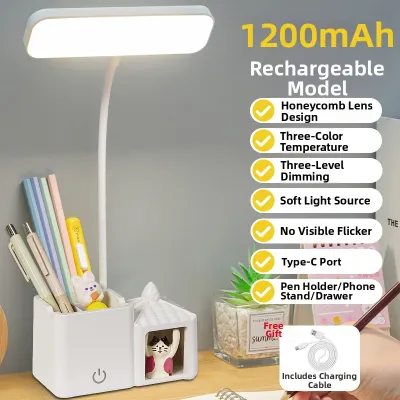
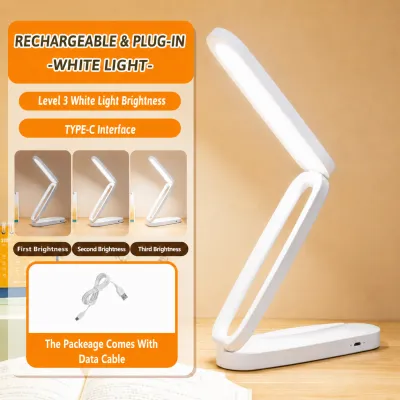
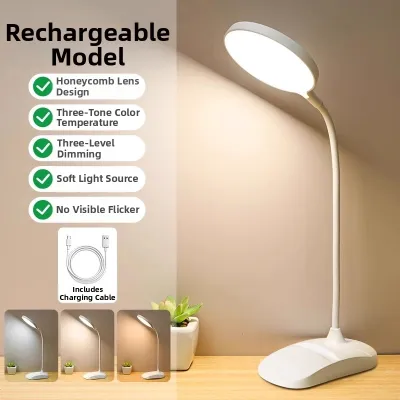
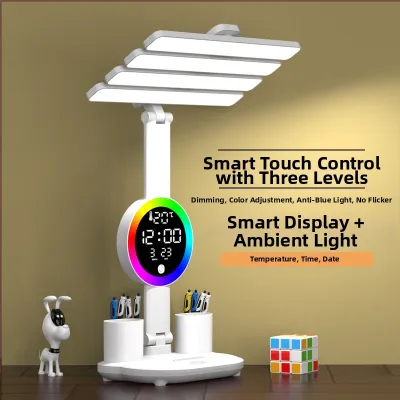
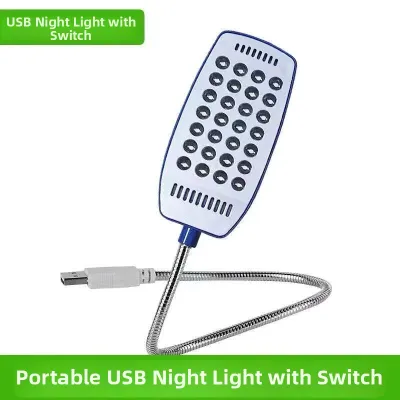
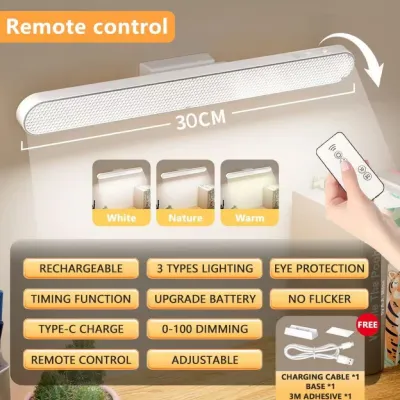
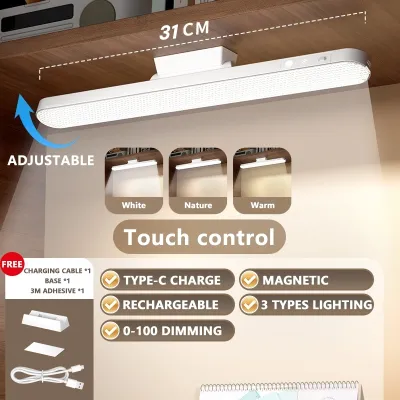
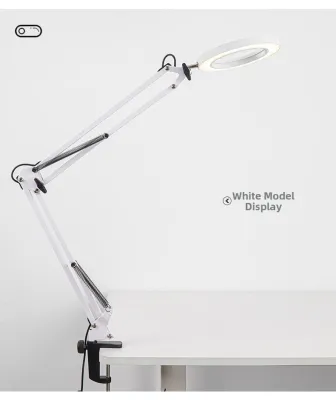
Prices are valid at publication and may change. Please refer to the product page for the latest price.
Excessive brightness is just as problematic as insufficient light. When a lamp is too bright, it creates a high-contrast environment against your computer screen, leading to visual fatigue and headaches during long study sessions. Look for lamps that allow you to fine-tune the output to match the ambient light in your room.
Color Temperature: Choosing Kelvin for Focus and Comfort
Color temperature, measured in Kelvin (K), dictates the color appearance of the light. Warm light (around 2700K to 3000K) has a cozy, yellowish hue, while neutral light (4000K) mimics natural daylight, and cool light (5000K and above) has a crisp, bluish-white tone. Each zone serves a distinct purpose in a study environment.
Cool, bluish light is highly effective for daytime concentration because it suppresses melatonin production, keeping you alert and focused during intense study blocks. However, using this same cool light during late-night study sessions can disrupt your natural circadian rhythm, making it difficult to fall asleep afterward.
To balance these needs, prioritize a desk lamp with adjustable color temperature settings. This flexibility allows you to use cool or neutral light during morning and afternoon sessions, and then transition to a warm, low-intensity setting as evening approaches to help your mind wind down.
Color Rendering Index (CRI): Why It Matters for Clarity
The Color Rendering Index (CRI) measures how accurately a light source reveals the true colors of objects compared to natural sunlight, scored on a scale up to 100. For studying, a high CRI is crucial because it directly affects text contrast and visual clarity. Low-CRI light can make black text on white paper look muddy or faded, forcing your eyes to work harder to decode the words.
For general reading and typing, a minimum CRI of 80 is acceptable. However, if your studies involve detailed diagrams, architectural drawings, medical illustrations, or artwork, you should prioritize a lamp with a CRI of 90 or higher. This ensures that subtle color differences are clearly visible and reduces the cognitive load of interpreting complex visual data.
To verify these claims, check the product specifications on the packaging or the detailed product description on online marketplaces. Reputable manufacturers will clearly list the CRI rating (often written as Ra). If a listing or box completely omits the CRI rating, it is safer to assume the light quality may not meet high-contrast study standards.
Dimming, Flicker, and Adjustability Features
A quality study lamp must adapt to changing ambient light throughout the day. Step dimming offers a few preset brightness levels (such as low, medium, and high), which is simple but sometimes limits your ability to find the perfect balance. Continuous dimming, often controlled via a touch-sensitive slider, allows you to adjust the brightness smoothly to any level.
Another critical factor is flicker. Many low-quality LED lamps flicker at a high frequency that is invisible to the naked eye but still registered by your brain, leading to unexplained headaches, eye strain, and fatigue. Look for lamps explicitly labeled as “flicker-free” or those that use high-quality direct current (DC) drivers to ensure a stable, continuous stream of light.
Physical adjustability is equally important. A lamp with a flexible gooseneck or a multi-axis rotating head allows you to direct the light precisely where you need it. This helps you position the light source to avoid casting shadows from your hand while writing, and prevents the light bulb from shining directly into your eyes or reflecting off your computer screen.
Electrical Safety and Compatibility Checks
In the Philippines, the standard electrical grid operates at 220 volts (V) at 60 hertz (Hz). When purchasing a desk lamp, especially from international sellers on online marketplaces, always verify that the power adapter is rated for 220V input. Using a lamp designed solely for 110V without a proper transformer can damage the device or pose a fire hazard.
Look for local safety marks such as the Philippine Standard (PS) mark or the Import Commodity Clearance (ICC) sticker on the product or its packaging. For imported electronic goods, international certifications like CE, UL, or FCC on the power adapter also indicate that the product has undergone rigorous safety testing.
Additionally, consider the physical environment of your study space. In tropical climates where ceiling fans or desk fans are frequently running to combat humidity, a lamp with a heavy, stable base is essential to prevent it from wobbling or tipping over. Ensure the power cord is long enough to reach your outlet safely without stretching, which can create a tripping hazard or damage the cord over time.
Frequently Asked Questions (FAQ)
Does a higher wattage always mean a better study lamp?
No, wattage only measures how much electricity a lamp consumes, not how much light it produces. With modern LED technology, highly efficient lamps can produce bright, clear light while using very little power. When comparing lamps, ignore the wattage and look at the lumen rating to determine the actual brightness.
Is blue light from cool desk lamps harmful to my eyes?
The blue light emitted by standard LED study lamps is generally not intense enough to cause physical damage to your eyes, unlike the concentrated exposure from staring directly at digital screens for hours. However, exposure to cool blue-toned light in the evening can interfere with your sleep cycle. To prevent this, simply switch your adjustable lamp to a warm color temperature (under 3000K) during night sessions.

Community discussion
Share your experience or ask a question. Comments are reviewed before publication.