
Quick Answer: Which Lamp Is Better for Your Reading Setup?
Choosing between a desktop lamp and a traditional bedside lamp for reading in bed depends on your personal reading habits, your physical space, and how you prefer to control light. A desktop lamp is highly suitable for readers who require focused, highly adjustable task lighting and have a stable, spacious surface next to the bed. The articulated arms and directional heads of these lamps allow you to channel light directly onto your pages without disturbing a sleeping partner.
Conversely, a traditional bedside lamp is better suited for those who prioritize a soft, ambient glow, simple physical controls, and a design that complements bedroom decor. These lamps excel at creating a relaxing atmosphere that helps prepare your mind for sleep, though they offer less flexibility in directing light. To make the right choice, you must verify your nightstand dimensions, check the accessibility of the power switch from a lying position, and confirm the lamp’s compatibility with your preferred bulb types.
Design and Placement: How Each Lamp Fits Your Nightstand
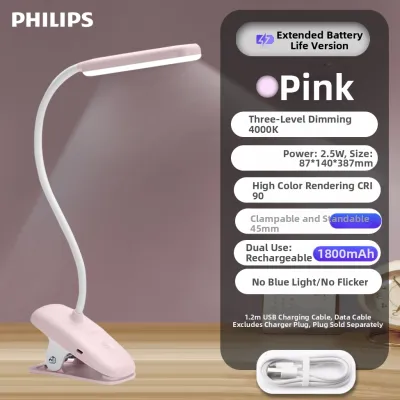
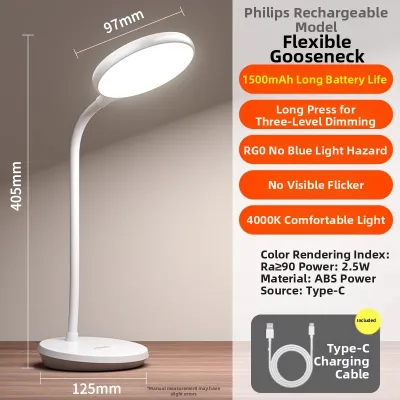
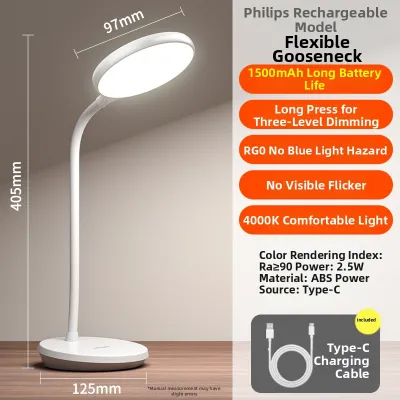
The physical build of your chosen light source directly impacts your comfort and reading posture. Desktop lamps typically feature flexible goosenecks or articulated, multi-jointed arms. This mechanical design allows you to pull the light source close to your book or push it away when you need more ambient illumination. However, this adjustability requires a sturdy, flat surface to prevent the lamp from tipping over when fully extended. If you use a small or lightweight nightstand, a heavy-duty desktop lamp might cause stability issues.
Products mentioned in this guide
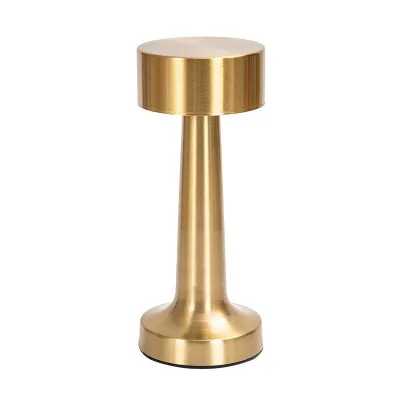
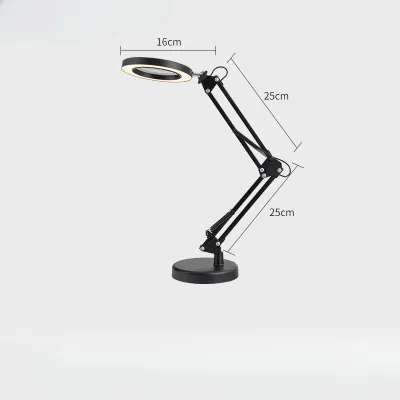
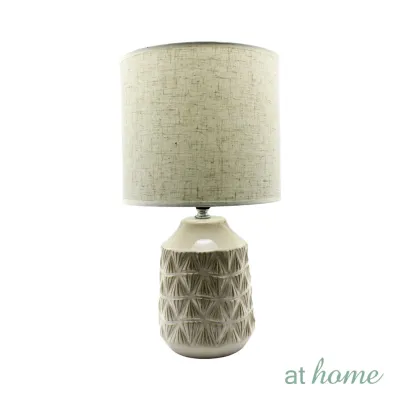
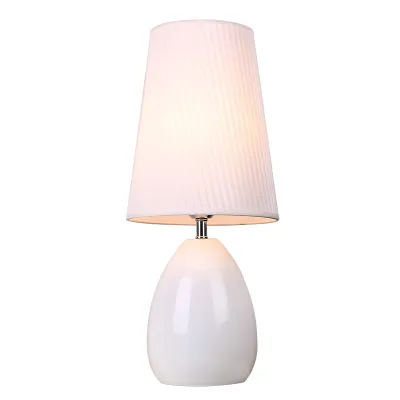
Prices are valid at publication and may change. Please refer to the product page for the latest price.

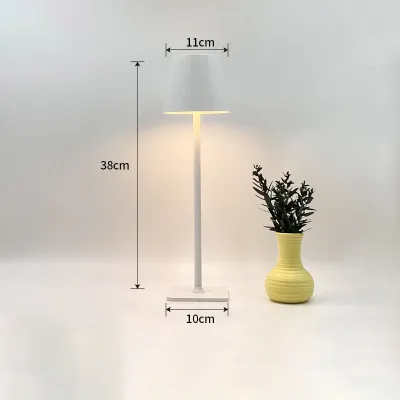
Traditional bedside lamps rely on a fixed base and a fabric, glass, or plastic shade. They are designed to sit permanently in one spot, offering a stable center of gravity that integrates seamlessly with standard bedroom furniture. Because they lack moving parts, they are less prone to mechanical wear over time. When selecting a bedside lamp, you should measure the height of your mattress relative to the nightstand. Ideally, the bottom of the lampshade should align with your eye level when sitting up in bed to prevent the bulb from shining directly into your eyes.
In tropical environments where humidity levels are consistently high, material choice becomes a critical factor for both lamp types. Metal joints and screws on adjustable desktop lamps can rust or stiffen over time if they are not treated with moisture-resistant coatings. On the other hand, traditional fabric shades can absorb airborne moisture and dust, which may lead to staining or mold in poorly ventilated rooms. Checking product specifications for rust-resistant finishes or choosing easy-to-clean shade materials like glass or treated plastics can save maintenance effort later.
Furthermore, you must consider external factors such as airflow. If you regularly use a powerful ceiling fan or a stand fan to stay cool at night, a lightweight lamp with a broad shade might wobble or drift. Verifying the base weight of any potential purchase ensures the fixture remains securely anchored, even when subjected to a steady breeze.
Light Quality and Eye Comfort for Nighttime Reading
Achieving the right light quality is essential for preventing eye strain during late-night reading sessions. Desktop lamps deliver a focused, directional beam of light. This concentrated illumination is excellent for rendering sharp contrast on printed text, making it easier to read small fonts without squinting. However, a highly focused beam can create harsh shadows and high-contrast zones in an otherwise dark room, which can tire your eyes over long periods.
Traditional bedside lamps diffuse light through a shade, scattering it across a wider area. This diffusion minimizes harsh shadows and reduces the contrast between your book and the surrounding room, creating a gentler visual environment. The trade-off is that diffused light is less concentrated, which may require you to strain your eyes if the bulb wattage is too low or if the shade material is too opaque.
To optimize eye comfort, you should check product labels for adjustable brightness and color temperature options. Many modern fixtures feature integrated LED modules with step-less dimming or multiple preset brightness levels. For nighttime reading, look for bulbs or integrated systems that support warm color temperatures, typically between 2700K and 3000K. Warm, yellowish light is less disruptive to your natural sleep cycle compared to cool, blue-toned light, which is better suited for daytime productivity.
The design of the shade and the placement of the bulb also dictate how glare is managed. An adjustable desktop lamp allows you to position the light source to block direct glare from reflecting off glossy book pages or e-reader screens. With a traditional bedside lamp, you must rely on the shade to block direct line-of-sight to the bulb. Before buying, verify that the shade is deep enough to fully cover the bulb from all viewing angles while you are lying down or sitting propped up against pillows.
Space, Convenience, and Bedroom Aesthetics
Your nightstand is valuable real estate, often holding essentials like phones, glasses, water glasses, and books. Desktop lamps, especially those with heavy bases or complex clamp mechanisms, can occupy a significant portion of this space. While clamp-on desktop lamps can be attached directly to a headboard or the edge of a shelf to save surface space, you must verify that your furniture has a compatible, sturdy edge that can support the clamp’s pressure without sustaining damage.
Traditional bedside lamps generally have a predictable, circular or square footprint that fits neatly into standard bedroom layouts. They serve as decorative focal points, allowing you to coordinate colors, textures, and materials with your bedding and curtains. If bedroom aesthetics and a cozy, symmetrical look are your primary goals, a pair of matching traditional bedside lamps is often the preferred design choice.
Cable management and switch accessibility are practical details that heavily influence daily convenience. Reaching out of bed to turn off a lamp should not require awkward stretching or risking a fall. Many desktop lamps feature switches on the base or touch-sensitive controls on the lamp head, which are easy to operate from a lying position. Traditional bedside lamps may use inline cord switches, which can easily slip behind the nightstand, leaving you fumbling in the dark.
When evaluating a lamp, check the total length of the power cord and the exact location of the switch. If the cord is too short, you may be forced to use extension cords, which can clutter the floor and pose a tripping hazard. Look for models that feature built-in utility options, such as USB charging ports on the base, which can help streamline your bedside cable setup and keep your devices charged within arm’s reach.
Feature Comparison: Desktop vs. Bedside Lamps
To help you quickly evaluate which structural design fits your bedroom layout and reading habits, refer to the comparison table below.
| Feature | Desktop Lamp | Traditional Bedside Lamp | What to Verify Before Buying |
|---|---|---|---|
| Adjustability | High (flexible necks, rotating heads, articulated arms) | Low (fixed height and angle) | Check joint tension and arm reach measurements. |
| Light Direction | Focused, narrow task beam | Broad, diffused ambient glow | Check shade opacity and beam angle specifications. |
| Space Footprint | Variable (can be bulky, but clamp options save space) | Standard (predictable base size on nightstand) | Measure nightstand surface area and clamp clearance. |
| Switch Type | Often on base, lamp head, or touch-sensitive | Inline cord switch, pull chain, or base rotary | Confirm switch location is reachable from your mattress. |
| Best Use Case | Long reading sessions, detailed tasks, shared beds | Casual reading, ambient room lighting, classic decor | Match the lamp type to your primary evening activity. |
Final Decision: Choose a Desktop Lamp if… / Choose a Bedside Lamp if…
To finalize your decision, evaluate your specific nighttime routine against the strengths of each lamp type.
Choose a Desktop Lamp if:
- You read for extended periods: The ability to position the light precisely over your book reduces physical fatigue and eye strain.
- You share a bed: You can angle the focused beam away from your partner, allowing them to sleep undisturbed while you read.
- You have limited nightstand surface space but a sturdy headboard: A clamp-on desktop lamp frees up your entire bedside table for other items.
- You prefer modern, functional aesthetics: The clean lines and mechanical look of task lamps fit well with minimalist or industrial bedroom designs.
Choose a Traditional Bedside Lamp if:
- Your reading sessions are short and casual: If you only read a few pages to wind down, a soft, ambient light is sufficient and highly relaxing.
- You prioritize bedroom decor and symmetry: Traditional lamps act as key design elements that tie the room's aesthetic together.
- You want simple, reliable operation: Standard fixtures with easily replaceable bulbs offer straightforward utility without complex joints or touch sensors.
- You prefer a warm, cozy atmosphere: The diffused light from a fabric or glass shade softens the room's edges, preparing your body for sleep.
Verify First if:
- You are unsure about nightstand dimensions: Measure the height and width of your bedside table to ensure the lamp base fits securely without hanging over the edge.
- You plan to use smart bulbs: Verify that the lamp's socket type (such as E27 or E14) is compatible with standard smart bulbs if you want to control your lighting via an app or voice commands.
- You have specific electrical layouts: Check the distance from your nightstand to the nearest wall outlet to ensure the power cord can reach safely without tension.
Safety and Electrical Checks Before You Buy
Before finalizing any lighting purchase, you must perform several basic safety and electrical verifications to protect your home and ensure reliable performance. First, verify the voltage compatibility of the lamp. In the Philippines, the standard household voltage is 220V at 60Hz. Purchasing a lamp designed solely for 110V systems without a proper transformer can damage the fixture or cause an electrical hazard.
Next, check the maximum wattage rating printed on the lamp’s socket or product label. Exceeding this limit by installing a bulb with too high a wattage can cause excessive heat buildup, particularly inside enclosed traditional lampshades. This heat can degrade the socket materials, damage the shade, or even pose a fire risk. If you prefer high brightness, consider using energy-efficient LED bulbs, which produce significantly less heat than traditional incandescent bulbs while delivering comparable light output.
Always look for recognized electrical safety certifications on the product packaging or manufacturer documentation. In the local market, look for the Philippine Standard (PS) mark or the Import Commodity Clearance (ICC) sticker, which indicate that the product has undergone safety testing. If you are purchasing from international sellers on online marketplaces, verify that the product complies with equivalent global safety standards.
Finally, avoid overloading your bedside electrical outlets. Running multiple high-draw devices alongside your reading lamp from a single wall outlet via cheap, unrated extension cords or adaptors can lead to overheating. If your bedroom lacks conveniently placed outlets, or if you require dedicated wall-mounted reading lights, avoid attempting complex DIY electrical work. Always isolate the power at the main circuit breaker and consult a qualified professional electrician to install new wiring, outlets, or wall switches safely.
Community discussion
Share your experience or ask a question. Comments are reviewed before publication.