
Selecting the perfect glowing butterfly led light for your outdoor space involves more than just picking an appealing design. In tropical climates like the Philippines, outdoor decorations must withstand intense solar heat, high humidity, and sudden torrential downpours. To ensure your decorative lighting remains safe, functional, and beautiful over time, you must evaluate technical specifications such as ingress protection (IP) ratings, power configurations, material durability, and installation requirements before making a purchase.
By focusing on these core specifications, you can avoid common pitfalls like premature water damage, electrical hazards, or rapid material degradation. This guide breaks down the essential technical details you need to check to make an informed and safe choice for your garden, patio, or balcony.
Decoding Waterproof (IP) Ratings for Your Glowing Butterfly LED Light
Ingress Protection (IP) ratings are the standard measurement for how well an electrical enclosure seals against solids and liquids. The rating consists of two numbers: the first represents protection against dust and solids (ranging from 0 to 6), while the second represents protection against water (ranging from 0 to 9). For outdoor lighting, the water resistance number is the most critical factor to inspect.
Products mentioned in this guide
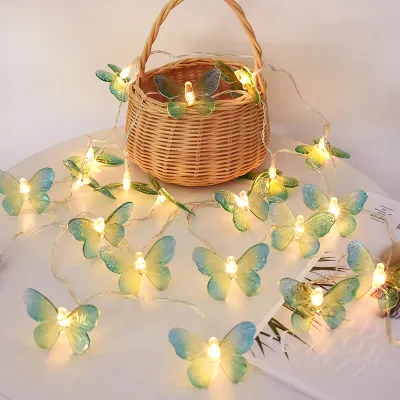
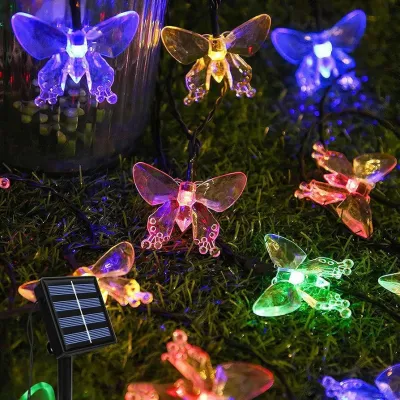
Prices are valid at publication and may change. Please refer to the product page for the latest price.
An IP44 rating means the light is protected against splashing water from any direction. This level of protection is generally suitable for covered outdoor areas, such as covered patios, balconies, or under deep roof eaves where the fixtures are shielded from direct, heavy rainfall. If your lights will be partially protected, IP44 is often sufficient.
For fully exposed areas like open garden beds, fences, tree branches, or lawn borders, you should look for at least an IP65 rating. IP65-rated lights are protected against water jets from any angle, making them capable of enduring heavy tropical monsoons. If the installation area is low-lying and prone to temporary water pooling during storms, an IP67 rating is even better, as it certifies protection against temporary immersion.
Do not rely on vague marketing terms like “waterproof” or “weather-resistant” in product titles on ecommerce platforms. Always locate the official technical specifications on the packaging or the manufacturer’s spec sheet to verify the true IP rating. Furthermore, ensure that this rating applies to the entire assembly; a common failure point occurs when the butterfly LED string is rated IP65, but the power adapter, controller box, or battery compartment is only rated for indoor use (IP20).
Power Source Options and Electrical Specifications
Choosing the right power source depends on your outdoor layout, sunlight exposure, and proximity to electrical outlets. The three primary options are solar-powered, plug-in, and battery-operated systems, each presenting distinct trade-offs in convenience and reliability.

Solar-powered lights are highly convenient for sunny garden spots because they require no external wiring. When evaluating solar models, check the solar panel type and the battery capacity, which is measured in milliampere-hours (mAh). Monocrystalline solar panels offer higher energy conversion efficiency than polycrystalline alternatives, while a larger battery capacity ensures the lights remain illuminated longer into the night. Keep in mind that during the rainy season, prolonged overcast skies will limit the solar panel’s ability to fully charge the battery.
Plug-in lights provide consistent, reliable brightness regardless of the weather. When choosing a plug-in glowing butterfly led light, you must verify that the voltage matches local standards. In the Philippines, the standard household electrical supply is 220V at 60Hz. Ensure the plug adapter is certified for this voltage and carries recognized safety marks, such as the Philippine Standard (PS) or Import Commodity Clearance (ICC) certifications.
Battery-operated lights offer maximum placement flexibility because they do not rely on outlets or sunlight. However, they require frequent battery replacements, which can quickly accumulate costs and generate environmental waste if you plan to run the lights daily. They are best reserved for temporary festive setups rather than permanent outdoor decor.
To ensure safety, calculate your required cable length before buying to avoid stretching wires or using unsafe daisy-chaining methods. Measure the exact distance from your outdoor outlet to the start of your decorative display, factoring in any slack needed to route the cable safely along walls or posts. If you use plug-in models, always use an outdoor-rated extension cord and protect the plug connection inside a dedicated waterproof outlet cover or weather-resistant junction box. For decorative string lights, wattage and lumen output are secondary to battery life, cord length, and electrical safety.
Material Build and UV Resistance
Outdoor decorative lights must endure harsh environmental exposure, making material selection a key factor in their longevity. The butterfly wings are typically made from PET (polyethylene terephthalate) plastic, silicone, or treated fabric. PET plastic provides good structural rigidity and clarity, while silicone offers excellent flexibility and resistance to cracking under temperature fluctuations. Fabric wings, even if treated with water-repellent coatings, tend to degrade, mold, or fade rapidly when exposed to tropical humidity and intense sunlight.
For the wiring, manufacturers generally use either ultra-thin bare copper wire or PVC-coated copper wire. Bare copper wire is highly flexible and blends seamlessly into foliage, but it is delicate and susceptible to snapping if pulled or subjected to high winds. PVC-coated copper wire provides an extra layer of physical insulation, protecting the conductors from friction, moisture, and accidental cuts.
Because the tropical sun can rapidly degrade plastics, check the product specifications for explicit UV-resistance claims. Non-UV-stabilized plastics will yellow, become brittle, and crack within a few months of sun exposure. Additionally, look for rust-proof or corrosion-resistant coatings on any metal clips, screws, or support stakes included with the set.
Remember that material names alone do not guarantee durability. You must verify the manufacturer’s care instructions, operating temperature ranges, and structural design. Pay close attention to the connection points where the individual butterfly LEDs join the main wire string. These joints are highly vulnerable to water ingress and physical tension, so look for models that feature molded, sealed, or heat-shrink-wrapped connections to prevent moisture from reaching the electrical contacts.
Lighting Modes and Color Temperature
Lighting specifications dictate the visual impact of your display. Glowing butterfly LED lights are commonly available in warm white (2700K to 3000K), cool white (5000K to 6500K), and RGB/multicolor options. Warm white light creates a cozy, soft, and inviting atmosphere, which is ideal for relaxing patio settings. Cool white offers a modern, crisp look with high visibility, while RGB options allow you to switch between vibrant colors for parties and holidays.
Control mechanisms determine how easily you can adjust the lighting modes, which typically include steady on, slow fade, flashing, or twinkle effects. Basic models feature a simple inline button on the power adapter or solar panel. More advanced models include an infrared remote control or Bluetooth/Wi-Fi smartphone app integration. If choosing a remote-controlled model, check the maximum operating range and whether the receiver requires a direct line of sight to function.
It is important to recognize that color temperature, color choices, and lighting modes are subjective design preferences rather than performance metrics. You should select these features based on the specific mood, theme, and architectural style of your outdoor living space.
Installation Methods and Safety Boundaries
Most glowing butterfly led light sets include integrated installation accessories such as hanging hooks, cable ties, or ground stakes. Ground stakes are perfect for anchoring the lights along garden paths or within flower beds. Hanging hooks and cable ties allow you to secure the strings along pergolas, gutters, or tree branches.
When installing your lights, you must establish clear safety boundaries. If your installation requires working at a height, drilling into exterior concrete walls, or modifying any fixed electrical wiring, prioritize safety. Always isolate the power supply by turning off the appropriate circuit breaker before handling any electrical components. If you need to install permanent outdoor outlets or run conduit underground, consult a qualified professional electrician to ensure the work complies with the Philippine Electrical Code.
Always adhere strictly to the product’s installation manual. Do not exceed the manufacturer’s stated weight or tension limits for the wire string. Pulling a string light too tight can damage the internal copper conductors, leading to premature failure, short circuits, or potential fire hazards.
Frequently Asked Questions (FAQ)
Can I leave solar butterfly lights outside during heavy rain?
Whether solar butterfly lights can remain outside during heavy rain depends entirely on the specific Ingress Protection (IP) rating of both the solar panel and the battery control box. While the LED butterflies themselves might be water-resistant, the control unit housing the battery and circuitry is often the most vulnerable component. Always refer to the user manual for extreme weather instructions. During severe weather events, such as typhoons or tropical storms common in the Philippines, it is highly recommended to temporarily bring the solar panel and battery unit indoors to prevent water damage from prolonged submersion or high-velocity winds.
Do glowing butterfly LED lights attract insects?
Insects are naturally attracted to ultraviolet (UV) light and cooler, blue-toned light spectrums, which they use for navigation. Choosing a glowing butterfly led light with warm white LEDs or setting your RGB lights to warm color modes (such as red, orange, or warm yellow) can significantly reduce the number of insects drawn to your outdoor seating area. However, it is important to clarify that no outdoor light source is entirely bug-proof, as heat and ambient light of any wavelength can still attract some nocturnal insects.
Community discussion
Share your experience or ask a question. Comments are reviewed before publication.