
Finding the right led lights for study table setups is essential for maintaining focus and preventing eye strain during long reading sessions. Instead of choosing a lamp based solely on its aesthetic design, you need to evaluate its technical specifications. Key factors such as light output, color tone, color accuracy, and physical adjustability directly impact how comfortable your study environment will be. By understanding these technical details, you can select a lamp that supports your learning habits and fits your workspace perfectly.
Understanding Brightness: Lumens vs. Watts
For decades, consumers relied on wattage to determine how bright a light bulb would be. With modern LED technology, wattage only tells you how much electrical power the lamp consumes, not how much light it actually produces. To evaluate the true brightness of led lights for study table use, you must look at the lumen rating on the product label. Lumens measure the total amount of visible light emitted by a source, allowing you to compare the efficiency of different models directly.
A study lamp should offer adjustable brightness, often listed as a dimmable feature. This flexibility allows you to lower the light level when using a bright computer screen or increase it when reading fine print on paper. When shopping, check the product specifications for the minimum and maximum lumen output to ensure the lamp can adapt to both daytime study sessions and late-night review work.
Products mentioned in this guide
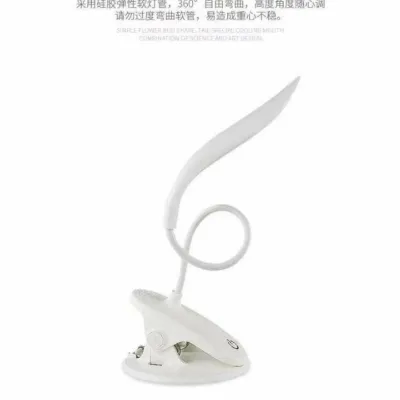
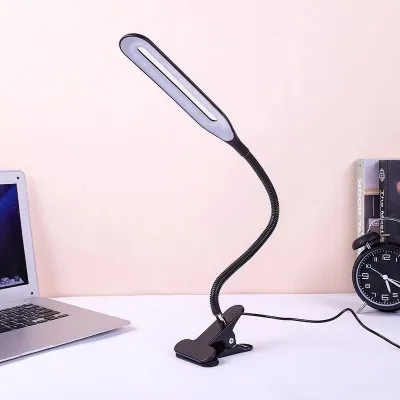
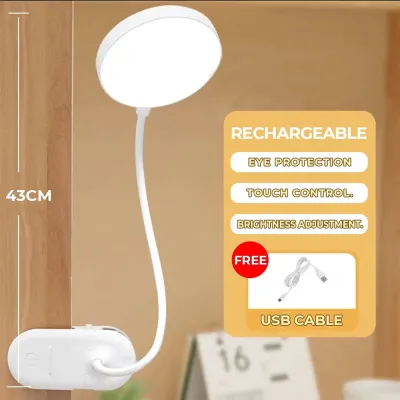
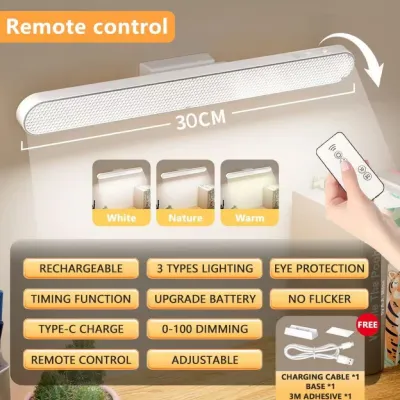
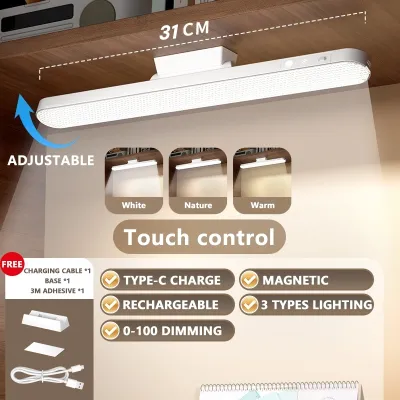
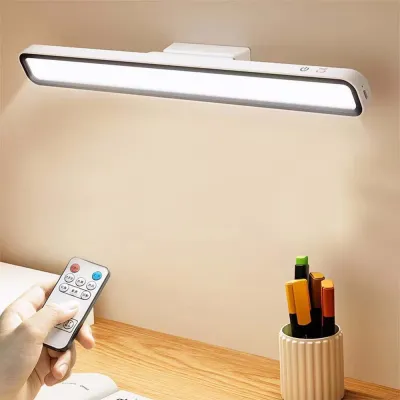
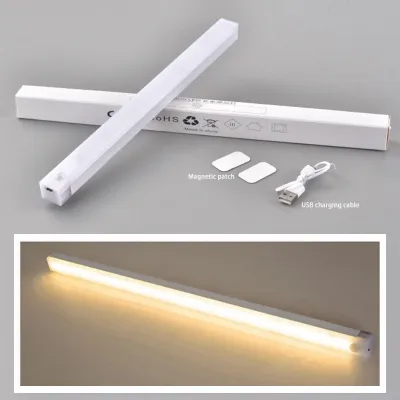
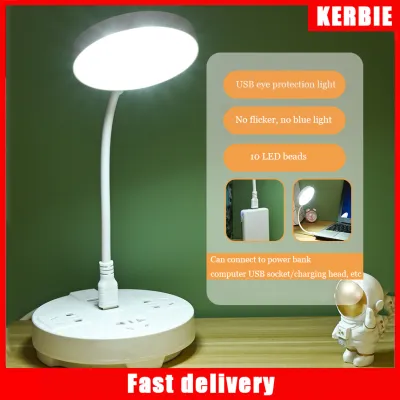
Prices are valid at publication and may change. Please refer to the product page for the latest price.
Color Temperature: Choosing the Right Kelvin for Focus
Color temperature, measured on the Kelvin (K) scale, determines the warmth or coolness of the light emitted by the lamp. Lower Kelvin ratings, such as 2700K to 3000K, produce a warm, yellowish glow that mimics traditional incandescent bulbs. Higher Kelvin ratings, ranging from 5000K to 6500K, produce a cool, bluish-white light similar to natural daylight.

For active studying and detailed tasks, cooler light temperatures are generally preferred because they help promote alertness and mental focus. However, if you frequently study late at night or transition between reading physical books and looking at digital screens, a lamp with adjustable color temperature settings is highly beneficial. This feature allows you to switch to a neutral white (around 4000K) or a warmer tone to reduce visual stimulation before sleep.
Color Rendering Index (CRI): Why It Matters for Reading
The Color Rendering Index, or CRI, is a quantitative measure of a light source’s ability to reveal the colors of various objects faithfully in comparison with a natural light source. Rated on a scale up to 100, a higher CRI means colors will appear more vibrant, accurate, and true to life under the lamp.
When studying textbooks with colorful diagrams, maps, or highlighted text, a high CRI rating is incredibly helpful. It ensures that different colored inks and highlighters stand out clearly, which improves visual contrast and makes reading less tiring for your eyes. Look for a CRI rating of 80 or higher on the product packaging or specification sheet to guarantee clear contrast during long study sessions.
Eye Comfort Specs: Flicker, Glare, and Beam Angle
Eye comfort during extended study sessions depends heavily on minimizing visual fatigue caused by flicker and glare. Even when invisible to the naked eye, rapid light flickering can cause headaches and eye strain over time. To prevent this, look for lamps that explicitly list flicker-free technology or solid-state driver designs in their product descriptions.
Glare is another common source of discomfort, especially when light reflects harshly off white paper or glossy textbook pages. Choose a lamp equipped with a built-in diffuser, a frosted cover, or a specialized lens design that softens the light and distributes it evenly across your desk. Additionally, prioritize physical adjustability, such as a flexible gooseneck or a multi-jointed pivoting arm, so you can direct the beam angle away from your eyes while fully illuminating your study materials.
Physical and Electrical Compatibility for Your Desk
Before finalizing your choice, you must verify that the lamp is physically and electrically compatible with your study environment. In the Philippines, the standard household voltage is 220V at a frequency of 60Hz, and plugs are typically flat two-pin or three-pin designs. Always check the product label or manufacturer specifications to ensure the lamp matches these local electrical standards to avoid short circuits or damage.
Consider the physical layout of your study table when selecting a lamp base. A heavy, weighted base provides excellent stability but takes up valuable desk space, whereas a clamp-on base frees up room but requires a sturdy desk edge for secure mounting. Finally, review the manufacturer’s instructions regarding heat dissipation and safe placement, keeping the lamp away from humid areas or potential water spills to ensure long-term safety in tropical climates.
Frequently Asked Questions (FAQ)
Is a higher wattage always better for a study lamp?
No, a higher wattage is not necessarily better because wattage only measures energy consumption, not brightness. For modern LED lamps, you should focus on the lumen rating to determine the actual light output. A highly efficient LED can produce a bright, clear light while consuming very little wattage, saving energy while providing excellent illumination.
Do I need a smart LED desk lamp for studying?
A smart LED desk lamp is not strictly necessary for studying, though it offers convenient features like app control, scheduling, and voice commands. For most students, a reliable manual lamp with physical buttons for adjusting brightness and color temperature is more than sufficient. Manual lamps are often more straightforward to operate and do not rely on a stable Wi-Fi connection to function.
How far should the LED lamp be from my books or screen?
The lamp should generally be positioned about 30 to 50 centimeters above your study surface, angled to prevent direct glare. Avoid placing the light source directly in your line of sight or pointing it directly at your computer screen, which can cause distracting reflections. Use the lamp’s adjustable arm to direct the light from the side opposite your writing hand to minimize shadows.

Community discussion
Share your experience or ask a question. Comments are reviewed before publication.