
Finding a genuine “buy 1 take 1” (B1T1) deal on waterproof outdoor solar lights is an excellent way for homeowners in the Philippines to brighten up dark pathways, gardens, and perimeter walls without adding a single centavo to their monthly electricity bills. Because e-commerce promotions on local shopping apps and online marketplaces change on a daily basis, static lists of active links quickly become outdated or lead to sold-out inventory. Rather than chasing temporary product links, the most effective approach is to equip yourself with the search strategies and technical knowledge required to identify, verify, and secure these bundle deals whenever they appear.
While promotional bundles offer undeniable cost savings, they can sometimes be used by sellers to clear out older, less durable inventory that may not survive the harsh local climate. The combination of intense tropical heat, high humidity, and heavy seasonal rainfall requires outdoor lighting to meet strict durability standards. By understanding how to navigate online marketplaces, decode technical specifications, and evaluate seller listings, you can confidently filter out low-quality clearance items and invest in solar lights that will reliably illuminate your outdoor spaces for years to come.
How to Find Active Buy 1 Take 1 Promos on E-commerce Platforms
Navigating online marketplaces to find active buy 1 take 1 promotions requires a mix of targeted search terms and smart filtering. Start by using highly specific keywords in the platform’s search bar, such as “solar light outdoor waterproof buy 1 take 1,” “B1T1 solar wall light,” or “outdoor solar light twin pack.” Many sellers list these promotions under localized terms like “B1T1” or “bundle deal,” so varying your search queries can reveal listings that might not show up under standard search terms.
Products mentioned in this guide
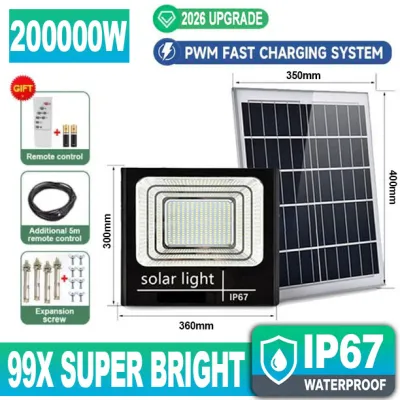
![Top Seller [171.8K Sold] KKSKY Buy 1 Take 1 1000W 60W 100W 200W 300W 500W Solar Led Lights Outdoor Flood Light 40W Street Lamp Waterproof With Remote 5 Years Warranty](https://img.lazcdn.com/g/p/71908228683594faabd610cdd55824de.jpg_400x400q80.jpg_.webp)
Prices are valid at publication and may change. Please refer to the product page for the latest price.
Once you have a list of search results, utilize the platform’s built-in promotional filters. Most major e-commerce platforms allow you to filter listings by “Bundle Deals,” “Buy 1 Get 1,” or “Flash Sales.” These filters help isolate active promotions and save you from scrolling through hundreds of standard single-unit listings. Additionally, keep an eye out for seasonal campaign banners, such as monthly double-day sales or mid-month pay-day promotions, as these are prime periods for brands to launch aggressive bundle deals.
It is also crucial to distinguish between official brand stores and third-party cross-border sellers. Official flagship stores or authorized brand malls on the platform are more likely to offer genuine buy 1 take 1 promotions on their latest models, complete with valid manufacturer warranties. Third-party sellers, on the other hand, may offer highly discounted bundles on generic, unbranded items. While these generic bundles can be incredibly cheap, they often carry a higher risk of early failure and may lack reliable customer support.
Finally, pay close attention to how the promotion is applied at checkout. Some listings are pre-packaged as a two-unit bundle, meaning you only need to add one item to your cart to receive two lights. Other promotions require you to manually add two units of the same item to your cart, with the platform automatically applying a 100% discount to the second unit at the final checkout screen. Always double-check your cart summary, the total item count, and the final price in ₱ before completing your purchase to ensure the promotional discount has been successfully applied.
Essential Specs to Verify Before Claiming a Promo Deal
When shopping for promotional solar lights, it is easy to get caught up in the excitement of a discount and overlook the technical specifications. However, outdoor lights must withstand demanding environmental conditions, making technical verification essential. The first and most critical specification to check is the Ingress Protection (IP) rating, which indicates how well the light’s housing protects its internal electrical components from dust and water.

For outdoor installations exposed to rain and wind, an IP65 rating is the baseline standard. An IP65-rated light is dust-tight and protected against water jets from any angle, making it highly suitable for wall-mounted security lights and garden fence fixtures. If you are purchasing ground-level pathway lights or lawn spotlights that might experience temporary water pooling during heavy downpours, look for an IP67 rating, which ensures protection against temporary immersion in water. Avoid any promotional listings that claim to be “waterproof” but fail to provide an explicit IP rating, as these are often only splash-resistant and prone to premature failure.
The type of solar panel integrated into the fixture also plays a major role in its performance, especially during the rainy season. Monocrystalline solar panels are highly efficient and can generate electricity even under overcast skies or indirect sunlight. Polycrystalline panels, while cheaper to manufacture and common in budget-friendly bundles, require direct, intense sunlight to charge effectively. Opting for monocrystalline panels ensures your lights can still charge during consecutive rainy days.
Battery capacity and chemistry are equally important for ensuring the lights stay illuminated throughout the night. Look for listings that specify the battery capacity in milliampere-hours (mAh) and use stable lithium-ion (Li-ion) or lithium iron phosphate (LiFePO4) chemistry. A standard wall-mounted security light should ideally have a battery capacity of at least 1200mAh to 2400mAh to provide reliable illumination from dusk until dawn. Cheap promotional bundles often cut costs by using low-capacity or recycled batteries that lose their charge after just a few hours of operation.
Additionally, verify the light’s brightness, measured in lumens, and its color temperature, measured in Kelvin. Lumens determine the light’s actual output: low-lumen fixtures (50 to 150 lumens) are perfect for decorative accent lighting, while high-lumen fixtures (500 to 1000+ lumens) are necessary for security and pathway visibility. Color temperature is a matter of personal preference and spatial effect; cool white light (5000K to 6500K) provides crisp, high-contrast visibility suitable for security, while warm white light (2700K to 3000K) offers a softer, more inviting glow for patios and gardens.
Lastly, if the solar light includes any wired components—such as a separate solar panel connected by a cable, or a hybrid backup charging port—verify the interface type, cable length, and voltage limits. Ensure that any electrical interfaces are sealed with waterproof rubber gaskets and that the product carries recognized electrical safety certifications. For any installations involving fixed household wiring or high-voltage integration, always isolate the power supply before handling and consult a qualified professional to ensure a safe setup.
How to Evaluate Listings and Avoid Low-Quality Bundles
To avoid falling victim to misleading promotions, you must learn to critically evaluate e-commerce listings. Start by diving deep into the customer review section, focusing on reviews that include real-world photos and videos. These user-generated uploads provide an honest look at the product’s actual build quality, brightness, and size, which can often differ from the polished, highly edited promotional images provided by the seller.
When reading reviews, look for specific feedback regarding long-term durability. Search for keywords like “water,” “rain,” “rust,” “battery,” or “stopped working.” If multiple buyers report that the lights stopped functioning after the first heavy rain or that the plastic housing cracked after a few weeks in the sun, it is a clear sign that the product’s waterproof seals or UV protection are substandard. Pay close attention to reviews written several weeks or months after purchase, as these offer the most accurate assessment of the product’s lifespan.
Next, evaluate the seller’s overall reputation and customer service history. Reputable sellers typically have a high positive rating (ideally 90% or above) and a fast chat response rate. Check the product’s warranty terms and return policies carefully. Some sellers mark promotional “buy 1 take 1” items as final sale or clearance, which may restrict your ability to return them if they arrive damaged or fail shortly after installation. Ensure the listing explicitly states that the standard return and refund policies apply to the promotional bundle.
Finally, calculate the true financial value of the promotion by comparing the bundle price against the single-unit retail price. Some sellers artificially inflate the price of a single unit to make a “buy 1 take 1” deal appear more generous than it actually is. By dividing the total bundle price in ₱ by two, you can determine the effective unit price. Compare this unit price against similar, non-promotional lights on the market to confirm that you are receiving a genuine discount rather than paying standard retail price for two lower-grade items.
Safe Installation and Maintenance for Outdoor Solar Lights
Proper installation and regular maintenance are key to maximizing the lifespan and performance of your promotional solar lights. When choosing installation locations, prioritize areas that receive direct, unobstructed sunlight for at least six to eight hours a day. Avoid placing the solar panels under roof eaves, dense tree branches, or in the shadow of walls and fences, as even partial shading can drastically reduce the panel’s ability to fully charge the battery.
While high-quality outdoor solar lights are designed to be waterproof, they still have physical limits. Avoid installing lights in low-lying areas of your garden where water tends to pool during heavy rains, as prolonged submersion can breach even well-made waterproof seals. Similarly, position the lights away from automated garden sprinklers or areas where they might be subjected to high-pressure water hoses during outdoor cleaning, as high-pressure water jets can force moisture past the rubber gaskets.
Safety should always be your top priority during installation, especially when working at heights to mount security lights on gutters, high walls, or posts. Always use a sturdy, level ladder, wear appropriate protective gear, and have a partner assist you to prevent falls. If your solar lighting setup involves any fixed wiring, connection to the main household electrical grid, or mounting near active power lines, ensure the power supply is completely isolated before beginning work, and hire a licensed electrician to handle the electrical connections safely.
Routine maintenance is simple but essential for keeping your solar lights functioning at their best. Over time, dust, pollen, bird droppings, and salt residue from coastal air can accumulate on the solar panels, blocking sunlight and reducing charging efficiency. Wipe the panels clean every few months using a soft, damp microfiber cloth and mild soapy water; avoid using abrasive scrubbers or harsh chemical cleaners that could scratch the protective glass or plastic coating.
Additionally, perform regular physical inspections of the light fixtures. Check the plastic or metal housings for signs of UV degradation, cracking, or rust, and inspect the mounting brackets to ensure they remain securely fastened against strong winds. If you notice moisture buildup inside the lens, carefully disassemble the light if the design allows, dry the interior thoroughly, and check if the rubber sealing gasket needs to be repositioned or replaced to restore its waterproof integrity.
Frequently Asked Questions (FAQ)
Do promotional bundle solar lights typically have shorter battery lifespans?
Promotional bundle deals do not inherently mean the solar lights have shorter battery lifespans, but some sellers use deep discounts to clear out older inventory. If a lithium-ion battery sits in a warehouse uncharged for an extended period, its overall capacity and lifespan can degrade. To ensure you get a durable product, choose reputable sellers with high inventory turnover, and verify that the product description specifies fresh, high-quality battery chemistry like LiFePO4.
Can waterproof solar lights withstand heavy monsoon rains?
Solar lights with a verified IP65 or IP67 rating are fully capable of withstanding heavy tropical monsoon rains. However, extreme weather events like typhoons can bring driving winds and localized flooding that may exceed standard waterproof limits. During severe weather warnings, it is highly recommended to temporarily secure or bring indoors any ground-level pathway lights or non-fixed fixtures to protect them from physical damage and water submersion.
What are the return options if one bundled light arrives defective?
On most online marketplaces, a buy 1 take 1 promotional bundle is processed as a single transaction. If one of the lights arrives defective or fails within the return window, platform policies usually require you to return both units to receive a full refund. To protect your purchase, always record a continuous video while unboxing and testing both lights immediately upon delivery, allowing you to provide clear evidence if you need to file a dispute.

Community discussion
Share your experience or ask a question. Comments are reviewed before publication.