
Creating the perfect reading corner requires more than just a comfortable chair; it demands lighting that reduces eye strain and enhances focus. The ideal floor lamp for a reading nook provides targeted task illumination while complementing your room’s ambient atmosphere. To find the best option, you must evaluate how a fixture directs light, its physical adjustability, and its compatibility with your existing furniture and electrical setup.
In tropical environments like the Philippines, selecting a reading lamp also involves practical considerations such as heat dissipation and material durability. High humidity can affect certain finishes, while traditional high-wattage bulbs can emit uncomfortable heat in a cozy, enclosed nook. By focusing on adjustable LED-compatible designs, stable bases, and proper ergonomic placement, you can establish a comfortable, well-lit sanctuary that supports hours of strain-free reading.
Lighting Requirements for a Comfortable Reading Nook
To design an optimal reading environment, you must first understand the difference between general ambient light and focused task lighting. Ambient light fills the entire room to prevent harsh contrasts, but it is rarely sufficient on its own for reading fine print. Task lighting, on the other hand, concentrates light directly onto your book, e-reader, or tablet. For comfortable reading without squinting, aim for a light source that delivers between 300 and 500 lumens to your reading surface. If you frequently read highly detailed texts or have older eyes, you may want to look for setups capable of delivering up to 800 lumens.
Products mentioned in this guide
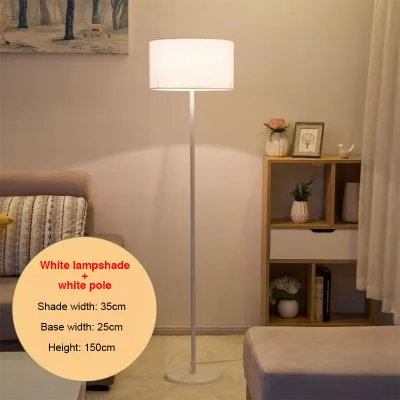
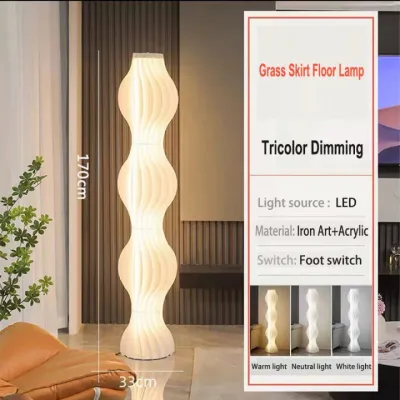
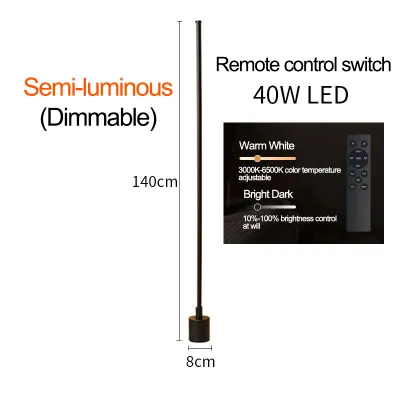
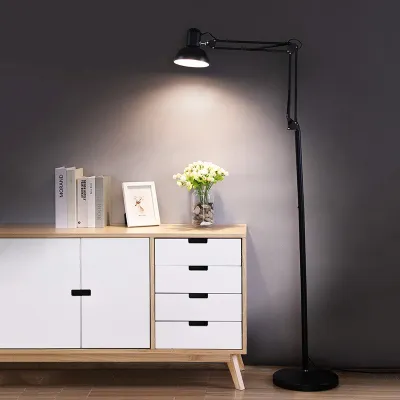
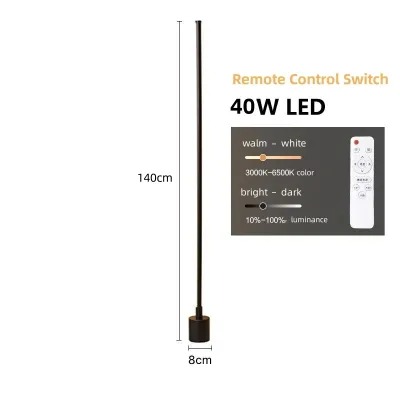
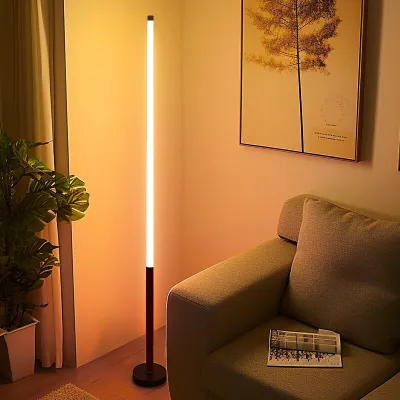
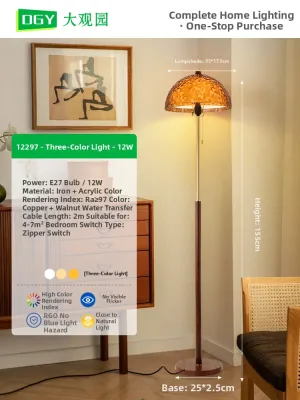
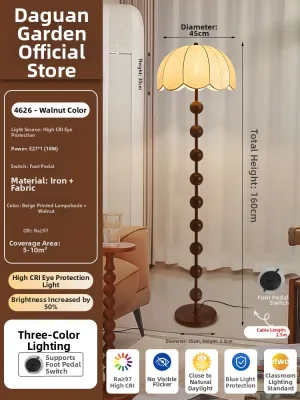
Prices are valid at publication and may change. Please refer to the product page for the latest price.
Color temperature, measured in Kelvin (K), plays a critical role in how your eyes behave during a reading session. Warm white light, ranging from 2700K to 3000K, mimics the gentle glow of traditional incandescent bulbs. This range is highly recommended for evening reading because it minimizes blue light exposure, helping your mind wind down for sleep. Conversely, cool white light between 4000K and 5000K mimics natural daylight, which enhances alertness, improves contrast, and makes text easier to read during daytime study sessions.
Because your lighting needs change depending on the hour, choosing a floor lamp with adjustable brightness and color settings offers the greatest flexibility. Many modern fixtures feature built-in step dimmers or continuous touch controls that let you transition from a bright, focus-oriented daytime setting to a soft, warm evening glow. If the lamp does not have built-in dimming, selecting a fixture that accommodates dimmable LED bulbs or smart bulbs allows you to customize the output to match your circadian rhythm and prevent eye fatigue.
Best Floor Lamp Designs for Focused Reading
The physical structure of a floor lamp dictates how effectively it delivers light to your reading material. Task and pharmacy lamps are engineered specifically for close-up work. Characterized by adjustable swing arms, pivoting heads, and opaque metal shades, these lamps direct one hundred percent of their light downward. This design prevents light spill from scattering into the rest of the room, making them ideal if you share a living space and want to read without disturbing others. The high adjustability of a pharmacy lamp allows you to position the light source precisely over your shoulder, eliminating shadows.

Arc floor lamps offer a dramatic, sweeping design that is both functional and visually striking. Featuring a long, curved neck that extends outward from a heavy base, an arc lamp can position a light source directly overhead without requiring a table or taking up floor space right next to your chair. This design is particularly useful if you have deep, plush armchairs or sectional sofas where a standard straight-pole lamp cannot reach close enough to the center of the seating area. However, because the shade hangs overhead, you must ensure the shade design prevents direct glare from reaching your eyes when you look up.
Torchiere lamps with secondary reading arms provide an excellent dual-purpose solution for multi-functional rooms. The main torchiere bowl points upward, bouncing light off the ceiling to create soft, glare-free ambient illumination throughout the room. Meanwhile, a flexible, adjustable arm extends from the mid-section of the pole, equipped with its own dedicated switch and directional shade. This configuration allows you to enjoy a cozy, dimly lit room while still receiving bright, focused task lighting directly on your pages.
Tripod and mid-century modern designs prioritize aesthetic appeal while still offering localized illumination. Tripod lamps feature three legs that spread outward, creating a stable and architecturally interesting base. While they typically use drum shades that diffuse light outward rather than focusing it downward, many mid-century variations feature adjustable cone-shaped metal shades. These directional shades allow you to angle the light toward your reading chair, combining a strong design statement with functional task lighting.
Essential Specs and Safety Checks Before You Buy
Before purchasing a floor lamp, verifying its electrical specifications is vital for safety and performance. In the Philippines, the standard residential electrical system operates at 220 volts (V) with a frequency of 60 hertz (Hz). When browsing online marketplaces or importing fixtures, always confirm that the lamp is rated for 220V/60Hz. Using a lamp designed exclusively for 110V systems without a proper transformer can lead to immediate electrical failure, short circuits, or fire hazards. Additionally, ensure the plug type matches your home’s outlets, which typically accept flat two-prong (Type A) or grounded three-prong (Type B) plugs.
The bulb socket or base type is another critical specification to check. The most common screw-type base in local households is the E27 socket, which makes finding replacement bulbs straightforward. Always adhere strictly to the manufacturer’s maximum wattage rating printed on the socket label. If a fixture is rated for a maximum of 40 watts, installing a 60-watt traditional incandescent bulb can generate excessive heat, melting the socket or damaging the shade. To maximize safety and energy efficiency, opt for LED bulbs, which produce significantly more light (lumens) while consuming a fraction of the wattage and generating minimal heat.
Physical stability and dimensions are equally important, especially in active households. A high-quality floor lamp must feature a heavy, well-balanced base to prevent accidental tip-overs if bumped by pets, children, or vacuum cleaners. When evaluating a lamp, check the weight of the base relative to the overall height; top-heavy designs with lightweight plastic bases pose a significant safety risk. Furthermore, measure the cord length to ensure it can comfortably reach your wall outlet without stretching tight or requiring daisy-chained extension cords, which can create tripping hazards and electrical overloads.
Finally, always inspect the product for recognized electrical safety markings and certifications. Look for local quality marks such as the Philippine Standard (PS) mark or the Import Commodity Clearance (ICC) sticker, or reputable international certifications like UL, CE, or RoHS. Avoid purchasing unbranded, exceptionally cheap fixtures that lack these safety markings, as they often feature substandard wiring, thin insulation, or poorly soldered connections that can degrade rapidly under tropical humidity.
Matching the Lamp to Your Space and Posture
Selecting the right floor lamp requires analyzing how the fixture interacts with your physical seating and reading habits. Start by measuring the height of your preferred reading spot, whether it is a low-slung modern armchair, a standard sofa, or a floor cushion. The height of the light source should align with your seated posture; ideally, the bottom of the lampshade should sit near eye level or slightly below it when you are seated. This positioning ensures that the bright bulb remains hidden from your direct line of sight, preventing uncomfortable glare while casting a clear pool of light onto your book.
Glare and shadow placement are heavily influenced by where you position the lamp relative to your body and your dominant hand. If you are right-handed, placing the lamp behind your left shoulder is generally best, as this prevents your hand or pen from casting shadows across the page if you take notes. Conversely, left-handed readers should position the lamp behind their right shoulder. If you read on glossy tablet screens or e-readers, angle the lamp head slightly to the side rather than directly overhead to minimize screen reflections and glare.
Lastly, consider the visual weight and footprint of the lamp in relation to your room’s overall layout. A massive arc lamp can overwhelm a tiny studio apartment, while a delicate, thin-profile pharmacy lamp might look lost next to a heavy, oversized leather recliner. Choose materials and finishes that complement your existing decor—such as matte black metal for industrial spaces, brushed brass for classic elegance, or warm bamboo and wood for tropical, organic interiors. Ensure the base fits comfortably behind or beside your furniture without blocking walkways or creating a cramped environment.
Quick Comparison of Floor Lamp Designs
To help you decide which style best fits your reading habits and room layout, the table below compares the four primary floor lamp designs across key functional categories.
| Lamp Type | Adjustability | Space Footprint | Primary Lighting Function | Best Suited For |
|---|---|---|---|---|
| Task / Pharmacy | High (adjustable joints and pivoting head) | Small (compact base fits tight corners) | Direct, focused task lighting | Dedicated reading chairs, study desks, and small nooks |
| Arc Lamp | Moderate (fixed curve, adjustable shade angle) | Large (requires overhead and floor clearance) | Overhead task and ambient lighting | Deep sectional sofas and modern living rooms |
| Torchiere with Arm | High for reading arm; none for main uplight | Medium (slender pole with stable base) | Dual-purpose (ambient uplight + task light) | Multi-functional living spaces and shared bedrooms |
| Tripod Lamp | Low (usually fixed height and shade angle) | Large (requires wide floor space for legs) | Ambient and decorative accent lighting | Large corners needing a stylish, architectural statement |
Frequently Asked Questions (FAQ)
How high should a reading floor lamp be from the floor?
A reading floor lamp should typically stand between 140 and 160 centimeters tall, positioning the bottom of the lampshade roughly at eye level when you are seated. This height range, which translates to about 100 to 120 centimeters from the seat cushion, ensures that the light source is close enough to provide clear illumination without exposing your eyes to direct bulb glare. If you use an adjustable task or pharmacy lamp, you can position the light head slightly lower and behind your shoulder to cast light directly onto your reading material while keeping the bulb completely out of your peripheral vision.
Can I use a smart bulb in any floor lamp for reading?
Yes, you can use a smart bulb in most reading floor lamps, provided the bulb’s base matches the fixture’s socket (typically E27) and the bulb’s physical dimensions fit within the shade. However, you must ensure the lamp is not connected to a physical, built-in dimmer switch on the cord or pole, as traditional dimmers can damage the sensitive electronic components inside a smart bulb. Additionally, if your lamp has an enclosed or tightly fitting shade, verify that the smart bulb has sufficient ventilation, as excessive heat buildup can shorten the lifespan of the bulb’s internal wireless transmitters.
What is the best way to clean fabric or paper lampshades?
The safest way to clean delicate fabric or paper lampshades is to use dry dusting methods to prevent staining or warping. For regular maintenance, gently run a clean lint roller or a soft microfiber cloth over the surface to collect dust and pet hair. For intricate pleats or fragile paper shades, a clean, dry paintbrush or a makeup brush works exceptionally well to sweep away dust without applying damaging pressure. Avoid using water, liquid sprays, or chemical cleaners, as these can dissolve adhesives, cause paper to tear, or leave permanent water spots on fabric. Always check the manufacturer’s care label for specific cleaning instructions before attempting any deep maintenance.
Community discussion
Share your experience or ask a question. Comments are reviewed before publication.