
Finding the right framed painting ideas for the empty wall space above your sofa often presents a frustrating design challenge, as an incorrectly sized piece can make your entire living room feel visually unbalanced. To resolve this common decorating dilemma, your framed painting should ideally span two-thirds to three-quarters of the sofa’s total width and hang so that its bottom edge sits 6 to 8 inches above the top of the sofa back. This specific spatial relationship anchors the artwork to the seating area, creating a cohesive focal point rather than a disconnected, floating element.
When wall decor is too small, it fails to command attention and leaves the surrounding wall looking sparse and unfinished. On the other hand, an oversized painting can overwhelm the sofa, making the seating area feel cramped and top-heavy. Striking the right balance requires a mix of simple math, careful physical measurements, and an understanding of how visual weight influences the perception of scale in a room.
How wide should a framed painting be compared to your sofa?
A framed painting should ideally measure between two-thirds and three-quarters of the total width of your sofa to maintain proper visual balance. This mathematical ratio ensures that the artwork is large enough to anchor the seating arrangement without extending past the physical boundaries of the furniture below it.
Products mentioned in this guide
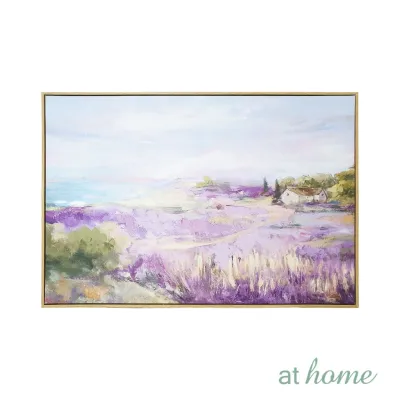
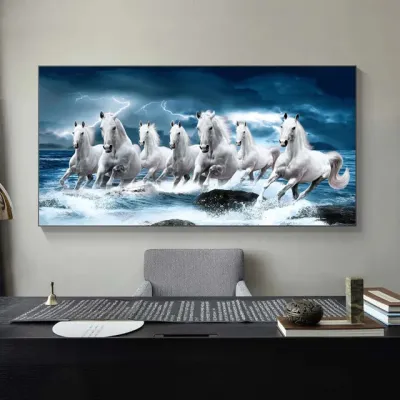

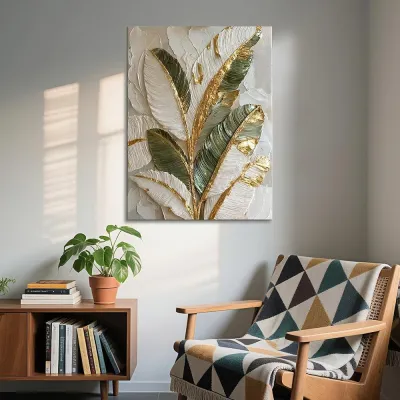
20 Lazada user ratings
it's not same with the picture,may pingas at damage p...excited to see p nman .a bit disappointed,even the color is different..but any way p…Read full reviewShow less
it's not same with the picture,may pingas at damage p...excited to see p nman .a bit disappointed,even the color is different..but any way pede n pag tyagaan..syang nman...
It looks fine. can be used as decor.
for me..satisfied aq very nice
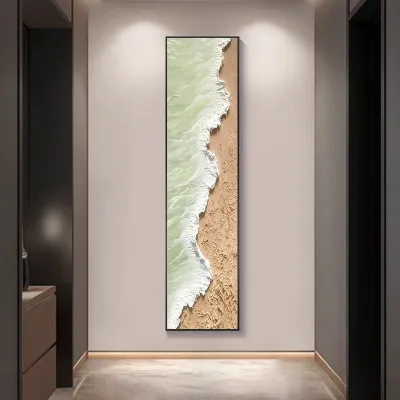
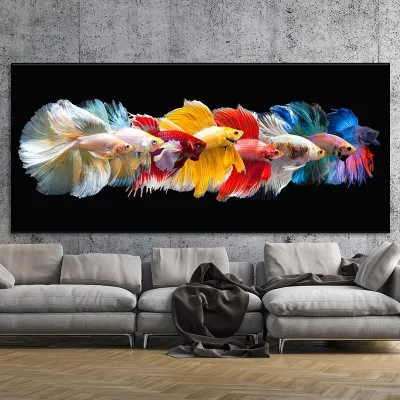
31 Lazada user ratings
your product is not worth 1k or more. the picture itself is nice but it s too small for the price. Kahit 300 pesos Hindi mabibili sa bangket…Read full reviewShow less
your product is not worth 1k or more. the picture itself is nice but it s too small for the price. Kahit 300 pesos Hindi mabibili sa bangketa. Don t be so greedy. Be fair to your customer to what you are selling...to return or get refund is a lot of hazzles. For those who wants to buy wall frame, better buy somewhere which you can get a lot cheaper and more beautiful.
ayos sya walang damage. Bagay na Bagay sa bahay.........................................
Vibrant and eye-catching artwork, High-quality printing and materials,
mali po ang size.maliit po kc ang pagkasize.eh mlki ang order q
Quality:fair Appearance:far from expected Performance:poor
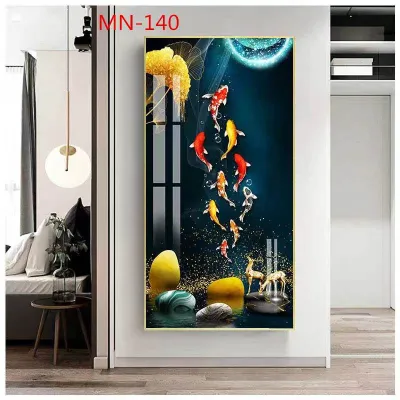
768 Lazada user ratings
second order ko na po ito mganda po sia at quality un item at makapal sia buhay na buhay un color Quality:10 Appearance:10 Performance:10
Very nice. Arrived on time. Will buy again next time. Thank you very much and also thank you to the delivery guy. He delivered on time.
masyadong maliit ang sukat ng pinaka malaki nila sana mayas malaking sukat. maganda ang pag kaka kanvass frameless ikaw na magpa frame
so beautiful and awesome! i live it... thank you kuya rider and seller too. fast delivery and well packed. thank you thank you
Great craftsmanship!, High-quality frameless wooden frame!, Impressive design and colors!, Vibrant and eye-catching!,
Prices are valid at publication and may change. Please refer to the product page for the latest price.
To find your target size, start by measuring the exact width of your sofa from outer arm to outer arm. For example, if you have a standard three-seater sofa that measures 84 inches wide, your ideal framed painting width should fall between 56 inches (two-thirds) and 63 inches (three-quarters). If you are decorating above a smaller loveseat that is 60 inches wide, the target width for your artwork would be between 40 and 45 inches. Adhering to these proportions prevents the common mistake of hanging a tiny frame over a large piece of furniture, which often looks lost and visually weak.
The visual weight of the frame itself also plays a significant role in how large the artwork appears on the wall. A thin, minimalist metal frame in black or silver has a lighter visual footprint, meaning you can lean toward the larger end of the scale (closer to three-quarters of the sofa width) without the piece feeling too heavy. Conversely, a thick, ornate wooden frame or a deep shadow box carries substantial visual weight, meaning a size closer to the two-thirds mark will often suffice.
Additionally, the presence of matting—the cardboard border that surrounds the image inside the frame—alters the perceived size. A wide white or cream mat board draws the eye inward and expands the overall dimensions of the frame. When browsing framed painting ideas, always calculate your proportions based on the outer edges of the frame rather than the size of the print or canvas itself. If a painting you love is slightly too small, choosing a wider mat and a thicker frame is an excellent way to bring the overall piece into the ideal width range.
What is the ideal height and hanging position for wall art?
The ideal hanging position for a framed painting is to have the bottom of the frame sit 6 to 8 inches above the top of the sofa back. This spacing is close enough to keep the artwork visually connected to the furniture while providing comfortable clearance for anyone sitting on the sofa.

While standard museum guidelines suggest hanging art so that the center of the image is at a standard eye level of 57 to 60 inches from the floor, this rule must be adjusted when placing art directly above furniture. When anchoring a piece over a sofa, the relationship between the furniture and the frame takes priority over the general eye-level rule. If you hang the painting too high to meet a strict eye-level measurement, you risk creating an awkward gap of empty wall space that makes the art look like it is floating independently of the room’s layout.
To ensure the height is comfortable and visually appealing, always test the placement before drilling holes or driving nails into the wall. You can create a paper template by tracing the outline of your framed painting onto kraft paper or newspaper and cutting it out. Tape this template to the wall above your sofa using low-tack painter’s tape. Sit on the sofa to verify that your head does not brush against the paper, and then step back to the entrance of the room to evaluate how the height looks from a distance.
Safety is another critical consideration when determining the hanging position, particularly for heavy framed paintings. Large frames with glass glazing carry significant weight and pose a hazard if not mounted securely. Always locate the wooden studs behind your drywall using a stud finder, or utilize heavy-duty wall anchors rated specifically for the weight of your framed piece. If you are working with plaster walls, brick, or exceptionally heavy materials, consulting a professional installer is a prudent step to ensure the artwork remains safely anchored over your seating area.
How do you measure your wall space before buying framed art?
To measure your wall space accurately before buying a framed painting, you must record the total width of the wall, the vertical distance from the sofa back to the ceiling, and the clearance around any nearby architectural features. Taking these precise measurements prevents you from purchasing a piece that is physically incompatible with your room’s layout.
Begin by measuring the total width of the wall on which the sofa sits, as well as the width of the sofa itself. Next, measure the vertical distance from the top of the sofa back to the ceiling or the bottom of any crown molding. This vertical measurement is crucial because it dictates how much height you have available for both the 6-to-8-inch gap above the sofa and the height of the frame itself. If you have low ceilings, a very tall vertical painting might feel cramped, whereas a home with high ceilings can easily accommodate a taller frame.
When evaluating online listings or gallery tags, pay close attention to the distinction between the image size and the outer frame dimensions. A product description might list a painting as 24 by 36 inches, but this often refers only to the canvas or print. Once you add a 3-inch mat and a 2-inch frame on all sides, the actual outer dimensions of the piece increase to 34 by 46 inches. Always use these final, outer dimensions when planning your wall layout to avoid unexpected crowding.
Finally, inspect the wall for fixed obstacles that could interfere with the placement of your painting. Common obstructions include light switches, electrical outlets, wall-mounted thermostats, air conditioning units, and decorative wall sconces. You must also account for the projection of window curtains or nearby furniture like bookshelves. Ensure there is a buffer of at least several inches between the outer edge of your frame and any of these elements to maintain a clean, intentional look that does not feel squeezed into the space.
When should you choose a gallery wall instead of a single large frame?
You should choose a gallery wall instead of a single large frame when you are working with an exceptionally wide wall, decorating on a budget, or looking to display a personal collection of smaller artworks. A gallery wall offers a flexible, highly customizable alternative that can easily scale to match the proportions of your sofa.
Finding a single, high-quality framed painting that spans 50 to 60 inches wide can be challenging and often requires a significant financial investment. If a single oversized piece is out of reach or difficult to transport, a gallery wall allows you to combine several smaller, more affordable frames to occupy the same visual footprint. This approach is also highly beneficial for rooms with low ceilings, where a single large, heavy frame might make the vertical space feel compressed, whereas a horizontal arrangement of smaller frames can make the room feel wider and more open.
When planning a gallery wall, maintaining consistent spacing between the frames is essential for a cohesive look. A general rule of thumb is to keep a gap of 2 to 3 inches between each frame. If the gaps are too wide, the individual pieces will look disconnected and lose their collective impact; if the gaps are too narrow, the arrangement can look cluttered and chaotic. You can choose a symmetrical grid layout for a formal, modern look, or an asymmetrical salon-style layout for a more casual, eclectic feel.
To ensure the gallery wall looks balanced above your sofa, you must treat the entire collection of frames as a single visual unit. The total width of the arrangement, from the far-left edge of the leftmost frame to the far-right edge of the rightmost frame, should still adhere to the two-thirds to three-quarters rule relative to your sofa. Similarly, the bottom row of frames should sit 6 to 8 inches above the sofa back. Laying out your frames on the floor first, or using paper templates taped to the wall, allows you to perfect the arrangement before making any permanent holes.

Community discussion
Share your experience or ask a question. Comments are reviewed before publication.