
Choosing the right outdoor solar security light depends entirely on the specific zone you need to protect. A driveway requires high-intensity illumination and long-range motion detection to welcome vehicles safely, while a gate or entryway demands precise, short-range sensors and exceptional weatherproofing to handle direct exposure to tropical downpours. For backyards, the priority shifts to wide-angle coverage and adjustable brightness settings that secure large perimeters without spilling harsh glare into your neighbor’s property. By matching the unique physical layout of each area to the correct solar fixture specifications, you can build a reliable, energy-independent security setup for your home.
Assessing Your Outdoor Area's Security Needs
Before purchasing any solar lighting fixture, you must evaluate the specific security goals of each outdoor zone. A driveway requires lighting that guides vehicles safely and alerts you to approaching traffic, whereas a gate or entryway focuses on identifying visitors and securing access points. Backyards, on the other hand, demand broad perimeter surveillance to eliminate blind spots along fences and garden walls. Defining these primary goals first prevents you from buying fixtures that are either too weak for large spaces or overly sensitive in tight entryways.
Environmental factors play a massive role in how well a solar light performs over time. In the Philippines, where intense tropical sun is often interrupted by heavy seasonal rains and high humidity, you must assess the shade coverage around your property. Take note of roof eaves, mature trees, and neighboring structures that might block sunlight from reaching your mounting spots during the day. A solar panel needs direct exposure to sunlight to charge its internal battery fully, so identifying these shaded areas early will help you decide between integrated fixtures and split-type models.
Products mentioned in this guide
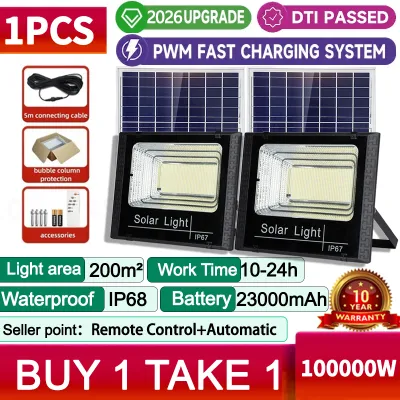
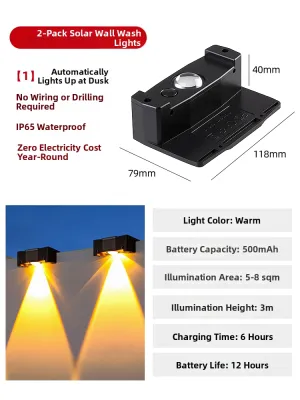
Prices are valid at publication and may change. Please refer to the product page for the latest price.
Additionally, examine the physical characteristics of your mounting surfaces. Concrete walls, wooden fences, brick pillars, and metal posts all require different mounting hardware and installation techniques. Before drilling, check the structural integrity of the surface to ensure it can support the weight of the fixture, especially during strong winds or typhoons. You should also measure the available mounting height to ensure the light can be positioned high enough to cast a wide beam while remaining accessible for occasional cleaning.
Finally, review the basic electrical and structural prerequisites for outdoor fixtures. While solar lights operate on low-voltage direct current and do not require connection to your home’s main electrical grid, they must still be built to withstand harsh outdoor conditions. Look for fixtures with sturdy mounting brackets and corrosion-resistant hardware. If you are considering hybrid solar lights that can switch to grid power during extended rainy periods, you must verify the voltage compatibility, wiring requirements, and electrical safety certifications before proceeding with the installation.
Driveway Lighting: High Brightness and Long-Range Detection
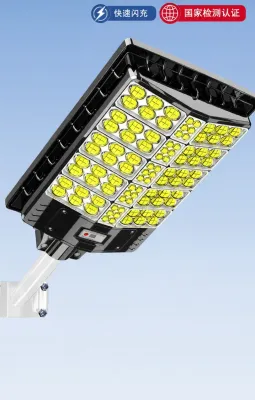
Driveways are typically long, narrow corridors that require high-intensity illumination to ensure safe vehicle navigation and early detection of intruders. To cover these spaces effectively, prioritize solar floodlights with high lumen outputs and focused beam angles. A focused beam concentrates the light along the path of the driveway rather than scattering it into empty space, providing a clear, bright path for incoming cars and deterring potential trespassers who approach from the street.

To complement this high brightness, look for solar lights equipped with adjustable motion sensors that offer extended detection ranges. A sensor with a long-range reach ensures that the light activates well before a vehicle or pedestrian reaches your parking area. This early activation gives drivers immediate visibility and alerts household members to activity at the edge of the property. Check the product specifications to verify the sensor’s maximum detection distance and horizontal angle.
Adjustability is another critical feature for driveway motion sensors. Because driveways often face public roads or sidewalks, a sensor that is too sensitive can cause frequent false triggers from passing cars or pedestrians. Choosing a fixture with adjustable sensitivity and detection zones allows you to angle the sensor downward or narrow its field of view, ensuring it only triggers when someone enters your actual property boundary.
Mounting height and placement are vital to maximizing both light coverage and solar charging. Driveway lights are best mounted on high walls, garage facades, or dedicated poles to cast light downward and prevent blinding glare in the eyes of drivers. This elevated position also helps keep the solar panel clear of low-lying shadows from parked vehicles or nearby garden plants, ensuring the battery receives maximum sun exposure throughout the day.
Gate and Entryway Lighting: Precision Sensors and Durability
Your front gate and main entryway serve as the primary access points to your home, making reliable, targeted lighting essential. Unlike driveways, entryway lighting does not need to cover vast distances; instead, it requires precision. Look for motion sensors with short-to-medium detection zones that activate immediately when someone approaches the gate, providing instant visibility for locking or unlocking entry points while ignoring distant street activity.
Because gate lights are highly exposed to the elements, durability and weatherproofing are non-negotiable. Always check the Ingress Protection (IP) rating on the product label before making a purchase. For gates and entryways in tropical climates, look for a rating of at least IP65, which indicates that the fixture is completely dust-tight and protected against water jets from heavy downpours. This level of protection prevents moisture from corroding the internal circuitry and battery contacts.
Consider choosing dual-head or adjustable-head solar light designs for your entryways. These fixtures feature multiple light panels that can be angled independently, allowing you to direct one beam toward the gate lock or intercom system and another toward the steps or pathway below. This dual-direction lighting improves security by illuminating the visitor’s face while simultaneously preventing trips and falls on uneven ground.
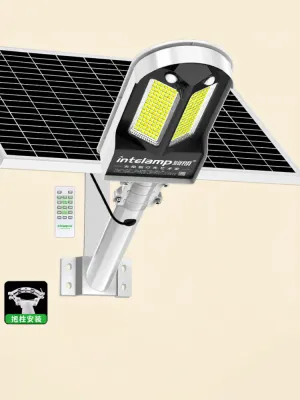
When planning the placement of gate lights, ensure the solar panel is positioned where it can receive unobstructed sunlight. If your gate is covered by a decorative arch, awning, or heavy foliage, an integrated solar light may not receive enough light to charge. In these scenarios, a split-type solar light is highly beneficial, as it allows you to mount the light fixture under the entryway cover while placing the solar panel on top of the roof or gate post via an extension cable.
Backyard Security: Wide Coverage and Light Pollution Control
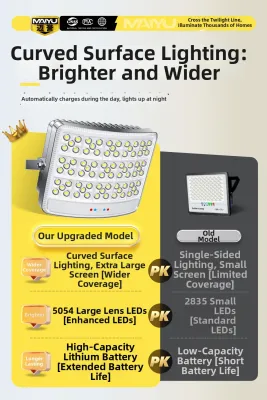
Backyards present a unique security challenge because they often consist of wide, open spaces with multiple potential entry points along the perimeter. To secure these areas without installing dozens of individual fixtures, select wide-angle solar floodlights or multi-panel designs. These fixtures use curved light panels or multiple adjustable heads to spread light across a broad radius, effectively illuminating large lawns, patios, and garden paths with a single unit.
While high brightness is important for security, constant harsh lighting in a backyard can create unpleasant glare and disturb your neighbors. To maintain a balance between security and comfort, look for solar lights that offer adjustable brightness settings or dim-to-bright motion modes. These smart modes keep the light at a low, ambient level during the night to provide gentle illumination, instantly switching to full brightness only when the sensor detects movement.
Color temperature is another factor to consider based on your personal preference and spatial goals. While cool white light (around 5000K to 6500K) is often preferred for high-security areas because of its crisp, high-contrast visibility, warm white light (around 3000K) is softer on the eyes and blends better with residential landscaping. Keep in mind that color temperature is a aesthetic preference rather than a measure of security performance, so choose the tone that best matches your backyard’s design.
Solar panel placement in backyards requires careful planning due to shade from trees, fences, and roof overhangs. If your ideal mounting spot for the security light is shaded for most of the day, look for split-type solar fixtures. This design allows you to install the light fixture under a shaded patio or tree canopy while mounting the solar panel in a sunny spot nearby, ensuring the system remains fully charged and ready for nighttime operation.
Installation Boundaries and Cross-Scene Compatibility
Before installing your solar security lights, you must confirm that the chosen mounting surface can support the weight of the fixture. Heavy-duty solar floodlights, especially those with large integrated lithium-ion batteries and metal casings, can exert significant strain on weak surfaces. Ensure that wooden fences, vinyl siding, or thin metal sheets are reinforced, or use appropriate heavy-duty anchors when mounting onto solid concrete or brick walls to prevent the fixture from falling during high winds.
It is also worth evaluating whether a single, high-lumen, wide-angle solar light can serve multiple zones on your property. For example, a powerful multi-panel light mounted on the corner of a house might successfully cover both a side driveway and a portion of the backyard. However, while cross-scene compatibility can save on equipment costs, specialized units tailored to the specific needs of each zone—such as precise sensors for gates and long-range beams for driveways—usually provide more reliable security.
Safety should always be your top priority during installation. If your solar lighting setup involves working at heights, ensure you use a stable ladder and have someone assist you. For hybrid solar systems that connect to your home’s electrical grid, or if you need to route permanent wiring through walls, always isolate the power source before starting. If the installation requires drilling into structural load-bearing beams, modifying existing electrical junction boxes, or working in highly damp environments with main power lines, stop immediately and consult a qualified professional.
Frequently Asked Questions (FAQ)
Do solar security lights work during heavy rain or extended cloudy days?
Yes, solar security lights can work during rainy or cloudy days, but their performance depends heavily on battery capacity and solar panel efficiency. When shopping, check the manufacturer’s specifications for battery capacity, which is typically measured in milliampere-hours (mAh), and look for monocrystalline solar panels, which are more efficient at converting ambient light into electricity under overcast skies. If you experience consecutive days of heavy rain, you may notice the light dimming or triggering less frequently; adjusting the solar panel’s angle to capture maximum daylight can help optimize charging during these periods.
How high should I mount a solar motion light for optimal detection?
To achieve the best balance of light spread and motion sensitivity, you should consult your product’s manual for the recommended mounting height, which is generally between 2 and 3 meters. Mounting the fixture too high can cause the motion sensor to miss movement on the ground or reduce its sensitivity, while mounting it too low limits the area the light can illuminate and makes the fixture vulnerable to tampering. Always verify the sensor’s detection cone specifications in the manual to ensure your chosen height covers the target area without creating blind spots.
Community discussion
Share your experience or ask a question. Comments are reviewed before publication.