
Securing the perimeter of a residential property, farm, or commercial compound in the Philippines requires a reliable outdoor lighting system that does not depend on the grid. While standard decorative solar lamps are suitable for garden pathways, they lack the brightness, durability, and battery capacity needed for serious security applications. True heavy-duty solar street lights are engineered to withstand intense tropical heat, torrential monsoon rains, and high wind loads while delivering consistent, high-intensity illumination throughout the night. Selecting the right system requires looking past exaggerated wattage claims on online marketplaces and focusing on verifiable physical specifications, battery chemistry, and structural integrity. By understanding the technical standards of these robust fixtures, property owners can make informed decisions that ensure long-term security and peace of mind.
What Makes a Solar Street Light "Heavy-Duty"?
To understand what qualifies a solar street light as heavy-duty, one must look closely at its physical construction and internal components. Standard outdoor solar lights often rely on thin plastic housings. While lightweight and inexpensive, these plastics degrade rapidly under the intense ultraviolet radiation of the Philippine sun, eventually becoming brittle, cracking, and allowing water to seep inside. In contrast, heavy-duty fixtures utilize robust die-cast aluminum enclosures. Aluminum resists ultraviolet degradation and physical impacts, and it serves as an efficient heat sink. Because light-emitting diodes (LEDs) and internal driver circuits generate heat during operation, a high-quality aluminum housing draws this heat away from sensitive components, preventing premature failure in a tropical climate where ambient nighttime temperatures remain high.
Another critical indicator of heavy-duty construction is the Ingress Protection (IP) rating, which measures a fixture’s resistance to dust and moisture. For reliable outdoor security lighting, a minimum rating of IP65 is essential, indicating the unit is completely dust-tight and protected against water jets from any angle. For coastal areas or regions prone to severe typhoons and driving rain, upgrading to IP66 or IP67 ratings provides enhanced protection. These higher ratings ensure that even during intense tropical storms, high-pressure water cannot penetrate the silicone seals, protecting the internal electronics from short circuits and corrosion.
Products mentioned in this guide
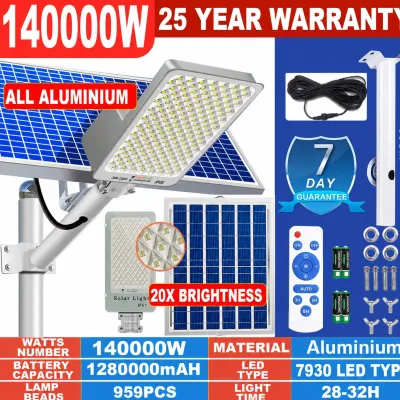
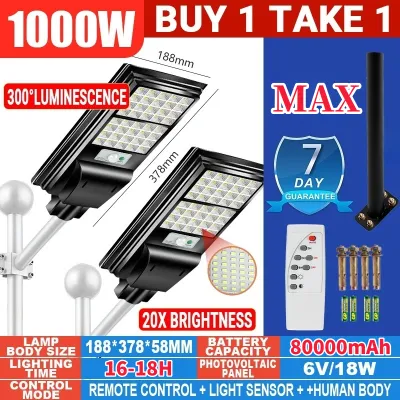
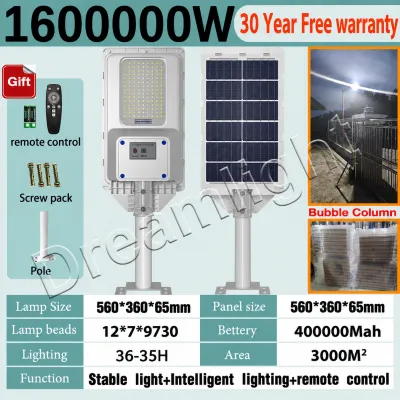
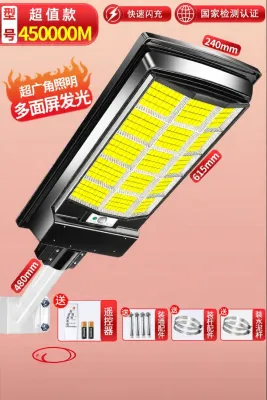
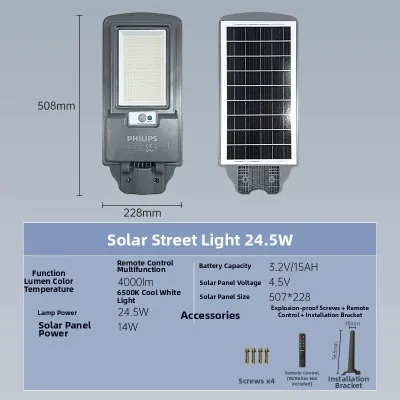
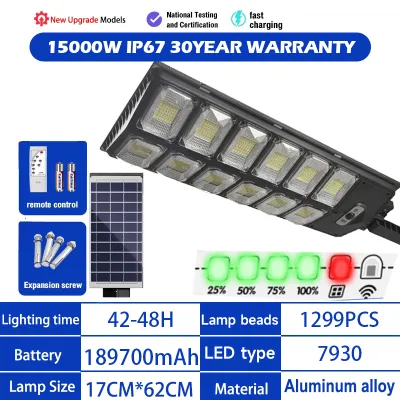
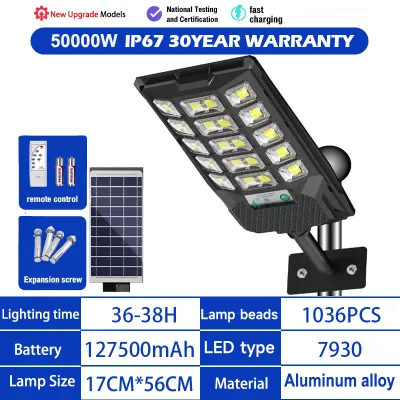
Prices are valid at publication and may change. Please refer to the product page for the latest price.
The heart of any heavy-duty solar light is its battery chemistry, which dictates both nightly runtime and overall lifespan. Standard solar lights frequently use lithium-ion or nickel-metal hydride batteries, which have limited cycle lives and degrade quickly when exposed to high operating temperatures. Heavy-duty systems almost exclusively employ Lithium Iron Phosphate (LiFePO4) batteries. LiFePO4 chemistry offers exceptional thermal stability, significantly reducing the risk of thermal runaway or swelling in hot climates. Furthermore, while standard lithium batteries may last only 300 to 500 charge-discharge cycles before losing capacity, high-quality LiFePO4 cells can easily exceed 2,000 cycles. This longevity means the battery can operate reliably for several years before requiring replacement, making it the standard choice for professional security installations.
Matching Light Specifications to Security Needs
When planning a security lighting layout for driveways, gates, or property perimeters, matching the technical specifications of the fixture to the specific spatial requirements is crucial. Many products advertised on ecommerce platforms claim power ratings of 500, 1,000, or even 2,000 watts. These figures are highly misleading, as a self-contained solar fixture cannot physically draw or sustain that level of power. Wattage measures electrical power consumption, not light output. For security purposes, the primary metric to evaluate is lumens, which measure the actual visible light emitted by the fixture. A reliable perimeter security light typically requires a true output of 1,500 to 4,000 lumens to provide clear visibility and deter intruders.

Beyond raw brightness, the distribution of light is determined by the beam angle and the design of the optical lenses. A standard spotlight might project a narrow, concentrated beam, which is useful for highlighting a specific sign but ineffective for broad security coverage. Heavy-duty street lights generally feature wide beam angles, often between 120 and 150 degrees, or utilize asymmetric optical lenses. These specialized lenses shape the light pattern into a wide rectangle, distributing illumination evenly along a fence line or driveway while minimizing dark spots where intruders could remain unseen. Note that decorative style, perceived color temperature, and specific spatial effects are highly subjective preferences; for security, a cool white color temperature (typically 5,000K to 6,500K) is generally preferred as it enhances contrast and improves the clarity of security camera footage.
To manage energy consumption throughout the night, heavy-duty solar lights offer various operating modes. Dusk-to-dawn sensors automatically activate the light at sunset and deactivate it at sunrise, which is ideal for continuous monitoring. However, to conserve battery power during consecutive cloudy days, many fixtures incorporate Passive Infrared (PIR) motion sensors or microwave radar. Microwave radar is particularly effective for security because it detects motion through light foliage, rain, or fog by measuring changes in electromagnetic waves. In a typical configuration, the light operates at a dim energy-saving level (such as 20% brightness) when the area is quiet, instantly ramping up to 100% brightness when motion is detected, which serves as an active deterrent to trespassers.
Ensuring the light remains operational throughout the night requires a balanced ratio between the solar panel’s charging capacity and the battery’s storage capacity. The solar panel, preferably made of high-efficiency monocrystalline silicon rather than cheaper polycrystalline silicon, must be large enough to fully charge the battery during the day, even under partial cloud cover. To verify this balance, check the manufacturer’s specifications for the panel’s wattage and the battery’s capacity in Watt-hours. A robust system should have a battery capacity that can sustain the light’s operation for at least two to three nights without any solar input, providing a safety buffer during the rainy season.
Weatherproofing and Installation Checks for the Philippines
Installing heavy-duty solar street lights in the Philippines requires careful preparation to ensure the fixtures can withstand local environmental stressors, particularly the high wind loads experienced during typhoon season. Because solar street lights feature large solar panels integrated into or mounted alongside the light fixture, they act like sails in strong winds. The mounting brackets, extension arms, and poles must be constructed from heavy-gauge galvanized steel or reinforced aluminum to resist bending or shearing. Before mounting, inspect all hardware for corrosion-resistant coatings, as the high humidity and salt air in coastal regions can rapidly degrade untreated metal.
The height and angle of installation directly affect both security coverage and solar charging efficiency. For optimal perimeter lighting, heavy-duty fixtures are typically mounted at heights of 4 to 6 meters. This elevation provides a wide area of illumination and keeps the fixture out of reach of potential vandals. The solar panel must be tilted at an angle—typically 10 to 15 degrees, facing south—to maximize solar energy capture throughout the year in the Philippines. This tilt also serves a practical maintenance function: it allows heavy tropical rains to wash away accumulated dust, pollen, and bird droppings, which would otherwise block sunlight and reduce charging efficiency. Ensure the installation site is completely clear of overhanging tree canopies, utility lines, or adjacent building roofs that could cast shadows on the panel during peak sunlight hours.
Safety must be the primary consideration during any installation process. Because heavy-duty fixtures are heavy and often installed at significant heights, working at height presents serious fall hazards. Always use stable, industrial-grade ladders or scaffolding, wear appropriate fall-protection harnesses, and work with a partner to assist with lifting and securing the fixture. For any installation involving fixed wiring, damp areas, work at height, heat, or suspended loads, always prioritize power-isolation, strictly follow the manufacturer’s installation instructions, and recognize when to hand over the task to a qualified professional. If the installation involves mounting the light on a tall steel pole, pouring a concrete foundation, or working near overhead utility lines, stop and consult a qualified structural or electrical professional. Additionally, while solar lights operate on low-voltage direct current and do not require complex grid wiring, any integrated grounding systems or lightning protection for tall metal poles must be installed according to local electrical codes to prevent electrical hazards during storms.
How to Evaluate Products and Avoid Misleading Claims
Navigating the market for heavy-duty solar street lights requires a critical eye, as online marketplaces and local hardware stores are flooded with low-cost options that make unrealistic performance promises. To protect your investment, establish a systematic verification process before making a purchase. Start by examining the warranty terms and the reputation of the seller. A genuine heavy-duty fixture should be backed by a comprehensive warranty of at least two to five years, with clear terms covering the LED chips, the solar panel, and the battery. Ensure the seller has an established local presence or distributor in the Philippines who can provide customer support, honor warranty claims, and supply replacement parts like batteries and mounting brackets when needed.
To spot misleading marketing claims, compare the physical dimensions of the product with its advertised specifications. For example, if a listing claims a light output of 5,000 lumens but features a tiny solar panel and a lightweight battery compartment, the claim is physically impossible. A true high-output solar light requires a large, heavy monocrystalline panel to capture sufficient energy and a substantial battery pack to store it. Always look for detailed technical specifications rather than generic marketing buzzwords. Verify the battery capacity in Watt-hours or Ampere-hours at a specific voltage, the solar panel wattage, and the specific IP rating. When evaluating fixtures, always verify the electrical specifications, including the operating voltage, base or mounting interface, wattage limits, physical dimensions, dimming methods, and electrical certifications (such as CE, RoHS, or local equivalents) to ensure compatibility with your installation environment. If a seller cannot or will not provide these detailed specifications, it is best to look elsewhere.
Finally, evaluate the total cost of ownership rather than focusing solely on the initial purchase price in ₱. A cheap, low-quality solar light may cost only a few hundred pesos initially, but if it fails within a few months due to water ingress or battery degradation, the cost of frequent replacements and the labor required to reinstall them will quickly exceed the price of a single high-quality fixture. Investing in a durable, heavy-duty solar street light with a die-cast aluminum housing, a LiFePO4 battery, and a high-efficiency monocrystalline panel may require a higher upfront cost of several thousand pesos, but it will deliver reliable security lighting for five years or more with minimal maintenance, providing a much higher return on investment and reliable property protection.
Frequently Asked Questions (FAQ)
Do heavy-duty solar street lights work during the rainy season?
Yes, high-quality heavy-duty solar street lights are designed to remain functional during the rainy season, though their performance depends on their battery capacity and power management systems. Professional-grade fixtures feature an autonomy rating, which indicates how many consecutive days the light can operate on a single full charge without receiving any sunlight. Many heavy-duty lights utilize intelligent controllers that automatically adjust the brightness or rely entirely on motion sensors during extended periods of overcast weather. This smart power conservation ensures that even during consecutive rainy days, the light remains active to provide essential security illumination rather than shutting down completely.
Can I install a heavy-duty solar street light on an existing wooden post?
While mounting a solar street light on an existing wooden post is possible, it requires a thorough assessment of the post’s structural integrity and load-bearing capacity. Heavy-duty solar street lights, particularly those with integrated die-cast aluminum bodies and large solar panels, are significantly heavier than standard residential fixtures. Wood is organic and susceptible to rot, termite damage, and weathering over time, which can severely compromise its strength. The added weight of the fixture, combined with the high wind leverage generated during a typhoon, can cause an unreinforced or decaying wooden post to snap or collapse. If you choose to use a wooden post, inspect it carefully for any signs of decay, ensure it is deeply anchored in the ground, use heavy-duty galvanized mounting brackets, and consult a structural professional if there is any doubt about its ability to safely support the load.
Community discussion
Share your experience or ask a question. Comments are reviewed before publication.