
A heavy-duty study lamp for extended daily use in the Philippines must combine robust thermal management, resilient mechanical joints, and certified electrical safety to withstand long hours of operation in tropical conditions. Rather than relying on marketing labels, a truly durable lamp is defined by its physical materials, stable base, and ability to dissipate heat efficiently.
When preparing for board exams, working remotely, or managing intensive university coursework, your lighting setup must remain reliable day after day without flickering, overheating, or drooping. Selecting the right lamp requires evaluating structural integrity, mechanical design, and electrical compatibility to ensure a safe and productive study environment.
What Makes a Study Lamp Truly "Heavy-Duty"?
In the consumer lighting market, the term “heavy-duty” is frequently used as a marketing buzzword to describe any lamp with a matte black finish or an industrial aesthetic. However, true heavy-duty construction is defined by verifiable engineering standards that allow a fixture to survive years of continuous operation and physical adjustment. For a study lamp, durability is not about surviving a high-impact drop; rather, it is about resisting the gradual wear and tear caused by thermal stress, mechanical friction, and environmental factors.
Products mentioned in this guide
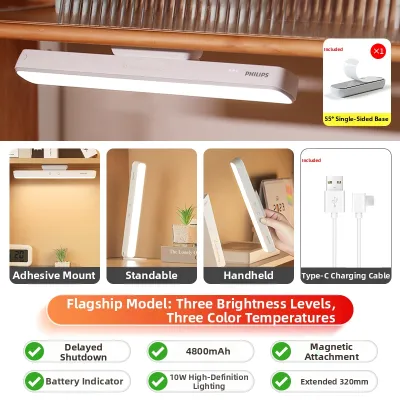
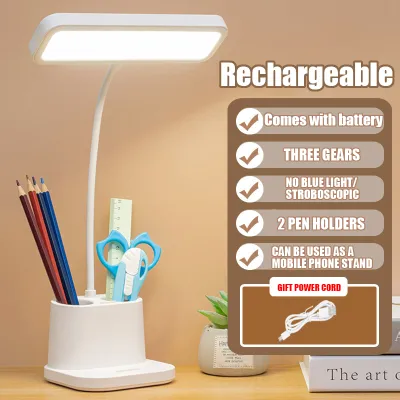
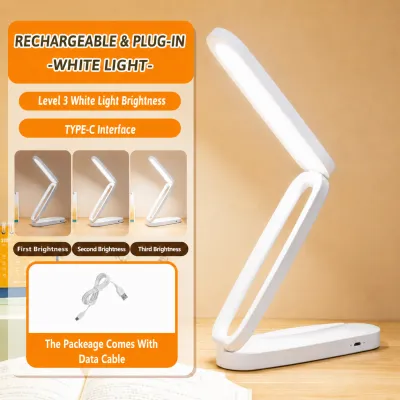
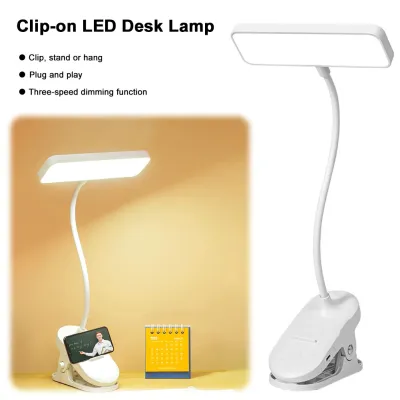
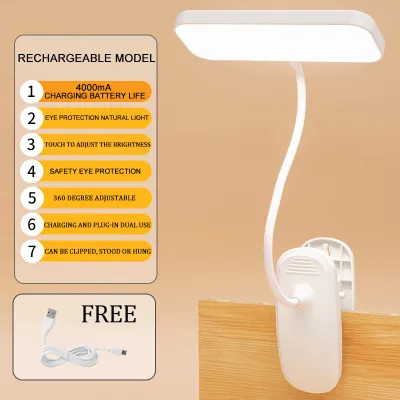
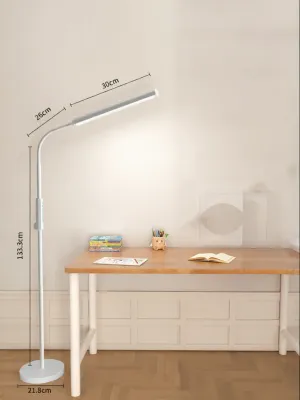
Prices are valid at publication and may change. Please refer to the product page for the latest price.
The core stress points of a study lamp are found at its articulation joints, its base weight distribution, and its switch mechanisms. Every time you tilt the lamp head, swing the arm, or turn the unit on and off, you apply physical stress to these components. Over months of daily use, low-quality joints will loosen and fail to hold their position, causing the lamp head to droop. Similarly, cheap electrical switches can wear out internally, leading to intermittent contact or complete failure.
Extended daily use introduces a silent but highly destructive factor: heat. Even highly efficient light-emitting diode (LED) lamps generate significant heat at the junction point of the diode. If this heat is not dissipated effectively, it bakes the surrounding housing, degrades the electronic driver, and accelerates the decline of the light source itself.
In the Philippines, this thermal stress is compounded by high ambient temperatures and relative humidity. These tropical conditions can accelerate the degradation of cheap plastics, corrode internal metal contacts, and cause low-grade adhesives to fail. A heavy-duty lamp must be engineered to handle both physical manipulation and continuous thermal loads under these demanding environmental conditions.
Mechanical Features That Survive Extended Use
The mechanical design of a study lamp determines how well it maintains its position over years of daily adjustment. The most common joint mechanism is the friction hinge, which relies on tightened screws or bolts to hold the arm segments in place. While simple and compact, friction hinges made of plastic or soft metals wear down quickly, requiring constant tightening until the threads eventually strip.

For a truly heavy-duty setup, look for friction joints that utilize steel-on-steel contact with adjustable tension knobs. This design allows you to restore holding power as the joint wears over time. Another highly durable option is the spring-loaded tension arm, often referred to as an architect-style arm.
This design uses external steel springs to counterbalance the weight of the lamp head, distributing physical stress away from the joints themselves. Because the springs absorb the tension, these arms can be adjusted thousands of times without losing their structural integrity. However, in humid tropical climates, it is essential to ensure that these springs are made of stainless steel or treated with a rust-resistant coating to prevent corrosion and squeaking.
Base stability is equally critical for a lamp intended for active, extended use. A heavy-duty lamp must feature a heavily weighted base—often constructed with a cast-iron or solid steel core—to keep the center of gravity low. This prevents the lamp from tipping over when the arm is fully extended across a wide desk.
The bottom of the base should be lined with high-density, anti-slip padding, such as textured rubber or thick felt. This padding prevents the lamp from sliding on smooth wooden or glass desks. It also dampens vibrations from nearby activity, protecting the internal electronics from physical shocks.
Finally, the durability of physical controls should not be overlooked. Traditional mechanical switches, such as heavy-duty toggle switches, rotary dials, or push-buttons, offer tactile feedback and are highly resilient. Touch-sensitive control panels are increasingly popular and eliminate mechanical wear entirely, but they introduce complex electronic control boards. In areas prone to high humidity or voltage fluctuations, these touch sensors can become unresponsive or fail prematurely if they lack adequate moisture protection and voltage regulation.
Assessing Materials and Build Quality
The materials used in a lamp’s construction directly dictate its lifespan and resistance to physical deformation. Aluminum alloys are the gold standard for heavy-duty study lamps. Aluminum provides an exceptional strength-to-weight ratio, ensuring the lamp remains structurally rigid without becoming excessively heavy.
More importantly, aluminum is an excellent thermal conductor. This allows the lamp head to act as a giant heatsink that draws damaging heat away from the LED chips and internal circuitry. Stamped steel is another highly durable material, commonly used for bases and heavy-duty arms.
While incredibly strong, steel must be properly finished to prevent rust in humid environments. On the other hand, reinforced polymers, such as high-impact ABS or polycarbonate, are acceptable for non-structural components like switch covers or decorative trim. However, a lamp constructed primarily of thin, unreinforced plastic is highly susceptible to warping, cracking, and color fading under the continuous heat generated by the light source.
When evaluating a lamp’s build quality, look closely for signs of weak construction. Hollow plastic joints, thin-walled lamp heads that flex under light pressure, and exposed, unreinforced wiring at the pivot points are major red flags. In a well-engineered lamp, the electrical wiring is routed safely inside the metal arm tubes, with protective rubber grommets at every joint to prevent the metal edges from chafing or cutting the wire insulation during adjustment.
Additionally, inspect the surface finish of the lamp. High-quality powder-coated or anodized finishes resist chipping, scratching, and fading. Conversely, cheap spray paint or soft-touch rubberized coatings can become sticky and degrade rapidly in warm, humid climates.
Electrical Safety and Compatibility in the Philippines
Electrical safety is paramount when operating any appliance for extended periods, and study lamps are no exception. In the Philippines, the standard electrical supply is 220 volts at a frequency of 60 hertz (220V/60Hz). Many imported lamps sold on online marketplaces are designed for 110V systems or 50Hz grids.
Operating a 110V lamp on a 220V outlet without a proper step-down transformer will cause immediate, catastrophic failure and poses a severe fire hazard. Always check the electrical specification label on the lamp or its power adapter to confirm it is rated for 220V/60Hz or labeled as “Universal Input” (100V–240V, 50/60Hz).
The plug type must also match local wall outlets safely. The Philippines primarily uses Type A (two flat parallel prongs) and Type B (two flat prongs with a round grounding pin) plugs. Avoid using cheap, loose-fitting universal adapters to connect incompatible plugs to your wall outlets.
Poorly fitting adapters can create electrical arcing, which generates intense heat, damages the plug, and increases the risk of an electrical fire. If a lamp comes with a non-standard plug, it is safer to have a qualified professional replace the plug entirely or use a high-quality, fused adapter.
To verify the safety of a study lamp, look for recognized certification marks. In the local market, compliant electrical products should carry the Philippine Standard (PS) quality mark or an Import Commodity Clearance (ICC) sticker. For imported lamps, look for reputable international certifications such as UL (Underwriters Laboratories), CE (Conformité Européenne), or RoHS (Restriction of Hazardous Substances).
The power cord itself should be thick, double-insulated, and equipped with robust strain relief boots where it enters the lamp base and the plug. Thin, flimsy cords can easily kink, fray, or overheat under continuous use. Furthermore, avoid daisy-chaining multiple extension cords or overloading a single power strip with your computer, monitor, and study lamp. Plug your heavy-duty lamp directly into a wall outlet or a high-quality, surge-protected power strip to ensure a stable, safe electrical connection.
Building Your Shortlist: A Buyer's Checklist
When comparing different study lamps, creating a structured checklist helps filter out low-quality options and ensures you invest in a truly durable product. Use the following comparison matrix to evaluate potential candidates based on their mechanical and material specifications:
| Feature | Heavy-Duty Standard | Low-End Standard (Avoid) |
|---|---|---|
| Primary Material | Aluminum alloy or stamped steel | Thin, unreinforced ABS plastic |
| Joint Mechanism | Steel-on-steel friction or spring-loaded arms | All-plastic friction hinges |
| Base Construction | Weighted cast-iron/steel with rubber padding | Lightweight plastic, hollow or sand-filled |
| Heat Dissipation | Integrated metal heatsink or vented housing | Sealed plastic housing with no ventilation |
| Electrical Safety | 220V/60Hz certified (PS/ICC, UL, or CE) | 110V only, uncertified, or missing labels |
| Wiring Protection | Internal routing with rubber joint grommets | Exposed wires prone to pinching at joints |
Understanding the warranty terms is another crucial step in building your shortlist. A reliable manufacturer of heavy-duty lamps will typically offer at least a one-year warranty covering both mechanical defects and electrical failures. When reviewing the warranty, pay close attention to the coverage of integrated LED modules.
Unlike traditional lamps where you can simply swap out a blown bulb, integrated LED lamps require replacing the entire light engine or the driver if they fail. Ensure the warranty explicitly covers early LED degradation, driver failure, and mechanical joint loosening.
Finally, watch out for critical red flags during your search. An unusually lightweight base is a clear sign of poor stability, indicating the manufacturer cut corners on materials. Missing or incomplete specification labels on the lamp or its power brick suggest a lack of quality control and compliance testing.
If a lamp head becomes uncomfortably hot to the touch after only thirty minutes of use, it lacks adequate heat dissipation and will likely fail prematurely. By systematically checking these factors, you can confidently select a study lamp that will provide safe, reliable, and high-quality illumination for years to come.
Frequently Asked Questions (FAQ)
How often should I replace the light source in a heavy-duty study lamp?
The replacement frequency depends entirely on whether your lamp uses an integrated LED module or a standard replaceable bulb socket (such as an E27 socket). Integrated LED modules are designed for extreme longevity, often rated for 25,000 to 50,000 hours of use. If you use your lamp for six hours every day, an integrated LED can theoretically last for over ten years before needing replacement.
However, because the LED chips cannot be easily swapped, a failure in the internal electronic driver will require replacing the entire lamp or seeking professional repair. In contrast, lamps with standard sockets allow you to replace the bulb instantly whenever it burns out. While convenient, standard LED bulbs often have shorter lifespans than integrated modules due to poorer heat dissipation within the enclosed bulb housing.
Regardless of the light source type, you should replace the bulb or fixture if you notice persistent flickering, a significant drop in brightness, a noticeable shift in color temperature (such as the light turning unusually blue or yellow), or a buzzing sound coming from the lamp. These are clear signs of electronic degradation that can cause eye strain and indicate imminent component failure.
Is it safe to leave my study lamp on for 12 hours straight?
Yes, it is safe to leave a high-quality, heavy-duty study lamp on for twelve hours straight, provided it is engineered with proper thermal management. Modern LED study lamps generate far less heat than older incandescent or halogen models, making them much safer for continuous, long-term operation. However, the safety of extended use hinges on the lamp’s ability to dissipate the heat that is generated.
Lamps with aluminum heads or dedicated metal heatsinks will safely draw heat away from the electronics, keeping the surface temperature within safe limits. To ensure safety during marathon study sessions, always maintain adequate ventilation around the lamp head and the external power adapter. Never drape clothes, papers, or plastic items over the lamp, and keep it away from flammable materials.
If the lamp head or the power brick becomes uncomfortably hot to the touch—meaning you cannot comfortably hold your hand against it for more than a few seconds—turn the lamp off immediately and allow it to cool. This extreme heat indicates poor thermal design or an electrical overload, both of which can lead to premature component failure or a potential safety hazard.
Community discussion
Share your experience or ask a question. Comments are reviewed before publication.