
A 10W solar panel can typically power between two and ten low-wattage LED garden lights (ranging from 1W to 2W each) for a standard evening duration of four to eight hours. The precise number of lights your setup can support depends heavily on your daily local sunlight exposure, the storage capacity of your battery bank, and the overall efficiency of your system components.
To build a reliable outdoor lighting system, you must design it around the flow of energy from the sun to your battery, and finally to your lights. Understanding this energy balance prevents common issues like flickering fixtures, premature battery failure, or lights that go dark only a few hours after sunset.
Understanding the Power Balance: Solar Panel vs. Battery vs. Lights
A common misconception is that a solar panel directly powers outdoor lights. In a standard landscape lighting setup, the solar panel acts strictly as a daily battery charger. During daylight hours, the panel converts sunlight into electrical energy to replenish a storage battery. When night falls, a charge controller or sensor switches the system’s path, drawing stored energy from the battery to illuminate the LED fixtures.
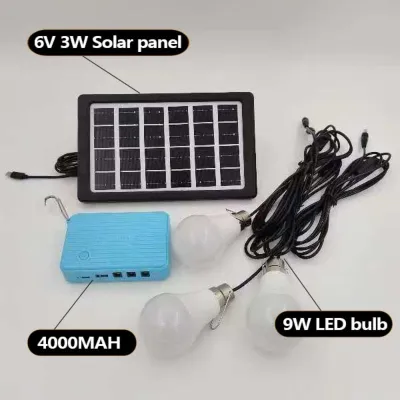
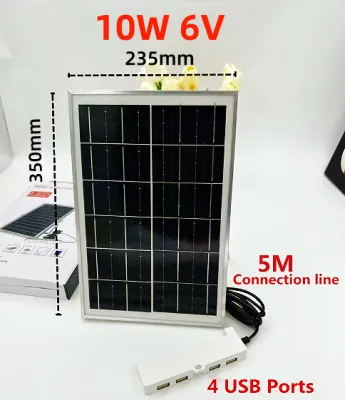
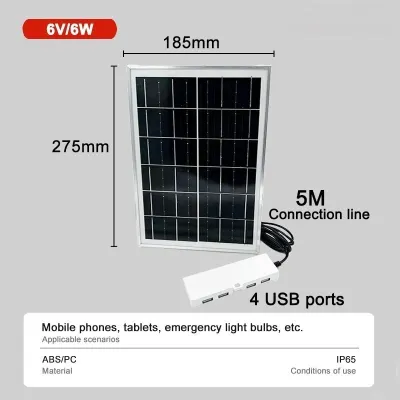
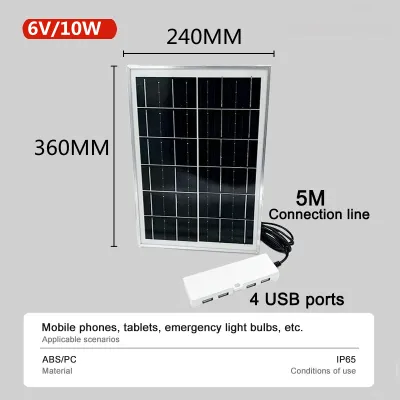
Products mentioned in this guide
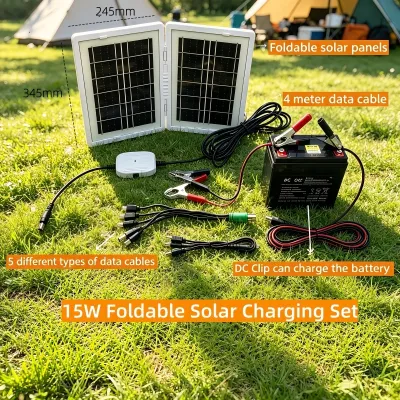
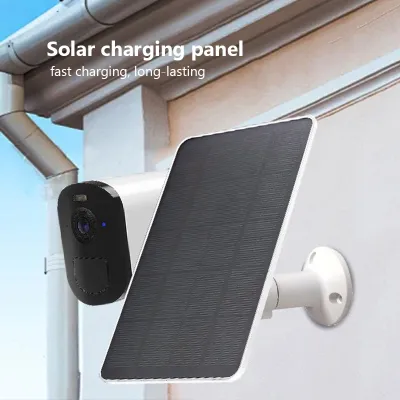
![[Vktech] 10W 5V IP Security Camera Charger 2 in 1 Charging IP65 Waterproof Portable Solar Panel Power Supply Monocrystalline High Efficiency for Mobile Hone](https://img.lazcdn.com/g/p/bcbbbeeb453e6b510729109bcbf08fe0.jpg_400x400q80.jpg_.webp)
Prices are valid at publication and may change. Please refer to the product page for the latest price.
To balance this system, you must evaluate three distinct electrical metrics:
- Generation Rate (Watts): The rate at which your 10W solar panel produces electricity under ideal sunlight conditions.
- Storage Capacity (Watt-hours or Amp-hours): The total amount of energy your battery can safely hold and discharge.
- Consumption Rate (Watts): The total power draw of all connected LED lights combined.
This relationship is governed by “Peak Sun Hours” rather than total daylight hours. A peak sun hour is defined as any hour where solar irradiance averages 1,000 watts per square meter. In tropical environments like the Philippines, you may experience 12 hours of daylight, but only receive 4 to 4.5 peak sun hours due to morning haze, afternoon cloud cover, and seasonal monsoons. Your 10W panel will only generate its maximum rated output during these peak hours, making realistic energy calculations essential.
Step-by-Step Calculation for Your Garden Setup
Determining the exact capacity of your system requires two separate calculations: estimating how much energy your panel can harvest daily, and calculating how much energy your lights will consume overnight. Comparing these two values reveals whether your 10W panel is sufficient for your goals.

Estimating Daily Energy Harvest
To calculate the usable daily energy your 10W solar panel can generate, use the following core formula:
Daily Energy Harvest (Wh) = Panel Wattage (W) × Peak Sun Hours × System Efficiency Factor
The system efficiency factor accounts for natural energy losses caused by wire resistance, charge controller conversion inefficiencies, and battery chemistry. For a standard low-voltage outdoor setup, an efficiency factor of 0.75 is a realistic baseline.
Assuming an average of 4.5 peak sun hours, the calculation is:
10W × 4.5 hours × 0.75 = 33.75 Watt-hours (Wh) of usable energy per day
Several environmental variables can cause this harvest to fluctuate. High ambient temperatures, common in tropical regions, can reduce solar panel efficiency slightly because solar cells operate less efficiently as they heat up. Additionally, partial shading from palm trees, roof eaves, or neighboring structures can cut a panel’s output by more than half, even if only a small corner of the panel is blocked.
Calculating LED Landscape Light Demand
To find out how much energy your desired lighting layout will consume, use this consumption formula:
Daily Energy Demand (Wh) = Light Wattage (W) × Number of Lights × Operating Hours
LED landscape lights vary widely in power consumption based on their design and purpose. Low-wattage accent lights or pathway markers typically draw between 1W and 2W. Brighter spotlights, directional floodlights, or security fixtures can draw 3W to 5W or more.
Your desired runtime also drastically alters the total energy demand. If you only want decorative evening ambiance for 4 hours, your energy needs will be modest. If you require dusk-to-dawn security lighting running for 10 hours, your system will require far more energy.
For example, if you plan to run three 1.5W pathway lights for 6 hours:
1.5W × 3 lights × 6 hours = 27 Wh of total daily energy demand
Because 27 Wh is less than your estimated daily harvest of 33.75 Wh, a 10W panel can comfortably support this configuration under typical sunny conditions.
Real-World Scenarios: What a 10W Panel Can Actually Support
To help visualize these calculations, consider how a 10W panel performs under different lighting configurations, assuming a standard 4.5 peak sun hour day yielding roughly 33.75 Wh of usable power.
- Scenario A: Low-Wattage Pathway Accent Lights: If you use small 1W LED accent lights designed to mark a garden path, you can run five of these lights for approximately 6 hours per night (1W × 5 lights × 6 hours = 30 Wh). This setup utilizes nearly all of your daily solar harvest, providing a beautiful, well-distributed light path.
- Scenario B: Medium-Wattage Spotlights: If you prefer to highlight specific garden features using brighter 3W spotlights, you can run two of these fixtures for about 5 hours per night (3W × 2 lights × 5 hours = 30 Wh). This provides focused, high-intensity light but limits the number of fixtures you can connect.
- Scenario C: High-Wattage Security Floodlight: If you install a single 5W LED floodlight, your 10W panel can only power it for about 6 hours per night (5W × 1 light × 6 hours = 30 Wh). Attempting to run this light all night (10 hours) would require 50 Wh, which exceeds what a 10W panel can generate in a single day.
These scenarios demonstrate that your system is strictly bottlenecked by both panel generation and battery storage. If you pair a 10W panel with an oversized battery bank to try and run more lights, the panel will never generate enough daily current to fully charge the battery. Conversely, if your battery is too small, it will reach full capacity early in the day, wasting potential solar energy and leaving you with insufficient storage to run your lights through the night.
To ensure reliable performance year-round, you must also factor in a rainy-season buffer. During prolonged periods of heavy rain or overcast skies, your daily solar harvest may drop by 70% or more. Sizing your system so that your daily light consumption uses only 60% to 70% of your maximum sunny-day harvest allows the battery to build a reserve, keeping your lights operational through one or two days of poor weather.
Essential System Components and Hidden Bottlenecks
To build a safe, long-lasting garden lighting system, you must select compatible individual components. A complete low-voltage solar lighting kit requires a solar panel, a solar charge controller, a rechargeable battery, and outdoor-rated cabling.
Solar Charge Controller
A solar charge controller is a mandatory safety component installed between the solar panel and the battery. It regulates the voltage and current coming from the panel, preventing the battery from overcharging during peak sun hours. It also prevents deep discharge by disconnecting the lights if the battery voltage drops below a safe threshold. For a small 10W panel, a basic 10-Amp PWM (Pulse Width Modulation) charge controller is highly cost-effective and sufficient.
Battery Chemistry and Depth of Discharge
When selecting a battery, compare the technical specifications of Lithium Iron Phosphate (LiFePO4) versus Sealed Lead-Acid (SLA) options:
- LiFePO4 Batteries: These offer a high usable Depth of Discharge (DoD) of up to 80% to 90% without damaging the cells. They are lightweight, highly efficient, and can withstand thousands of charge cycles, making them the superior choice for long-term outdoor use.
- Sealed Lead-Acid (SLA) Batteries: These are more affordable upfront but have a limited usable DoD of only 50%. Discharging an SLA battery past 50% repeatedly will drastically shorten its lifespan. They are also heavier and less efficient in high-temperature environments.
Wire Gauge and Voltage Drop
Low-voltage DC power (typically 12V) is highly susceptible to voltage drop, which is the loss of electrical pressure as current travels along a wire. If your cable run from the battery to the furthest garden light is too long or the wire is too thin, the lights will dim or fail to illuminate.
For garden runs under 15 meters, a standard 14-gauge (AWG) outdoor-rated, two-conductor low-voltage wire is generally sufficient. For longer runs or higher wattages, upgrade to 12-gauge wire to minimize power loss.
Installation Tips and Common Sizing Mistakes
Proper installation and regular maintenance are vital to keeping your solar lighting system operating at peak efficiency.
Avoid these common DIY mistakes during installation:
- Partial Shading: Never place your solar panel where tree branches, fences, or roof lines will cast shadows on it during peak daylight hours (typically between 10:00 AM and 2:00 PM).
- Incorrect Panel Angle: Position your panel to maximize sun exposure. In the Philippines, which lies in the northern tropical zone, mount your panel facing south at a slight tilt angle of roughly 10 to 15 degrees. This angle optimizes year-round sun exposure and allows tropical rainfall to naturally wash away accumulated dust and debris.
- Neglecting Waterproofing: All outdoor electrical connections must be thoroughly waterproofed. Use IP65 or IP67 outdoor-rated junction boxes, heat-shrink tubing, or silicone-filled wire connectors to prevent moisture from corroding the copper wires.
For basic low-voltage (12V DC) garden systems, DIY installation is highly safe and manageable. However, if your project requires complex underground trenching, integration with high-voltage (220V AC) household wiring, or a hybrid grid-tied system, always isolate the main power source and consult a qualified professional electrician to ensure compliance with local electrical codes.
Always verify the exact voltage, base interface, wattage limits, dimming compatibility, and installation environment specifications printed on your product labels before finalizing your system assembly.
Frequently Asked Questions (FAQ)
Can I connect LED garden lights directly to a 10W solar panel without a battery?
Connecting LED lights directly to a solar panel is not recommended. While the lights may turn on during periods of intense, direct midday sun, they will flicker constantly with passing clouds or shifting shadows. Because solar panels cannot store energy, the lights will turn off immediately at sunset, defeating the purpose of garden illumination. A battery and a charge controller are required to store power for reliable nighttime use.
How do I maintain solar panel output during the rainy season?
To maintain output during wet or overcast seasons, clean the glass surface of your panel regularly to remove accumulated grime, bird droppings, and algae, which block light transmission. Keep nearby foliage trimmed so it does not cast new shadows as plants grow. During weeks of continuous heavy rain, consider manually turning off your lights for a night or two using a system switch, or reduce their nightly runtime to prevent your battery from draining completely.
Community discussion
Share your experience or ask a question. Comments are reviewed before publication.