
To arrange large Christmas balls for a balanced and stunning display, you must work from the inside out. Position the largest, heaviest ornaments deep within the branches close to the tree trunk to establish depth, then distribute the remaining large spheres in a staggered, triangular pattern across all quadrants of the tree. This method prevents a top-heavy appearance, supports the physical weight of the ornaments, and creates a professional, multi-layered look that elevates your entire holiday decor.
Achieving a designer-grade look does not require expensive professional help, but it does demand a systematic approach. By treating your tree as a three-dimensional canvas, you can ensure that your oversized ornaments serve as beautiful focal points rather than distracting, sagging clutter. Whether you are decorating a fresh pine or a reusable artificial tree, proper preparation and strategic placement are the keys to success.
Prepare Your Tree and Ornaments for Styling
Before hanging a single ornament, you must prepare the tree structure to support the physical weight of large decorations. For artificial trees, this begins with thorough fluffing and shaping. In warm, humid climates like the Philippines, stored artificial trees can become severely compressed and lose their structural resilience over the off-season. Spend time pulling apart every branch tip, angling them slightly upward to mimic natural growth and to create sturdy shelves that can cradle heavier ornaments deep within the foliage.
Products mentioned in this guide
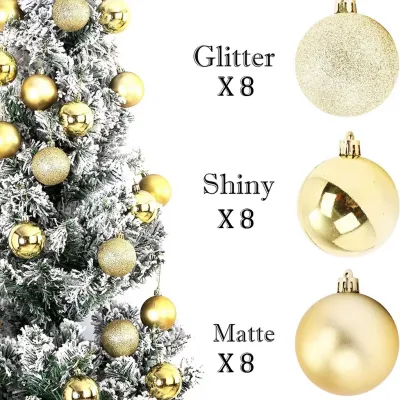
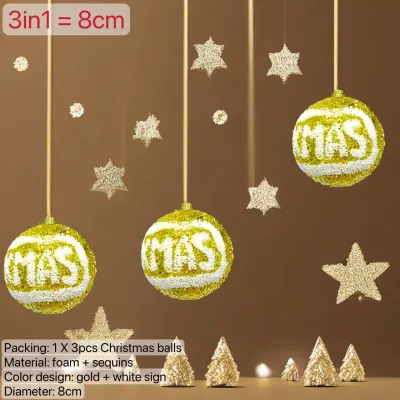
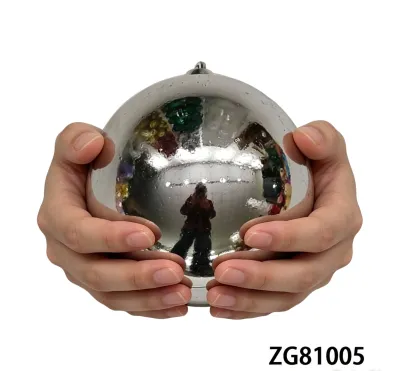
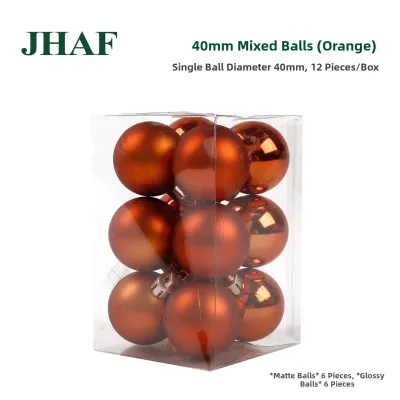
![[COD] CISWGE SPORTS 1Pc 12 15 20CM Christmas Decoration Ball Christmas Tree Ornaments Hang Shiny Bauble Ball For Home Bar Party Wedding Xmas Decor](https://img.lazcdn.com/g/p/965535797515478a6f0edad834a6aa54.jpg_400x400q80.jpg_.webp)
Prices are valid at publication and may change. Please refer to the product page for the latest price.
Next, inspect the hardware of your large Christmas balls. Oversized ornaments—especially those made of heavy glass, thick acrylic, or dense composite materials—exert significant downward force on branches. Check that the metal caps are securely fitted to the ornament necks and that the hanging loops are not loose or cracked. If you find any loose caps, secure them with a small drop of multi-purpose adhesive before hanging. This simple check prevents unexpected falls that could shatter your favorite pieces or damage your flooring.
Finally, organize your decorating workspace to streamline the styling process. Lay out all your large Christmas balls on a nearby table or clean sheet, grouping them by color, finish, and texture. Separating your shiny, matte, glittered, and patterned ornaments beforehand allows you to see exactly what inventory you have. This visual inventory makes it much easier to plan a balanced distribution and ensures you do not accidentally cluster too many identical finishes in one section of the tree.
Execute a Step-by-Step Placement Strategy
To create a professional sense of depth, start by anchoring several large Christmas balls deep inside the tree, close to the central trunk. Placing ornaments near the center pole utilizes the thickest, strongest parts of the branches, which easily support heavier items. This technique also hides the bare inner gaps of artificial trees and catches the light from the interior bulb strings, creating a beautiful, glowing shadowbox effect that makes the entire tree look fuller and more dimensional.

Once the inner layer is established, begin distributing the remaining large ornaments across the outer branches. Divide your tree mentally into three vertical zones (bottom, middle, and top) and four vertical quadrants. To avoid a lopsided or top-heavy appearance, place your largest balls primarily in the bottom and middle zones, where the branches are naturally wider and more robust. As you move toward the top zone, transition to slightly smaller ornaments or use fewer large pieces to maintain a natural, tapered silhouette.
As you place these outer ornaments, apply the visual triangle rule to guide the viewer’s eye smoothly across the display. Choose three large balls of a similar color or finish and arrange them in an asymmetrical triangle on the tree—for example, one on the lower left, one in the middle right, and one slightly higher near the center. Repeat this triangular grouping pattern with your other colors and finishes. This classic design technique prevents the eye from getting stuck on a single heavy spot and creates a cohesive, rhythmic flow around the entire tree.
Balance Visual Weight and Avoid Clutter
Maintaining visual balance requires you to step back from your work frequently. When you stand too close to the tree, it is easy to lose perspective and overcrowd a single branch. Periodically walk five to ten feet away, squint your eyes slightly, and look for any dark gaps or overly dense clusters. Squinting helps blur the fine details, making it much easier to identify unbalanced areas where the visual weight is unevenly distributed.
To prevent a bulky or monotonous appearance, always mix your large Christmas balls with medium and small filler ornaments. Think of your large balls as the anchor points of your design, while the smaller ornaments act as the supporting elements that bridge the gaps. Nestling medium-sized spheres and delicate, elongated ornaments around your large focal points creates a pleasing contrast in scale. This variation in size keeps the eye engaged and prevents the tree from looking like a random collection of oversized shapes.
As you place your ornaments, pay close attention to how the branch tips react to the weight. If a branch sags significantly under a large ornament, it can block the view of the ornaments below it or obscure your Christmas lights. Adjust the surrounding branch tips to cradle the ornament, or bend the supporting branch slightly upward to counteract the sag. Ensuring that every large ornament hangs freely without crushing the surrounding foliage keeps the overall display looking clean, crisp, and professionally styled.
Secure Heavy Ornaments to Prevent Damage
Standard thin wire hooks are rarely sufficient for securing oversized or heavy Christmas balls. Instead, opt for heavy-duty alternatives such as green floral wire, chenille stems, or even small zip ties. These materials allow you to bind the ornament cap directly to the woody, structural core of the branch rather than relying on a flimsy tip. By wrapping the wire tightly around both the ornament loop and the branch, you eliminate the risk of the ornament slipping off when the tree is bumped.
When hanging heavy items, always prioritize safety by attaching them strictly to the thickest, most mature sections of the branches. Avoid the temptation to hang heavy glass balls on the very ends of the branches just to make them more visible. If you want a large ornament to appear near the outer edge of the tree, use a longer piece of floral wire to anchor it to a thick inner branch, then thread the wire forward so the ornament rests gently on the outer needles without putting weight on them.
This secure mounting method is especially important in active households. If you have curious pets, young children, or high-velocity ceiling fans running to keep your living room cool, unsecured ornaments can easily become falling hazards. Take a moment to gently shake a few branches after decorating to verify that your heavy ornaments are locked in place. If you plan to invest in premium ornaments, which can range from ₱500 to over ₱1,500 for specialty hand-blown glass designs, taking these extra security steps protects your financial investment and keeps your home safe.
Add Final Touches and Integrate Lighting
To maximize the visual impact of your large Christmas balls, integrate them thoughtfully with your tree lighting. If you are using string lights or delicate copper wire fairy lights, weave the light strands directly behind and around your large ornaments. When the lights are turned on, the bulbs will illuminate the ornaments from behind. This setup beautifully highlights the reflective qualities of shiny metallic finishes and coaxes a soft, warm glow out of matte or frosted surfaces.
After your lights and large ornaments are in place, use decorative fillers to bridge any remaining visual gaps. Wide wired ribbons, faux floral picks, and natural botanical elements work wonderfully to soften the transitions between large focal points. You can tuck loops of ribbon or sprigs of holiday berries immediately adjacent to your large Christmas balls to create a rich, layered vignette that looks incredibly luxurious and complete.
Conclude your styling project by performing a thorough 360-degree walk-around of the tree. View the display from every possible angle in the room, including from seated positions and from the entryway. Check that the lighting reflections are consistent, that no structural sagging has developed under the weight of the ornaments, and that the visual balance remains perfect from top to bottom. This final inspection ensures your tree will look stunning and remain structurally secure throughout the entire holiday season.
Frequently Asked Questions (FAQ)
How many large Christmas balls do I need for a standard tree?
There is no single, rigid number of ornaments required, as the ideal quantity depends on your tree’s height, fullness, and your personal style preferences. However, a helpful baseline for a standard 6-foot to 7-foot tree is to use between 12 and 18 large Christmas balls (typically 4 to 6 inches in diameter) as your primary focal points. This quantity allows you to distribute three to four large ornaments per visual quadrant, ensuring excellent coverage without overwhelming the tree’s natural green foliage.
If you prefer a highly packed, maximalist look, you can increase this count to 24 or more, provided your tree has strong, stiff branches to support the load. For a more minimalist or modern aesthetic, limiting yourself to 8 to 10 oversized balls paired with delicate fairy lights can create a clean, sophisticated statement. Always prioritize visual balance and branch strength over a strict numerical count.
Can I hang large ornaments on the outer tips of the branches?
You should avoid hanging heavy or oversized ornaments directly on the fragile outer tips of your tree branches. The outer tips lack the structural wood density needed to support significant weight, which inevitably leads to drooping branches, unsightly gaps, and an increased risk of ornaments slipping off and breaking. Drooping branches also disrupt the clean, conical silhouette of your tree.
Instead, place your large ornaments deeper within the branch structure where the wood is thicker and more rigid. If you want a large ornament to be highly visible on the exterior, secure it to a strong inner branch using a sturdy piece of floral wire, then position the ornament so it rests lightly against the outer needles. This technique gives you the desired visual prominence on the outside of the tree while transferring all the physical weight safely to the strong interior structure.
Community discussion
Share your experience or ask a question. Comments are reviewed before publication.