
Planning a gallery wall that incorporates prayer card holders alongside standard photo frames requires balancing different sizes, shapes, and visual weights. By treating the prayer card holders as intentional design elements rather than afterthoughts, you can create a unified and meaningful display. This guide walks you through the planning, layout selection, and installation steps to achieve a professional-looking arrangement.
Planning Your Gallery Wall and Gathering Materials
Before driving any nails or drilling holes, you must assess the physical characteristics of your wall. In many homes, especially in tropical climates like the Philippines, walls are often constructed from solid concrete, hollow blocks, or plaster over masonry rather than standard drywall. This structural reality dictates the type of mounting hardware you will need, as concrete requires masonry drill bits, plastic wall plugs, and matching screws to support any significant weight. If you are working with lightweight partition walls or drywall, toggle bolts or threaded anchors are more appropriate.
Humidity is another critical factor to consider when planning your display. High moisture levels can cause wood frames to warp, adhesive strips to fail, and paper cards to curl over time. To prevent your carefully arranged gallery from sagging or falling, select high-quality hanging hardware rated for at least double the actual weight of your frames and prayer card holders. Avoid relying solely on standard double-sided foam tape in humid rooms, as the adhesive can degrade rapidly, risking damage to your cherished keepsakes.
Products mentioned in this guide
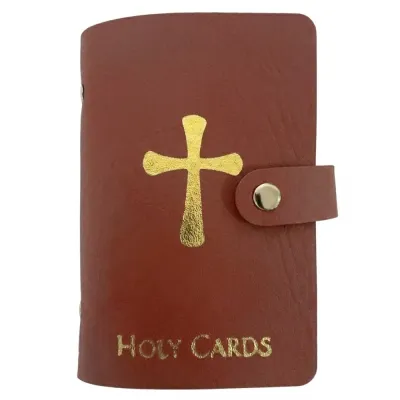
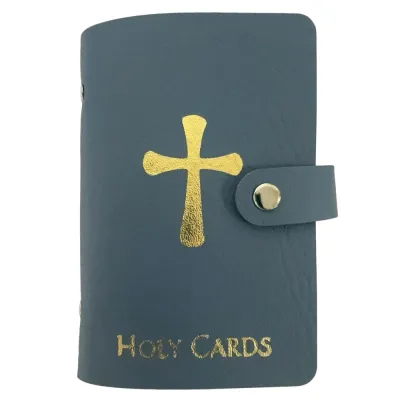
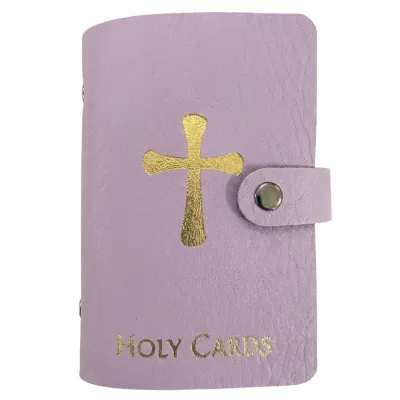
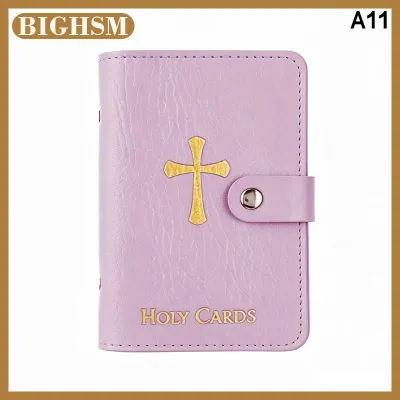
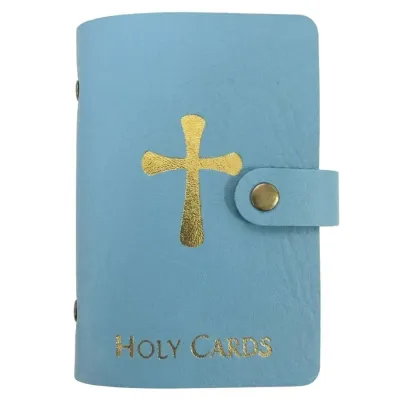
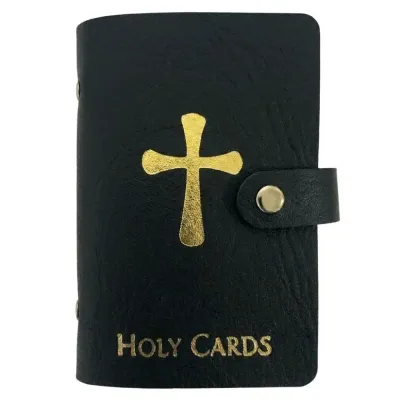
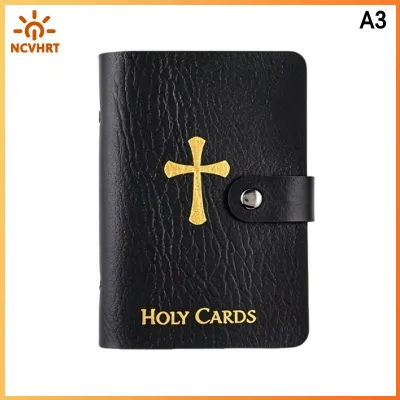
Prices are valid at publication and may change. Please refer to the product page for the latest price.
Gathering the correct tools beforehand ensures a smooth, frustration-free installation process. You will need a reliable metal measuring tape, a spirit level to guarantee straight lines, a pencil for marking reference points, and low-tack painter’s tape that will not peel the paint off your walls. Additionally, keep a hammer, a drill with the correct drill bits, and a roll of brown craft paper or newspaper on hand to create life-sized templates of your frames.
Choosing a Layout Strategy for Mixed Media
Integrating prayer card holders with standard photo frames requires a deliberate layout strategy to prevent the wall from looking cluttered or disorganized. A structured grid layout is highly effective if you prefer clean lines and symmetry. However, because prayer card holders are typically much smaller than standard photo frames, a strict grid requires you to source holders that share the exact outer dimensions of your other frames, or mount the cards inside larger, standardized frames with custom matting.

For a more dynamic and forgiving arrangement, the salon or eclectic layout is an excellent choice. This approach allows you to mix various frame sizes, shapes, and depths, making it easy to nestle smaller prayer card holders into the natural negative spaces created by larger pieces. When using a salon layout, aim to maintain a consistent gap of about 5 to 8 centimeters (roughly 2 to 3 inches) between all frames to keep the overall composition looking intentional rather than chaotic.
The anchor piece method offers a middle ground, providing both structure and flexibility. Start by selecting a large central piece—such as a family portrait, a prominent mirror, or a large piece of art—to serve as the visual anchor of the wall. Position this anchor at eye level, which is typically about 140 to 150 centimeters from the floor to the center of the image. Once the anchor is established, build outward by placing your prayer card holders in the mid-tier visual zones, balancing them symmetrically or asymmetrically on either side of the central piece.
Integrating Prayer Card Holders into the Visual Flow
Achieving a balanced visual flow requires careful distribution of the visual weight across your gallery wall. Because prayer card holders are often smaller and may feature unique shapes, placing them all on one side of the layout will make the wall feel lopsided. Instead, scatter these smaller elements evenly throughout the arrangement, pairing them diagonally from one another to guide the viewer’s eye smoothly across the entire display.
Coordinating the materials and finishes of your frames is one of the easiest ways to unify a mixed-media wall. If your prayer card holders are made of warm wood, try to select photo frames that share similar warm undertones, even if the grain or exact shade varies slightly. Alternatively, a modern, minimalist aesthetic can be achieved by using matte black or sleek metallic frames for every piece on the wall, which instantly ties different shapes and functions together under a single design language.
If you find that a particular prayer card holder is simply too small to hold its own against larger frames, you can artificially increase its visual footprint. Consider placing the prayer card inside a larger frame with a wide, high-quality mat board, or mount the holder itself onto a larger decorative backing board before hanging. This technique not only protects the card from direct contact with the glass but also elevates its status, turning a small token into a striking focal point.
Step-by-Step Installation and Hanging Process
The secret to a flawless gallery wall installation is planning the entire layout on paper before making a single mark on your wall. Lay all your frames and prayer card holders flat on the floor in front of the target wall, adjusting their positions until you are completely satisfied with the arrangement. Once the floor layout is finalized, trace the outline of each frame onto your craft paper and cut out the templates, labeling each one so you know exactly which piece it represents.
Using low-tack painter’s tape, transfer these paper templates to the wall one by one, replicating the layout you designed on the floor. This step allows you to step back and assess the scale, height, and spacing of the arrangement in the actual room, making it easy to adjust individual pieces without damaging the wall surface. Use your spirit level to ensure that the top edges of all templates are perfectly horizontal.
With the templates securely taped to the wall, measure the distance from the top of each frame to its hanging hardware or wire on the back. Mark this exact distance down from the top edge of the corresponding paper template on the wall, using a pencil to pinpoint the precise spot where the nail or screw must go. Drill your holes or drive your nails directly through the paper templates, then gently tear the paper away, leaving your hardware perfectly positioned and ready for hanging. Start hanging your pieces from the center anchor outward, checking each one with the level as you go.
Final Adjustments and Wall Care
Once all your frames and prayer card holders are on the wall, step back several paces to inspect the overall alignment. Minor shifts can occur during the hanging process, so use your spirit level to make fine adjustments to any crooked frames. If certain frames tend to tilt or slide out of place easily, apply a small piece of removable mounting putty or a rubber bumper to the bottom corners of the frame backing to keep them securely anchored.
Maintain a consistent spacing between all elements to ensure the wall feels cohesive and breathable. If you notice a gap that feels too wide or too cramped, do not hesitate to adjust the template and re-hang that specific piece; taking the time to correct these small details now will yield a much more professional result.
If you made any mistake holes or scuffed the paint during installation, clean up the area immediately to preserve your wall’s integrity. Fill any unused holes with a small amount of wall putty or spackling compound, smooth it flat with a putty knife, and apply a quick touch-up of matching wall paint once it dries. Keeping a small jar of your wall’s original paint color on hand makes these quick repairs seamless and invisible.
Frequently Asked Questions (FAQ)
Can I mix prayer card holders with floating shelves in a gallery wall?
Yes, incorporating floating shelves is an excellent way to add depth and dimension to your gallery wall. When installing floating shelves, ensure they are anchored securely into wall studs or mounted with heavy-duty masonry plugs to safely support the weight of your items. Shelves allow you to lean your prayer card holders alongside small potted plants, candles, or books, creating a layered, casual look that is easy to update and rearrange without drilling new holes.
How do I prevent prayer card holders from looking too small next to large frames?
To prevent small prayer card holders from being overwhelmed by larger frames, try grouping two or three of them closely together to form a single, cohesive visual block. Alternatively, you can place the prayer cards inside larger frames featuring wide, custom-cut matting, which naturally expands their visual presence. Using contrasting background colors or textured fabric backings behind the cards inside the holders can also draw the eye and make the smaller pieces stand out dynamically.
Community discussion
Share your experience or ask a question. Comments are reviewed before publication.