
To transform a compact condo bedroom into a cozy, ambient sanctuary, draping string lights over a bed canopy is one of the most effective design choices. However, guessing the length of your string lights often leads to frustrating results—either leaving you with a cord that falls short of the outlet or an overwhelming tangle of excess wire. Determining the perfect length of string lights for bedroom canopies requires a systematic approach that accounts for your bed dimensions, your chosen draping style, and the practical layout of your room. By taking precise measurements and applying a few simple formulas, you can achieve a polished, professional look that elevates your space without compromising safety or functionality.
In high-density residential developments where space is at a premium, lighting plays a crucial role in defining the mood of a room. Standard overhead lighting can often feel harsh or clinical, making soft, localized accent lighting highly desirable. Installing string lights around a canopy frame or headboard allows you to layer your light sources, creating a warm, inviting atmosphere that makes a small bedroom feel larger and more comfortable. To get started, you will need to understand the relationship between the physical path of your installation and the actual length of the wire you need to purchase.
The Quick Formula for String Light Length
If you need a fast estimate before diving into detailed measurements, you can use a basic multiplier rule. This quick formula calculates your required length by taking the linear distance of your installation path and multiplying it by a “drape factor” that corresponds to your desired aesthetic. For a clean, straight-lined look with minimal sagging, use a multiplier of 1.1x. For gentle, elegant swags, apply a multiplier of 1.3x to 1.5x. If you plan to create dense, heavy drapes, wrap the lights tightly around posts, or design deep scallops, you will need a multiplier of 2.0x to 3.0x the linear distance.
Products mentioned in this guide
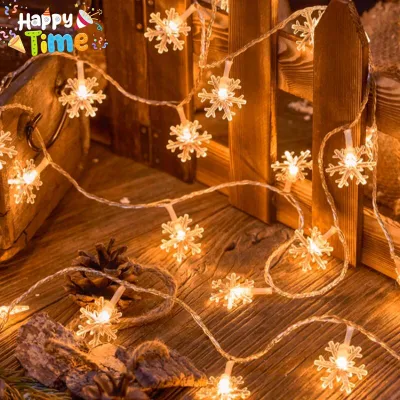
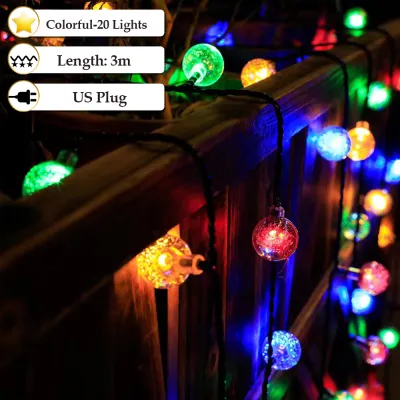
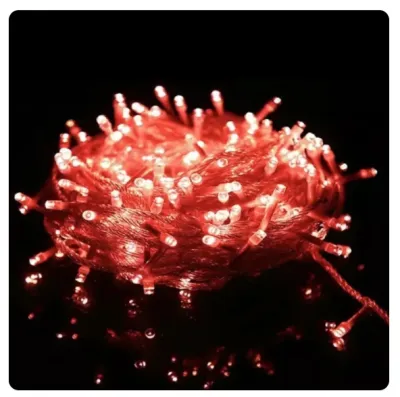
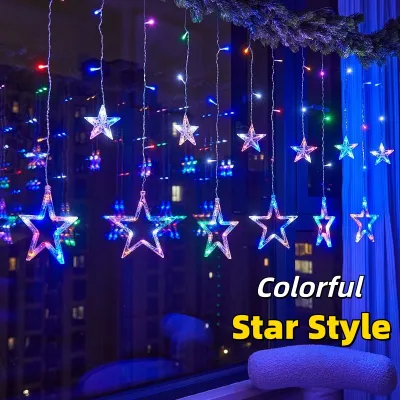
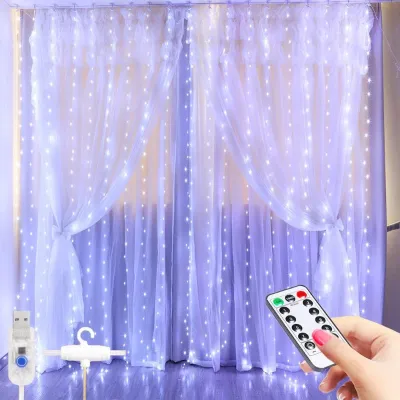
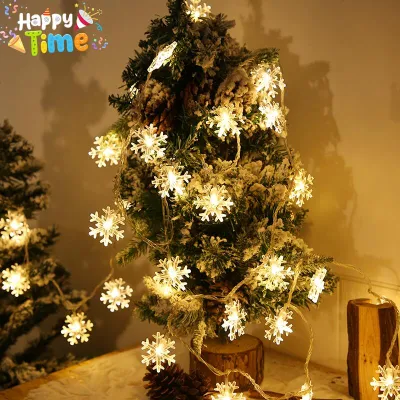
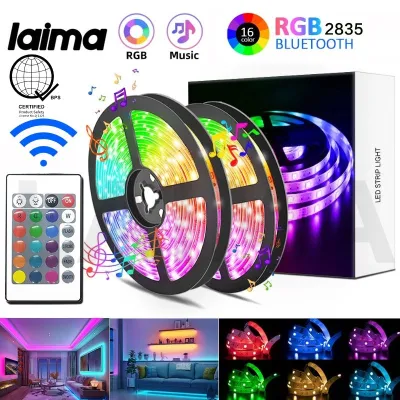
Prices are valid at publication and may change. Please refer to the product page for the latest price.
It is important to understand that “linear distance” refers to the actual physical path the wire will travel along your canopy frame or wall, rather than simply the width of your bed. For example, if you want to run lights along the top perimeter of a canopy frame, your linear distance is the sum of the frame’s four sides. If you only measure the width of the bed, you will end up with a strand that is far too short to complete the loop.
The table below provides a quick-reference baseline showing estimated total meters of string lights needed for standard bed sizes based on a simple perimeter canopy outline. These figures assume a standard canopy height of approximately 2 meters above the mattress and are intended as starting points rather than final purchase numbers.
| Bed Size | Standard Dimensions (Meters) | Simple Perimeter Loop (1.1x Multiplier) | Gentle Swag Loop (1.5x Multiplier) |
|---|---|---|---|
| Single | 0.9 m × 1.9 m | 6.2 meters | 8.4 meters |
| Double | 1.4 m × 1.9 m | 7.3 meters | 9.9 meters |
| Queen | 1.5 m × 2.0 m | 7.7 meters | 10.5 meters |
| King | 1.8 m × 2.0 m | 8.4 meters | 11.4 meters |
Step 1: Measure Your Bed and Canopy Frame
To achieve an accurate calculation, you must measure the physical dimensions of your specific bed and canopy frame. Start by measuring the width and length of your bed frame using a standard tape measure. Next, measure the vertical height of your canopy frame from the top of the mattress to the top of the frame or the ceiling, depending on how your canopy is supported. If you are planning to drape lights over a headboard instead of a full canopy, measure both the width and the total height of the headboard from the floor.

Always record your measurements strictly in meters. Most string lights sold on online marketplaces and in local home improvement stores in the Philippines are labeled and sold by meter length. Measuring in meters from the start eliminates the need for unit conversions and reduces the risk of ordering the wrong size.
Condo living introduces specific spatial constraints that you must factor into your measurements. Check the clearance between your bed and the nearest wall, and note the location of any low-hanging beams or dropped ceilings, which are common in modern high-rise developments. Ensure that your planned canopy frame and string light placement do not obstruct the airflow of your split-type air conditioning unit or interfere with the rotation of a ceiling fan.
Do not rely on standard manufacturing charts for your bed dimensions, as actual sizes can vary slightly between brands. Custom built-in furniture, which is highly popular in space-saving condo layouts, often features non-standard dimensions. Taking the time to measure your actual physical setup ensures that your calculations are based on reality rather than assumptions.
Step 2: Calculate Length Based on Your Draping Style
Your chosen aesthetic style is the single most influential factor in determining how many meters of string lights you need to buy. A style that requires tight wrapping or multiple vertical drops will consume significantly more wire than a simple horizontal run. Below are the calculation methods for the three most common canopy lighting styles.
Straight Drops and Canopy Curtains
Creating a curtain effect with vertical drops of light hanging from the top of your canopy frame offers a classic, whimsical look. To calculate the total length needed for this style, you must determine how many vertical strands you want and how far down they will hang. Use the following formula:
Total Length = (Drop Length + Top Frame Width) × Number of Strands
For example, if you have a Queen bed with a top frame width of 1.5 meters and you want 10 vertical drops that hang down 2 meters each, your calculation would begin by determining the spacing. Spacing strands 15 centimeters (0.15 meters) apart across a 1.5-meter frame will give you exactly 11 drops (including the ends). If each drop is 2 meters, your total vertical length is 22 meters. Adding the horizontal run along the top frame to connect these drops ensures you have enough continuous wire to complete the installation.
To maintain a balanced look without overcrowding a small condo bedroom, aim for a spacing of 10 to 15 centimeters between each vertical strand. Closer spacing creates a dense wall of light that can feel overly bright and warm in a small space, while wider spacing can look sparse and unfinished.
Swag, Scallop, and Catenary Drapes
If you prefer a softer, traditional look, you can hang your string lights in drooping curves, known as swags or catenary drapes. Because the wire dips downward rather than running in a straight line, you must account for the “swag factor” to prevent the lights from being pulled taut. As a rule of thumb, you should add 20% to 30% extra length to the linear span of each drape to allow the wire to sag naturally.
To calculate this, multiply the linear horizontal distance between your support hooks by 1.25. If you are draping lights across a 2-meter span on the side of your bed, you will need approximately 2.5 meters of lighted wire for that single span. If you plan to create multiple smaller scallops along the frame, calculate the horizontal width of each individual scallop, apply the 1.25 multiplier, and multiply by the total number of scallops.
In compact condo bedrooms, avoid making the swags hang too deep. Deeply looping wires can easily catch on pillows, mosquito nets, or bedding when you move, creating a safety hazard. Keep your loops shallow and elegant, ensuring they remain well above head height when you are sitting up in bed.
Wrapped, Zig-Zag, and Headboard Weaves
Wrapping string lights around vertical bedposts or weaving them through the slats of a headboard creates a highly textured, high-density light source. This style consumes wire incredibly fast because the cord must constantly wrap around the physical bulk of the wood or metal frame. To calculate the length for wrapped posts, you must measure the circumference of the post and determine how closely together you want the wraps to sit.
For a standard post wrap, calculate the total length by multiplying the circumference of the post by the number of individual wraps you plan to make. If a bedpost is 0.2 meters in circumference and you want to wrap it 15 times from top to bottom, you will need 3 meters of light string for that single post. If you are creating a diagonal zig-zag pattern across a headboard, calculate the diagonal distance between your anchor points using a basic estimate, and apply a 2.5x to 3.0x multiplier to the overall width of the headboard.
Because wrapped and woven styles use so much wire, they can quickly look cluttered if the wire is too thick or the bulbs are too large. Opt for micro-LED fairy lights on thin copper or silver wire for these styles, as they wrap tightly and neatly around thin frame components without adding unnecessary bulk.
Step 3: Factor in Power Drops and Connection Allowances
One of the most common reasons installations fall short is neglecting the distance from the end of the decorated canopy to the actual wall outlet. This distance is composed of two parts: the unlit lead wire on your string lights and the physical “power drop” in your room. The lead wire is the portion of the cord between the plug and the very first light bulb. Before purchasing, always check the product specifications on the packaging or online listing to verify the length of this lead wire.
If your lead wire is only 1.5 meters long, but your canopy frame is 2 meters high and your outlet is at floor level, the first active bulb will end up hanging awkwardly down the wall rather than starting at the top of the canopy. To prevent this, calculate your power drop by measuring the distance from the highest point of your installation down to the floor, and then horizontally to your outlet.
If the built-in lead wire is too short to bridge this gap, you will need to plan for a safe extension cord. In a compact condo layout, safety is paramount when managing extension cords. Never run extension cords under heavy rugs, mattresses, or bedding, as the trapped heat combined with high tropical humidity can create a serious fire hazard. Avoid running wires across high-traffic walkways where they present a tripping hazard or can be pinched by sliding closet doors.
Common Sizing Mistakes to Avoid
To ensure your bedroom lighting project is successful, keep these frequent planning errors in mind so you can avoid them:
- Forgetting the lead wire and power drop: This mistake results in active light bulbs dangling along the wall or floor leading to the outlet, rather than starting cleanly at the edge of your canopy.
- Assuming one long strand is always better than multiple short ones: Buying a single 50-meter strand can make installation incredibly difficult, as the wire will easily tangle during setup. Utilizing multiple shorter, connectable strands gives you much better layout flexibility and makes replacement simple if a single section fails.
- Ignoring the physical bulk of the wire: Wrapping thick, heavy outdoor-grade rubber cables around delicate canopy frames or headboard slats can look messy and put physical strain on your furniture.
- Failing to leave a slack allowance: Always add a 5% to 10% buffer to your final calculated length. This extra slack is essential for making minor adjustments, navigating sharp corner turns, wrapping secure knots around hooks, and ensuring the wire is not under constant physical tension.
Safe Installation and Condo-Friendly Mounting
Living in a rental condo often means you cannot drill holes or drive nails into the walls or ceiling. To mount your canopy lights without damaging the property, use temporary, damage-free hanging solutions. Clear adhesive hooks are highly effective for lightweight wire lights. Because high humidity levels in tropical climates can weaken standard adhesive backings, choose moisture-resistant adhesive strips and thoroughly clean the mounting surface with isopropyl alcohol before application. Alternatively, tension rods placed between opposite walls can support lightweight fabrics and lights without requiring permanent fasteners.
Always consider the weight limits of your canopy frame or mounting hardware. While a single strand of copper wire fairy lights weighs very little, heavy-duty commercial string lights with glass Edison bulbs can add up to several kilograms. Ensure your frame and adhesive hooks can support the cumulative weight of the lights, the fabric canopy, and any mounting clips over time.
Electrical safety must be your top priority when installing decorative lighting in your bedroom. In the Philippines, ensure that your string lights are rated for the local 220V grid voltage and carry official safety certifications, such as the Philippine Standard (PS) mark or the Import Commodity Clearance (ICC) sticker. If you plan to install fixed wiring or dedicated ceiling outlets to power your canopy lights, always isolate the power at your breaker panel first and consult a licensed professional electrician to handle the installation.
Avoid daisy-chaining more strands than the manufacturer’s maximum safety limit, which is typically specified on the product label. Keep all bulbs and wires a safe distance away from highly flammable materials, such as polyester canopy curtains, bed sheets, and paper decorations. If you prefer a warmer, softer glow, choose low-wattage LED bulbs, which remain cool to the touch even after hours of operation, minimizing both energy consumption and fire risks.
Frequently Asked Questions (FAQ)
Can I connect multiple string light strands together?
Yes, but your ability to connect multiple strands end-to-end depends entirely on the manufacturer’s specifications. Always check the product packaging or instruction manual for the maximum allowable wattage or the maximum number of connectable strands. Exceeding these limits can overload the internal wiring of the first strand, leading to premature product failure, melted plastic, or a serious electrical fire hazard on your bedroom circuit.
How do I hide the power cord in a small bedroom?
To maintain a clean, minimalist aesthetic in a compact condo, use paintable plastic cord covers or self-adhesive raceways to run the power cord flat against the wall. Alternatively, you can route the cord discreetly behind your headboard or along the top of your baseboards using small, clear adhesive wire clips. Ensure the cord is never pinched tightly behind heavy furniture, as friction and pressure can damage the protective insulation of the wire over time.
Community discussion
Share your experience or ask a question. Comments are reviewed before publication.