
Integrating a 10,000 lux light therapy lamp into your work-from-home (WFH) or study desk in the Philippines requires looking beyond simple brightness claims. While many compact desk lamps promise high light output, achieving a true therapeutic intensity of 10,000 lux depends on a precise combination of optical design, distance, and electrical stability. In a tropical environment where natural daylight is abundant outdoors but often blocked indoors by heavy window drapes or concrete walls, a dedicated light therapy lamp can help regulate your daily rhythm and maintain focus during long hours at your computer.
Selecting the right device involves verifying specific distance-to-lux ratios, UV filtration, and electrical compatibility rather than relying on generic marketing labels. Because these lamps are positioned close to your face for extended periods, understanding how to evaluate their technical specifications and physical designs is essential for creating a safe, comfortable, and productive workspace.
Key Optical and Electrical Specifications to Verify
When evaluating a light therapy lamp, the most critical specification to verify is the relationship between lux output and measurement distance. A rating of 10,000 lux is not a static measurement; it is highly dependent on how close you sit to the light source. Many budget-friendly models claim to deliver 10,000 lux but only achieve this intensity at an impractical distance of 5 to 10 centimeters, which would require you to sit uncomfortably close to the panel. Reliable manufacturers will explicitly state a practical distance, typically between 15 and 30 centimeters, at which the lamp safely delivers the full 10,000 lux output.
Products mentioned in this guide
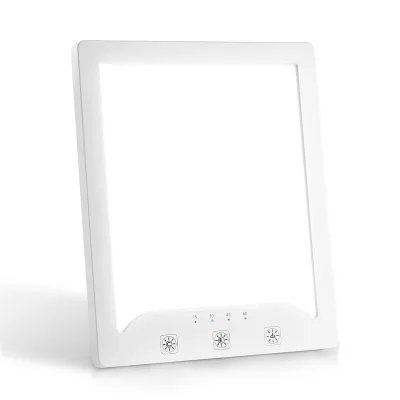
![10000 Lux SAD Light Therapy Lamp LED Light Therapy Lamp for Effective Treatment of Seasonal Affective Disorder with Timer Function Touch Control Suitable for Home/Office [Energy Class A+]](https://img.lazcdn.com/g/p/c0a8ae1913d6458013c9e59e8dea3e89.jpg_400x400q80.jpg_.webp)
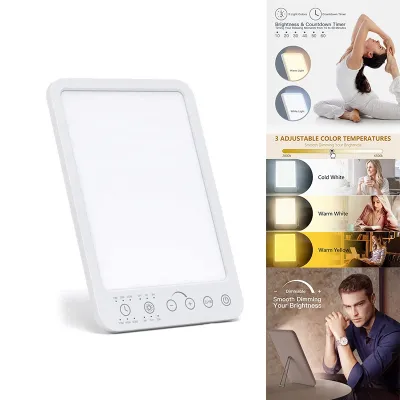
![[rooqs]Light Therapy Lamp 10000 Lux Therapy Light Mood-Lifting SAD Light Therapy Lamp Emotional Wellness Therapy Lamp](https://img.lazcdn.com/g/p/dd4b7a3ff82aee744052b1e3a114e740.jpg_400x400q80.jpg_.webp)
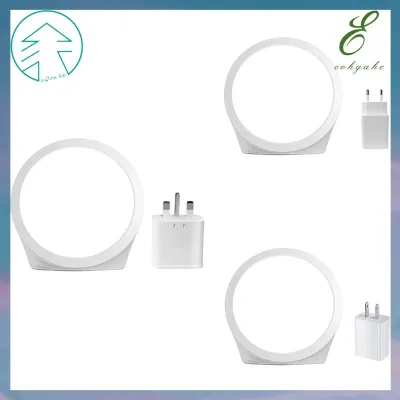
![[LEH4]Light Therapy Lamp 10000 Lux Sun Lamp with 5 Adjustable Brightness Levels Touch Control SAD Light Therapy Lamp](https://img.lazcdn.com/g/p/58c86750935964dc95ca429ea746a382.jpg_400x400q80.jpg_.webp)
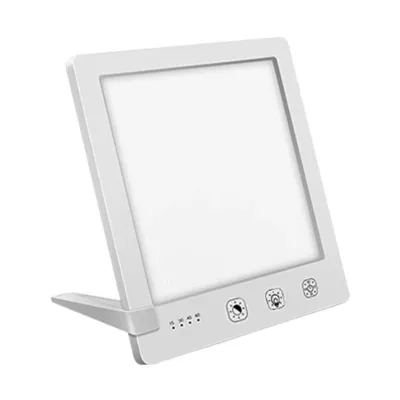
Prices are valid at publication and may change. Please refer to the product page for the latest price.
Another non-negotiable specification is ultraviolet (UV) safety. Because light therapy requires direct exposure to your eyes and skin, the lamp must be certified as UV-free to prevent long-term tissue damage. High-quality light therapy lamps utilize specialized LED arrays and integrated diffusion lenses that inherently emit zero ultraviolet radiation or filter it out completely. Always check the product specifications or user manual for an explicit “UV-free” or “99.9% UV-filtered” certification before making a purchase.
Color temperature options also play a significant role in how the lamp integrates into your daily routine. Standard light therapy relies on a cool white daylight spectrum, typically rated at 6500K, which mimics natural morning sunlight and helps promote alertness. Some modern lamps offer adjustable color temperatures, allowing you to switch between cool daylight for morning therapy sessions and warmer tones (such as 3000K) for evening task lighting. Keep in mind that while warmer settings are excellent for winding down, they do not provide the specific spectral distribution required for active light therapy.
If you plan to use the device as your primary desk light, pay close attention to the Color Rendering Index (CRI). A high CRI rating, ideally 90 or above, ensures that the lamp reveals the true colors of objects accurately. This is particularly beneficial if your WFH or study tasks involve reading physical documents, sketching, or participating in video calls, where natural skin tones and clear contrast are important.
Adapting the Lamp to Your Desk Setup and Ergonomics
Integrating a new light source into a WFH or study setup requires careful consideration of physical space and ergonomics. Desk space is often limited in Philippine households, where study areas may be set up in shared rooms or compact bedrooms. Compare the base designs of different models to find one that fits your layout. Compact, tablet-style lamps with fold-out kickstands offer excellent portability and a minimal footprint, while models with weighted bases or adjustable articulated arms provide greater stability and positioning flexibility at the cost of more desk space.

Adjustability is crucial for preventing screen glare and visual discomfort. To use a light therapy lamp effectively, the light should enter your eyes indirectly from an angle, rather than shining directly into your line of sight or reflecting off your computer monitor. Look for lamps that feature adjustable tilt angles or height settings. This allows you to position the light panel slightly above eye level and angle it downward, mimicking the natural overhead projection of the sun while keeping your screens free from distracting reflections.
Power cord length and plug types are practical details that are easily overlooked but highly impactful. In many home offices, desks are positioned away from wall outlets, requiring the use of extension cords or power strips. Verify that the lamp’s power cord is long enough (ideally 1.5 meters or more) to reach your power source without creating tension or a tripping hazard. Additionally, ensure the plug type is compatible with standard Philippine outlets to avoid the need for bulky, unstable adapters.
Finally, evaluate the control interface and dimming capabilities of the lamp. Touch-sensitive control panels are highly convenient, allowing you to adjust brightness levels or set timers with a gentle tap rather than pushing physical buttons that might shift the lamp out of position. Smooth, step-less dimming is particularly valuable, as it allows you to transition the device from a high-intensity morning therapy session to a lower, comfortable brightness level for standard reading or ambient lighting later in the afternoon.
Safety Standards and Electrical Compatibility Checks
Electrical safety is a paramount concern for any high-intensity lighting device used daily. The standard electrical grid in the Philippines operates at 220V and 60Hz. Many light therapy lamps sold on global e-commerce platforms are designed for the North American market (110V/60Hz) or European markets (220V/50Hz). Operating a 110V device directly on a 220V outlet will cause immediate, irreversible damage to the lamp and poses a severe electrical fire hazard. Always verify that the power adapter explicitly states an input range of “100-240V, 50/60Hz” to ensure safe, direct compatibility with local power outlets.
To protect your home and yourself, look for recognized electrical safety certification marks on the product packaging, device label, or user manual. Certifications such as CE, FCC, RoHS, or UL indicate that the manufacturer has complied with strict international safety standards regarding electrical insulation, material toxicity, and electromagnetic interference. In the humid tropical climate of the Philippines, high-quality internal insulation is especially important to prevent moisture-induced short circuits over time.
High-intensity LED panels generate a noticeable amount of heat during operation. Reliable lamps are designed with effective heat dissipation features, such as ventilated back casings or internal aluminum heat sinks, to keep the device running cool. Always review the manufacturer’s guidelines regarding maximum continuous usage times. Most manufacturers recommend limiting a single session to 20 or 30 minutes to prevent the LEDs from overheating, which can degrade the light quality and shorten the overall lifespan of the lamp.
Built-in session timers and auto-shutoff features are excellent safety additions that help manage your exposure times automatically. A lamp equipped with a timer (offering intervals like 15, 30, or 45 minutes) ensures that you do not accidentally exceed your intended usage duration while deeply focused on your work or studies. It also provides peace of mind by ensuring the device turns off automatically if you step away from your desk and forget to switch it off.
Building Your Shortlist: How to Compare Models Online
When shopping for a light therapy lamp on online marketplaces, it is important to look past flashy marketing claims and focus on verifiable specifications. Be skeptical of generic listings that advertise “10,000 lux” at exceptionally low prices (such as under ₱500) without providing detailed technical data. Producing a genuine, safe light therapy panel requires high-quality LED chips and precise optical diffusion filters. Look for listings that clearly state the specific distance required to achieve the 10,000 lux output, as this is a strong indicator of a reputable manufacturer.
Cross-referencing official brand specifications with real-world user reviews is an effective way to gauge a product’s true performance. Pay close attention to feedback from buyers who use the lamp in WFH or study environments similar to yours. Look for comments regarding the actual brightness of the lamp, the stability of the stand, and whether the power adapter gets excessively hot during use. User-uploaded photos can also provide a realistic sense of the lamp’s size, build quality, and how it looks alongside standard laptops or monitors.
To ensure you receive a genuine product with reliable customer support, prioritize purchasing from official brand stores, authorized local distributors, or reputable specialty retailers. Buying from gray-market sellers may save you money initially, but it often leaves you without a valid warranty if the power adapter fails or the LEDs begin to flicker. A reliable local warranty ensures you can easily obtain a replacement or refund if any technical issues arise.
To make your final decision, create a simple comparison matrix based on your specific desk requirements. Weigh the trade-offs between different models: a compact, highly portable tablet lamp might be ideal if you frequently move between your desk and the dining table, while a larger, highly adjustable model might be better suited for a dedicated, permanent study corner. By prioritizing verified optical safety, electrical compatibility, and ergonomic fit, you can confidently select a light therapy lamp that safely and effectively supports your daily routine.
Frequently Asked Questions (FAQ)
Can I use a regular bright desk lamp instead of a dedicated light therapy lamp?
No, standard desk lamps are not suitable substitutes for dedicated light therapy lamps. Even very bright LED desk lamps typically only deliver between 300 and 500 lux at a normal working distance, which is far below the 10,000 lux required for effective light therapy. Furthermore, standard household lamps do not undergo the strict optical testing required to ensure they are completely UV-free, meaning prolonged close-range exposure could expose your eyes and skin to harmful ultraviolet radiation.
How should I position the lamp on my desk for effective use?
For optimal results, place the lamp approximately 15 to 30 centimeters from your face, positioned slightly to the side (at roughly a 45-degree angle) rather than directly in front of your eyes. This positioning allows the light to reach your eyes indirectly, mimicking the natural angle of outdoor sunlight without causing direct glare on your computer screen or forcing you to stare directly into the bright light source. Always consult your specific model’s user manual, as recommended distances vary based on the lamp’s unique optical output.
What maintenance is required to keep the light output effective over time?
Maintaining a light therapy lamp is simple but essential for preserving its optical performance. Regularly dust the outer diffuser screen using a dry, clean microfiber cloth, as accumulated dust can block and scatter the light, reducing its overall intensity. Never use harsh chemical solvents, abrasive cleaners, or wet cloths that could seep into the housing and damage the internal electronics. Periodically inspect the power cable and adapter for any signs of wear, fraying, or overheating; if you detect any damage, discontinue use immediately and contact the manufacturer for a certified replacement.

Community discussion
Share your experience or ask a question. Comments are reviewed before publication.