
Quick Answer: Ideal Lamp Traits for Nighttime Bible Reading
To read the Bible comfortably at night without straining your eyes, the ideal desk lamp must offer adjustable color temperatures, a highly customizable dimming range, and precise beam control. Because Bible pages are typically printed on exceptionally thin, lightweight paper, they are highly susceptible to glare, text washout, and rear-page bleed-through.
A lamp with a warm-to-neutral color temperature range (between 2700K and 4000K) helps minimize blue light exposure before sleep while maintaining clear text contrast. Additionally, a physical design featuring an articulating arm or a flexible gooseneck allows you to position the light source below eye level, directing a focused beam strictly onto the pages. This targeted illumination prevents light from spilling across a dark room, ensuring a comfortable reading experience that does not disturb others.
Key Lighting Features to Prevent Eye Strain
Selecting the right light quality is essential for protecting your vision during extended nighttime study sessions. The first specification to evaluate is color temperature, measured in Kelvin (K). Warm light (around 2700K to 3000K) emits a cozy, amber glow that minimizes sleep disruption, making it highly suitable for late-night reflection. However, very warm light can sometimes reduce the sharpness of tiny print. A neutral white light (around 4000K) provides excellent contrast, making small footnotes and cross-references much easier to read. Choosing a lamp with adjustable color temperature settings allows you to customize the output based on your immediate visual comfort.
Products mentioned in this guide
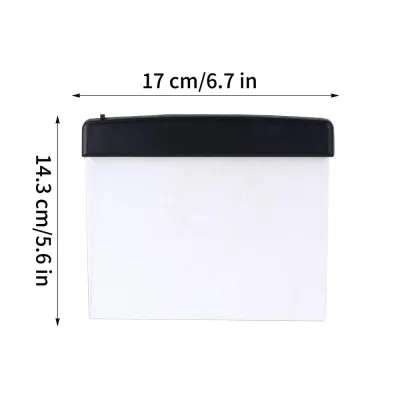
Prices are valid at publication and may change. Please refer to the product page for the latest price.

Brightness and dimming capabilities are equally critical when dealing with unique paper types. Many Bibles are printed on delicate, semi-translucent paper that easily allows text from the reverse side to show through under intense light. High brightness levels can also cause harsh reflections on coated or glossy pages. A lamp with step-less dimming or multiple brightness presets allows you to lower the intensity to the exact level where the text is legible but the page does not reflect blinding glare back into your eyes.
Beam angle and focus determine how well the light is directed. A wide, uncontrolled flood of light can illuminate the entire bedroom, which is problematic if you share the space. A focused beam angle directs the light precisely onto your book, keeping the rest of the room dark. This localized illumination helps your mind focus on the text while keeping your surroundings restful.
Finally, always check manufacturer labels for flicker-free operation and high color rendering. High-frequency flickering from low-quality LED drivers is a primary cause of headaches and eye strain, even if the flicker is invisible to the naked eye. A high Color Rendering Index (CRI) of 90 or above ensures that colors—such as red-letter editions of scripture or detailed maps—appear vivid and distinct, while black text stands out sharply against the page.
Lamp Design and Adjustability for Extended Sessions
The physical structure of your desk lamp dictates how comfortably you can position the light. Articulating arms with multiple tension joints or flexible silicone goosenecks allow you to bring the light source close to the page without blocking your view. This adjustability is crucial for maintaining proper posture, preventing you from hunching over your desk or bed during long reading sessions.
Shade and baffle designs play a major role in glare reduction. If you can see the bare bulb or the LED panel from your reading position, your eyes will constantly struggle to adjust to the bright spot. Choose a lamp with a deep, opaque shade or an integrated baffle that completely conceals the light source from your direct line of sight, directing all illumination downward onto the book.
Base stability is another important consideration, especially on small bedside tables or crowded desks. A lamp must have a heavy, stable base to prevent it from tipping over when you extend or adjust the arm. In tropical climates where table fans or ceiling fans are frequently running on high, a sturdy base also ensures the lamp head does not wobble or vibrate, which can cause distracting shadow movement on your pages.
Control placement should be intuitive and easy to access in the dark. Look for lamps with controls located directly on the base or the lamp head rather than inline cord switches that require fumbling in the dark. Touch-sensitive panels or smooth rotary dials are ideal. Additionally, ensure the lamp does not feature bright, non-dimmable standby indicator lights, as these can be highly distracting in a dark bedroom.
Setting Up Your Reading Space for Maximum Comfort
To minimize shadows across your text, position your desk lamp on the side opposite your dominant hand. If you are right-handed, place the lamp on your left. This prevents your hand, arm, or pen from casting shadows across the pages if you are taking notes, highlighting passages, or turning pages.
While it might seem intuitive to read with only a single bright lamp in a pitch-black room, this extreme contrast actually forces your pupils to constantly dilate and constrict as your eyes move between the bright page and the dark surroundings. To prevent this contrast strain, introduce a soft, low-intensity ambient light in the room—such as a warm wall sconce or a dim background light—to bridge the gap between light and dark.
The angle at which light hits your Bible determines where the reflection goes. If the light shines straight down at a 90-degree angle, the glare will bounce directly up into your eyes. Tilt the lamp head slightly so the light strikes the page at an angle, directing the reflected glare away from your face.
Dust and humidity can accumulate on the lamp’s diffuser or bulb over time, reducing light output and causing uneven diffusion. Make it a habit to unplug the fixture and wipe it down with a dry microfiber cloth. Always verify the manufacturer’s cleaning instructions, and ensure the lamp is completely cool before performing any maintenance. Before purchasing any lamp or replacement bulb, always verify that the operating voltage matches the standard 220V electrical system in the Philippines, and check for local safety certifications to ensure reliable operation.
Frequently Asked Questions (FAQ)
Can I use a smart bulb in my existing desk lamp for Bible reading?
Yes, provided you verify that your existing fixture’s wattage limit and socket type match the smart bulb’s specifications. Ensure the fixture is not fully enclosed if the smart bulb requires open airflow for heat dissipation. When selecting a smart bulb, check that it supports flicker-free dimming and allows you to adjust the color temperature to warm or neutral white through its companion app.
Is a clip-on light better than a freestanding desk lamp for reading in bed?
A clip-on light is highly portable and saves space, but its suitability depends on your headboard. You must measure your headboard’s thickness and ensure the clip has protective padding to prevent scratching wooden or upholstered surfaces. While clip-on lights offer excellent localized beam control, a freestanding desk lamp with an articulating arm generally provides greater stability, a wider range of height adjustments, and a deeper shade to prevent light from spilling over to a sleeping partner.

Community discussion
Share your experience or ask a question. Comments are reviewed before publication.