
A moon lamp night light brings the serene, textured glow of the lunar surface directly into your living space. Whether you are looking at a budget-friendly ₱500 model on an online marketplace or a premium levitating lamp, selecting the right option requires looking past the initial visual appeal. Technical specifications, material builds, and power options ensure your chosen lamp remains a functional, safe, and beautiful addition to your home.
Power Sources and Brightness Specifications
When evaluating a moon lamp, how it receives power dictates where you can place it. Rechargeable models offer cordless freedom, allowing you to position the glowing sphere on a dining table, a floating shelf, or a bedside table without an unsightly cable trailing down. If you choose a rechargeable option, check the battery capacity, measured in milliampere-hours (mAh). A larger capacity translates to longer runtimes between charges, which is convenient if you plan to use the lamp throughout the night. Additionally, modern models increasingly feature USB-C ports, which offer sturdier connections and faster charging times than older micro-USB ports. For stationary setups, plug-in models that run on continuous USB power eliminate battery degradation concerns entirely, though they restrict placement to areas near an electrical outlet.
Before finalizing your purchase, always verify the voltage compatibility, base interface, wattage limits, and electrical certifications of the lamp. These specifications, along with the dimming method and the intended installation environment, are critical for ensuring electrical safety, as a simple product category name does not prove compatibility or safety. Additionally, if you plan to place the lamp in potentially damp areas or near heat sources, consult the manufacturer’s installation instructions regarding environmental limits, and always isolate the power before performing any maintenance.
Products mentioned in this guide
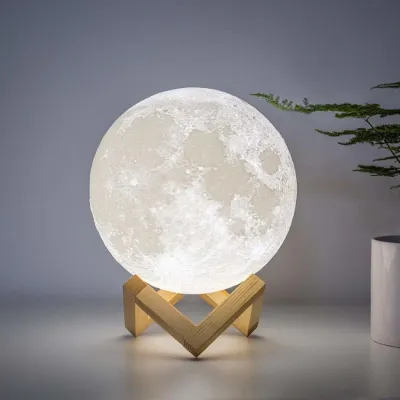
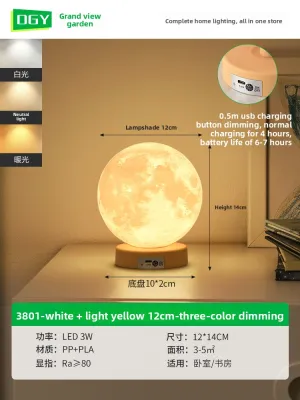
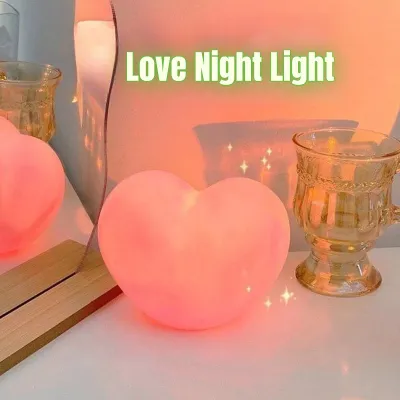
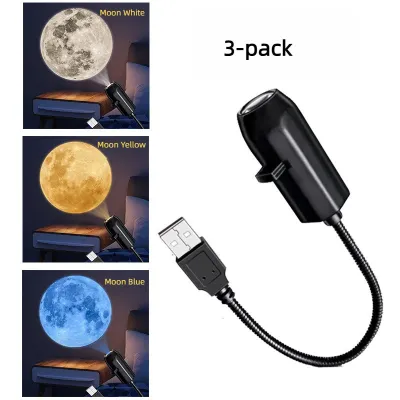
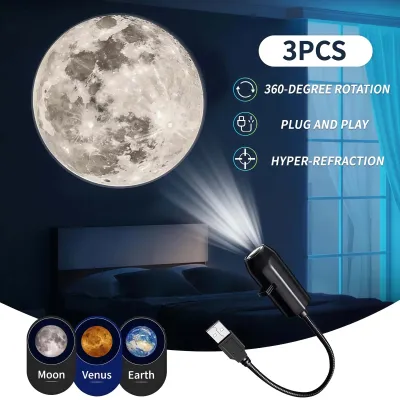
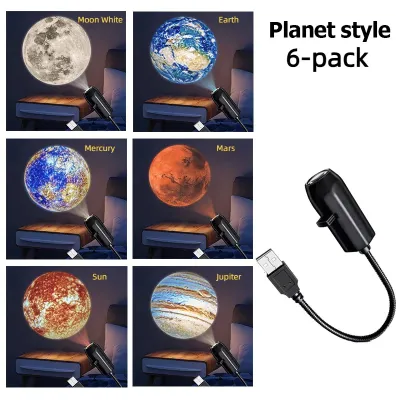
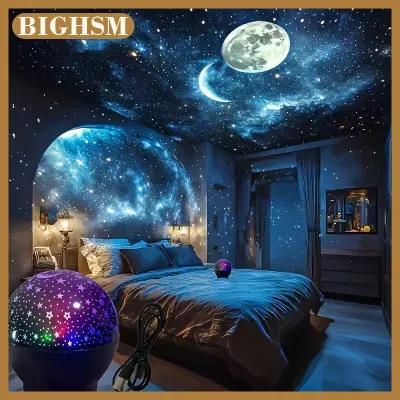
Prices are valid at publication and may change. Please refer to the product page for the latest price.
Brightness levels determine whether your moon lamp serves as a functional reading light or a subtle sleep aid. Look for specifications detailing the lumen output or wattage; a low-lumen output is ideal for a gentle, sleep-friendly glow that will not disrupt your circadian rhythm. To get the most versatility, prioritize models with adjustable brightness settings. Touch-sensitive sensors or step-less dimming dials allow you to transition seamlessly from a brighter setting for evening wind-downs to a faint, comforting whisper of light for overnight use.
Material Quality and 3D Surface Texture
The visual magic of a moon lamp relies heavily on its physical construction. Most affordable moon lamps are crafted from plastics like Polyvinyl Chloride (PVC) or Polylactic Acid (PLA), an eco-friendly thermoplastic derived from renewable resources. PLA is highly favored for its rigidity and ability to hold fine details, though it can be sensitive to high temperatures. When shopping, verify the material’s heat resistance and check for any reports of chemical odors, especially if the lamp will be placed in a poorly ventilated bedroom.

The realistic craters, ridges, and maria of the lunar landscape are achieved through 3D printing technology. High-resolution prints feature thinner layer lines, resulting in a smoother gradient and more realistic shadow patterns when illuminated. Some premium models feature hand-painted details to enhance the visual depth even when the lamp is switched off. Because these lamps are often handled, durability is key. A sturdy shell prevents cracking if the lamp is accidentally knocked off a bedside table, while checking the manufacturer’s guidelines regarding continuous operation limits ensures the material can withstand the mild warmth generated by the internal light source over several hours.
Color Temperature and Lighting Modes
Color temperature plays a vital role in setting the mood of your room and preparing your body for rest. Measured in Kelvin (K), color temperature dictates how warm or cool the light appears. For a bedroom wind-down routine, look for warm white options ranging between 2700K and 3000K. This soft, amber-toned light mimics the natural sunset, helping to signal to your brain that it is time to sleep, which is particularly beneficial after a long day in a bustling city environment.
Many moon lamps offer dual-color or multi-color modes, allowing you to switch between warm white, cool white, and sometimes a neutral daylight setting. Cool white light (around 5000K to 6000K) can be useful during the early evening when you need clearer visibility for tasks, but it should be avoided right before sleep due to its high blue-light content. If you want to use the lamp as a decorative accent in a living room, consider models equipped with multi-color RGB modes. These allow you to cycle through a spectrum of colors, from deep blues to vibrant purples, often controlled via a remote.
Size, Base Design, and Spatial Placement
Before purchasing a moon lamp, measure the physical space where you plan to display it. These lamps come in various diameters, typically ranging from small, palm-sized spheres to large, statement-making globes. A small lamp is perfect for a crowded nightstand or a compact study desk, while a larger model can serve as a striking centerpiece on a living room console. Keep in mind that larger spheres require more stable support and cast a wider glow.
The base design is crucial for both stability and aesthetic harmony. Common options include minimalist wooden stands, sleek metal brackets, and even magnetic levitation bases. Wooden stands offer a warm, organic look that complements tropical or Scandinavian interior designs, while metal brackets provide a modern, industrial feel. Ensure the base has a wide enough footprint to prevent the spherical lamp from rolling off the surface, especially in homes with pets or active children. Additionally, consider the clearance required for power cords and connectors to avoid straining the port in compact condo spaces.
Control Interfaces and Smart Features
How you interact with your moon lamp affects your daily convenience. The simplest models feature a single touch-sensitive metal ring at the charging port, which allows you to turn the lamp on, change colors, and adjust brightness with sequential taps or long presses. While elegant and seamless, this interface can sometimes be finicky if your hands are damp or if you are trying to operate the lamp in complete darkness.
Physical remote controls offer a more convenient alternative, allowing you to adjust settings from across the room or without sitting up in bed. When choosing a remote-controlled model, check the line-of-sight requirements and the wireless range. Most basic remotes use infrared technology, which requires a clear path between the remote and the lamp’s sensor. For those building a connected home, smart moon lamps offer integration with mobile apps or voice assistants, allowing you to set automated schedules or dim the lamp using simple voice commands.
Frequently Asked Questions (FAQ)
Are moon lamp night lights safe to leave on all night?
Yes, most modern moon lamps are highly safe for overnight use because they utilize low-voltage LED light sources rather than traditional incandescent bulbs. LEDs generate very little heat, minimizing the risk of the lamp body becoming hot to the touch or warping the plastic shell. However, you should always check the manufacturer’s instructions for any specific continuous runtime recommendations. To maintain safety, ensure the lamp is placed on a stable, non-flammable surface with adequate ventilation, and keep it clear of loose bedding, curtains, or other fabrics that could block airflow around the base and power adapter.
How do I clean a 3D-printed moon lamp without damaging the texture?
To clean the intricate, textured surface of a 3D-printed moon lamp, always isolate the power by unplugging the lamp from the wall outlet before cleaning to prevent electrical hazards. Use a dry, soft-bristle brush, such as a clean makeup brush or a soft paintbrush, to gently sweep dust out of the printed ridges and craters. A dry microfiber cloth can also be used for flat areas. Avoid using liquid cleaners, water, or harsh chemical solvents, as moisture can seep into the micro-grooves of the 3D print and potentially damage the internal electronics or degrade the material over time. Never use abrasive sponges or scrubbing pads, which can scratch the delicate plastic surface or strip away any hand-painted details.

Community discussion
Share your experience or ask a question. Comments are reviewed before publication.