
Choosing the right dining ceiling light is essential for balancing practical illumination with a warm, inviting atmosphere. Unlike kitchens where high-intensity task lighting dominates, the dining room is a gathering space where meals are shared and conversations linger. Recessed panel lights offer a sleek, modern alternative to traditional bulky fixtures, but finding the right balance of brightness, color warmth, and visual comfort requires careful planning. By understanding how these flush-mounted fixtures interact with your ceiling architecture and your dining table’s layout, you can transform your dining area into a beautifully lit space that enhances both your food and your overall home experience.
Understanding Your Dining Room's Lighting Needs
Dining spaces demand a unique lighting strategy that sets them apart from high-traffic utility areas. In hallways or bathrooms, the primary goal is uniform, high-visibility illumination to ensure safety and ease of movement. In contrast, a dining room requires a layered approach that blends soft ambient illumination with focused task lighting centered on the dining table. This combination ensures that while the entire room feels open and visible, the focal point remains on the food, the table settings, and the faces of your guests.
To establish a baseline for your dining ceiling light selection, start by evaluating the natural light your dining room receives during the day. A room with large windows may require less daytime supplemental lighting but will still need a robust artificial setup for evening meals. Ceiling height is another critical factor; high ceilings allow for wider light dispersion but may require higher wattage or narrower beam angles to project sufficient light down to the table level. Conversely, lower ceilings benefit from ultra-slim panel designs that sit flush without making the room feel cramped or imposing.
Products mentioned in this guide
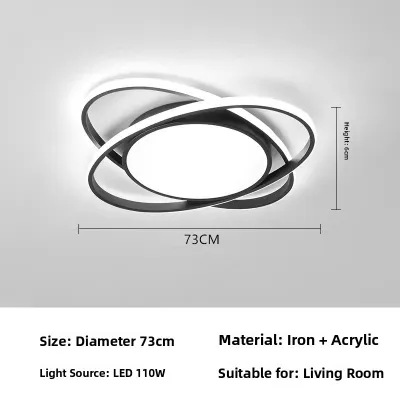
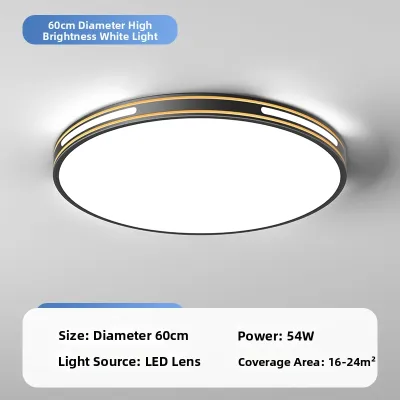
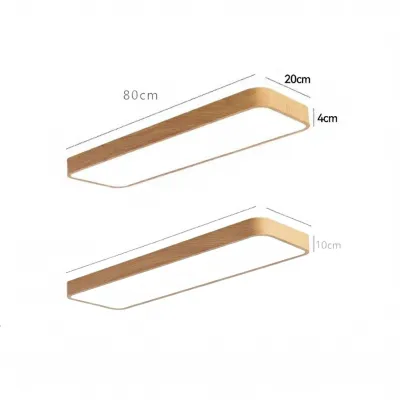
Prices are valid at publication and may change. Please refer to the product page for the latest price.
Your existing interior decor style should also guide your selection. While minimalist and modern dining rooms naturally pair with the clean lines of recessed panels, transitional or classic spaces can also benefit from them when used as supportive ambient lighting. In these traditional setups, recessed panels can work in tandem with a central decorative chandelier, providing a subtle fill light that eliminates harsh shadows without competing visually with your statement fixture.
Key Specifications for Your Dining Ceiling Light
Selecting the ideal dining ceiling light requires looking beyond the physical design of the fixture to examine its technical specifications. The optical performance of a recessed panel determines not only how well you can see but also how comfortable the environment feels during extended meals. Paying close attention to color temperature, color rendering, and beam distribution will prevent common lighting mistakes that can make a dining room feel cold, clinical, or overly bright.

Color Temperature and Ambiance
Color temperature, measured in Kelvins (K), dictates the perceived warmth or coolness of the light emitted by your fixtures. For a dining room, creating a cozy, relaxing, and inviting environment is paramount, which is why warm white light ranging from 2700K to 3000K is highly recommended. This lower Kelvin range mimics the gentle glow of candlelight or traditional incandescent bulbs, which naturally signals the body to relax and enhances the cozy atmosphere of evening meals.
Neutral white light, typically around 4000K, has a clean, energetic quality that is best suited for multi-purpose dining spaces. If your dining table doubles as a daytime workspace, homework station, or crafting area, a neutral white panel can provide the focus and clarity needed for these tasks. Some homeowners with ultra-modern, minimalist interior designs also prefer 4000K to highlight crisp white walls and metallic accents, though it should be paired with dimming capabilities to soften the space during dinner.
Avoid excessively high color temperatures, such as cool white or daylight options ranging from 5000K to 6500K, in a residential dining setting. These high-Kelvin lights can make your dining room feel clinical, sterile, and unappealing. Furthermore, cool blue-toned light suppresses melatonin production and can make fresh food look unappetizing by casting a dull, greyish hue over warm-toned dishes.
Color Rendering Index (CRI) for Food
The Color Rendering Index, or CRI, is a quantitative measure of a light source’s ability to reveal the colors of various objects faithfully in comparison with a natural light source. In a dining room, CRI is of utmost importance because it directly affects how appetizing and visually appealing your meals appear. High-CRI lighting brings out the rich reds of grilled meats, the vibrant greens of fresh salads, and the deep, complex tones of red wines, making the dining experience far more sensory and enjoyable.
When shopping for a dining ceiling light, look for recessed panels that offer a CRI of 80 or higher, with a CRI of 90 or above being the gold standard for dining areas. Fixtures with low CRI values (under 80) tend to dull colors, making fresh ingredients look washed out, flat, or artificially colored. This is particularly noticeable with warm food tones, which can lose their rich, savory appearance under poor-quality light sources.
To verify the color rendering quality of a recessed panel light, locate the CRI or Ra value on the product packaging, specification sheet, or manufacturer’s website. Reliable manufacturers will clearly print this value alongside other key metrics like wattage and lumens. If a product does not list its CRI, it is best to assume it is a lower-grade utility light and continue searching for a certified high-CRI fixture.
Glare Control and Beam Angles
Visual comfort is a critical yet often overlooked aspect of dining room lighting design. Because diners spend extended periods sitting down and looking across the table, poorly positioned or unshielded light sources can cause significant eye strain and discomfort. Choosing recessed panel lights with advanced anti-glare designs or a low Unified Glare Rating (UGR) helps mitigate this issue by recessing the light source deeper into the fixture or using frosted diffusers to soften the output.
The beam angle of your recessed panel light dictates how the light spreads across your dining table and the surrounding space. Wide beam angles, typically 100 degrees or more, disperse light broadly across the ceiling and walls, providing an even layer of general ambient fill light that softens shadows throughout the room. This is ideal for ensuring the entire dining area feels bright, open, and cohesive.
In contrast, narrower beam angles (between 30 and 60 degrees) focus the light downward in a more concentrated cone. Utilizing narrower beams directly above the dining table allows you to create focused, dramatic pools of light that highlight your table setting and centerpieces. Combining a few narrow-beam spotlights over the table with wide-beam recessed panels around the perimeter of the room creates a beautifully balanced, layered lighting scheme.
Sizing, Layout, and Ceiling Constraints
Determining the physical size and placement of your recessed panel lights requires careful calculation to ensure the layout matches your dining table’s dimensions. For a standard rectangular dining table, a linear layout of two to four small-to-medium recessed panels (typically 3 to 4 inches in diameter) aligned along the center axis of the table provides excellent coverage. If you have a round or square dining table, a single larger central panel or a circular arrangement of three smaller fixtures can mirror the table’s shape beautifully.
Ceiling height and cavity depth are major physical constraints that dictate which type of recessed panel you can install. Standard recessed panels require several inches of clearance behind the ceiling board to accommodate the housing and heat sink. If your ceiling cavity is shallow or blocked by air conditioning ducts or structural beams, ultra-slim recessed LED panels are an excellent alternative, as they often require less than an inch of vertical clearance.
Heat dissipation is another critical factor, particularly in warm and humid tropical climates like the Philippines. LED drivers and chips generate heat that must escape to prevent premature failure of the fixture. When installing recessed panels, ensure there is adequate airflow within the ceiling cavity, and always verify whether the fixture is rated for contact with insulation (IC-rated) or requires a minimum clearance from building materials to prevent heat buildup.
Before purchasing, verify that your ceiling material is compatible with the panel’s mounting mechanism. Most residential gypsum board or plasterboard ceilings are ideal for spring-clip mounting, where the fixture is held securely in place by tension arms. If you have an aluminum grid or suspended T-bar ceiling, you will need to select panels designed specifically to drop into the grid structure.
To prevent harsh shadows on diners’ faces, avoid placing recessed fixtures directly above the seating positions. Instead, position the lights slightly forward over the table surface or use wider diffusers to soften the light. Spacing the fixtures roughly 1.5 to 2 times the distance from the ceiling to the tabletop will help you achieve a seamless, overlapping light pattern that eliminates dark spots.
Dimming and Smart Controls for Dining Scenes
A dining room is a multi-functional space that transitions through various moods and activities throughout the day. Dimmable recessed panel lights provide the flexibility needed to adapt your dining ceiling light to these changing scenes. A bright, fully illuminated room is ideal for a busy family breakfast or a clean-up session, while a dimmed, low-light setting creates an intimate and sophisticated atmosphere for evening dinner parties or late-night conversations.
To achieve smooth, flicker-free dimming, you must verify compatibility between the LED driver included with your recessed panel and the dimmer switch installed on your wall. LED fixtures do not dim in the same manner as traditional incandescent bulbs; they require drivers that are specifically engineered to interpret dimming signals. Common dimming methods include Phase-cut (TRIAC) dimming, which is standard for residential retrofits, and 0-10V or digital dimming, which is often used in commercial or advanced smart home systems.
Pairing incompatible components can lead to frustrating performance issues, such as rapid flickering, audible buzzing, or a limited dimming range where the light suddenly cuts out. Before purchasing your fixtures and dimmers, consult the manufacturer’s compatibility matrix or product specifications to ensure they are designed to work together. If you are integrating your dining ceiling light into a smart home system, look for smart-enabled LED drivers that support wireless protocols like Zigbee, Wi-Fi, or Bluetooth.
Installation Safety and Electrical Requirements
Working with residential electrical systems requires strict adherence to safety protocols to prevent electrical shock, short circuits, or fire hazards. In the Philippines, the standard electrical supply is 220V at 60Hz. Before purchasing any recessed panel light, verify that the fixture’s internal LED driver is rated for this specific voltage and frequency to avoid damaging the unit or creating an electrical hazard.
Prior to inspecting, installing, or replacing any ceiling fixture, always turn off the power at the main circuit breaker panel. Do not rely solely on the wall switch to isolate the circuit, as some wiring configurations may still leave live wires active at the ceiling junction box. Use a reliable non-contact voltage tester to confirm that the wires are completely de-energized before touching them.
While replacing an existing plug-and-play recessed light can often be a straightforward task, structural ceiling modifications and new electrical wiring require professional expertise. If your installation involves cutting new holes in your ceiling, running new electrical lines from the main distribution board, or installing heavy or oversized panels, you must hire a licensed electrician. Professional installation ensures compliance with the Philippine Electrical Code (PEC) and protects your home’s warranty and safety.
Finally, always look for recognized safety certification marks on the product packaging or the fixture itself. In the local market, look for the Import Commodity Clearance (ICC) sticker or the Philippine Standard (PS) safety mark. These certifications indicate that the lighting product has undergone rigorous safety and performance testing, giving you peace of mind that your new dining ceiling light is safe for long-term use in your home.
Frequently Asked Questions (FAQ)
Can I use standard office LED panel lights in my dining room?
Standard office LED panel lights are generally not recommended for residential dining rooms. Office panels are engineered for high-productivity environments, meaning they typically feature cool color temperatures (4000K to 6500K) and high glare outputs designed to keep workers alert. These characteristics will make a dining room feel cold, clinical, and uninviting. Additionally, commercial panels often have lower Color Rendering Index (CRI) ratings, which will make your food look dull and unappetizing. For a dining space, it is best to choose residential-grade panels that offer high CRI (90+) and warm color temperatures (2700K to 3000K).
How many recessed panel lights do I need over a dining table?
The ideal number of recessed panel lights depends on the dimensions of your dining table, the ceiling height, and the lumen output of the fixtures. As a general guide for a standard 6-foot rectangular table under an 8-to-9-foot ceiling, two to three 9-watt to 12-watt recessed panels spaced evenly along the center line of the table will provide sufficient ambient and task light. To achieve a more dynamic and layered lighting design, consider supplementing these recessed panels with a central decorative pendant light or adjustable accent spotlights that draw focus to the center of the table.
Community discussion
Share your experience or ask a question. Comments are reviewed before publication.