
To reduce eye strain during long reading sessions, you should look for a study table lamp that offers adjustable brightness, customizable color temperature, flicker-free performance, and a highly adjustable physical design. Setting up an ergonomic study space is crucial for students and remote professionals, especially when navigating long hours of work in tropical conditions where ambient light changes rapidly. Choosing the right lamp for study table use is not merely a matter of style; it directly impacts your visual stamina, cognitive focus, and long-term eye health.
Why Proper Lighting Matters for Extended Study and Work
When you spend hours reading printed text or looking at a screen, your eyes must constantly adjust to the light levels in your immediate environment. Insufficient, uneven, or excessively harsh illumination forces the tiny ciliary muscles inside your eyes to work overtime to maintain focus. Over time, this continuous physical strain leads to common symptoms of asthenopia, including dry eyes, blurred vision, tension headaches, and physical fatigue.
Another major contributor to eye strain is high contrast between your reading material and the surrounding room. Working on a brightly lit laptop screen or reading a stark white textbook page in an otherwise dark room forces your pupils to dilate and constrict rapidly whenever you look away. This constant adjustment quickly exhausts your visual system, making it difficult to maintain concentration during late-night sessions.
Products mentioned in this guide
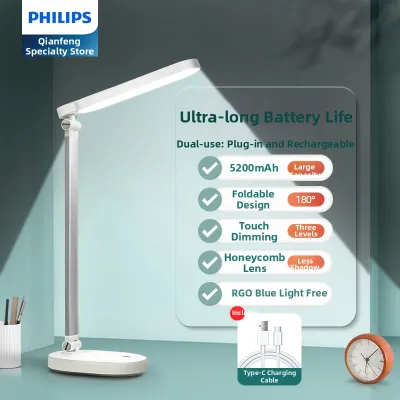
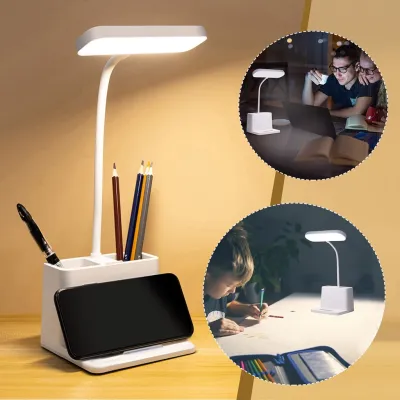
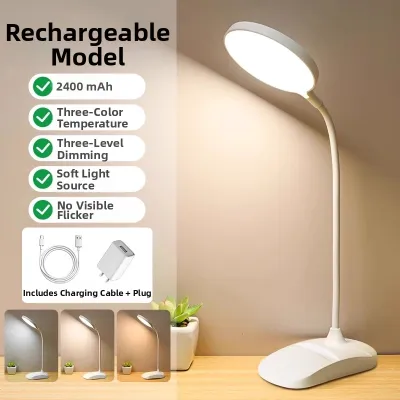
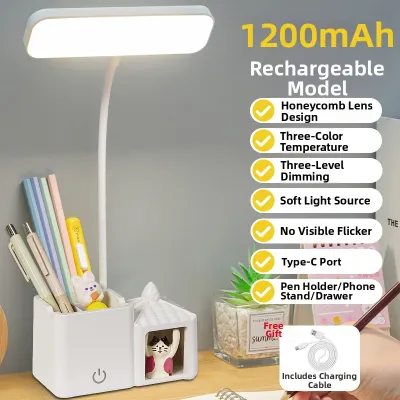

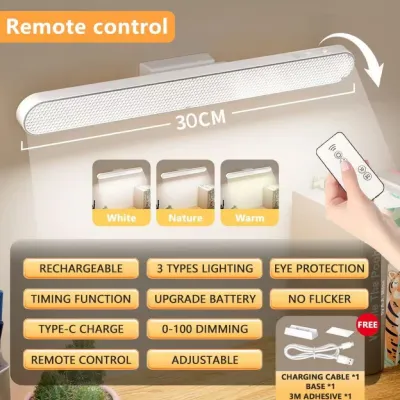
Prices are valid at publication and may change. Please refer to the product page for the latest price.
A dedicated task lamp solves this issue by isolating your primary work area with a consistent, controlled pool of light. Instead of over-illuminating the entire room with a harsh overhead fixture, a task lamp provides localized visual comfort. This targeted approach minimizes the contrast between your desk and your immediate surroundings, creating a balanced visual environment that supports sustained mental focus.
Key Features to Look for in an Eye-Care Desk Lamp
Standard desk lamps often rely on basic on-and-off toggle switches and unshielded bulbs that emit harsh, uneven light. To protect your vision during marathon study sessions, you must transition to specialized eye-care lamps. These modern fixtures incorporate advanced optical designs, diffusers, and electronic controllers engineered specifically to minimize the physical stressors that cause eye fatigue.

Brightness and Illuminance Control
Understanding how light is measured is essential when evaluating a lamp for study table use. Lumens represent the total amount of light emitted by the light source in all directions, whereas lux measures the intensity of light that actually hits a specific surface. A lamp with a high lumen rating is not necessarily ideal for studying if the light scatters inefficiently or creates blinding hot spots on your desk.
When reviewing product specifications, look for details on illuminance grades and light distribution uniformity. A high-quality eye-care lamp should distribute light evenly across your entire working surface rather than concentrating it in a single, intense spot. This uniform distribution ensures that your eyes do not have to adjust to different brightness levels as you move your gaze from a textbook to a notebook.
Adjustability is equally critical, which makes dimming capabilities a non-negotiable feature for long-term comfort. Look for lamps that offer stepless dimming or multiple pre-set brightness levels, allowing you to adapt the light output to your changing environment. During a bright afternoon, a low-intensity fill light may be sufficient to soften shadows, while a dark night will require a higher, more focused setting that still avoids harsh contrast. Always verify the dimming method—such as a touch sensor, physical dial, or smart app—to ensure it fits your workflow.
Color Temperature Adjustability
Color temperature, measured in Kelvins (K), describes the warmth or coolness of the emitted light. Warmer light, typically ranging from 2700K to 3000K, has a soft yellow hue that mimics traditional incandescent bulbs. Cooler light, ranging from 5000K to 6500K, has a crisp, blue-white appearance that closely resembles natural daylight.
These different color temperatures have distinct psychological and physiological effects on the human body. Warmer tones are naturally relaxing and cause less strain on the eyes in low-light environments, making them ideal for casual reading or winding down at the end of the day. Conversely, cooler tones promote alertness, enhance contrast, and make small printed text much easier to read, which is highly beneficial during intense, analytical study sessions.
Choosing a lamp with adjustable color temperature settings allows you to customize your lighting to match your specific task and the time of day. You can utilize a crisp, cool white light during morning study sessions to boost alertness and switch to a soft, warm white light in the evening to prepare your mind for sleep. Always check the manufacturer’s product label or specification sheet to verify that the lamp covers a versatile range, ideally from 3000K to at least 5500K.
Flicker-Free and Anti-Glare Design
Many low-cost LED lamps exhibit high-frequency flicker due to cheap internal drivers and power supplies. Although this flicker is usually invisible to the naked eye, your pupils still contract and dilate in response to the rapid fluctuations in light output. This constant, subconscious movement strains the eye muscles and nervous system, leading to unexplained headaches and rapid eye fatigue.
To protect your health, verify that the manufacturer explicitly guarantees “flicker-free” performance. Look for recognized electrical certifications, testing standards, or compliance labels on the product packaging. Investing in a lamp with a high-quality electronic driver ensures a stable, continuous current to the LEDs, eliminating the invisible pulse that tires your eyes.
Physical glare is another major source of visual discomfort, occurring when direct light reflects off glossy book pages, laptop screens, or polished desk surfaces. To combat this, select a lamp equipped with physical anti-glare features such as frosted diffusers, honeycomb lenses, or asymmetric optical designs. Asymmetric light distribution is particularly effective, as it directs light across your desk at an angle, illuminating your workspace while keeping the light source completely out of your direct line of sight.
Adjustability and Ergonomic Placement for Different Tasks
The physical design of your study lamp plays a vital role in maintaining an ergonomic and comfortable workspace. Look for models featuring flexible goosenecks, adjustable multi-joint arms, or swivel heads. These mechanical features allow you to direct the light precisely where you need it, adapting to your posture, desk layout, and specific tasks without requiring you to move the entire heavy base.
Proper ergonomic placement of the lamp is critical to preventing distracting shadows and direct glare. Position the lamp base on the opposite side of your dominant writing hand—for instance, on the left side of the desk if you are right-handed—to ensure your hand does not cast shadows across your notebook as you write. Additionally, adjust the height of the lamp head so that the light source is positioned below your eye level, preventing the bare LEDs or bulb from shining directly into your eyes.
Stability is another practical factor to consider, especially when making frequent manual adjustments to the lamp’s position. A heavy, weighted base ensures the lamp remains stable and does not tip over during use. If your study table has limited surface area or is prone to wobbling, a clamp-on model or a monitor-mounted light bar offers an excellent, secure alternative that frees up valuable desk space while maintaining precise positioning.
Matching the Lamp to Your Specific Study Environment
To maximize the benefits of your study lamp, you must integrate it thoughtfully into your existing room setup. A common mistake is relying solely on a desk lamp in an otherwise pitch-black room, which creates high contrast in your peripheral vision. Always balance your task lighting with soft ambient room lighting, such as a dimmed ceiling light or a secondary floor lamp, to maintain a comfortable visual field.
When purchasing electrical appliances in the Philippines, always verify local compatibility and safety standards. The standard residential electrical system in the Philippines operates at 220V with a frequency of 60Hz. Ensure the lamp’s adapter, power supply, or internal driver is rated for this voltage to prevent overheating, premature failure, or electrical hazards. Look for local safety certifications, such as the Philippine Standard (PS) quality mark or the Import Commodity Clearance (ICC) sticker, to guarantee the product has passed rigorous national safety tests.
Finally, consider the physical constraints of your study table and the local environment. In warm, humid tropical climates, electronic components like LED drivers can degrade faster if they lack proper heat dissipation; look for lamps with aluminum or high-quality heat-dissipating shells. Measure your available desk footprint and check the mounting interface (such as clamp width or base dimensions) before buying to decide whether a compact base, a slim profile, or a space-saving clamp-on model is the most practical choice for your specific study environment.
Frequently Asked Questions (FAQ)
Finding the perfect lighting setup often involves balancing technical specifications with daily study habits. These common questions address practical concerns about choosing and using a study lamp effectively.
Can a regular room light replace a dedicated study lamp?
No, a standard overhead room light cannot adequately replace a dedicated study lamp for close-up tasks. Ceiling fixtures are designed to provide general ambient illumination, which is typically too weak and diffuse to highlight the fine details of printed text or writing. Furthermore, because overhead lights are positioned directly above or behind you, they frequently cast shadows from your head, shoulders, and hands onto your workspace. A dedicated task lamp provides focused, adjustable, shadow-free illumination that can be positioned to suit your specific posture and task.
Is blue light from desk lamps harmful during night reading?
Cooler color temperatures (above 5000K) emit a higher proportion of blue light, which mimics natural daylight and promotes daytime alertness. However, exposure to blue light late at night can suppress the body’s natural production of melatonin, a hormone essential for regulating sleep cycles. This disruption can make it difficult to fall asleep after a late-night study session. To avoid this, choose a lamp with adjustable color temperature settings and switch to a warm, low-intensity light (around 3000K or lower) during evening reading sessions.
Community discussion
Share your experience or ask a question. Comments are reviewed before publication.