
Finding the right clip solar light for your outdoor space in the Philippines requires balancing convenience with durability. These versatile fixtures offer a drill-free way to illuminate dark pathways, garden fences, balcony railings, and emergency areas. However, the local climate—characterized by intense tropical heat, high humidity, and sudden torrential downpours—demands careful selection. To get the most value for your money, you must look beyond basic aesthetics and evaluate the technical specifications, physical build, and mounting security of each unit.
By understanding what makes a solar light resilient, you can avoid the common pitfall of buying cheap fixtures that fail after the first heavy rain. This guide will walk you through the essential factors to consider, from battery capacities and weatherproofing standards to clip mechanisms and optimal placement strategies.
Key Specifications to Check Before Buying
When browsing online marketplaces or local home improvement stores, the product description is your first line of defense against a poor purchase. The most critical specification to check is the lumen output, which measures the total amount of visible light emitted by the source. For gentle accent lighting along a garden path or balcony railing, a rating of 50 to 100 lumens is generally sufficient. If you require functional illumination for security, stairways, or outdoor work areas, look for units that deliver 200 to 500 lumens.
Products mentioned in this guide
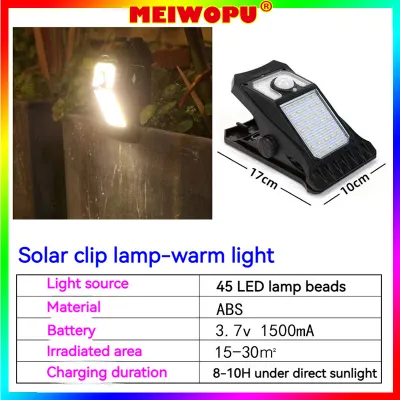
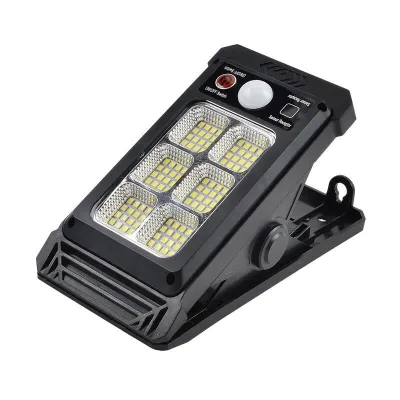
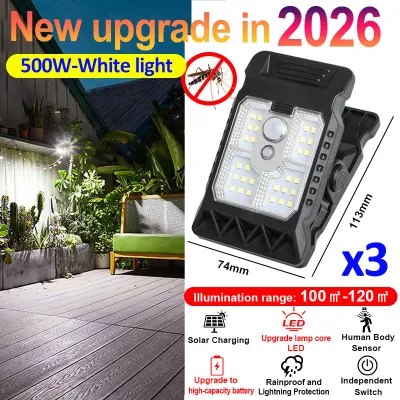
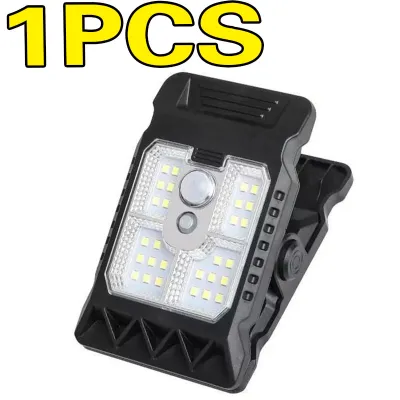
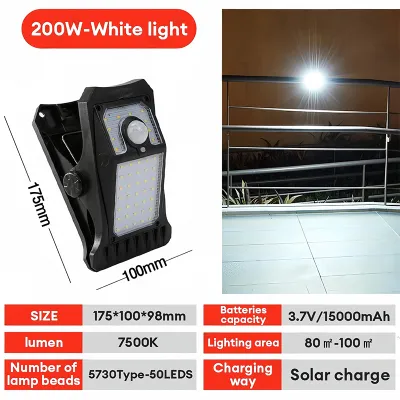
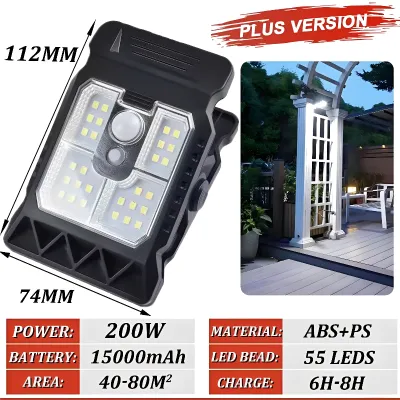
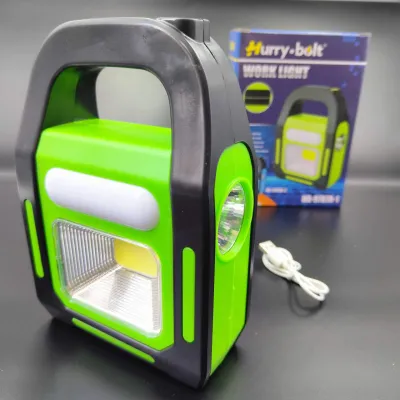
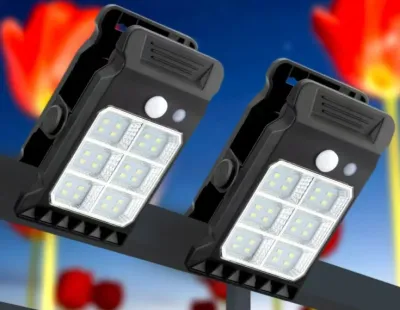
Prices are valid at publication and may change. Please refer to the product page for the latest price.
Alongside lumens, pay close attention to the LED count and configuration. While a higher number of LEDs can distribute light more evenly across a wider angle, it also increases power consumption. This is why matching the light source with an adequate battery capacity is vital for reliable overnight performance.
Battery capacity is measured in milliampere-hours (mAh) and dictates how long the light can run after a full day of charging. For outdoor clip lights, lithium-ion (Li-ion) or lithium iron phosphate (LiFePO4) batteries are preferred due to their superior energy density and longer lifespan compared to older nickel-metal hydride (NiMH) alternatives. A reliable outdoor light should feature a battery capacity of at least 1,200mAh to 2,200mAh. This range typically provides enough stored energy to power the LEDs for 8 to 12 hours, ensuring the light remains active until dawn.
The solar panel itself is the engine of the fixture, and its efficiency determines how quickly the battery charges. Monocrystalline solar panels are highly recommended for the Philippine climate because they offer the highest conversion efficiency, allowing them to generate power even on overcast or rainy days. Polycrystalline panels are more affordable but require longer exposure to direct, unobstructed sunlight to achieve a full charge. Check the product specifications for the estimated charging time, which should ideally be between 6 to 8 hours of direct sunlight.
Finally, evaluate the retail price in Philippine Pesos (₱) against these technical specifications to determine the overall value. Extremely cheap options priced under ₱200 often compromise on battery capacity and panel quality, leading to dim light and short runtimes. Mid-range options priced between ₱500 and ₱1,200 generally offer a much better balance of high-capacity lithium batteries, efficient monocrystalline panels, and durable housing materials that can withstand years of outdoor exposure.
Evaluating the Clip Mechanism and Build Quality
The physical design of the clip is just as important as the electrical components inside the light. A weak or poorly designed clip can cause the fixture to sag, slip, or fall off entirely during a sudden gust of wind. When evaluating a clip mechanism, look for a wide jaw opening of at least 2 to 3 inches. This ensures the light can securely clamp onto a variety of surfaces, such as thick wooden fence posts, metal balcony railings, or sturdy tree branches.

Grip strength is another critical factor that prevents the light from shifting over time. High-quality clip lights utilize heavy-duty tension springs made of stainless steel or rust-resistant alloys. To protect your property, ensure the inner jaws of the clip are lined with thick, textured silicone or rubberized padding. This padding serves a dual purpose: it prevents the clamp from scratching painted metal or finished wood surfaces, and it creates high friction that keeps the light firmly in place on smooth or vertical poles.
The materials used in the main housing of the light must be selected with the local climate in mind. The intense tropical sun in the Philippines can quickly degrade cheap plastics, making them brittle and prone to cracking. Look for fixtures constructed from high-grade Acrylonitrile Butadiene Styrene (ABS) plastic or polycarbonate that features UV-resistant coatings. If the light incorporates metal parts, verify that they are treated with rust-resistant finishes to prevent corrosion from high humidity and salty coastal air.
Water and dust resistance are quantified by the Ingress Protection (IP) rating, which is a crucial metric for any outdoor electrical device. For general outdoor use where the light is partially sheltered under an eave or awning, an IP65 rating is the standard requirement, indicating protection against dust and low-pressure water jets. For lights that will be completely exposed to heavy monsoon rains and tropical storms, look for an IP67 rating, which ensures the internal electronics remain completely dry even during temporary submersion. Avoid IP44-rated lights for fully exposed areas, as they are only splash-proof and are highly susceptible to water ingress during heavy downpours.
Matching Light Modes to Your Outdoor Needs
Different outdoor spaces require different lighting behaviors, so it is important to choose a clip light that offers customizable operating modes. Constant-on mode keeps the light illuminated at a steady brightness level from dusk until dawn or until the battery drains. This mode is perfect for creating a warm, continuous ambiance on patios, balconies, or outdoor dining areas during evening gatherings. However, because it draws continuous power, it may struggle to last the entire night during the rainy season when daytime charging is limited.
To conserve energy, many modern clip solar lights feature motion-sensor modes utilizing Passive Infrared (PIR) sensors. In this configuration, the light remains off or at a very dim standby level (around 10% brightness) until it detects movement within a specific range, usually 3 to 5 meters. Once motion is detected, the light switches to 100% brightness for 15 to 30 seconds before dimming down again. This mode is highly efficient, provides excellent security around entryways, and ensures the battery lasts through multiple consecutive cloudy days.
Color temperature is another subjective preference that significantly impacts the look and feel of your outdoor space. Measured in Kelvin (K), color temperature ranges from warm yellow to cool blue-white. Warm white light (2700K to 3000K) is ideal for decorative and recreational areas, as it creates a cozy, relaxing atmosphere that mimics traditional incandescent bulbs. Cool white or daylight (5000K to 6500K) provides high-contrast, crisp illumination that is far better suited for task lighting, security paths, and stairwells where maximum visibility is required.
To maximize the utility of these light modes, look for fixtures that feature an adjustable light head and an independent swivel joint for the solar panel. This design allows you to clamp the base securely to a vertical post while angling the solar panel upward toward the sky and tilting the light head downward toward the ground. Without this adjustability, you may be forced to compromise either the charging efficiency of the panel or the direction of the light beam.
Installation and Placement for Maximum Efficiency
Proper installation is key to ensuring your clip solar lights perform at their peak. The most important rule of solar lighting is to position the solar panel in an area that receives direct, unobstructed sunlight for the majority of the day. Avoid placing the lights directly under deep roof eaves, dense tree canopies, or in the shadow of adjacent walls. Even a small amount of shade covering a portion of the solar panel can drastically reduce its power output, preventing the battery from reaching a full charge.
Before leaving a newly installed light unattended, always perform a physical stability test on the mounting surface. Ensure the branch, railing, or gutter is structurally sound and can easily support the weight of the fixture without bending or sagging. Give the light a gentle tug to verify that the clip does not slide, rotate, or lose its grip on the surface. If you are mounting the light on a smooth metal pole, wrapping a small piece of rubber tape around the pole before attaching the clip can provide extra grip and prevent slipping.
The Philippines regularly experiences severe weather, including heavy monsoon rains and destructive typhoons. While high-quality clip solar lights are designed to be weather-resistant, they are not immune to the physical forces of extreme winds. The wide surface area of the light head can act like a sail, catching strong winds and ripping the clip off its mount. During active typhoon warnings, the best practice is to take advantage of the clip-on design and temporarily bring the lights indoors to prevent loss or damage.
If you prefer a permanent outdoor installation that you do not have to remove during storms, you must implement secondary securing strategies. Use heavy-duty, UV-resistant plastic zip ties or stainless steel wire tethers to loop through the clip handle and secure it tightly to a structural post or railing. This ensures that even if the clip’s grip fails under extreme wind pressure, the light will remain anchored to the structure rather than falling or being blown away.
Troubleshooting Common Performance Issues
If your clip solar light fails to turn on, dims quickly, or flickers, there are several simple diagnostic steps you can take before assuming the unit is defective. First, ensure the light received a proper initial charge. Many manufacturers ship these devices with completely drained batteries. Before using the light for the first time, turn the power switch to the “off” position and place the unit in direct sunlight for 24 to 48 hours. This initial deep charge helps condition the battery and ensures it can hold its maximum capacity.
Another common cause of poor performance is a dirty solar panel. Over time, dust, pollen, salt residue, and bird droppings can accumulate on the protective glass or plastic cover of the panel. This debris blocks sunlight from reaching the solar cells, significantly reducing charging efficiency. To maintain optimal performance, wipe the solar panel clean at least once a month using a soft, damp microfiber cloth. Avoid using abrasive scrubbing pads or harsh chemical cleaners, as scratches on the panel surface can permanently degrade its light absorption capabilities.
If the light continues to exhibit short runtimes despite receiving plenty of direct sunlight and having a clean panel, the internal rechargeable battery may be reaching the end of its usable life. Most rechargeable lithium batteries degrade after 500 to 1,000 charge cycles, which translates to roughly 1.5 to 3 years of daily use. Check the manufacturer’s instructions to see if the battery compartment is user-accessible. Many models allow you to easily unscrew the casing and replace the old battery with a standard rechargeable cell of the same voltage and chemistry. Always dispose of old batteries responsibly by bringing them to designated electronic waste collection points.
Frequently Asked Questions (FAQ)
Can clip solar lights withstand heavy rain and typhoons?
Standard outdoor clip solar lights with an IP65 or IP67 rating can easily withstand heavy tropical rains and high humidity. However, they are not designed to survive the extreme wind speeds associated with typhoons. The physical force of the wind can dislodge the clip from its mounting surface, leading to falls and severe damage. It is highly recommended to temporarily detach the lights and store them indoors during severe weather alerts, or secure them permanently using heavy-duty zip ties or safety tethers.
How long do the built-in batteries typically last?
The built-in rechargeable lithium batteries in high-quality clip solar lights typically last between 1.5 to 3 years under daily charge and discharge cycles. Over time, the battery’s chemical capacity will naturally degrade, resulting in shorter runtimes at night. If you notice the light only stays on for an hour or two after a full day of sun, it is likely time to replace the internal battery. Choosing models with accessible battery compartments allows you to swap out the old cell and extend the overall lifespan of your fixture.
Community discussion
Share your experience or ask a question. Comments are reviewed before publication.