
Choosing the right LED vine tree lights to create a cozy bedroom ambiance requires balancing technical specifications with your personal aesthetic goals. To transform your bedroom into a relaxing sanctuary, you must select the correct strand length, verify wire flexibility, choose a warm color temperature, and prioritize safe power configurations. By matching these factors to your specific room layout, you can achieve a soft, organic glow that enhances restfulness without cluttering your space.
Understanding Your Bedroom Space and Lighting Goals
Before purchasing any lighting fixtures, assess your bedroom layout and identify where the vine lights will serve the greatest purpose. A common mistake is buying a set of lights without measuring the target area, leading to strands that are either too short to make an impact or too long to manage safely. Take a flexible measuring tape and map out the exact path where you plan to install the lights, whether you are framing a window, draping them over a headboard, or running them vertically down a corner.
Consider the primary function of the vine lights in your overall bedroom design. If you intend to use them as a bedside accent, they should provide just enough illumination for reading or winding down without casting harsh shadows. If they are meant to be a dramatic headboard backdrop, they need to cover the width of your bed frame evenly. For corner decor, the lights should draw the eye upward, making a small bedroom feel taller and more spacious.
Products mentioned in this guide
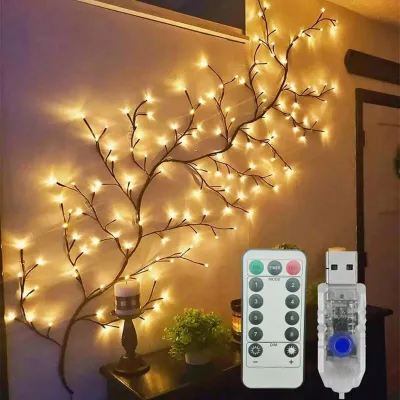
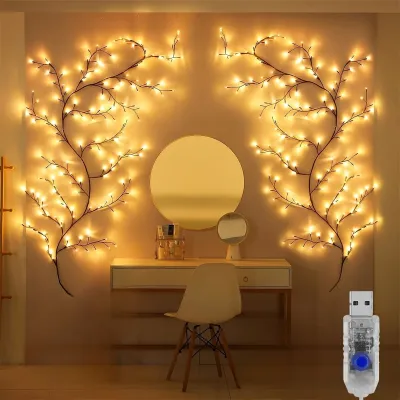

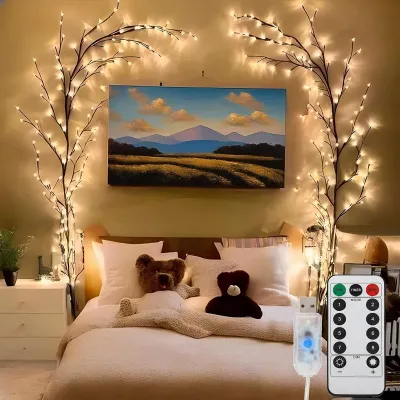
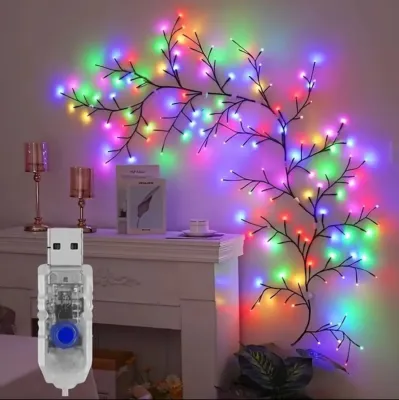
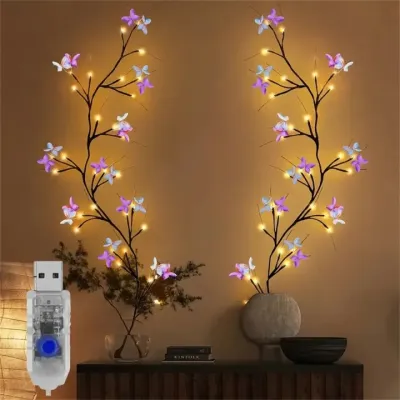
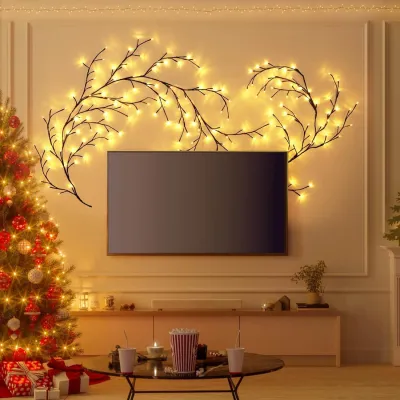
Prices are valid at publication and may change. Please refer to the product page for the latest price.
You must also evaluate the existing ambient light in your room. Bedrooms with bright streetlights filtering through the windows or those with highly reflective white walls require less supplemental glow than darker, wood-paneled rooms. Understanding how the vine lights will interact with your main ceiling fixtures, bedside lamps, and natural light ensures that the final setup feels balanced and cohesive rather than overwhelming.
Selecting the Right Length and Wire Flexibility
Selecting the correct strand length is crucial for achieving a clean, professional look. If you plan to wrap the vine lights around a post, a bed frame, or a standing mirror, you will need significantly more length than if you were simply draping them in a straight line across a wall. As a general rule, wrapping requires about one and a half to two times the linear length of the object being wrapped. Measure the height and circumference of the object, then calculate the total length needed before browsing online marketplaces or local lighting shops.

The material and flexibility of the wire determine how easily you can shape the vine to mimic natural plant growth. Look for high-quality, bendable wire—often made of coated copper or flexible plastic alloys—that retains its shape once bent. Stiff wires are difficult to manipulate around tight corners and may spring back, pulling adhesive hooks off the wall. Conversely, wires that are too thin can snap under tension or sag over time, ruining the organic, climbing look of the vine.
Power source proximity is another critical factor when planning your layout. Always locate the nearest electrical outlet or USB port before finalizing your installation plan. If the outlet is far from your desired display area, you may need to choose a longer lead wire (the unlit portion of the cord between the plug and the first bulb) or use a safe, low-voltage extension cord. Avoid dangling cords across walkways where they present a tripping hazard or pulling the wire taut, which can damage the internal connections of the vine lights.
Choosing Color Temperature and Brightness for Relaxation
To foster a calming, sleep-friendly environment, prioritize the color temperature of the LEDs. Color temperature is measured in Kelvins (K), and for a cozy bedroom, warm white tones ranging from 2200K to 2700K are highly recommended. These warm hues mimic the soft glow of candlelight or sunset, which helps signal to your brain that it is time to relax. Avoid cool white or daylight options (4000K to 6500K) in the bedroom, as these blue-toned lights can suppress melatonin production and disrupt your natural sleep cycle.
Brightness levels, measured in lumens, should be kept relatively low for ambient bedroom lighting. Look for LED vine tree lights that feature dimmable capabilities or multiple adjustable brightness settings. This flexibility allows you to keep the lights bright enough for evening activities like reading, and then dim them down to a soft, whisper-quiet glow as you prepare for sleep. Adjustable settings also help prevent eye strain, especially when transitioning from a dark room to a lit space.
Be cautious of lights that only offer high-intensity, flashing, or rapid chasing modes. While dynamic patterns can be festive, they are generally too stimulating for a bedroom environment designed for relaxation. Opt for models that feature a “steady on” mode or a very slow, gentle fade. If the lights do have multiple modes, ensure the controller has a memory function so you do not have to cycle through flashing settings every time you turn them on.
Power Options and Safety Considerations
When choosing between battery-operated, USB, or direct plug-in models, weigh convenience against long-term reliability. Battery-operated vine lights offer maximum placement flexibility because you do not need to worry about nearby outlets, making them ideal for rental properties or temporary setups. However, they require frequent battery replacements, which can become costly and less environmentally friendly over time. USB-powered models offer a great middle ground, allowing you to power the lights using a standard wall adapter, a power bank, or even a laptop. Direct plug-in models are the most reliable for daily, long-term use, providing consistent brightness without the worry of fading power.
Safety is paramount when installing electrical fixtures near bedding, curtains, or wooden headboards. Always verify that the LED vine lights operate on low voltage (typically 5V for USB or 12V/24V via an adapter) and have low heat emission. LEDs are inherently cooler than traditional incandescent bulbs, but low-quality manufacturing can still lead to warm spots along the wire. Touch the lights after they have been running for an hour to ensure they remain cool to the touch.
In the Philippines, where tropical humidity and warm temperatures are common, electrical safety is especially important. Look for products that carry recognized safety certifications, such as the Philippine Standard (PS) mark or the Import Commodity Clearance (ICC) sticker, to ensure the electrical components have been tested for safety. Additionally, prioritize models that include built-in timers or remote controls. A timer that automatically shuts the lights off after six hours ensures you do not waste electricity or leave the system running unattended throughout the night.
Step-by-Step Installation and Styling Tips
Installing your LED vine tree lights securely requires careful preparation to avoid damaging your bedroom walls or furniture. Start by thoroughly cleaning the wall or surface where you plan to mount the lights. In humid tropical climates, dust and moisture can quickly cause adhesive hooks to fail. Wipe the area with rubbing alcohol and let it dry completely before applying any adhesive clips or damage-free hooks.
Once the surface is ready, begin shaping the flexible vine branches before you mount them. Lay the vine flat on a clean floor or bed and gently spread out the smaller offshoots to create a full, three-dimensional look. This step mimics the natural, organic growth of a climbing plant. When mounting, start from the power source end and work your way up, securing the main “trunk” of the vine with sturdy clips every few feet, then letting the lighter branches drape naturally.
Always test the layout by plugging the lights in before you finalize their placement. Step back to the opposite side of the room to check the overall balance and light distribution. Look for any dark spots where branches are clumped together or areas where the light is too concentrated. Adjust the individual bendable twigs to fill in gaps, ensuring the glow is evenly dispersed across your wall or headboard for a seamless, professional-looking installation.
Maintenance and Troubleshooting Common Issues
Regular maintenance will extend the lifespan of your LED vine tree lights and keep them looking vibrant. Dust can accumulate quickly on the intricate wire branches, dimming the light output over time. To clean them safely, turn off and unplug the lights completely. Use a dry, soft microfiber cloth or a static duster to gently wipe down the wires and bulbs. Avoid pulling or tugging on the delicate connections, as this can loosen the internal wiring and cause sections of the vine to fail.
If your lights fail to turn on, systematically troubleshoot the power source before assuming the fixture is broken. For battery-operated models, check for battery corrosion or try replacing the batteries with a fresh set. For USB or plug-in models, test the wall adapter with another device to ensure it is functioning correctly, and verify that the USB plug is securely seated in the port.
When it comes time to take down or relocate your lights, proper storage is essential to prevent a tangled mess. Avoid stuffing the vine lights haphazardly into a box. Instead, gently fold the main trunk and wrap the branches loosely around a piece of cardboard or a clean plastic spool. Store them in a cool, dry place away from direct sunlight and high humidity to protect the wire insulation and electronic components from degrading.
Frequently Asked Questions (FAQ)
Can I leave LED vine tree lights on all night?
While high-quality, low-voltage LED vine tree lights emit minimal heat and are generally safe, it is not recommended to leave them running completely unattended all night. Continuous operation can shorten the lifespan of the LEDs and slowly degrade the wire insulation over time. To enjoy a worry-free sleep, utilize a built-in auto-timer function set to turn off after a few hours, and always ensure the wires and bulbs are kept clear of heavy blankets, pillows, or flammable fabrics.
How do I hide the battery pack or power cord?
Concealing the power source is key to maintaining a clean, magical aesthetic in your bedroom. For battery packs, you can use adhesive hook-and-loop strips to mount the pack to the back of your headboard, the underside of a bedside table, or behind a picture frame. If you are using a plug-in or USB model, route the power cord along the baseboard using paintable cord covers, or tuck it neatly behind furniture. You can also place the battery pack or excess cord inside a decorative woven basket or a hollow book on your nightstand to keep it completely out of sight.
Community discussion
Share your experience or ask a question. Comments are reviewed before publication.