
Decorating the exterior of your home is one of the most cherished holiday traditions, especially during the long festive season in the Philippines. Transforming your outdoor space into a warm, welcoming display requires careful planning and the right equipment. Selecting the perfect christmas lights outdoor setup is not just about aesthetics; it is about choosing the correct light styles, lengths, and durability ratings for each unique zone of your property.
Whether you want to highlight a lush garden, trace the sharp lines of your roof, or add a cozy glow to a compact balcony, each area presents distinct environmental challenges. Tropical heat, heavy evening downpours, and high humidity require specific product features to ensure your display remains safe and beautiful throughout the holidays. By matching the right lighting types to your outdoor spaces, you can create a stunning visual impact while avoiding common electrical hazards.
Essential Weather and Safety Checks Before You Buy
Before purchasing any outdoor lighting, you must verify that the products are engineered to withstand the demanding tropical climate. Never rely on vague marketing terms like “waterproof” or “weather-resistant” printed on the box. Instead, look for an explicit Ingress Protection (IP) rating. For outdoor installations exposed to direct rainfall, a minimum rating of IP44 is required to protect against splashing water, though IP65 is highly recommended for fully exposed garden areas to ensure complete protection against heavy downpours.
Products mentioned in this guide
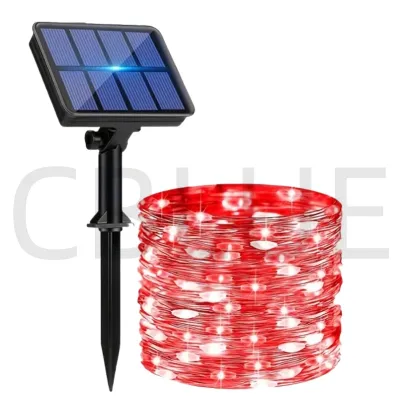
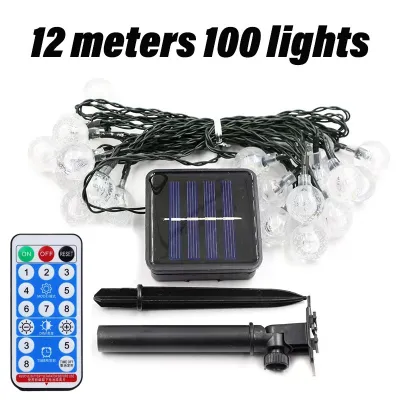
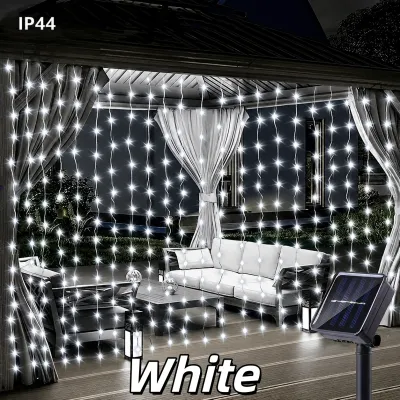
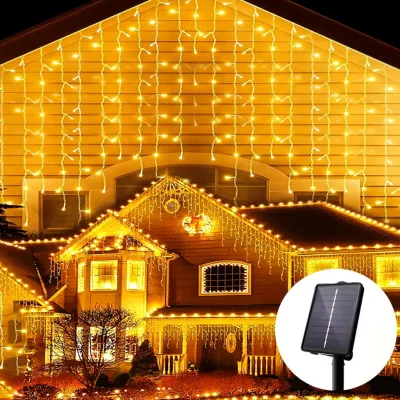
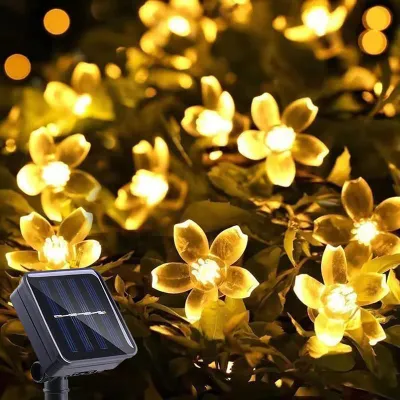
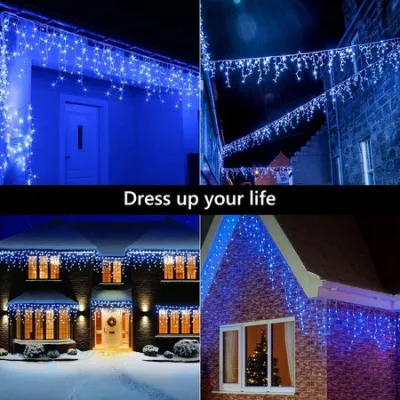
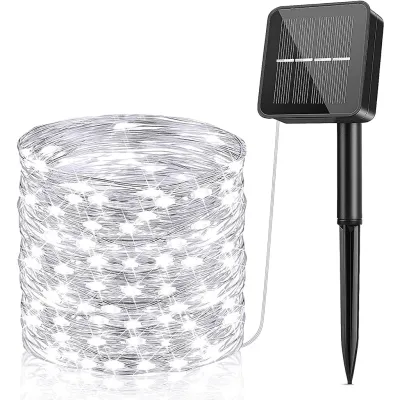
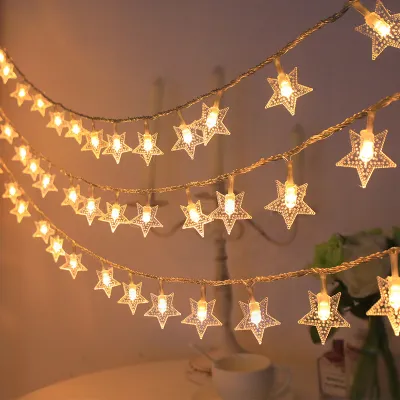
Prices are valid at publication and may change. Please refer to the product page for the latest price.
Electrical compatibility is another critical safety factor. Standard residential power outlets in the Philippines operate at 220 volts (V) at a frequency of 60 hertz (Hz). Using imported lights rated only for 110V without a proper transformer will instantly destroy the product and pose an immediate fire risk. Always check the product label for the official Philippine Standard (PS) quality mark or the Import Commodity Clearance (ICC) sticker, which certifies that the lighting has undergone rigorous safety and voltage compatibility testing.
The intense tropical sun can be just as damaging to holiday decorations as heavy rain. Standard plastic insulation degrades rapidly under prolonged ultraviolet (UV) exposure, becoming brittle, cracking, and exposing live electrical wires. Ensure the product specifications explicitly state that the wiring and light casings are UV-resistant. Heavy-duty rubber-insulated cables (such as SOOW or SJTW ratings) are far superior to thin, cheap PVC wires for long-term outdoor use, preventing dangerous short circuits when the seasonal rains arrive.
Garden and Yard: Illuminating Trees, Bushes, and Pathways with Christmas Lights Outdoor
Landscaping features like trees, shrubs, and walkways offer a beautiful natural canvas for your holiday display, but they require different lighting styles to look their best. For dense bushes, hedges, and low-lying shrubs, net lights are the most efficient and visually uniform option. These lights are pre-woven into a flexible grid that you can simply drape over the foliage, saving hours of manual wrapping while ensuring an even distribution of light across the entire surface.

For trees, classic string lights remain the ideal choice because they allow you to accentuate the natural structure of the trunk and branches. To estimate the length of string lights needed for a tree trunk, use a simple mathematical formula: measure the circumference of the trunk in meters, divide the total height of the trunk by your desired spacing interval (usually 10 to 15 centimeters), and multiply these two figures together. Always add an extra three to five meters of unlit lead wire to this total to ensure the cord can comfortably reach your power source without being pulled taut, which can strain the connections and damage the wire.
Pathway lighting adds both charm and safety to your garden walkways. Dedicated pathway stake lights are excellent for guiding guests, but you must pay close attention to the construction materials. Because tropical soil remains highly humid and can be slightly acidic, cheap metal stakes will rust and degrade within a single season. Choose stakes made of heavy-duty, UV-stabilized plastic or premium rust-resistant metals, and verify that the product label explicitly approves the stakes for wet soil contact.
Roofs and Eaves: High-Visibility Lights and Secure Mounting
The roofline is the most prominent part of any outdoor holiday display, visible from down the street and defining the architectural shape of your home. To create a high-visibility effect from a distance, larger bulb styles such as C7 or C9 LED retrofits are highly recommended. Alternatively, icicle lights—which feature drops of varying lengths hanging down from a main horizontal wire—create a classic, elegant dripping effect along the eaves.
Accurately measuring your roofline is essential to avoid mid-installation shortages or excessive slack. Use a measuring tape to map the horizontal perimeter of your eaves, and remember to measure the vertical drops where the cords must run down the side of the house to reach the nearest outdoor power outlet. When purchasing your lights, look for modular strands that allow you to connect multiple sections together, but always verify the maximum run limit specified by the manufacturer to prevent overloading the wire.
A non-negotiable safety rule for roof installations is the absolute prohibition of nails, staples, metal tacks, or screws to secure the wires. Metal fasteners can easily pierce the protective plastic insulation of the cables, creating a direct path for water intrusion, electrical shocks, or short circuits that can ignite wooden eaves. Instead, use dedicated plastic gutter hooks or shingle clips. These plastic clips grip the edge of your gutters or slide securely under roof shingles, holding the wires firmly in place without causing any structural damage or electrical hazards.
Working at heights introduces significant physical risks, especially when handling electrical components. Always use a stable, non-conductive ladder—preferably made of fiberglass rather than aluminum to eliminate electrical conductivity risks—and ensure you have a spotter on the ground at all times. If your home has a steep roof, multiple stories, or complex architectural features, do not attempt the installation yourself. Hire a qualified professional installer who has the proper safety harnesses, climbing gear, and electrical training to complete the job safely.
Balconies and Railings: Space-Saving and Wind-Resistant Decor
For townhouses, apartments, and condominiums, balconies and railings offer a highly visible space to share the holiday spirit without requiring a large yard. Curtain lights are incredibly effective for flat balcony walls, cascading down like a sheet of stars to create a dramatic backdrop. For railings and balustrades, flexible LED rope lights or standard string lights wrapped tightly around the handrails provide a clean, streamlined look that does not obstruct your view.
Before purchasing any decorations for an elevated space, you must consult your condominium association or building management rules. Many residential buildings have strict guidelines regarding the types of outdoor decorations permitted, the approved mounting methods to prevent structural damage, and specific curfews for when the lights must be turned off to avoid disturbing neighbors. Adhering to these guidelines beforehand prevents costly fines and disputes.
Elevated balconies are highly exposed to strong winds, which can whip loose wires around and damage the bulbs or the building facade. Secure your lights firmly using UV-resistant nylon zip ties or specialized plastic railing clips that will not degrade under the sun. When routing your power cords, ensure they do not drape over sliding door tracks or window frames; a pinched cable can easily have its insulation severed by a closing door, leading to a severe electrical short or fire hazard inside your living space.
Power Planning and Electrical Safety for Outdoor Displays
A spectacular outdoor light display is only as good as the electrical system supporting it. Before plugging anything in, you must calculate the total wattage of all your connected light strands to ensure you do not overload your household circuits. To find this, look at the technical label near the plug of each strand to find the wattage, and add them together. Ensure this cumulative wattage remains well below the maximum capacity printed on your extension cords and does not exceed 80% of the rating of the home circuit breaker you are utilizing.
Never use standard indoor extension cords outside, as their thin jackets cannot withstand moisture, foot traffic, or sunlight. Use only heavy-duty, outdoor-rated extension cords that feature thick, water-resistant insulation. Additionally, keep all plug connections elevated off the ground—such as by hanging them from wall hooks or placing them on elevated ledges—to prevent them from sitting in puddles during heavy downpours. For absolute safety, wrap all plug connections in dedicated, gasketed plastic waterproof connection covers.
Finally, establish strict operational habits to protect your home and family. Always isolate the power supply by completely unplugging the main cord before hanging, adjusting, or replacing any bulbs in your display. Never leave your outdoor lights running when you are sleeping or when the house is left unattended. Utilizing an outdoor-rated mechanical or digital timer can automate this process, ensuring your display turns off safely at a designated hour every night.
Frequently Asked Questions (FAQ)
Can I use indoor Christmas lights outside if they are under a covered porch?
No, you should never use indoor-rated lights outdoors, even if they are completely shielded under a covered porch. Indoor lights lack the specialized moisture-resistant seals and UV-protective coatings found on outdoor models. The high relative humidity and ambient moisture common in tropical climates can easily condense inside non-sealed indoor sockets, causing rapid corrosion, short circuits, and potential shock hazards. Additionally, strong winds can blow rain sideways, directly exposing the indoor lights to water.
How do I safely connect multiple strands of outdoor string lights?
To connect multiple strands safely, you must read the manufacturer’s label to find the maximum number of end-to-end connections allowed for that specific product. This limit is determined by the gauge of the internal copper wire, which can only carry a set amount of electrical current. Exceeding this recommended limit will cause the wires in the first strand of the chain to overheat, melting the plastic insulation and creating a severe fire hazard. If you need to cover a larger area than the limit allows, run a separate outdoor-rated extension cord to power the additional segments.
Are solar-powered outdoor Christmas lights a good alternative for gardens?
Solar-powered lights are an excellent, energy-efficient alternative for garden areas because they eliminate the need to run long, potentially hazardous extension cords across damp lawns. However, they come with specific trade-offs that you must consider. Because their performance depends entirely on the solar panel receiving direct, unobstructed sunlight during the day to charge the internal battery, they may perform poorly during consecutive cloudy or rainy days. The lights may appear noticeably dimmer or run out of power after only a few hours of operation compared to standard plug-in models.
Community discussion
Share your experience or ask a question. Comments are reviewed before publication.